Key Takeaways
-
A complete synthetic turf quote must detail all cost components including turf material ($2.50-$6.50/sq ft), infill ($0.40-$1.20/sq ft), edging (priced per linear foot, not area), and base aggregate to avoid surprise costs.
-
Residential synthetic turf typically costs $8-$18 per square foot, but your actual price depends on turf quality, ground conditions, and prep work—always get a personalized quote based on site visit measurements, not phone estimates.
-
Proper base preparation with 3-4 inches of compacted aggregate is critical; skimping here causes pooling water and uneven turf within 1-2 years, making it the most important investment in your quote.
-
Compare multiple quotes fairly by verifying turf specs match, checking base depth and infill type, reviewing both product and workmanship warranties, and confirming what’s excluded before choosing the lowest price.
-
Site-specific factors like clay soil, sloped terrain, tree roots, restricted access, and complex yard shapes significantly increase quote costs—these aren’t sales tactics but honest pricing for legitimate extra labor and materials.
-
A trustworthy quote should itemize every step (removal, excavation, grading, drainage, installation labor, cleanup) with manufacturer names and specifications; vague descriptions like ‘premium turf’ are red flags requiring clarification.
So you’re thinking about swapping that patchy, high-maintenance lawn for artificial grass. Smart move! But before you say yes to any project, you need to understand your synthetic turf quote inside and out. A good quote is more than just a number. It’s a roadmap that tells you exactly what you’re paying for, and it protects you from surprise costs down the road.
Here in the Chicago suburbs, we see everything from small urban condo patios to sprawling suburban backyards to busy commercial properties. Every single one of those spaces needs a different approach, and that means every synthetic turf quote should look a little different too. Whether you’re a homeowner in Aurora dreaming of a low-maintenance yard, or a property manager trying to boost curb appeal without a huge water bill, this guide will help you read a quote like a pro. Let’s break it down together, friend.
What Exactly Is a Synthetic Turf Quote?
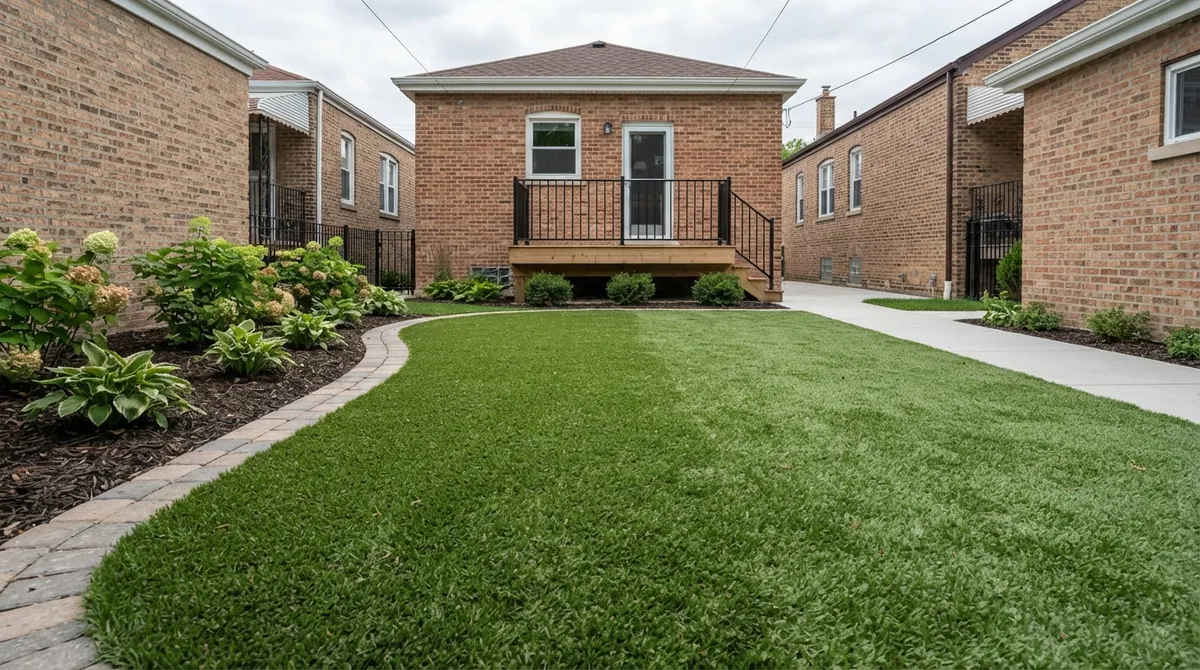
A synthetic turf quote is simply a detailed estimate for installing artificial grass on your property. It should cover materials, labor, site prep, and any extras your yard needs. Think of it as a promise on paper, one that spells out what work will happen and what it will cost.
Here’s the thing though: not all quotes are created equal. A trustworthy quote comes from an actual site visit and real measurements, not a guess based on a quick phone call. According to SiteOne’s guidance on quoting synthetic turf projects, an accurate estimate depends heavily on understanding your specific site conditions before any numbers get written down.
How Much Does Synthetic Turf Cost Per Square Foot?
This is the question everyone asks first, and we totally get it. You want a ballpark figure before you commit to anything. Based on current industry research, most residential installations land somewhere between $8 and $18 per square foot. Some projects can run as low as $5 or as high as $20 or more, depending on your specific situation.
A 2025 cost guide from Home Depot pegs the average around $12 per square foot, with that same wide range of $5 to $20. These numbers are helpful starting points, but they’re not gospel. Your actual price depends on turf quality, ground conditions, and how much prep work your yard needs.
Breaking Down the Cost Components
To really understand your synthetic turf quote, it helps to know what each piece costs on its own. Here’s a general breakdown based on 2026 estimating data:
| Component | Typical Cost Range | Notes |
|---|---|---|
| Turf Material | $2.50–$6.50 per sq ft | Varies by pile height and quality |
| Infill | $0.40–$1.20 per sq ft | Depends on infill type and coverage |
| Edging | $1.40–$2.20 per linear foot | Cost tied to perimeter shape, not area |
| Base Aggregate | Varies by depth needed | Typically 2–4 inches compacted |
Notice how edging is priced by linear foot, not square footage? That’s why two yards with the same size lawn can have very different quotes if one has a simple rectangle shape and the other has lots of curves and corners.
What Should Be Included in a Complete Synthetic Turf Quote?
A vague quote is a red flag. You deserve a document that spells out every step of the process. Here’s what a thorough quote should cover:
- Existing lawn removal and disposal – Getting rid of your old grass and hauling it away
- Excavation and grading – Digging out the area and shaping it for proper drainage
- Base material and depth – The type of aggregate used and how thick it will be
- Compaction – Packing down that base so your turf doesn’t shift or sink later
- Weed barrier – If your project calls for one
- Turf specifications – Manufacturer name, pile height, face weight, and warranty details
- Seams and fasteners – How pieces of turf get joined together seamlessly
- Infill type and quantity – What goes between the blades and how much
- Edging – Whether it’s included and how it’s priced
- Installation labor and cleanup – The actual work and tidying up afterward
If your quote just says “premium turf” without naming a manufacturer or specs, ask questions. You want to know exactly what you’re getting, not just a pretty description.
Factors That Can Raise Your Quote
Every yard has its own personality, and some yards are just more complicated to work with than others. Here are common reasons your synthetic turf quote might come in higher than expected:
- Sloped or uneven ground – Extra grading work takes more time and labor
- Poor drainage or clay soil – Common in many Chicago-area yards, this may require additional base material or drainage solutions
- Tree roots – These can complicate excavation significantly
- Restricted access – Tight urban lots or condo courtyards make it harder to bring in equipment
- Complex shapes – Curvy borders and multiple corners increase edging costs
- Additional drainage needs – Some properties need extra work to handle stormwater properly
If you’re a suburban homeowner dealing with heavy clay soil, or an urban condo owner working with a tricky rooftop space, don’t be surprised if your quote reflects that extra complexity. It’s not a sales tactic. It’s just honest pricing for honest work.
How to Compare Multiple Quotes Fairly
Getting a few quotes is smart. But comparing them apples to apples takes a little effort. Here’s how to do it right:
- Check the turf specs – Make sure each quote names the same or similar turf product, not just a price
- Compare the scope of work – Does one quote include removal and disposal while another doesn’t?
- Look at base depth – A thinner base might mean a cheaper quote now but a shorter lifespan later
- Ask about infill type – Some infills cost more but perform better in heat or high-traffic areas
- Review the warranty – Both product and workmanship warranties matter
- Confirm exclusions – What’s NOT included? Permits? Utility checks? Extra drainage?
- Understand the payment schedule – When are deposits due, and when is the final payment expected?
Never pick the lowest number just because it’s the lowest. A quote that skips base prep or uses thin turf might save you money today but cost you more in repairs later.
Questions to Ask Before You Sign
You wouldn’t buy a car without asking questions, and the same goes for your outdoor space. Here are smart things to ask any installer:
- What brand and model of turf are you using?
- How deep will the base material be, and what’s it made of?
- What infill are you using, and how much per square foot?
- Is edging included, and how is it priced?
- What’s your process for handling drainage on my specific site?
- What warranty comes with the product and with your labor?
- How long will installation take from start to finish?
- What happens if you find unexpected issues once you start digging?
According to FieldTurf’s guidance for landscapers, asking these questions upfront helps both the customer and the installer avoid miscommunication later. A good contractor will welcome these questions, not dodge them.
Why Different Properties Need Different Approaches
At Serenity Landscape Group, we’ve learned that no two projects are alike. A commercial property manager needs durable, low-maintenance turf that can handle heavy foot traffic near an office entrance. A small business owner wants a welcoming, attractive space that draws customers in. A new home builder in Aurora needs turnkey installation that fits a tight construction timeline.
That’s why we always recommend checking out our artificial turf installation services to see the full range of what’s possible. We also encourage you to browse our gallery of completed projects to get a feel for the quality and variety we bring to Chicagoland properties.
Commercial Considerations
If you manage a commercial property, your synthetic turf quote might look quite different from a residential one. You’ll want to think about foot traffic levels, ADA compliance for pathways, and stormwater management requirements. Many commercial clients also pair turf installation with other upgrades, like our commercial lawn maintenance services, to keep everything looking sharp year-round.
Base Preparation and Drainage Matter Most
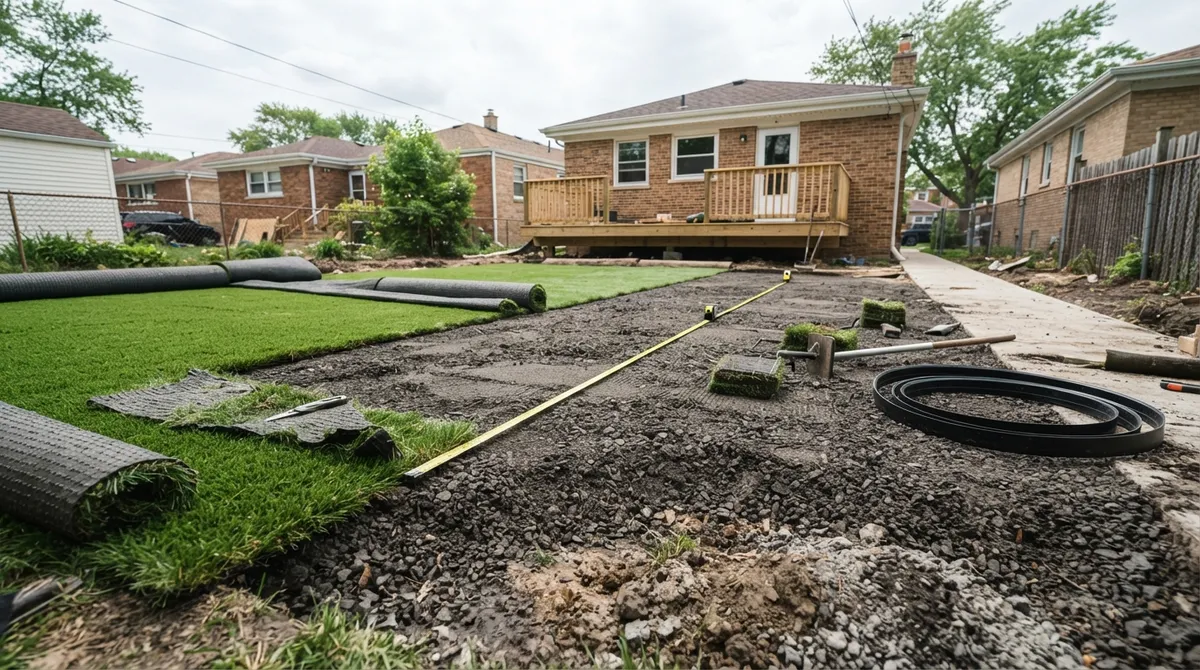
We can’t stress this enough: the base beneath your turf is where the real magic happens. A 2026 estimating guide recommends a compacted aggregate base of about 3 to 4 inches, though some regional guidance suggests 2 to 4 inches depending on soil type. Skimping here is one of the most common mistakes we see, and it almost always leads to problems like pooling water or uneven turf within a year or two.
Chicago’s clay-heavy soil and unpredictable weather make proper drainage even more critical. If you want to learn more about how drainage systems work beneath synthetic turf, check out our article on how turf drainage systems work in your yard.
How Long Does Installation Take?
Most residential synthetic turf projects take anywhere from one to three days, depending on size and complexity. Larger commercial jobs or properties with drainage challenges can take longer. Your quote should give you a realistic timeframe, not just a vague “a few days” answer.
We also recommend reading our guide on the 5 key stages of the artificial turf installation process so you know exactly what to expect once work begins.
Working With Trusted Professionals
Choosing a qualified installer matters just as much as reading the fine print. Look for contractors who are members of respected industry organizations like Landscape Illinois, which promotes professional standards across the state. For hardscaping elements that often pair with turf projects, certification through groups like the ICPI Certified Installer program is another good sign of quality craftsmanship.
With over two decades of experience serving the greater Chicago area, our team understands the unique challenges of local soil, weather, and municipal regulations. We’ve helped suburban homeowners meet HOA standards, urban condo owners maximize small spaces, and commercial property managers create sustainable, attractive landscapes that perform well through every season.
Your Next Steps
Getting a synthetic turf quote doesn’t have to feel confusing or stressful. Now that you know what to look for, you can approach the process with confidence. Ask the right questions, compare quotes fairly, and choose a team that values transparency as much as you do.
If you’re ready to see what a detailed, honest synthetic turf quote looks like for your property, we’d love to help. Feel free to get a free estimate from our team, or simply call us at (630) 359-5139 to talk through your project. We’re here to help you create an outdoor space you’ll genuinely love, season after season.
FAQs
Q: How much does synthetic turf installation cost per square foot?
A: Great question! Most residential projects land somewhere between $8 and $18 per square foot, though some can be as low as $5 or as high as $20 depending on your yard. Factors like turf quality, base prep, and site conditions all play a role, so it’s best to get a personalized quote for your specific space.
Q: What should be included in a synthetic turf quote?
A: A solid quote should cover everything from lawn removal and excavation to base material, turf specs, infill type, edging, and cleanup. It should also name the actual turf product being used, not just call it “premium” without details. Don’t be shy about asking for these specifics if they’re missing!
Q: Does a synthetic turf quote include removal of existing grass and disposal?
A: It depends on the installer, so always check! Many quotes do include this step, but some treat it as a separate line item or extra charge. This is exactly the kind of detail you want clarified before signing anything, so you’re not caught off guard later.
Q: What factors make a synthetic turf installation quote more expensive?
A: Things like sloped yards, clay soil, tree roots, tricky access, and complex shapes can all bump up your quote. These challenges require more labor and sometimes extra materials to get the job done right. It’s not about upselling you, it’s about making sure your turf lasts for years to come.
Q: How long does synthetic turf installation take, and what warranties should I expect?
A: Most residential jobs wrap up in one to three days, though larger or more complex projects can take longer. As for warranties, you’ll want both a product warranty from the turf manufacturer and a workmanship warranty from your installer. Don’t hesitate to ask for these details in writing before you commit.