Key Takeaways
-
Natural stone retaining walls in Chicago last 50+ years with proper installation including drainage and footings below the frost line, significantly outlasting concrete block (25-50 years) and timber (15-25 years) alternatives.
-
Proper installation requires site assessment, engineering review, permitting, compacted base preparation, and professional drainage systems—skipping steps can cause failure within years instead of decades.
-
Natural stone signals quality to tenants and customers, resists fading better than alternatives, and creates unique design features that enhance curb appeal and property value beyond just soil retention.
-
Chicago’s freeze-thaw cycles demand experienced contractors who understand local permitting, proper backfill materials, weep holes, and quality mortar or dry-stack methods suited to the climate.
Picture this: a commercial property with a sloped lot that used to be a headache, now turned into a stunning, functional space framed by gorgeous natural stone. That’s the magic of a well-built retaining wall. If you manage a business property, own a shopping plaza, or develop new builds around Chicago, you’ve probably wondered whether natural stone is worth the investment. Spoiler alert: it usually is, and we’re here to walk you through exactly why.
At Serenity Landscape Group, we’ve spent over two decades helping Chicago-area property owners solve grading problems while boosting curb appeal. Natural stone commercial retaining walls in Chicago aren’t just pretty. They hold back soil, manage stormwater, and make your property look like a million bucks. Let’s dig into the seven things you need to know before you start your project.
1. Why Natural Stone Stands Out for Commercial Properties
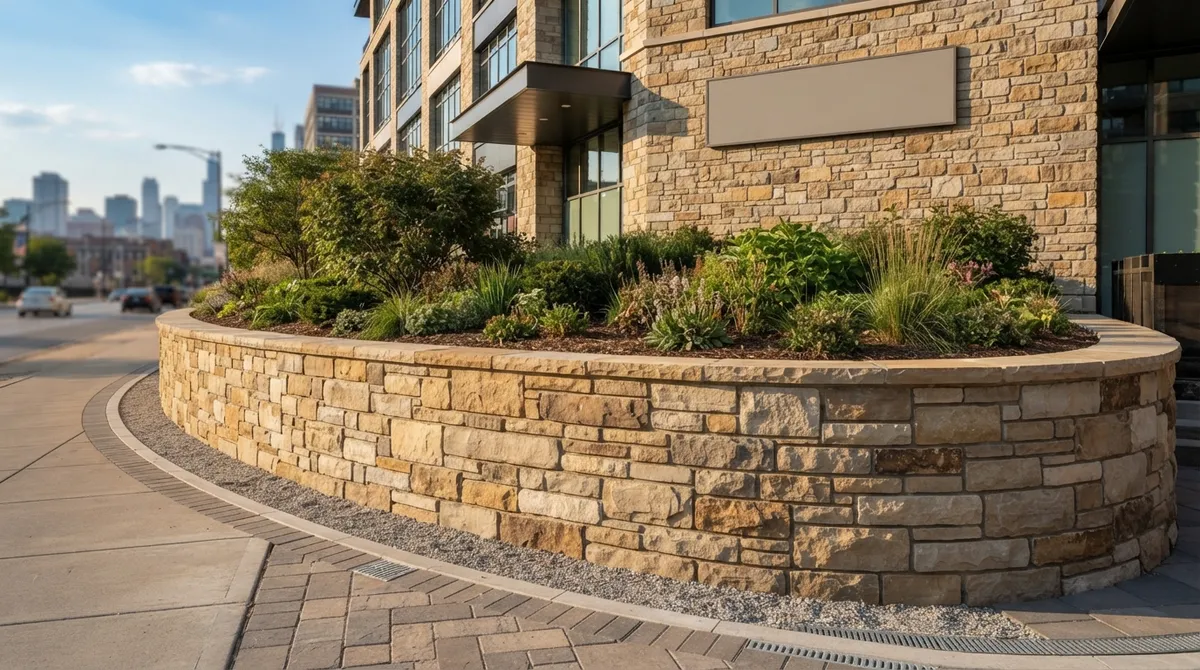
Natural stone brings a timeless look that concrete blocks just can’t match. Every piece has its own texture, color variation, and character. That means your retaining wall becomes a design feature, not just a structural necessity.
Commercial property managers love natural stone because it signals quality to tenants and customers. A crumbling wooden wall says “we don’t invest in upkeep.” A beautiful stone wall says the opposite. If you’re managing an office park or retail center, first impressions matter more than you might think.
- Natural stone resists fading and weathering better than many alternatives
- It blends naturally with existing landscaping and softscapes
- Each wall is unique, adding a custom, high-end feel
- Stone options range from limestone to fieldstone to granite, giving you design flexibility
2. How Natural Stone Retaining Walls Handle Chicago’s Tough Climate
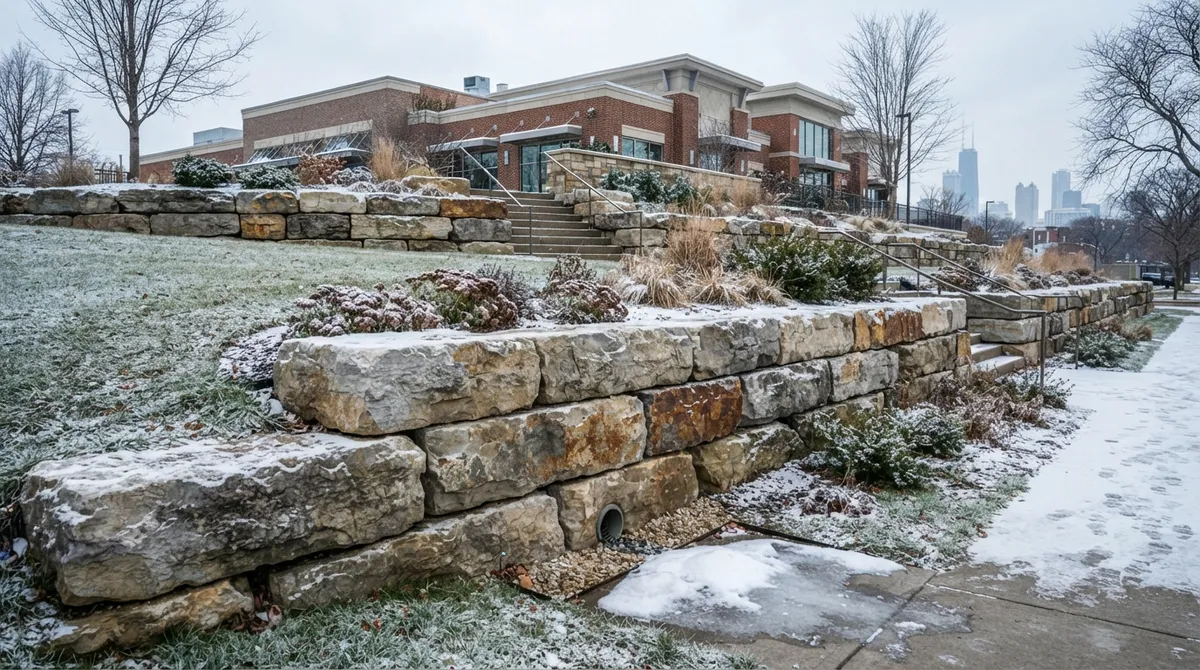
Let’s be honest, Chicago weather is no joke. Freeze-thaw cycles can wreck poorly built structures. Natural stone, when installed correctly, handles these swings far better than many other materials.
The key is proper drainage and a solid base. Water that gets trapped behind a wall and freezes can cause serious damage over time. That’s why working with experienced retaining wall professionals matters so much here.
What Makes Stone Walls Winter-Ready
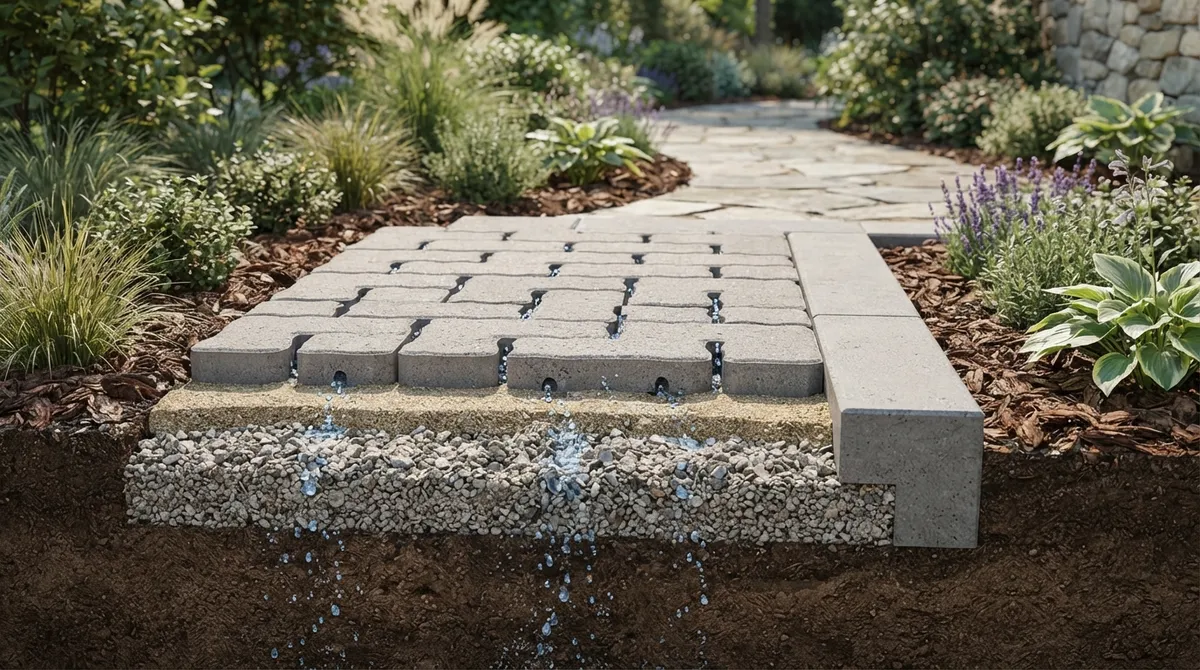
- Proper backfill material that allows water to drain instead of pool
- Deep footings that go below the frost line
- Weep holes or drainage pipes built into the design
- Quality mortar or dry-stack methods suited to our climate
If you’re curious about the technical side, our guide on how to choose natural stone commercial retaining walls breaks it down even further.
3. Comparing Natural Stone to Other Retaining Wall Materials
We get this question a lot: “Is natural stone really better than concrete block or precast systems?” The answer depends on your budget, timeline, and goals. Here’s a quick comparison to help you decide.
| Material | Average Lifespan | Maintenance Needs | Aesthetic Appeal |
|---|---|---|---|
| Natural Stone | 50+ years | Low | High, unique character |
| Precast Concrete Block | 25-50 years | Low to moderate | Uniform, less custom look |
| Poured Concrete | 30-50 years | Moderate | Plain unless finished |
| Timber | 15-25 years | High | Rustic but fades over time |
If you’re weighing your options, check out our comparison piece on cantilever vs. gravity retaining walls for more technical insight.
4. The Installation Process, Step by Step
Building a natural stone retaining wall isn’t a weekend DIY project. It takes planning, permits, and skilled labor. Here’s a simplified look at how the process typically works for commercial jobs.
- Site assessment and soil testing to understand drainage and load needs
- Engineering review, especially for taller or load-bearing walls
- Permitting through your local municipality
- Excavation and preparing a compacted base
- Laying the foundation footing below the frost line
- Setting the stone course by course, checking for level and stability
- Installing drainage systems and backfilling with proper gravel
Every step matters. Skipping even one can lead to a wall that fails within a few years instead of lasting decades. Our team follows a proven process to make sure nothing gets overlooked.
5. Cost Factors for Natural Stone Commercial Retaining Walls in Chicago
We know budget is always top of mind. Natural stone tends to cost more upfront than some alternatives, but it often pays off in longevity and reduced maintenance. Several factors affect your final price.
- Wall height and total length of the project
- Type of stone chosen, since granite costs more than limestone
- Site accessibility for equipment and materials
- Drainage complexity based on your property’s grading
- Engineering requirements for taller commercial walls
Getting an accurate estimate means having a professional walk your site. If you want a clear picture of what your project might cost, we invite you to get a free estimate from our team.
6. Where Natural Stone Retaining Walls Make the Biggest Impact
Not every commercial property needs a retaining wall, but many do, especially in Chicago’s varied terrain. Here are the most common places we install them.
Common Commercial Applications
- Parking lot slope management and erosion control
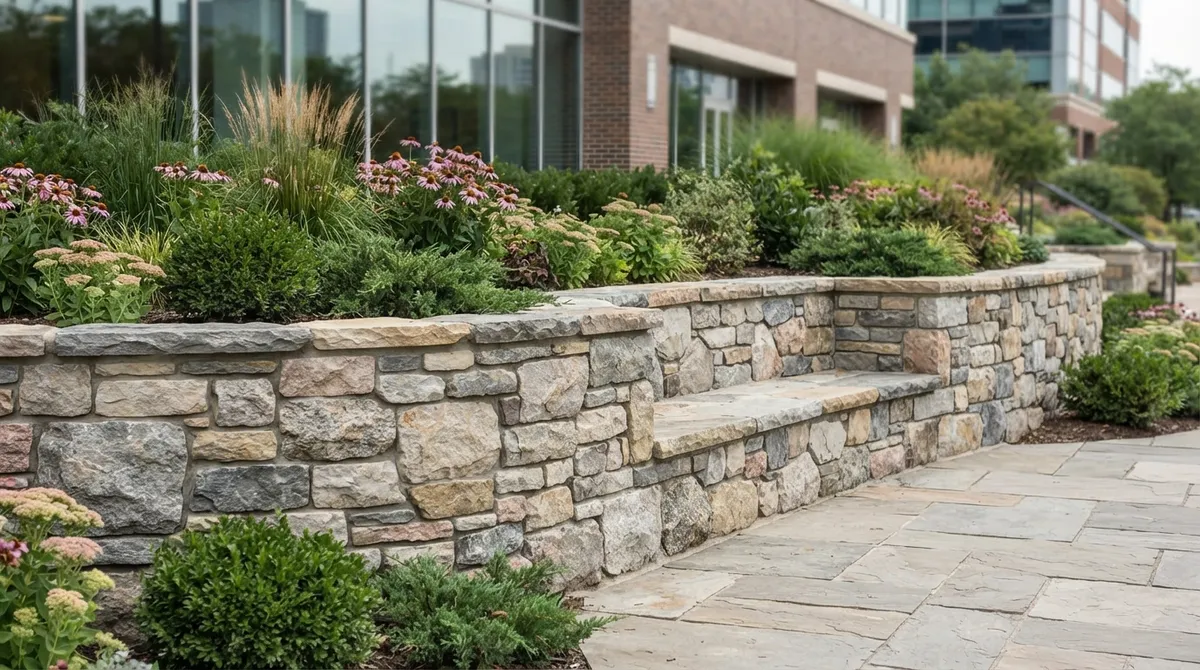
- Terracing for office parks and retail centers
- Stormwater retention pond edges
- Grade changes near entrances for accessibility
- Highway frontage and roadside embankments
If you manage a property with parking lot grading issues, our article on how to use retaining walls for commercial parking lots covers this topic in more detail. For businesses dealing with runoff, take a look at our piece on retaining walls versus drainage systems for stormwater management.
7. Choosing the Right Contractor for Your Project
This might be the most important step of all. A beautiful design means nothing if the installation is shoddy. Here’s what to look for when hiring a contractor for natural stone commercial retaining walls in Chicago.
- Ask about their experience with commercial-scale projects specifically
- Request references or a gallery of past work
- Confirm they understand local permitting and engineering requirements
- Check for proper licensing and insurance coverage
- Look for industry credentials, like certification from the ICPI Certified Installer program
Working with a certified, experienced team protects your investment. It also gives you peace of mind that the wall will perform as expected for decades. Organizations like Landscape Illinois also offer resources for property owners researching qualified landscape professionals in our region.
Natural Stone Options Compared
Different stone types offer different looks, price points, and durability levels. Here’s a breakdown to help guide your decision.
| Stone Type | Typical Cost Range | Best Use Case | Durability |
|---|---|---|---|
| Limestone | Moderate | Traditional, classic commercial look | Very high |
| Fieldstone | Moderate to high | Natural, rustic appearance | High |
| Granite | High | Premium properties, high-traffic areas | Extremely high |
| Sandstone | Moderate | Warmer tones, softer aesthetic | Moderate to high |
Additional Benefits Beyond Structural Support
Retaining walls do more than hold back dirt. They can add real value to your commercial property in ways you might not expect.
- Creating usable terraced space for outdoor seating or landscaping
- Reducing erosion that could damage sidewalks or parking areas
- Improving accessibility by managing grade changes near entrances
- Boosting property value and tenant satisfaction
- Pairing beautifully with other hardscape features like pavers or lighting features
Many of our commercial clients pair their new stone walls with updated softscapes and lighting to create a cohesive, welcoming environment. Our softscapes team can help you design planting beds that complement your new wall perfectly.
Maintaining Your Natural Stone Wall for the Long Haul
Good news: natural stone walls require far less upkeep than many alternatives. Still, a little seasonal attention goes a long way toward preserving your investment.
- Inspect for shifting stones or gaps after freeze-thaw cycles each spring
- Keep drainage pathways clear of debris and leaves
- Watch for any signs of bulging, which could indicate drainage issues
- Schedule a professional inspection every few years for larger commercial walls
If you already have an aging wall and aren’t sure whether it needs repair or full replacement, our article on how to plan commercial retaining wall replacement that lasts can help you weigh your options.
Ready to Build Something Beautiful and Lasting
Natural stone commercial retaining walls in Chicago aren’t just about function. They’re a statement piece that tells everyone who walks by that your property is well cared for and built to last. Whether you’re managing a busy retail center, developing a new subdivision, or maintaining an office park, the right wall can transform a problem slope into one of your property’s best features.
We’d love to be part of your next project. Our team has spent over 20 years perfecting the art and science of retaining wall construction throughout the greater Chicago area, and we bring that same care to every job, big or small. Ready to see what’s possible for your property? Get a free estimate today, or feel free to call us at (630) 359-5139 to talk through your project with our friendly team.
FAQs
Q: How long do natural stone commercial retaining walls last in Chicago?
A: When built properly with good drainage and a solid footing below the frost line, natural stone walls can easily last 50 years or more. Chicago’s freeze-thaw cycles are tough, but stone handles them beautifully with the right installation. That’s one reason so many property owners choose it for long-term peace of mind.
Q: Is natural stone more expensive than concrete block retaining walls?
A: Generally, yes, natural stone costs more upfront than precast concrete block systems. However, it often makes up for that cost with a longer lifespan and lower long-term maintenance. Think of it as an investment that pays you back in curb appeal and durability for decades.
Q: Do commercial retaining walls need permits in Chicago?
A: In most cases, yes, especially for taller walls or those near property lines and public right-of-ways. Local municipalities often require engineering review for walls above a certain height. Your contractor should handle the permitting process for you as part of a proper installation.
Q: Can natural stone walls help with stormwater management on commercial properties?
A: Absolutely, when designed with proper drainage systems, natural stone walls can direct water flow and reduce erosion around your property. They work especially well near parking lots, retention ponds, and sloped entrances. Pairing them with a smart grading plan makes a huge difference during Chicago’s rainy seasons.
Q: How do I know if my commercial property needs a retaining wall?
A: If you’re dealing with sloped land, erosion near walkways, or drainage issues around your building, a retaining wall might be the perfect fix. A quick site visit from a landscaping professional can tell you exactly what your property needs. We’re always happy to take a look and offer honest, friendly advice.