Key Takeaways
-
Know your pavilion's design snow-load rating before anything else, since it comes from approved plans or permits; if unknown, consult your building department or a licensed structural engineer.
-
Ground snow load is not the same as roof snow load, so do not mix them up when checking your pavilion's rating.
-
Clear leaves and pine needles from the roof and edges, and flush gutters and downspouts so meltwater drains freely and does not freeze into added weight.
-
Inspect fasteners, connections, posts, beams, and footings for rust, rot, loose hardware, and settling, pressing wood gently with a screwdriver to detect soft spots.
-
Take baseline photos from several angles in early fall so you can compare conditions later and spot new sagging or damage during winter.
-
If you see sagging, cracking sounds, leaks, or tilted posts, stay out from under the structure and call a qualified professional immediately rather than removing snow yourself.
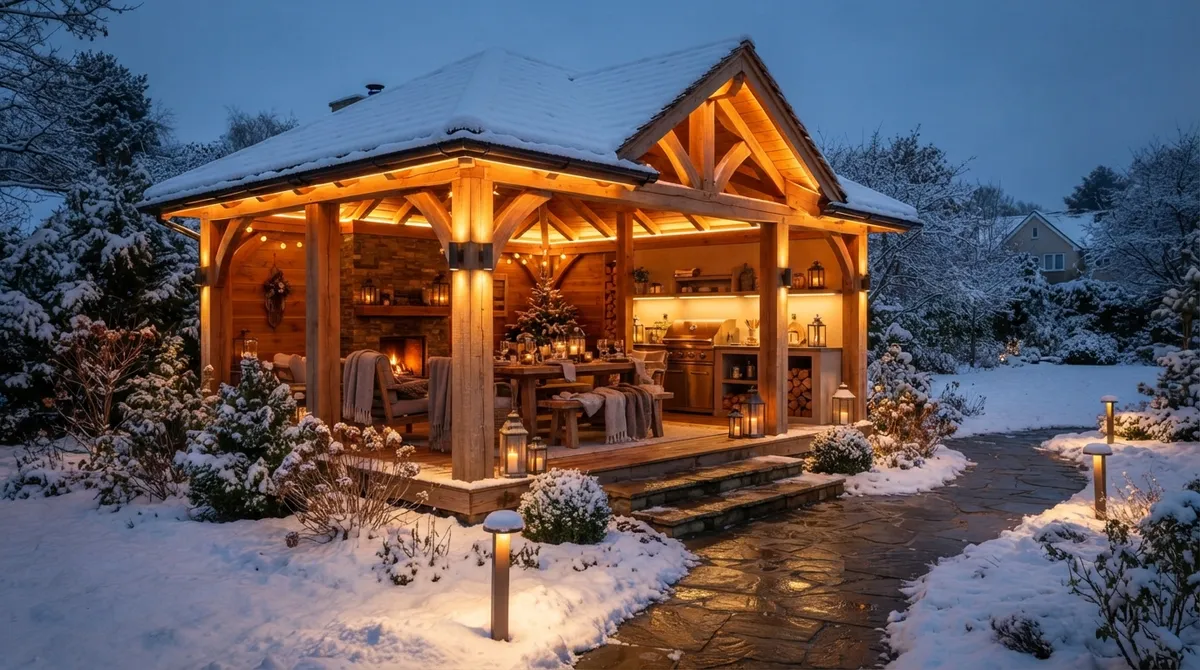
Picture this: the first big Chicago snowstorm is a few days away, and your backyard pavilion has been the star of every summer cookout. Now it needs a little attention before winter settles in. A pavilion roof inspection before snowfall is one of the simplest ways to protect your investment and keep your outdoor space safe.
Here at Serenity Landscape Group, we have spent over two decades helping Chicago-area homeowners and businesses care for their outdoor structures. We have seen how a small crack or a clogged drain in October can turn into a big headache by February.
The good news? Most of this inspection is simple, visual, and easy to do from the ground. In this guide, we will walk you through nine steps, explain what a landscaping team can and cannot check, and show you when to call a structural engineer. Grab a warm drink and a notepad, and let’s get your pavilion ready for winter.
Why a Pavilion Roof Inspection Before Snowfall Matters
Snow looks light and fluffy, but it adds real weight. Wet, heavy snow can weigh much more than dry powder. Add drifting, ice, and trapped meltwater, and your pavilion roof can face a lot of stress.
A pre-winter check gives you a clear picture of your pavilion’s condition before the weather gets tough. It helps you spot small problems early, clear drainage paths, and decide if you need expert help.
FEMA’s Snow Load Safety Guide (2013) recommends gathering baseline details, such as local codes, the design snow load, and the structural framing. It also suggests a professional inspection before snow season. A 2025 technical guidance document on roof snow loads echoes this idea: know your roof’s baseline condition before the first flake falls.
Who Benefits Most From This Checklist
- Suburban homeowners with backyard pavilions, pergolas, or poolside shelters
- Commercial property managers who oversee shaded gathering areas, patios, and courtyards
- Restaurant and shop owners with covered outdoor seating that guests love in the shoulder seasons
- New home builders who want to hand buyers clear care instructions for new outdoor features
If you own a pavilion, this guide is for you.
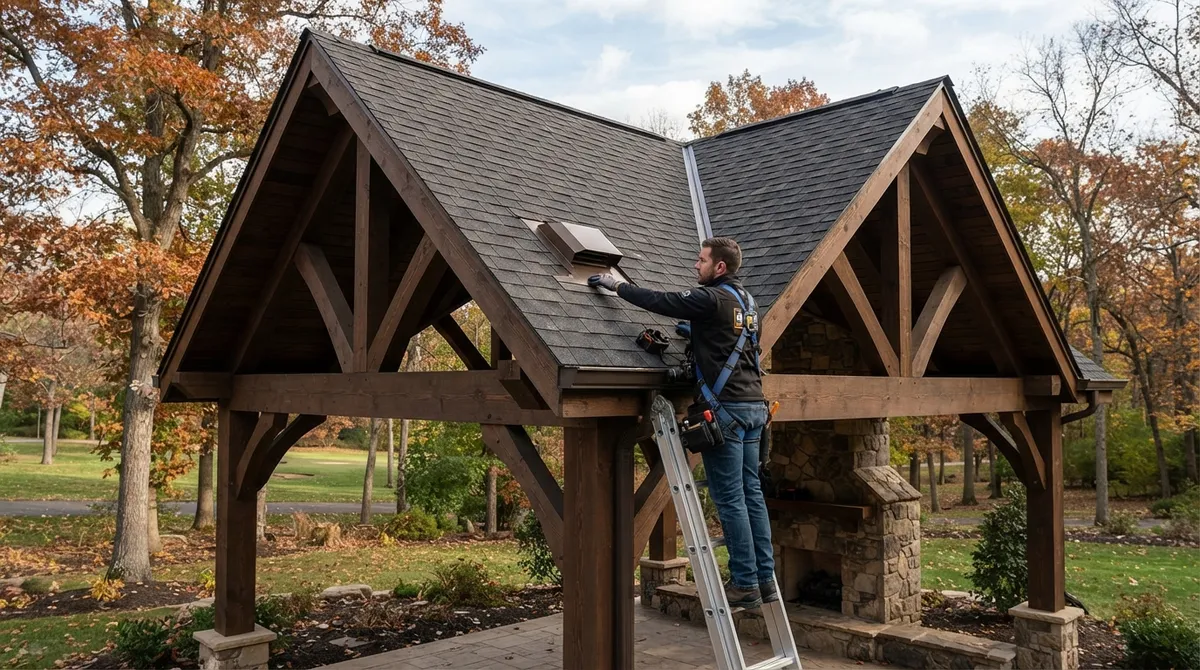
9 Steps for Your Pavilion Roof Inspection Before Snowfall
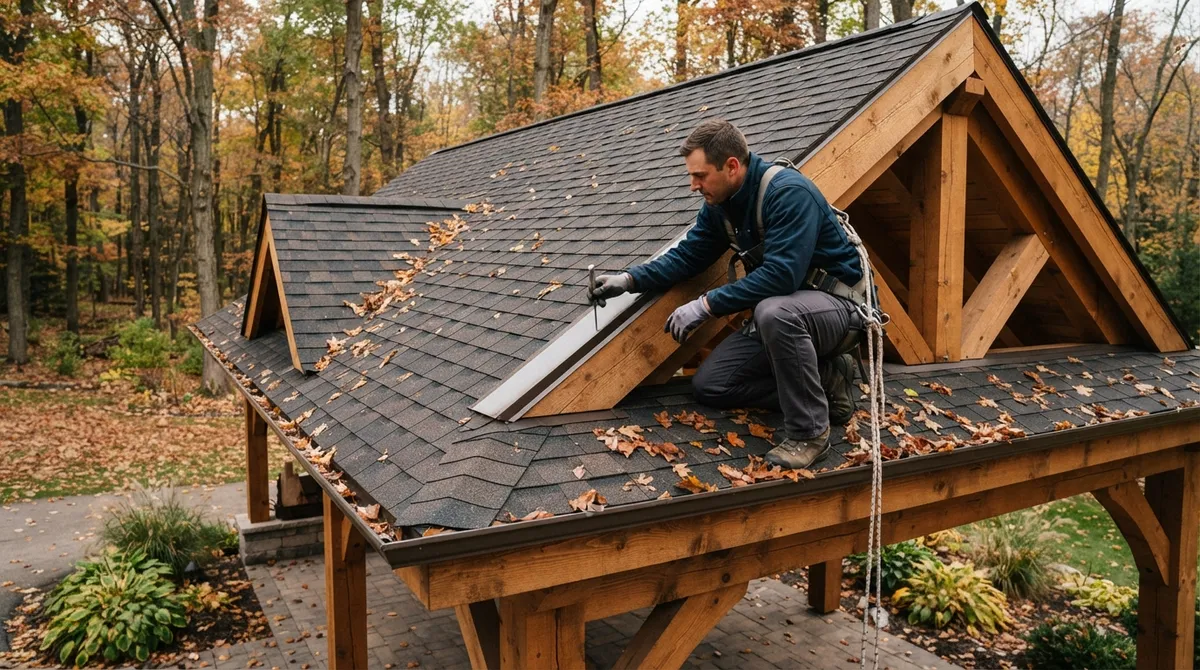
Work through these steps on a dry, calm day in early to mid fall. Stay on the ground whenever you can. A ladder or roof walk adds risk, and it is rarely needed for a first look.
1. Find Your Pavilion’s Snow-Load Rating
This is the most important step, and it happens before you ever look at the roof. Every pavilion is designed for a certain snow load. That rating depends on the design, the materials, and your location.
Here is a key point: ground snow load is not the same as roof snow load. Do not mix them up. Check your approved plans or permit paperwork. If you cannot find them, ask your local building department what applies to your area.
If the rating is unknown, that is a sign to call a licensed structural engineer. A landscaping team cannot certify structural capacity, and no one should guess.
2. Walk the Ground and Look Up
Start by simply standing back and looking at the whole structure. Does the roofline look straight? Do you see any sag, dip, or lean? A roof that looks different from last year deserves a closer look.
Take photos from several angles. These photos become your baseline, so you can compare conditions later in winter. At Serenity Landscape Group, we often photograph visible conditions during fall property maintenance so owners have a clear record.
3. Check the Roof Surface and Panels
Look for cracked, warped, or missing roofing material. Whether your pavilion has shingles, metal panels, cedar shakes, or polycarbonate, damage matters. Water that gets in during a freeze-thaw cycle can expand as it turns to ice and make small cracks bigger.
Watch for these warning signs:
- Cracked or lifted panels
- Loose, missing, or curling shingles
- Worn seals around seams and edges
- Stains or dark streaks that suggest water has been getting in
4. Inspect Fasteners and Connections
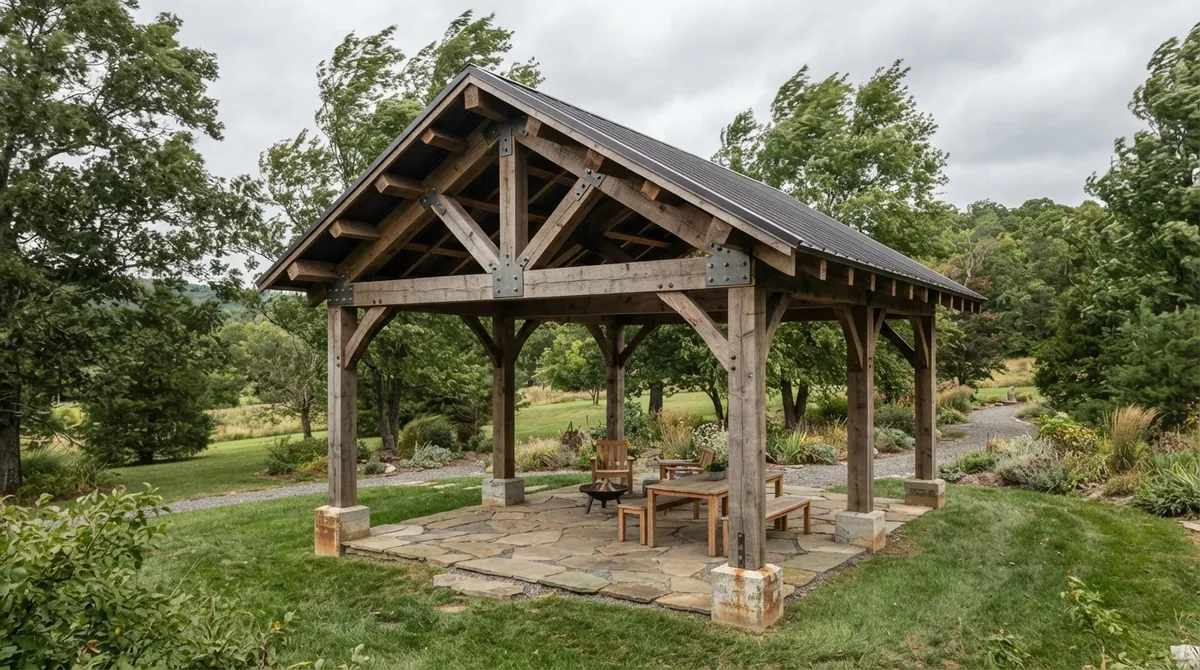
Roofs stay put because of their connections. Look at screws, bolts, brackets, and metal plates. Are any loose, rusty, or missing? Corroded fasteners can weaken over time, especially in our wet Midwest climate.
Also check where the roof meets the beams and where beams meet posts. Gaps, cracks, or movement at these joints are worth noting.
5. Examine Posts, Beams, Braces, and Footings
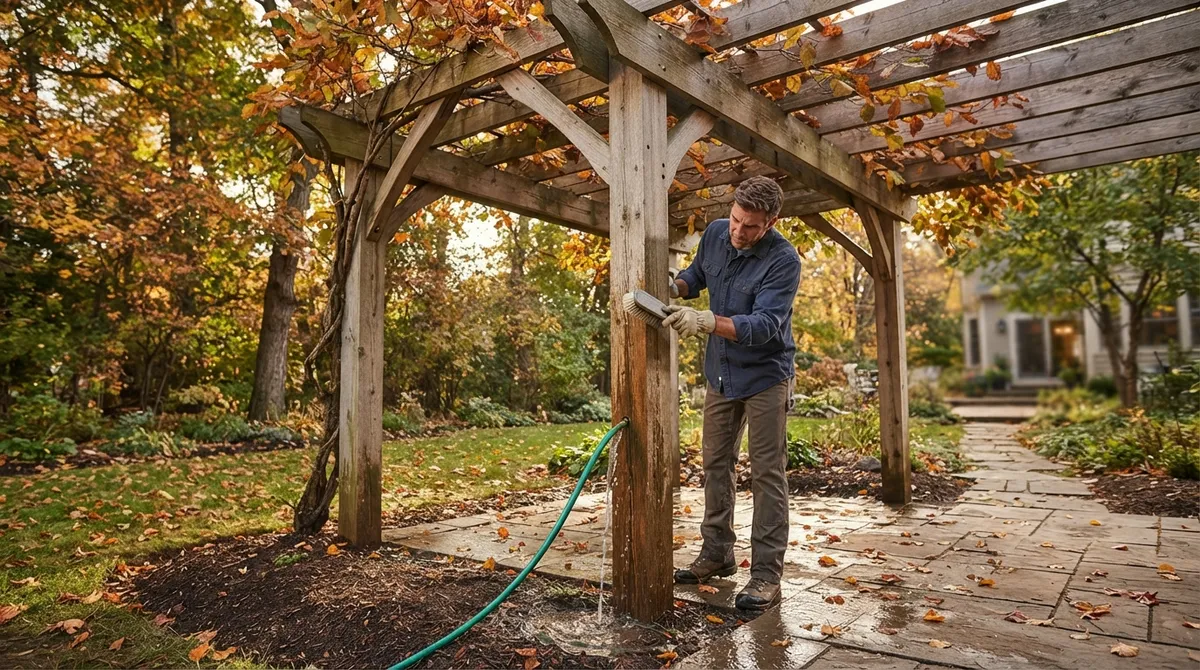
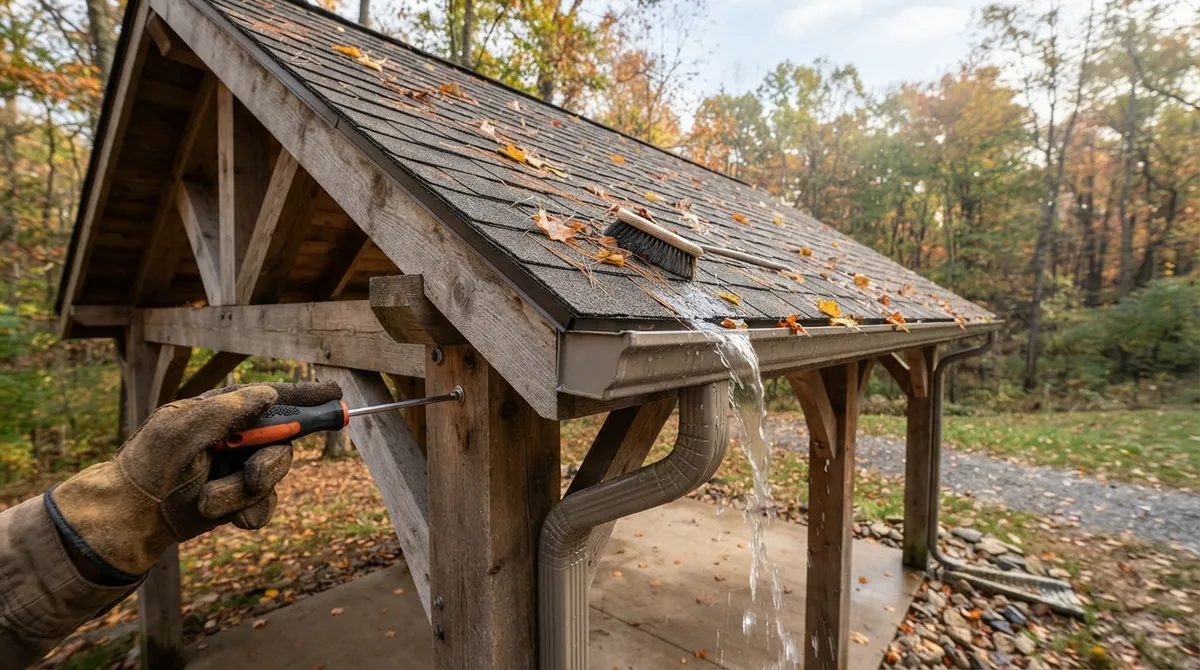
The roof is only as strong as what holds it up. Look closely at the posts and beams for rot, splitting, rust, or insect damage. Press gently on wood with a screwdriver tip. Soft spots can signal decay.
Check the base of each post, too. Look at the footings for cracking, shifting, or soil that has washed away. If your pavilion sits on a paver patio, make sure the pavers around the posts have not settled or heaved. Our paver installation team often spots these small shifts during seasonal visits.
6. Clear Leaves, Needles, and Debris
Wet leaves and pine needles hold moisture against the roof. They also block the paths that meltwater needs to follow. Once the trees have dropped most of their leaves, clear the roof and edges.
Use a soft broom or a leaf blower from the ground when possible. Avoid sharp tools that could scratch or puncture roofing. Do not climb onto the roof if you are unsure about its condition.
7. Check Gutters, Downspouts, and Drainage Paths
When snow melts during the day and freezes at night, water needs somewhere to go. Blocked gutters and downspouts let water pool and freeze, which adds weight and can cause ice damage.
- Remove leaves and debris from gutters and drain openings.
- Flush downspouts with a hose to confirm water flows freely.
- Make sure downspouts direct water away from posts, footings, and patio edges.
- Check that the ground below slopes away from the pavilion.
Good drainage on the ground matters just as much as drainage on the roof. If water collects around your pavilion, you may want to read our guide on dry well installation to stop yard flooding for good.
8. Look for Drift and Uneven-Load Spots
Snow does not always fall evenly. Wind can pile it up in certain spots. Uneven loading can stress part of a roof more than a smooth, even blanket of snow.
Pay special attention to places where snow tends to collect:
- Roof edges and eaves
- Places where the roof height changes
- Areas near parapets, walls, or nearby buildings
- Spots around fans, lighting, heaters, or other attached equipment
Notice where wind blows across your yard. If a nearby fence, hedge, or building creates a drift zone, make a note of it. Our softscape team can sometimes help adjust plantings that affect how wind and snow move across your property.
9. Decide What You Can Handle and What Needs a Pro
You have done your walk-around. Now it is time to sort your findings. Simple tasks, like clearing debris and cleaning gutters, are great for DIY or a landscaping crew. Structural concerns are a different story.
Call a licensed structural engineer or other qualified professional if you notice sagging, cracked beams, shifting posts, heavy corrosion, or if you simply do not know the design snow-load rating. It is always better to ask than to guess.
Quick Reference: What to Check and Why
Use this table as a handy checklist before the first snowfall.
| Area to Inspect | What to Look For | Who Should Handle It |
|---|---|---|
| Snow-load rating | Documented design capacity and local requirements | Owner, building department, or structural engineer |
| Roof surface | Cracks, loose panels, worn seals, water stains | Landscaping or roofing professional |
| Fasteners and connections | Loose, rusty, or missing hardware | Qualified contractor |
| Posts, beams, footings | Rot, rust, movement, settling | Structural engineer if concerns appear |
| Debris | Leaves, needles, and buildup on the roof | Owner or landscaping crew |
| Gutters and drains | Blockages, poor flow, ice-prone spots | Owner or landscaping crew |
| Drift zones | Places where snow may pile unevenly | Owner, with professional advice if needed |
What a Landscaping Service Can (and Cannot) Do
It helps to be clear about roles. A landscaping company can be a wonderful partner for fall pavilion care. It cannot replace an engineer.
What We Can Do
- Include pavilion checks in fall property maintenance
- Document visible conditions with photos
- Clear leaves and debris from roofs and drainage paths
- Check that water drains away from the structure
- Report any structural concerns we notice so you can follow up
What We Do Not Do
We do not certify structural capacity or perform engineering assessments. If your pavilion’s snow-load rating is unclear, or if we spot signs of distress, we will recommend a licensed structural engineer. That honesty protects you, your guests, and your property.
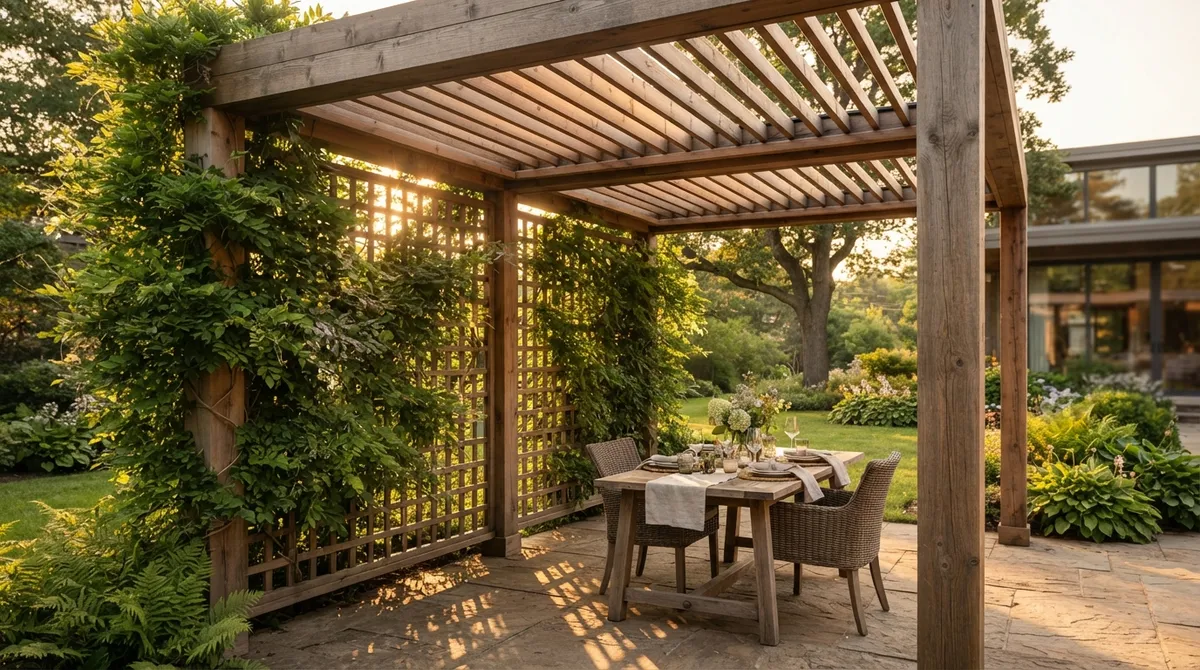
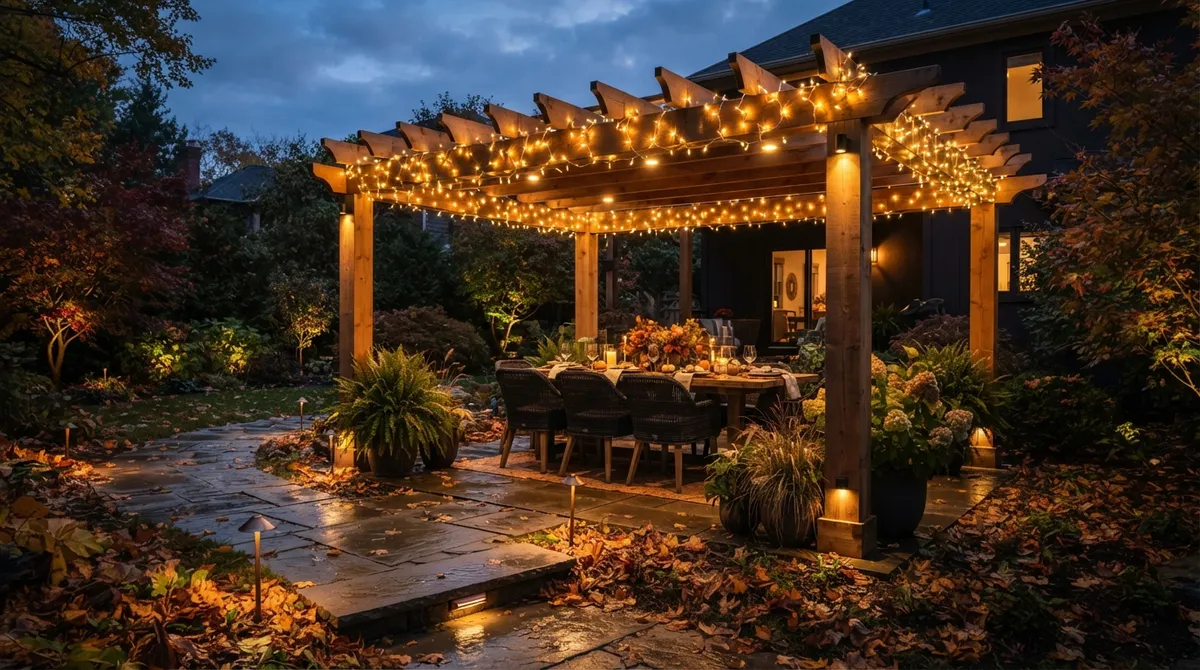
If you are also thinking about what your pavilion offers beyond winter, take a look at our pergolas and pavilions page or learn what pavilions are and how they can transform your outdoor space.
Signs Your Pavilion Roof May Be Unsafe Under Snow
Sometimes the pavilion tells you it is struggling. Do not ignore these clues, especially once snow has arrived.
- Visible sagging or bowing in the roof or beams
- New cracking sounds, popping, or creaking
- Doors, gates, or screens near the structure that suddenly stick
- New cracks in beams, posts, or connections
- Water leaking in, or ice forming along edges
- Posts that look tilted or shifted
If you see any of these, stay out from under the structure. Keep people and pets away. Then call a qualified professional right away.
Is It Safe to Remove Snow Yourself?
It is tempting to grab a shovel and clear the roof. Please pause before you do. Roof snow removal comes with real hazards, including falls, falling snow, and sudden load changes.
There is no single “safe” snow depth for every pavilion. Snow weight changes with moisture, compaction, and drifting, and every pavilion has a different capacity. Follow your structure’s documented rating and local requirements. If the rating is not available, get professional advice.
If you think the roof may be overloaded, do not climb onto it. Hire qualified professionals who use proper fall protection. If removal is needed, avoid sudden or uneven load changes and skip tools that could damage the roof surface.
Building a Simple Fall-to-Winter Routine
The best approach is a gentle, repeating routine. A little attention each season goes a long way.
- Early fall: Do your full inspection and take baseline photos.
- Late fall: Clear leaves and recheck gutters after the trees drop their foliage.
- During winter: Check drainage features regularly from the ground and watch for ice buildup.
- After major storms: Look for sagging, leaks, or new damage.
- Spring: Inspect again and note any wear for repairs.
This rhythm fits nicely into a larger seasonal plan. For property managers, our commercial lawn maintenance services can help keep fall tasks on schedule. If you want to see how a full year of care fits together, explore what property maintenance really includes in 2026.
Helpful Resources for Chicago-Area Owners
Learning from trusted organizations never hurts. The Landscape Illinois association offers industry information for our region. If your pavilion sits on a paver base, the ICPI Certified Installer program is a good place to learn about quality hardscape work. For snow-load planning, the Federal Emergency Management Agency offers its Snow Load Safety Guide as a free resource.
Ready for Winter? Let Us Help
A pavilion roof inspection before snowfall does not have to feel overwhelming. Start with your snow-load rating, look over the roof and structure, clear debris, check your drains, and call a structural engineer if anything feels uncertain. These small steps protect your pavilion and the people who enjoy it.
At Serenity Landscape Group, we love helping Chicago-area owners keep their outdoor spaces beautiful and ready for every season. Whether you need fall cleanup, drainage help, or ideas for your next outdoor project, we are here for you. Get a Free Estimate today, or call us at (630) 359-5139 to talk with our friendly team.
FAQs
Q: What should I check on a pavilion roof before winter snow arrives?
A: Start with the roof surface, fasteners, posts, beams, and footings. Look for sagging, cracks, rust, rot, and signs of water getting in. Then clear leaves and make sure gutters and downspouts drain freely.
Q: How do I find out how much snow load my pavilion roof can support?
A: Check your approved building plans or permit paperwork first. If you cannot find them, ask your local building department. If the rating is still unknown, a licensed structural engineer can help you figure it out.
Q: Can a landscaping company inspect a pavilion for snow damage or structural safety?
A: A landscaping team can do a visual check, clear debris, take photos, and report concerns. We cannot certify structural capacity. For that, you will want a licensed structural engineer.
Q: Is it safe to remove snow from a pavilion roof myself?
A: It can be risky. Climbing onto a snowy roof raises the chance of falls, and sudden or uneven load changes can stress the structure. If you think the roof may be overloaded, stay off it and hire qualified professionals with proper fall protection.
Q: When should I hire a structural engineer to inspect a pavilion?
A: Call one if you see sagging, cracked beams, shifting posts, heavy corrosion, or signs of water damage. You should also call one if you do not know the design snow-load rating. It is always smart to ask for help when you are unsure.