Key Takeaways
-
Proper artificial turf installation requires a 2-4 inch compacted aggregate base with careful grading and drainage—skipping this foundation leads to pooling, odors, and turf damage.
-
Chicago’s clay-heavy soil requires special attention to drainage; install a gentle 1-2% slope to direct water away and prevent soggy conditions after heavy rainfall.
-
Professional installation costs $6.50-$15.00 per square foot ($10.75 average) plus $0.50-$2.00 per square foot for infill; get a written estimate for your specific property rather than relying on national averages.
-
Eight critical installation steps—from site preparation through fiber brushing—cannot be skipped; mistakes in the base layer are expensive to fix once turf is installed.
-
Quality artificial turf lasts over a decade with proper installation and routine maintenance (debris removal, occasional rinsing, infill redistribution), making professional installation a worthwhile investment.
-
Choose infill type based on your needs: silica sand for budget-friendly support, zeolite for pet odor control, or cork for comfort underfoot.
Tired of muddy patches, brown spots, and weekend mowing marathons? You’re not alone. More Chicago homeowners are discovering that fake turf installation can give them a lush, green yard without the constant upkeep. But here’s the thing: a great artificial lawn isn’t just about buying pretty green plastic and rolling it out. It takes real planning, the right base, and careful attention to detail.
At Serenity Landscape Group, we’ve spent over two decades helping Chicagoland families and businesses create outdoor spaces they actually love. We’ve seen firsthand what makes fake turf installation succeed—and what causes headaches down the road. In this guide, we’ll walk you through exactly what goes into a proper installation, what it costs, and how to keep your new lawn looking fabulous for years to come. Let’s dig in (pun intended).
What Is Fake Turf Installation, Really?
Fake turf, also called synthetic or artificial grass, is a manufactured surface made to look and feel like real grass. But here’s what surprises a lot of folks: you can’t just unroll it over your existing lawn and call it a day. Proper installation means building a stable, well-drained foundation first.
Think of it like building a house. You wouldn’t skip the foundation, right? The same logic applies here. Your turf is only as good as what’s underneath it. This is exactly why professional artificial turf installation involves so much more than meets the eye.
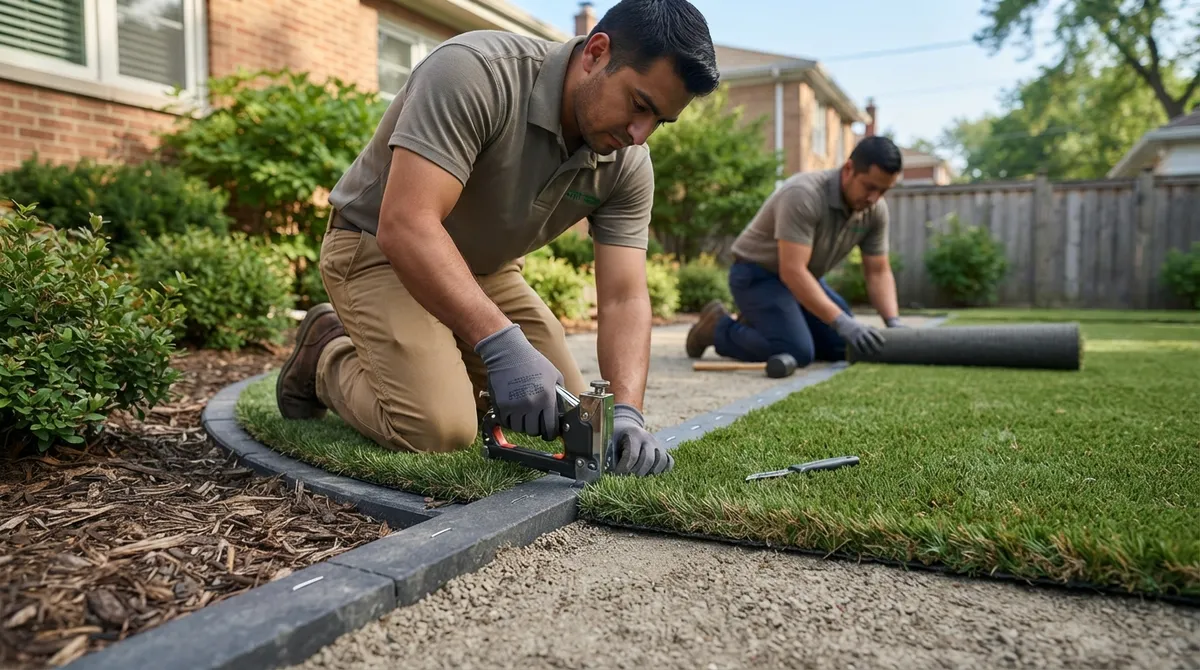
The Step-by-Step Installation Process
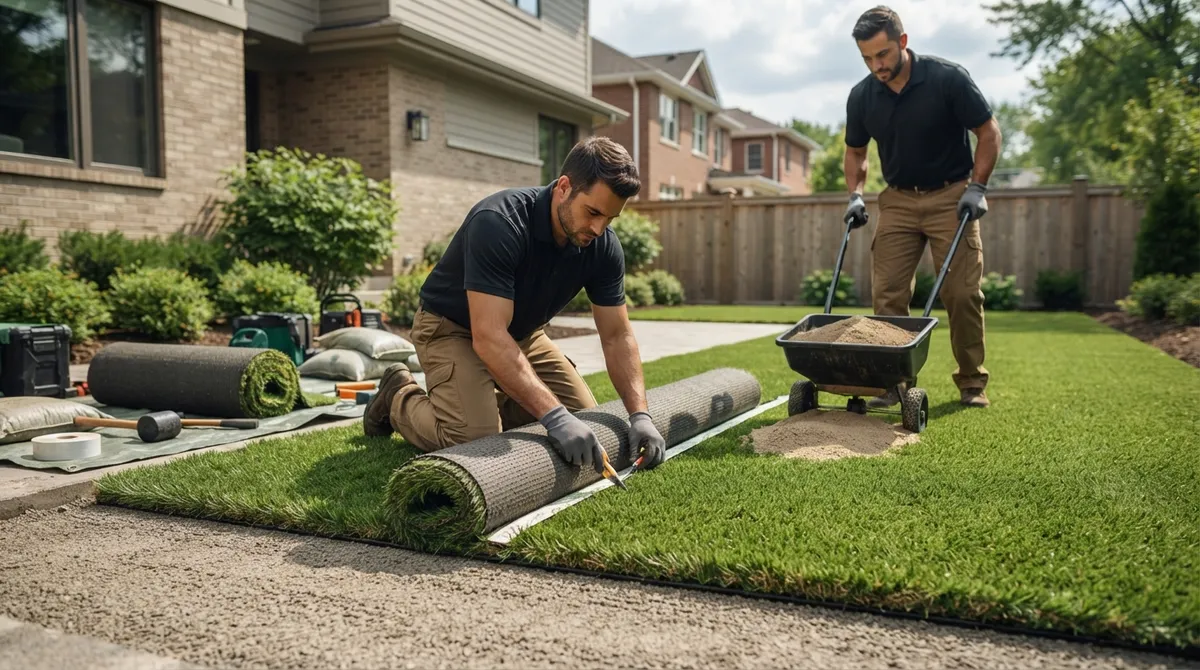
Every good project follows a clear process. Here’s what a typical fake turf installation looks like from start to finish:
- Measure and plan the layout. This step determines how much turf you need and where seams will fall.
- Remove the old sod and debris. Your installer clears away grass, roots, rocks, and anything else in the way.
- Grade and compact the subgrade. The soil underneath gets shaped and packed down firmly.
- Add a free-draining aggregate base. This layer helps water flow through instead of pooling.
- Fit and seam the turf pieces. Panels are laid out with fibers facing the same direction, then joined carefully.
- Secure the edges. Anchoring stops the turf from shifting, wrinkling, or lifting over time.
- Apply infill. This material gets brushed into the fibers to help them stand up and stay weighted down.
- Brush the fibers upright. A final grooming step gives your lawn that fresh, natural look.
Skipping any of these steps can lead to problems later—like drainage issues, visible seams, or turf that just doesn’t look right. This is why so many homeowners turn to professionals rather than tackling it themselves. If you want to see what a properly finished project looks like, check out our gallery of our work for inspiration.
Why the Base Matters More Than the Turf Itself
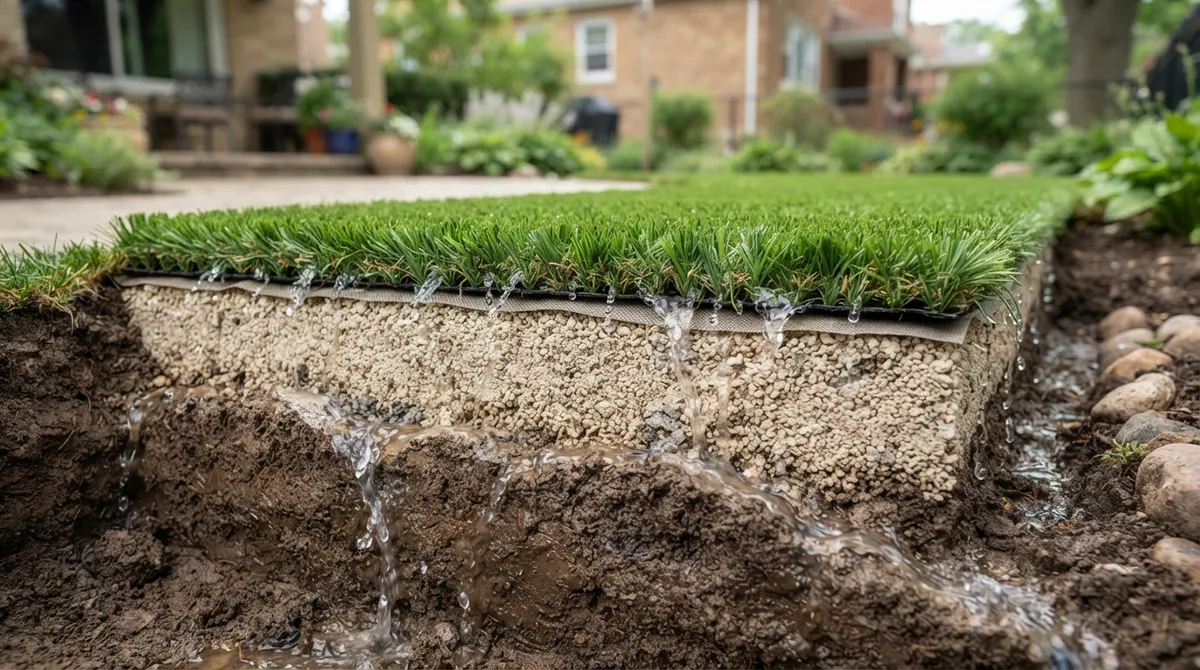
Here’s a secret many people don’t realize: the base underneath your turf is the real MVP of the whole project. Installation guides typically call for about 2 to 4 inches of compacted aggregate, though the exact depth depends on your soil type, climate, and how the space will be used.
Chicago’s clay-heavy soil can be tricky. It doesn’t drain well on its own, which means extra care is needed to prevent water from pooling under your new lawn. Poor drainage can lead to puddling, odors, and even damage to the turf over time. That’s why our team pays close attention to turf drainage systems during every project we take on.
Getting the Slope Right
Water needs somewhere to go. A gentle slope, often around 1 to 2 percent grade, helps direct water away from your yard toward an appropriate outlet. Without this slope, even the best turf can end up sitting in soggy conditions after a Chicago downpour.
How Much Does Fake Turf Installation Cost?
This is probably the question on your mind right now, and it’s a fair one. Pricing varies quite a bit depending on turf quality, site conditions, and project size. According to a 2025 U.S. cost guide from Ergeon, installed artificial grass typically runs between $6.50 and $15.00 per square foot, with a national average landing around $10.75 per square foot.
Infill adds extra cost too, usually somewhere between $0.50 and $2.00 per square foot. Here’s a quick breakdown to help you understand where your money goes:
| Cost Factor | Typical Range | What Affects It |
|---|---|---|
| Turf material | $2.00–$6.00 per sq ft | Pile height, fiber quality, brand |
| Base and excavation | $2.00–$5.00 per sq ft | Soil type, drainage needs, access |
| Infill | $0.50–$2.00 per sq ft | Infill type, intended use (pets, play, etc.) |
| Labor and seaming | Varies by project size | Yard shape, number of seams, site access |
Because so many variables affect the final price, it’s smart to get a written estimate specific to your property rather than relying on a single national number. Our team is happy to walk your property and give you a clear, honest quote. Get a free estimate today to see what your project might cost.
Can You Install Fake Turf Over Concrete or an Existing Lawn?
Great question! The short answer is: it depends, but it’s rarely a simple rollout job. Over concrete, you’ll usually need a shock pad or drainage layer to keep the surface comfortable and prevent water from sitting on top. Over an existing lawn, the grass and roots need to be removed first, then the soil graded and a proper base installed.
Skipping these steps might save time upfront, but it often leads to lumpy surfaces, poor drainage, and a shorter lifespan for your turf. If you’re considering a rooftop or patio space, our guide on rooftop artificial turf covers some unique considerations for those settings.
Choosing the Right Infill for Your Space
Infill isn’t just filler—it plays a real role in how your turf performs. It helps the fibers stand upright, adds weight to keep the turf in place, and can even help with odor control if you have pets. Here are a few common infill types to consider:
- Silica sand: A budget-friendly option that adds weight and support.
- Zeolite: Helps absorb odors, great for households with dogs.
- Antimicrobial infill: Designed to reduce bacteria growth, popular for pet areas and play spaces.
- Cork or organic infill: A cooler-to-the-touch option that’s gentle on bare feet.
Always follow the manufacturer’s recommendation for infill type and application rate. Our team has put together a helpful resource on infill types for artificial grass if you want to dig deeper into this topic.
Keeping Your Fake Turf Looking Great
Here’s some good news: fake turf installation dramatically cuts down on mowing, watering, and fertilizing. But it’s not entirely maintenance-free. A little regular care goes a long way toward keeping your lawn looking its best for years.
Here’s what routine maintenance usually involves:
- Removing leaves, sticks, and other debris regularly
- Rinsing the surface occasionally to keep it fresh
- Cleaning up pet waste promptly to avoid odors
- Brushing fibers that have been flattened by foot traffic or furniture
- Redistributing infill as needed over time
If you have pets, check out our tips on cleaning artificial turf from pet waste to keep your yard smelling fresh all year.
How Long Does Fake Turf Actually Last?
With proper installation and reasonable care, quality artificial turf can last well over a decade. Factors like sun exposure, foot traffic, and Chicago’s harsh winters all play a role in lifespan. Choosing a professional installer who understands local climate challenges makes a real difference here.
Our detailed breakdown on artificial turf lifespan in Chicago covers what you can realistically expect based on our decades of local experience.
Why Hire a Professional Instead of Going DIY?
We get it—DIY projects can be fun and rewarding. But fake turf installation involves heavy equipment, precise grading, and knowledge of local soil conditions that can be tough to master on a weekend project. Mistakes in the base layer are expensive to fix once the turf is down.
Professional installers, like our team at Serenity Landscape Group, bring the tools, experience, and attention to detail that DIY often can’t match. We’re proud members of organizations like Landscape Illinois, and we follow best practices established by groups such as the ICPI Certified Installer program for hardscape and turf-related work. This commitment to industry standards helps us deliver results that last.
Want to compare the pros and cons yourself? Our article on professional turf installation versus DIY breaks it all down in plain language.
Fake Turf for Every Type of Chicago Property
Whether you’re a suburban homeowner dealing with clay soil, a condo owner with a tiny balcony, or a property manager overseeing a commercial space, fake turf installation can be customized to fit your needs. Here’s a quick look at how different properties benefit:
| Property Type | Common Benefit |
|---|---|
| Suburban homes | Consistent green lawn despite clay soil and HOA standards |
| Urban condos and rooftops | Low-maintenance green space in small or elevated areas |
| Commercial properties | Reduced maintenance costs and improved curb appeal |
| New home developments | Turnkey outdoor features that appeal to buyers |
| Local businesses | Attractive, pedestrian-friendly landscaping |
No matter your property type, pairing turf with other softscapes or pavers can create a cohesive, polished look that boosts both function and beauty.
Ready to Transform Your Outdoor Space?
Fake turf installation is one of the smartest ways to get a beautiful, low-maintenance lawn that holds up through Chicago’s unpredictable weather. From proper grading and drainage to choosing the right infill, every detail matters for a lawn that looks great and lasts for years.
At Serenity Landscape Group, we’ve spent over 20 years perfecting our process so you don’t have to worry about the details. We handle everything from design to installation to ongoing care, so your new lawn stays gorgeous season after season. Ready to see what’s possible for your yard? Request your free estimate today, or give us a call at (630) 359-5139 to start the conversation. We can’t wait to help you fall in love with your outdoor space all over again.
FAQs
Q: How much does fake turf installation cost per square foot?
A: Great question! Based on 2025 industry data, installed artificial grass typically runs between $6.50 and $15.00 per square foot, with a national average around $10.75. The final price depends on things like turf quality, base prep, and your yard’s specific layout, so a personalized estimate is always your best bet.
Q: How much base material is needed under artificial grass?
A: Most installation guides recommend about 2 to 4 inches of compacted aggregate base. The exact depth really depends on your soil type, local climate, and how you plan to use the space, so it’s worth chatting with a professional about your specific yard.
Q: Does artificial turf need drainage, and how is it installed?
A: Yes, drainage is a big deal! While turf backing lets water pass through, the ground underneath still needs proper grading to direct water where it needs to go. A gentle slope, usually around 1 to 2 percent, helps prevent puddling and keeps your lawn looking fresh.
Q: Can artificial turf be installed over concrete or an existing lawn?
A: It can, but it’s not as simple as just rolling it out! Over concrete, you’ll likely need a drainage or shock layer first. Over an existing lawn, the old grass needs to come out and a proper base needs to go in for the best long-term results.
Q: How long does artificial turf last, and what affects its lifespan?
A: With quality materials and professional installation, artificial turf can easily last a decade or more. Things like sun exposure, foot traffic, and how well it was installed all play a role, so choosing an experienced local installer really pays off.