Key Takeaways
-
Rock formation speakers offer seamless audio integration by disguising speakers as natural landscape elements, providing 360-degree sound coverage.
-
Ground-mounted speakers provide a low-profile audio solution that can be strategically placed along walkways and patios with minimal visual disruption.
-
Multi-zone distributed audio systems allow independent control of different outdoor areas, enabling customized sound experiences across large properties.
-
Wireless outdoor speakers simplify installation by eliminating cable runs, though they work best in smaller spaces or as supplementary audio solutions.
-
Camouflaged speaker enclosures like planter and tree bark designs blend high-performance audio equipment into landscape aesthetics.
-
Hospitality-grade outdoor sound systems offer robust, reliable audio solutions for large properties and commercial venues with demanding performance requirements.
-
Modular expandable speaker systems provide flexibility, allowing homeowners to start small and gradually increase audio coverage as their landscape evolves.
-
Smart home-integrated outdoor audio enables advanced features like voice control, automated scheduling, and seamless synchronization across indoor and outdoor spaces.
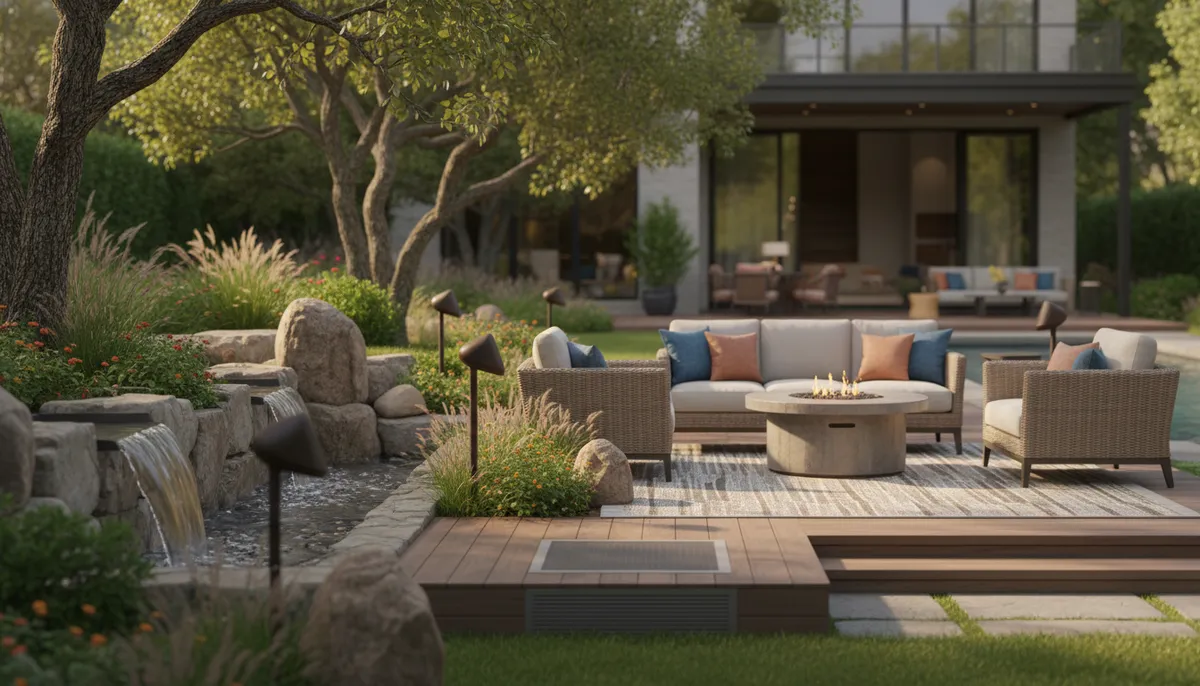
Picture this: you’re hosting a summer barbecue in your beautifully landscaped backyard, the sun is setting over your perfectly arranged pavers, and your guests are enjoying conversation around your custom fire pit. The only thing missing? A soundtrack to match the ambiance. That’s where outdoor landscape sound systems come into play, creating an immersive audio experience that elevates your outdoor living space from ordinary to extraordinary. Whether you’re looking to add background music to your patio or create a complete outdoor entertainment zone, the right sound system can make all the difference in how you and your guests experience your landscape.
At Serenity Landscape Group, we’ve seen firsthand how integrating quality outdoor audio transforms spaces throughout the greater Chicago area. After helping countless homeowners and businesses enhance their landscapes with professional lighting and sound solutions, we’ve learned what works and what doesn’t when it comes to outdoor audio. Let’s explore the best outdoor sound systems that can turn your landscape into an entertainment paradise.
Why Landscape Sound Systems Matter for Your Outdoor Space
Before we dive into specific systems, let’s talk about why outdoor sound systems have become such a popular addition to modern landscapes. Your outdoor space is an extension of your home, and just like you wouldn’t design an indoor room without considering ambiance, your outdoor areas deserve the same attention to detail.
Outdoor sound systems serve multiple purposes beyond just playing music. They create atmosphere for entertaining guests, provide audio for outdoor movie nights, offer background sounds for meditation spaces, and even enhance commercial properties by improving the customer experience. For businesses like restaurants with outdoor dining areas, the right audio setup can encourage customers to linger longer and return more often.
The key difference between indoor and outdoor audio is the challenge of sound dispersion. Outdoors, sound travels differently than in enclosed spaces—it dissipates more quickly and competes with ambient noise like traffic, wind, and neighborhood sounds. That’s why specialized landscape sound systems use weather-resistant materials and strategic speaker placement to deliver clear, balanced audio throughout your outdoor areas.
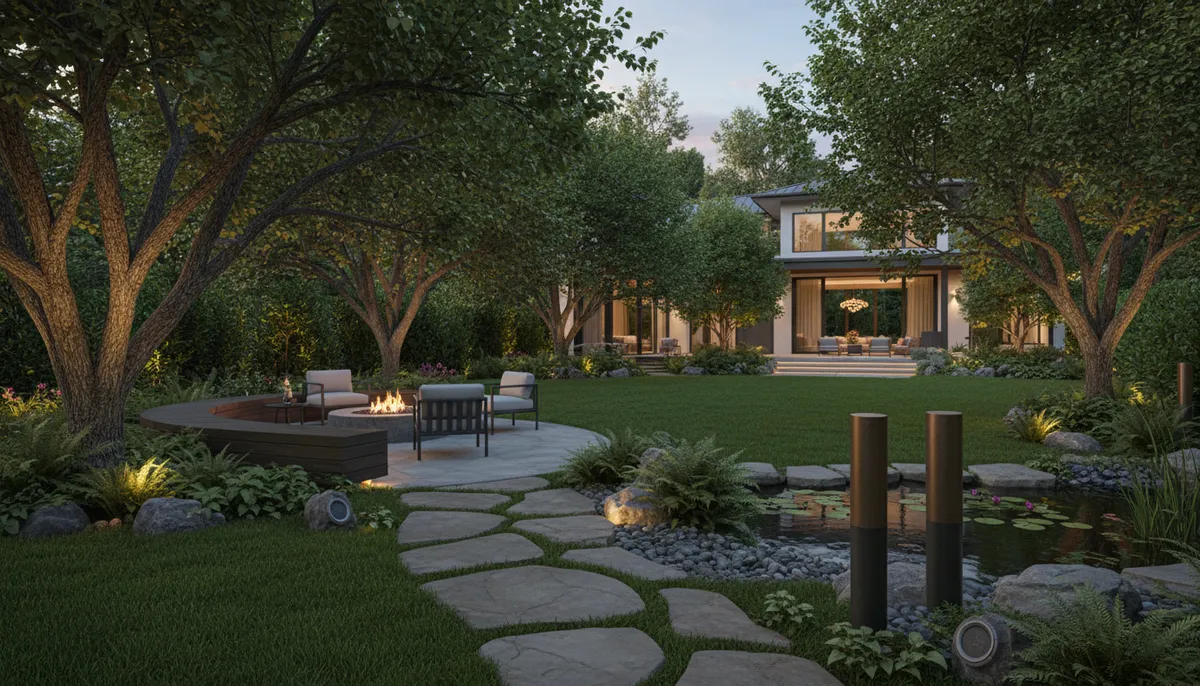
Understanding Outdoor Audio Technology
Modern landscape sound systems have come a long way from the basic outdoor speakers of the past. Today’s systems utilize advanced technology designed specifically for outdoor environments, and understanding these innovations helps you make informed decisions about your landscape audio needs.
Most professional outdoor sound systems use 70-volt distributed audio technology, which allows multiple speakers to run off a single amplifier without losing sound quality over long cable runs. This technology is particularly useful for larger properties or commercial landscapes where speakers need to be spread across wide areas.
The speakers themselves are constructed from materials that can withstand everything Chicago weather throws at them—rain, snow, temperature extremes, UV exposure, and even accidental encounters with lawn equipment. Quality landscape speakers feature enclosures made from UV-resistant polyethylene, fiberglass-reinforced ABS, or similar durable materials that won’t crack, fade, or deteriorate over multiple seasons.
1. Rock Formation Speaker Systems
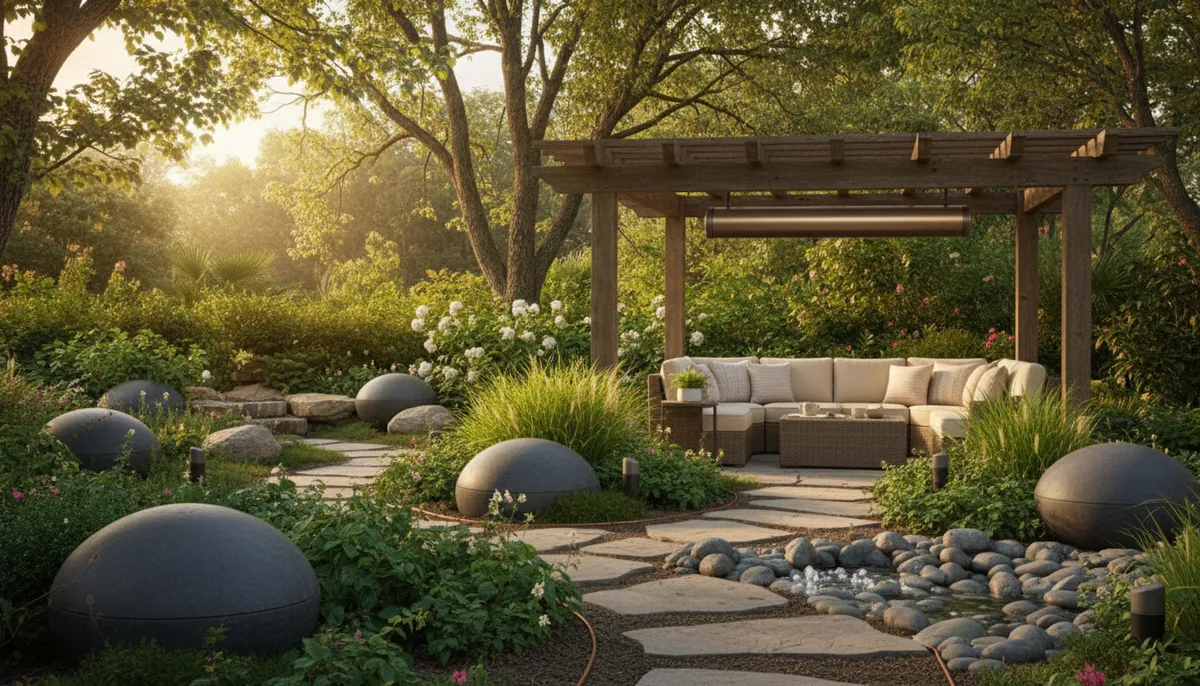
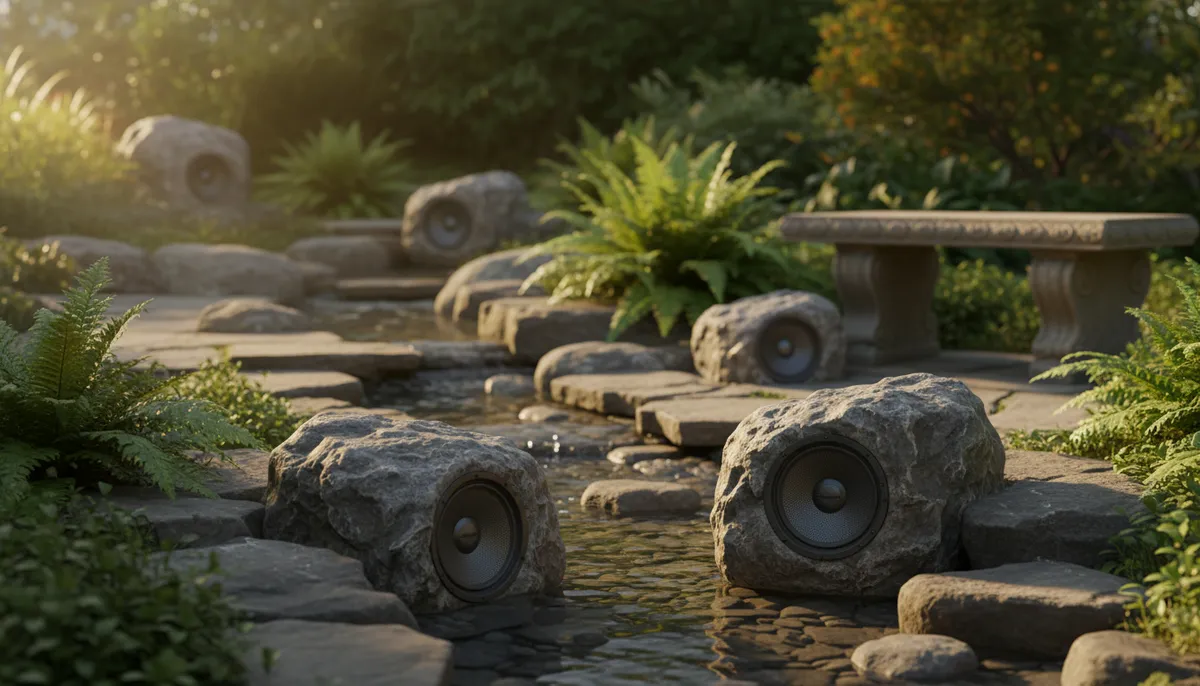
Rock formation speakers are the chameleons of landscape audio. These clever devices look exactly like natural stones or boulders, blending seamlessly into gardens, flower beds, and rock gardens without disrupting your carefully designed landscape aesthetic. They’re perfect for homeowners who want high-quality sound without visible technology cluttering their outdoor views.
These speakers come in various sizes, from small accent rocks that fit into tight spaces to larger boulder designs that can deliver more powerful bass response. Most rock speakers offer 360-degree sound projection, meaning audio radiates evenly in all directions, creating consistent coverage throughout your outdoor area. This makes them ideal for placement near fire pits or gathering spaces where guests might be seated in multiple directions.
Installation is straightforward—rock speakers can be placed on the ground among existing landscaping or partially buried for an even more natural appearance. They typically handle between 50 to 100 watts of power, providing plenty of volume for most residential applications without overwhelming your space.
Key Features of Rock Formation Systems
- Realistic stone textures and colors that match natural landscaping elements
- Weather-resistant construction that withstands freezing temperatures and moisture
- 360-degree sound dispersion for even coverage
- Available in multiple sizes to accommodate different landscape designs
- Low-profile design that doesn’t obstruct views or landscape features
2. Ground-Mounted Landscape Speakers
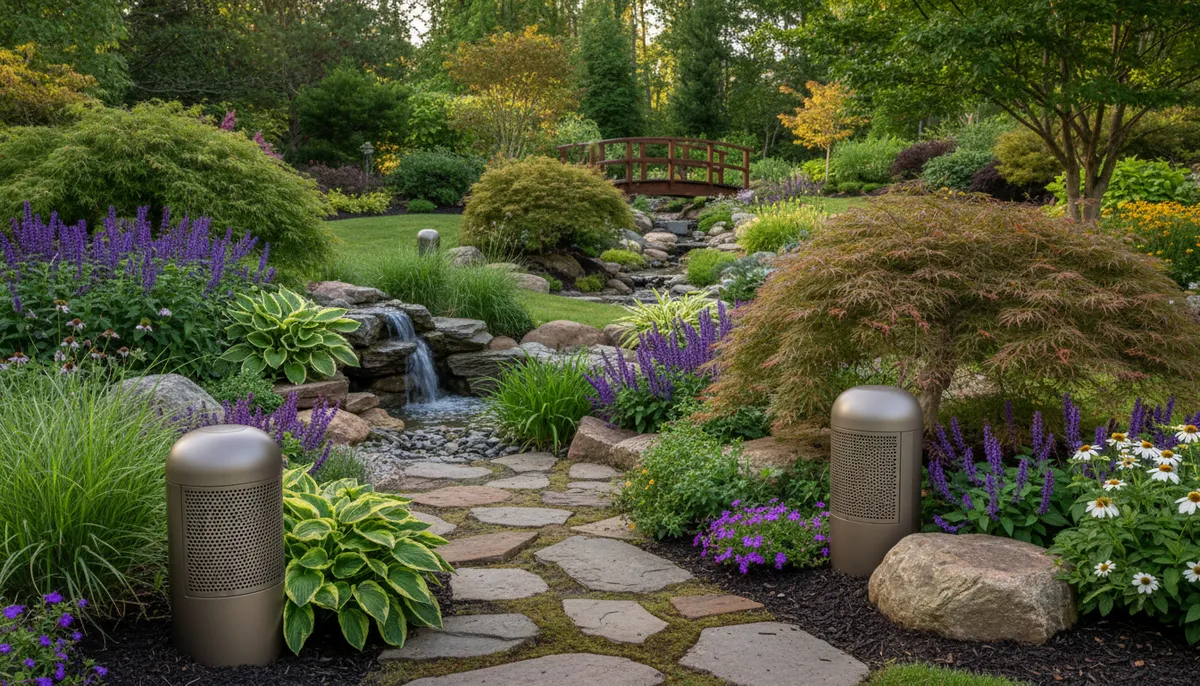
Ground-mounted speakers take discretion to the next level. These slim, low-profile units are designed to sit flush with the ground or slightly above it, making them nearly invisible in your landscape. They’re especially popular in contemporary landscape designs where clean lines and minimal visual clutter are priorities.
What makes ground-mounted speakers particularly appealing is their versatility. They can be placed along walkways to create an audio path, positioned around paver patios for entertainment areas, or distributed throughout gardens to provide ambient sound without visible speakers. Many models feature directional capabilities, allowing you to aim sound toward specific areas rather than broadcasting in all directions.
These speakers are built tough—they need to withstand not just weather but also foot traffic, lawn mowers, and other outdoor activities. Quality models feature heavy-duty grilles and reinforced housings that protect internal components while maintaining acoustic performance. Power handling typically ranges from 50 to 150 watts, depending on the model and intended application.
Advantages for Different Property Types
| Property Type | Best Application | Coverage Area |
|---|---|---|
| Residential Yards | Patio and garden areas | 15-25 feet per speaker |
| Commercial Properties | Outdoor dining and lounges | 20-30 feet per speaker |
| Urban Spaces | Rooftop terraces and small courtyards | 10-20 feet per speaker |
| Large Estates | Distributed throughout property | Multiple zones with 25+ feet coverage |
3. Multi-Zone Distributed Audio Systems
For properties with multiple outdoor areas—think front yard, backyard, pool area, and patio—multi-zone systems offer the ultimate flexibility. These comprehensive systems allow you to control different audio zones independently, playing different music in different areas or broadcasting the same audio throughout your entire property.
Multi-zone systems typically include a central amplifier or controller, multiple weather-resistant speakers, and control interfaces that can be wall-mounted, handheld, or smartphone-based. The beauty of these systems is scalability—you can start with two zones and expand up to eight or more zones as your needs grow or your landscape evolves.
Professional installation is usually recommended for multi-zone systems because they require careful planning of speaker placement, cable routing, and amplifier sizing to ensure optimal performance. However, once installed, these systems provide years of reliable service and can significantly increase your property value. According to Landscape Illinois, well-designed outdoor entertainment features like sound systems can boost property appeal by creating true outdoor living spaces.
Planning Your Multi-Zone System
- Identify distinct outdoor areas that would benefit from independent audio control
- Determine the primary use for each zone (entertaining, relaxation, background ambiance)
- Calculate the square footage of each zone to determine speaker quantity and power needs
- Consider how zones might be used together for large gatherings versus separately for daily use
- Plan cable routing during landscape installation to minimize visible wires and future disruption
- Choose a control system that matches your technical comfort level and lifestyle
4. Wireless Outdoor Speaker Systems
Wireless technology has revolutionized outdoor audio by eliminating the need for extensive cable runs between audio sources and speakers. Modern wireless outdoor speakers connect via Bluetooth or Wi-Fi, allowing you to stream music directly from smartphones, tablets, or home audio systems without physical connections.
These systems are particularly appealing for homeowners who want to add audio to existing landscapes without digging trenches for speaker cables. While speakers still need power (either through electrical outlets or rechargeable batteries), the absence of audio cables simplifies installation significantly.
However, wireless systems do have limitations. Range can be an issue for larger properties, and wireless signals may be affected by obstacles like walls or dense landscaping. Battery-powered wireless speakers require regular recharging, which may not be practical for permanent installations. For these reasons, wireless systems work best for smaller outdoor areas or as supplements to wired systems rather than complete replacements.
5. Camouflaged Speaker Enclosures
Camouflaged speakers take concealment beyond rock designs to include planters, tree bark textures, and other natural-looking enclosures that disappear into your landscape. These innovative designs allow you to place high-quality audio equipment exactly where you need it without compromising your landscape’s visual appeal.
Planter speakers are particularly clever—they function as both working planters for flowers or small plants and high-performance audio devices. The planter design provides acoustic benefits by helping to direct sound while the plants add to the natural disguise. Tree bark speakers can be mounted on existing trees or structures like pergolas and pavilions, blending seamlessly with wooden elements in your landscape.
These camouflaged options often feature the same weather-resistant construction and power handling capabilities as more traditional landscape speakers, proving that you don’t have to sacrifice performance for aesthetics. Many homeowners and businesses appreciate that guests never realize speakers are present until the music starts playing.
6. Hospitality-Grade Outdoor Sound Systems
Hospitality-grade systems are the workhorses of commercial outdoor audio. These robust systems are designed for continuous operation in demanding environments like restaurants, hotels, resorts, and event venues. While they’re built for commercial use, many homeowners who entertain frequently or maintain large properties choose hospitality-grade equipment for its reliability and performance.
What sets hospitality systems apart is their construction quality and power capabilities. These systems typically include commercial-grade amplifiers that can power dozens of speakers simultaneously, professional speaker models built to withstand constant use, and sophisticated control systems that allow staff to manage audio throughout large properties from central locations.
The investment in hospitality-grade equipment pays off through longevity and minimal maintenance requirements. These systems are engineered to operate year-round in all weather conditions, with components that are easily serviceable when needed. For businesses, reliable outdoor audio is essential for maintaining customer experience consistency, making hospitality-grade systems a smart long-term investment.
When to Choose Hospitality-Grade Equipment
- Properties larger than one acre requiring extensive speaker coverage
- Commercial venues with daily audio needs
- Locations where audio quality directly impacts customer satisfaction
- Applications requiring simultaneous operation of 10 or more speakers
- Environments with high ambient noise levels that demand powerful audio output
- Situations where system failure would significantly impact business operations
7. Modular Expandable Speaker Systems
Modular systems offer a grow-as-you-go approach to outdoor audio that’s perfect for homeowners who want to start small and expand over time. These systems are designed from the ground up for scalability, allowing you to begin with a basic two-speaker setup and eventually expand to eight or more speakers as your landscape evolves or your budget allows.
The key advantage of modular systems is compatibility—speakers, amplifiers, and controllers from the same product line work together seamlessly, eliminating the guesswork and compatibility issues that can arise when mixing components from different manufacturers. Many modular systems are also compatible with conventional home audio receivers and lower-power distributed audio amplifiers, giving you flexibility in how you power and control your outdoor audio.
These systems typically include expansion kits that provide additional speakers and necessary hardware for adding new zones or increasing coverage in existing zones. Installation is straightforward enough for DIY-minded homeowners, though professional installation ensures optimal performance and protects your investment.
8. Smart Home-Integrated Outdoor Audio
Smart home integration has transformed how we control outdoor audio systems. Modern landscape sound systems can connect to popular smart home platforms, allowing you to control your outdoor audio through voice commands, smartphone apps, or automated schedules that match your lifestyle.
Imagine your outdoor speakers automatically starting soft background music when you open your patio door, or voice-commanding your system to play party music when guests arrive. Smart integration also enables sophisticated automation like having different music play at different times of day, adjusting volume based on time to respect neighbors during evening hours, or coordinating audio with outdoor lighting systems for complete ambiance control.
These systems typically connect through Wi-Fi networks and work with platforms like Amazon Alexa, Google Home, or Apple HomeKit. Some models also support integration with whole-home audio systems, allowing you to extend indoor audio outdoors or create unified audio experiences throughout your entire property.
Popular Smart Integration Features
- Voice control for hands-free operation while cooking, entertaining, or working in the garden
- Scheduling capabilities that automatically start and stop audio at predetermined times
- Multi-room audio synchronization that keeps music in sync across indoor and outdoor zones
- Geofencing that triggers audio when you arrive home or turns it off when you leave
- Volume limiting to prevent disturbing neighbors during quiet hours
- Integration with weather sensors that adjust audio based on conditions
- Party modes that optimize settings for entertaining and easily accessible volume control for guests
9. Directional Outdoor Speaker Arrays
Directional speakers solve a common outdoor audio challenge: delivering clear sound to specific areas without broadcasting to your entire neighborhood. These specialized speakers use focused audio projection to direct sound toward intended listening areas while minimizing sound spillage to adjacent properties.
This technology is particularly valuable for urban properties with close neighbors or commercial spaces where audio needs to be contained within property boundaries. Directional speakers are also excellent for creating distinct audio zones within larger properties—you can have music playing in your entertainment area without it overwhelming your quiet meditation garden just 30 feet away.
The acoustic engineering behind directional speakers involves carefully designed speaker arrays and enclosures that focus sound waves in specific directions. While they typically cost more than omnidirectional speakers, the ability to control where your audio goes is worth the investment for many property owners.
10. Weather-Resistant Premium Audio Systems
At the top of the outdoor audio spectrum are premium systems that deliver audiophile-quality sound in weather-resistant packages. These high-end systems feature advanced acoustic engineering, premium drivers and tweeters, and sophisticated crossover networks that produce clear, balanced audio across the entire frequency spectrum.
Premium systems excel at reproducing music with accuracy and clarity, making them ideal for homeowners and businesses that refuse to compromise on audio quality just because they’re outdoors. These systems typically include high-power handling capabilities (often 150-200 watts or more per speaker), enhanced bass response that compensates for outdoor sound dissipation, and precision-engineered enclosures that protect components while optimizing acoustic performance.
While premium systems require larger investments upfront, they deliver superior sound quality, longer lifespan, and better resistance to harsh weather conditions than budget alternatives. For those who view their outdoor space as an extension of their home and want the best possible audio experience, premium systems are the clear choice.
Choosing the Right System for Your Chicago Landscape
Selecting the perfect outdoor sound system for your property depends on several factors unique to your situation and the Chicago climate. First, consider the size of your outdoor space—smaller patios and courtyards need fewer speakers with less power, while sprawling suburban yards require distributed systems with multiple speakers to provide consistent coverage.
Your intended use matters too. Background music for quiet evenings requires different equipment than hosting outdoor parties or events. If you’re a business owner, think about how audio fits into your customer experience strategy and whether you need capabilities like background music mixing with paging announcements.
Budget is always a consideration, but remember that outdoor audio is a long-term investment. Quality systems from reputable manufacturers will serve you reliably for many years, while budget systems may require replacement after just a few Chicago winters. It’s usually better to start with a smaller, high-quality system that you can expand later than to invest in a large, low-quality system that disappoints from day one.
Key Decision Factors
| Factor | Considerations | Impact on System Choice |
|---|---|---|
| Property Size | Square footage of outdoor areas | Determines speaker quantity and power needs |
| Budget | Initial investment and expansion plans | Influences equipment grade and scalability options |
| Aesthetic Preferences | Visible vs. hidden speakers | Guides speaker style selection (rock, ground-mount, camouflaged) |
| Technical Comfort | DIY vs. professional installation | Affects system complexity and control interface choices |
| Primary Use | Background vs. entertainment audio | Determines required sound quality and power levels |
Installation Considerations for Outdoor Audio
Proper installation is crucial for outdoor sound system performance and longevity. Even the best speakers will underperform if they’re poorly positioned or installed incorrectly. Speaker placement should consider both acoustic coverage and landscape aesthetics—you want even sound distribution without creating visual clutter or obstructing important landscape features like retaining walls or softscape elements.
Cable routing requires careful planning, especially for wired systems. Burying speaker cables protects them from weather and lawn equipment damage while keeping your landscape looking clean and professional. Cables should be rated for direct burial and run through conduit where they’ll cross driveways or high-traffic areas. According to the Masonry and Hardscapes Association, coordinating utility and audio cable installation during initial landscape construction saves time and prevents damage to finished landscapes.
Power requirements vary by system, but all outdoor audio equipment needs reliable electrical supply. Outdoor-rated outlets and proper weatherproof enclosures for amplifiers and controllers are essential for safety and performance. Many homeowners choose to install outdoor audio systems during comprehensive landscape projects, allowing electricians and landscape professionals to coordinate their work efficiently.
Maintaining Your Outdoor Sound System
Quality outdoor sound systems require minimal maintenance, but a few simple practices will keep your system performing optimally for years. Regular cleaning of speaker grilles prevents dirt and debris buildup that can affect sound quality. Use a soft brush or compressed air to remove leaves, spider webs, and other outdoor debris from speaker openings.
In Chicago’s climate, seasonal care makes a difference. Before winter, inspect all speaker connections and seals to ensure water can’t infiltrate components during freeze-thaw cycles. While quality outdoor speakers are designed to withstand freezing, ensuring proper drainage prevents ice buildup that could damage internal components. Some homeowners choose to cover or remove portable speakers during the harshest winter months, though properly installed permanent systems can operate year-round.
Amplifiers and control equipment should be installed in protected locations—ideally in weatherproof enclosures or covered areas where they’re shielded from direct rain and snow. Check these components periodically to ensure ventilation openings aren’t blocked and connections remain secure and corrosion-free.
Bringing It All Together
Outdoor sound systems have evolved from simple speakers to sophisticated audio solutions that enhance every aspect of outdoor living. Whether you’re drawn to discreet rock speakers that blend into your garden, powerful multi-zone systems that serve your entire property, or smart-integrated solutions that respond to your voice, there’s an outdoor audio system that perfectly matches your needs and landscape design.
The key to success is choosing equipment designed specifically for outdoor use, planning installation carefully to optimize both performance and aesthetics, and working with experienced professionals who understand how outdoor audio integrates with comprehensive landscape design. When done right, outdoor sound systems create ambiance, enhance entertainment, and transform your outdoor spaces into environments you’ll enjoy spending time in throughout every season.
At Serenity Landscape Group, we’ve helped countless Chicago-area homeowners and businesses integrate professional audio solutions into their landscapes, creating outdoor spaces that look beautiful and sound amazing. If you’re ready to explore how outdoor sound systems can transform your landscape into an entertainment paradise, reach out to our team for a free estimate. We’ll help you design an outdoor audio solution that complements your landscape, fits your budget, and delivers the perfect soundtrack for your outdoor living experience.
FAQs
Q: How much does a complete outdoor landscape sound system cost?
A: Costs vary widely based on property size and equipment quality. Basic systems for small patios start around $500-1,000, while comprehensive multi-zone systems for larger properties can range from $3,000-10,000 or more. Professional installation typically adds 20-40% to equipment costs. The investment pays off through years of reliable performance and increased property enjoyment.
Q: Can outdoor landscape speakers withstand Chicago winters?
A: Yes! Quality outdoor speakers are specifically designed to handle Chicago’s extreme weather, including freezing temperatures, snow, ice, and temperature swings. They’re constructed from UV-resistant, weatherproof materials like polyethylene and fiberglass-reinforced ABS that won’t crack or deteriorate. Proper installation with adequate drainage ensures speakers perform reliably year-round without requiring seasonal removal.
Q: What is the typical coverage area for landscape speakers?
A: Coverage varies by speaker type and power, but most landscape speakers effectively cover 15-30 feet radius in outdoor environments. Rock and ground-mounted speakers with 360-degree projection typically cover circular areas, while directional speakers focus sound in specific directions. For consistent audio throughout larger spaces, multiple speakers strategically placed provide the best results without dead zones or overly loud areas.
Q: Can I add outdoor speakers to my existing home audio system?
A: Many modern home audio systems can be extended outdoors with the right equipment. You’ll need outdoor-rated speakers, proper cabling, and often an additional amplifier to power outdoor zones without overloading your receiver. Smart home audio systems make integration easier through wireless connectivity. Working with professionals ensures compatibility between indoor and outdoor components for seamless operation throughout your property.
Q: How do I choose between rock speakers and ground-mounted speakers?
A: The choice depends on your landscape design and preferences. Rock speakers work beautifully in gardens, around fire pits, and in naturalistic landscapes where they blend with existing rock elements. Ground-mounted speakers suit contemporary designs, work well along pathways, and offer directional sound control. Both types deliver excellent audio quality, so your decision should be based primarily on which style complements your landscape aesthetic while providing coverage where you need it most.