Key Takeaways
-
Artificial turf fibers are made from durable polyethylene with high carbon content that flexes under snow weight and springs back to original shape, unlike natural grass that dies under pressure.
-
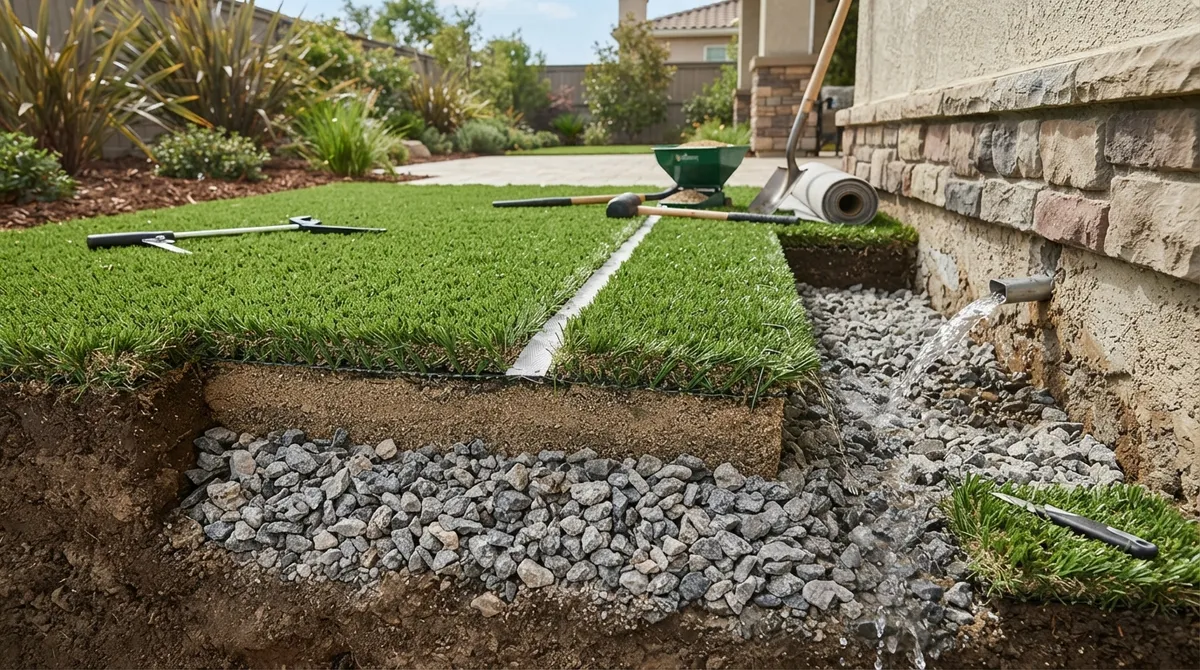
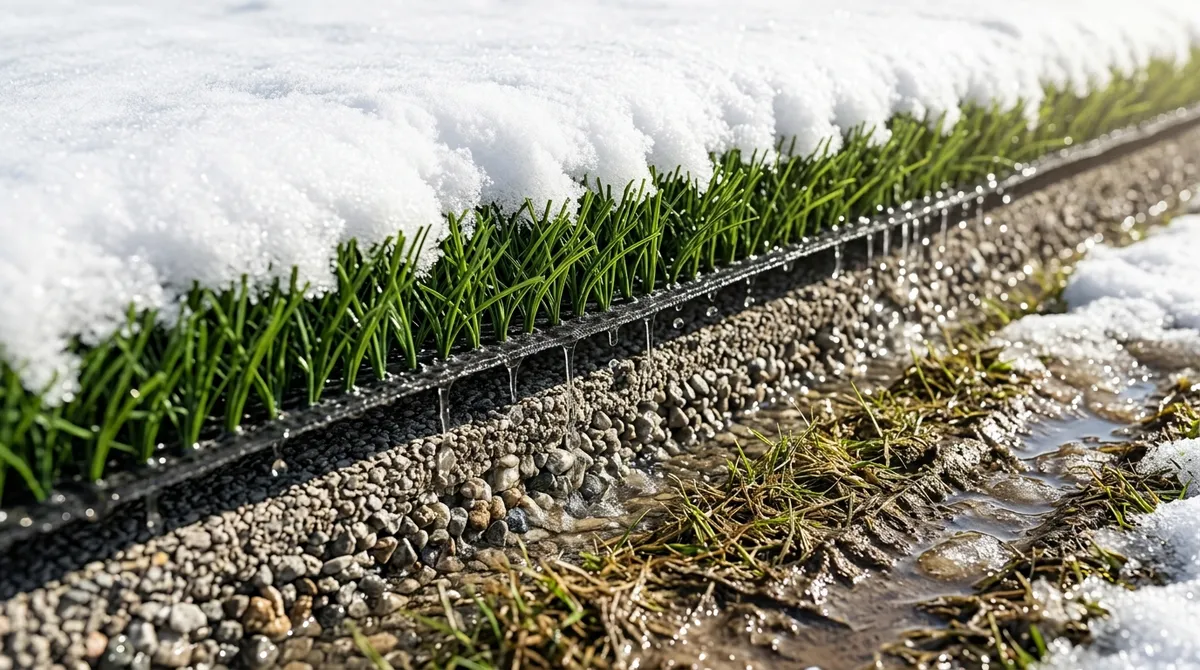
Advanced drainage systems with perforated backing allow melted snow to drain efficiently at 30+ inches per hour per square yard, eliminating mud and standing water that damages natural lawns.
-
High-quality artificial turf lasts 15-25 years in harsh Chicago winters with proper installation and basic care, compared to natural grass requiring weeks or months of recovery after snowmelt.
-
Use only plastic shovels for snow removal and avoid metal tools, salt-based de-icers, and snow blowers to prevent fiber damage; let light snow melt naturally through the turf’s drainage system.
-
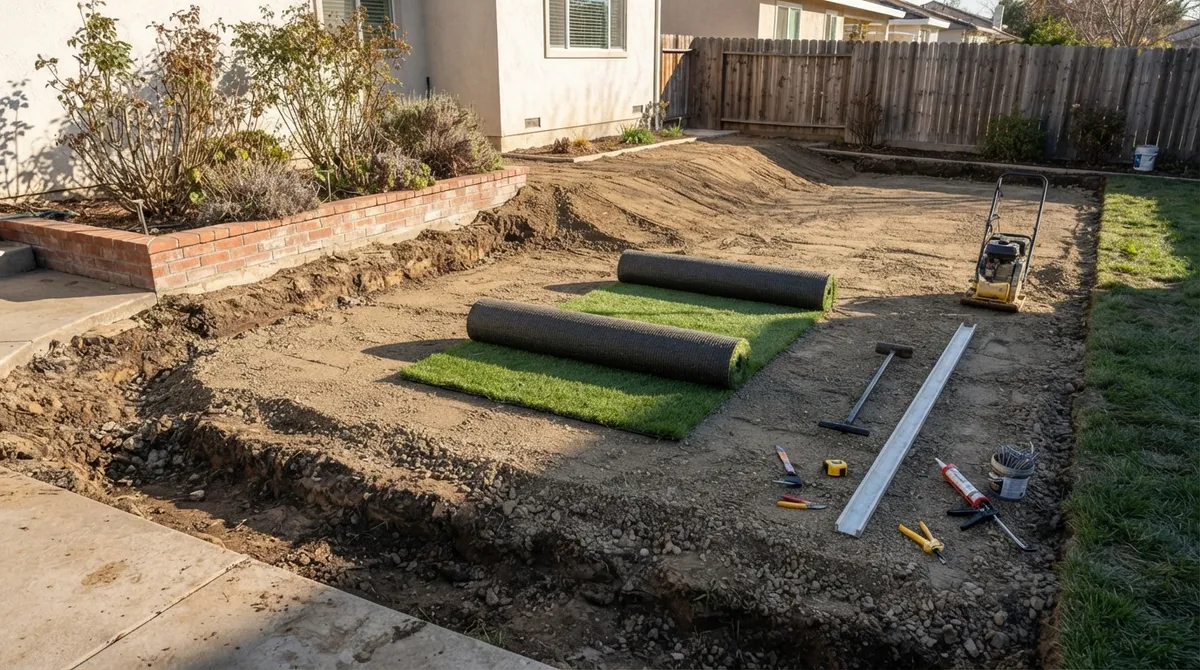
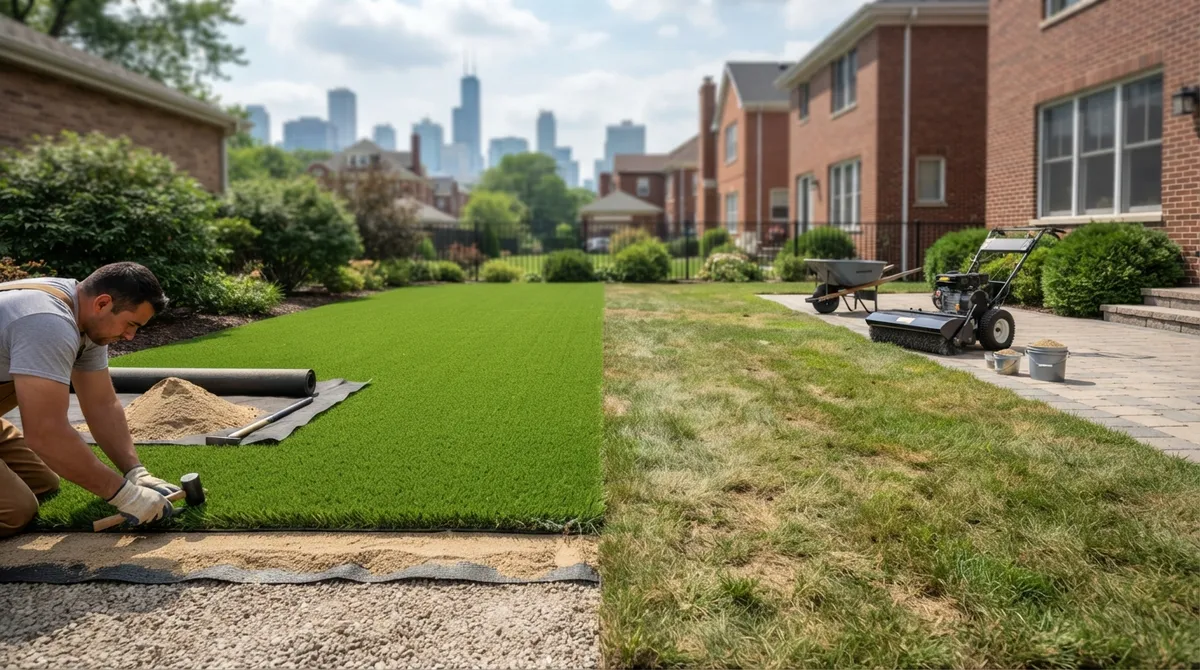
Professional installation with a crushed aggregate base layer is essential for stability and drainage during freeze-thaw cycles common in Chicago winters and ensures the turf won’t shift or separate.
-
Artificial turf requires minimal winter maintenance compared to natural grass, which needs overseeding, aeration, and repairs, making it a cost-effective long-term investment for homeowners and commercial properties.
If you live in the Chicago area, you know winters can be brutal. Heavy snowfall, freezing temperatures, and endless freeze-thaw cycles can wreak havoc on your lawn. But what if your yard could look great all year long — even under a foot of snow? That’s exactly the promise of artificial turf, and it delivers. Whether you’re a suburban homeowner tired of muddy, dead grass each spring, or a commercial property manager who needs a low-maintenance outdoor space, understanding how artificial turf handles heavy snow can help you make a smarter landscaping decision. Let’s walk through everything you need to know — from the materials that make it work to the simple care steps that keep it looking great after every snowstorm.
Why Snow Is Tough on Natural Grass
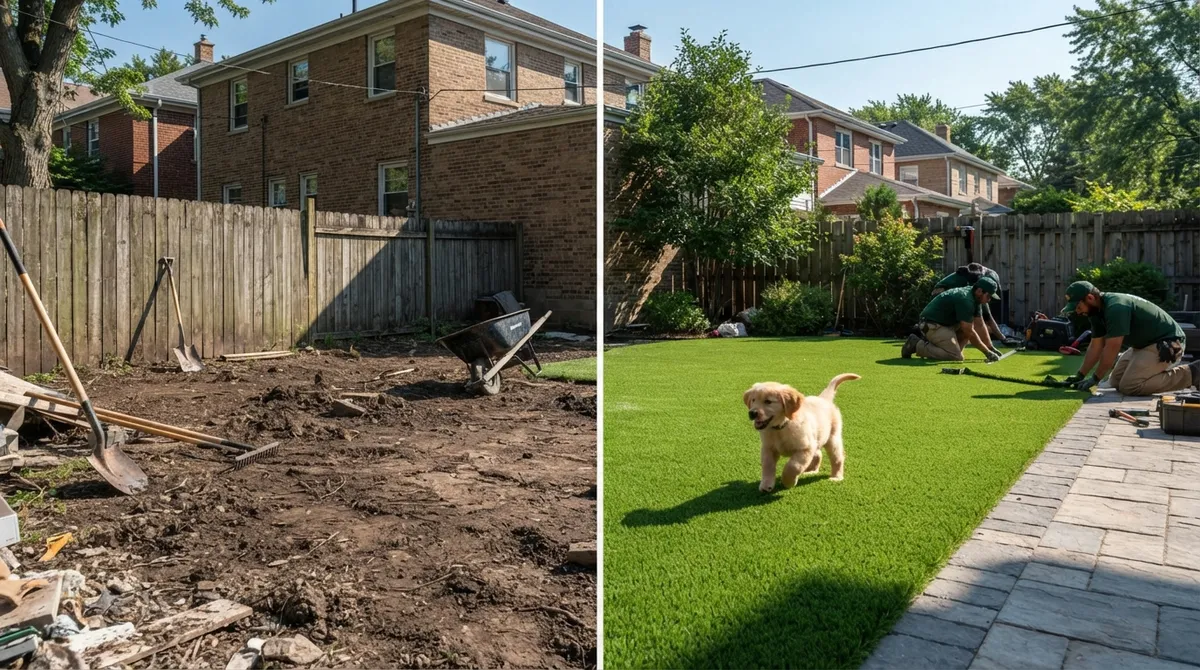
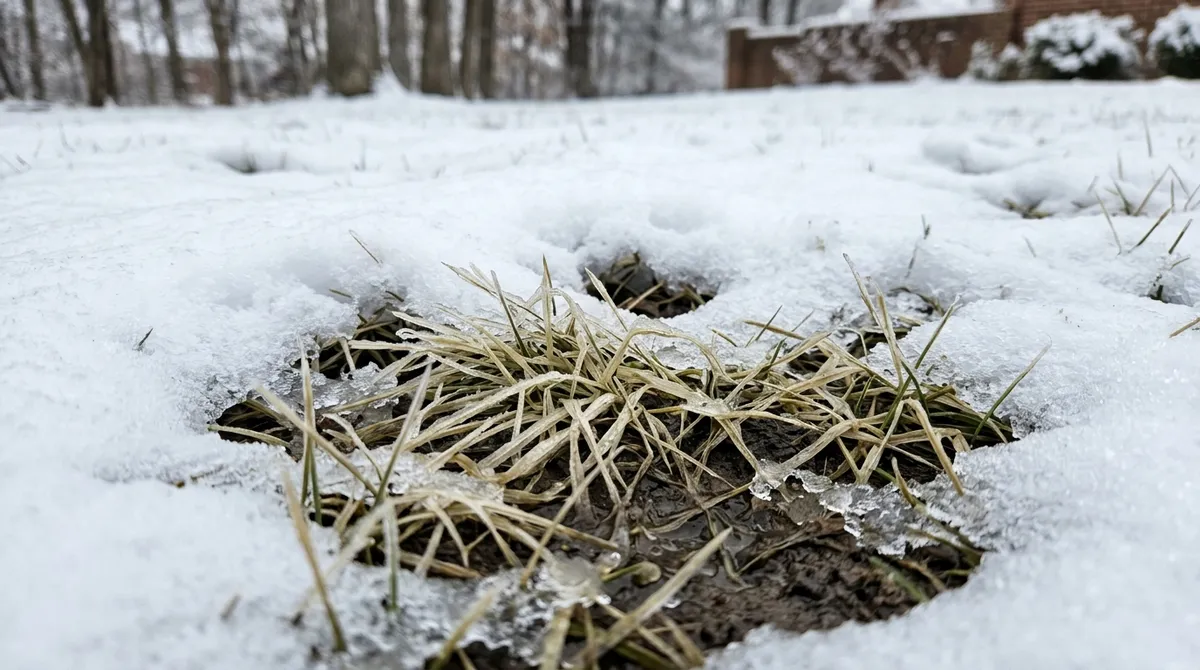
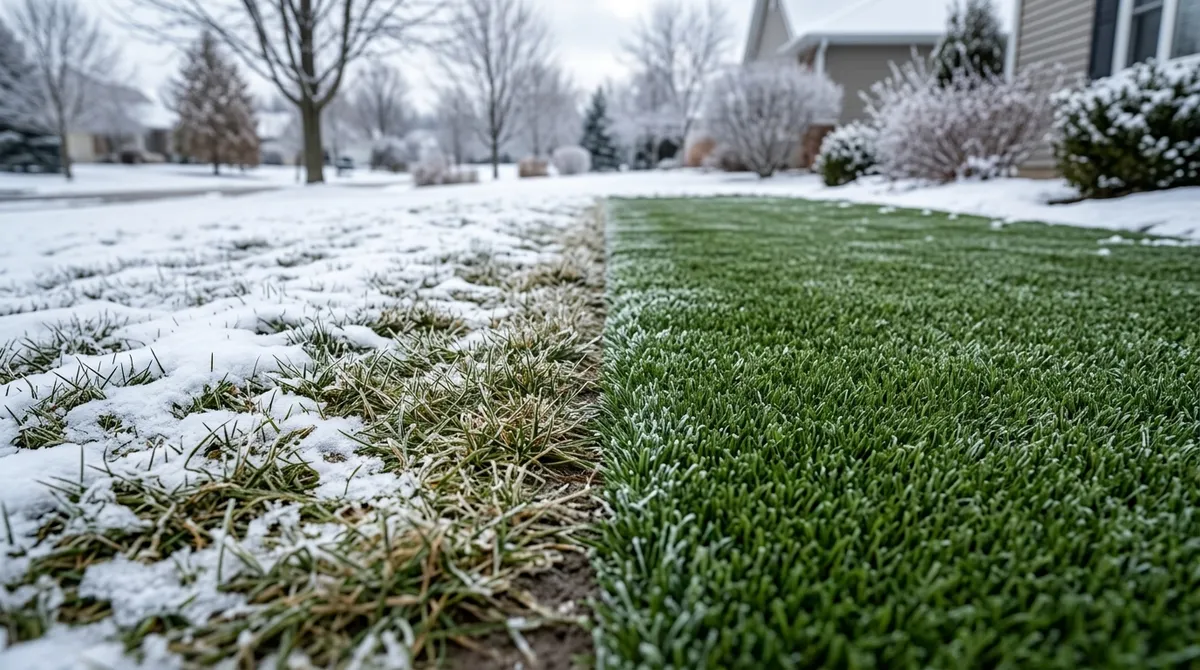
Natural grass struggles badly in winter. Heavy snow presses down on grass blades, causing them to flatten and die. When snow melts, the ground gets soggy and muddy. This creates a mess that takes weeks — sometimes months — to recover from. It also invites lawn diseases, root damage, and erosion that can cost you a lot of money to fix come spring.
For Chicago homeowners and property managers, this is a real pain point. You invest in your landscape all spring and summer, only to watch it get destroyed every winter. That’s where artificial turf installation changes the game completely.
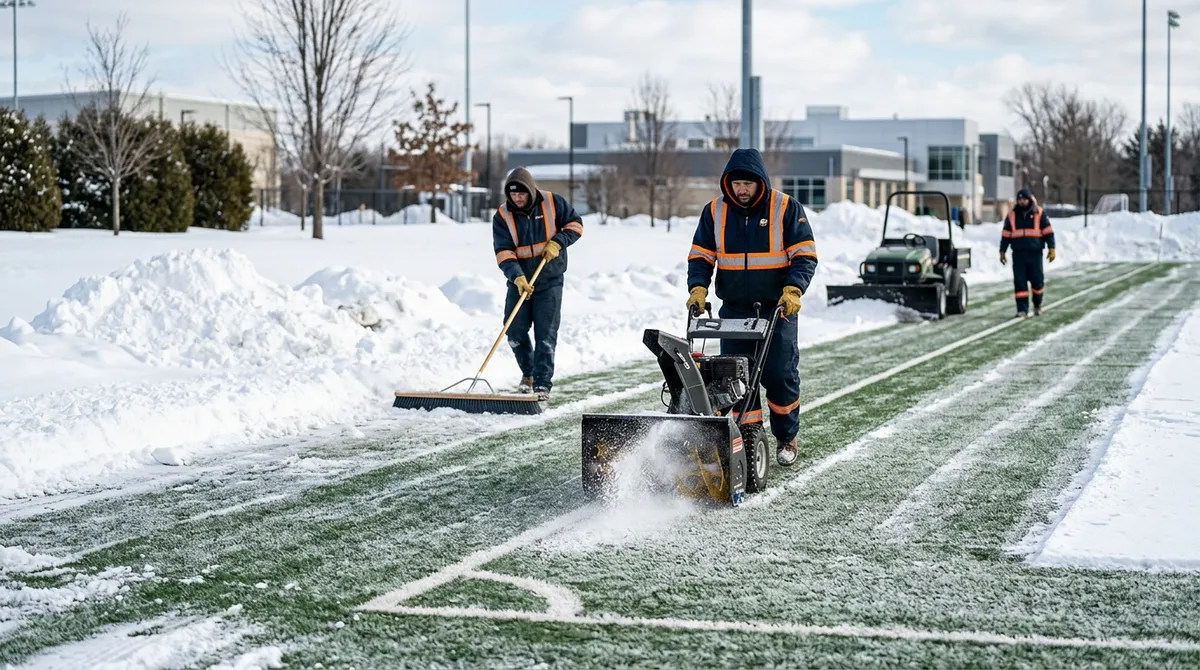
What Makes Artificial Turf Snow-Ready
Modern synthetic grass is engineered with cold climates in mind. It’s not just plastic blades stuck in the ground — it’s a sophisticated system designed to survive everything from summer heat to winter blizzards. Here’s what makes it work:
Durable Fiber Technology
High-quality artificial turf uses durable polyethylene (PE) fibers with high carbon content. This gives the blades flexibility and strength. Instead of snapping or cracking under snow weight, the fibers simply bend and bounce back once the snow melts. Think of it like a rubber band — it stretches but returns to its original shape.
Advanced Drainage Systems
One of the biggest advantages of artificial turf in snowy climates is its drainage system. Quality turf is built with perforated backing that allows water — including melted snow — to drain efficiently. This means no puddles, no mud, and no standing water that can refreeze and cause damage. For homeowners with kids or pets, this is a huge win.
UV and Weather Resistance
Top-tier artificial turf undergoes rigorous testing before it ever reaches your yard. Many products are tested for up to 5,000 hours of UV resistance and meet European ESTO Luxury Class 3 ratings — standards that confirm the turf can handle tough weather conditions, including heavy snow loads and freezing temperatures. That’s serious engineering for a seriously reliable product.
How Artificial Turf Handles Heavy Snow Step by Step
It helps to understand what actually happens to your synthetic lawn during a Chicago snowstorm. Here’s the process from first flake to full recovery:
- Snow accumulates on the surface. The turf fibers support the weight of snow without compressing permanently. Unlike natural grass, the blades don’t die under the pressure.
- Cold temperatures keep the turf stable. The synthetic materials don’t freeze, crack, or become brittle in cold weather. The base layer remains firm and intact throughout winter.
- Snow melts and drains quickly. As temperatures rise, the advanced drainage system channels meltwater down through the turf and into the ground below — no pooling, no mud.
- Turf fibers spring back. Once the snow is gone, the flexible PE fibers return to their upright position. A light brushing can help restore the pile if needed.
- Your lawn is ready to use immediately. Unlike natural grass that needs weeks of recovery, artificial turf is ready to enjoy as soon as the snow clears.
Comparing Artificial Turf to Natural Grass in Winter
Not sure if artificial turf is worth the investment? Take a look at how the two options stack up during Chicago winters:
| Feature | Artificial Turf | Natural Grass |
|---|---|---|
| Snow damage | Minimal — fibers bounce back | High — grass can die under heavy snow |
| Mud after snowmelt | None — drains efficiently | Significant — soggy and muddy |
| Recovery time after snow | Immediate | Weeks to months |
| Winter maintenance needed | Minimal | High — overseeding, aeration, repair |
| Long-term lifespan | 15–25 years | Ongoing replanting required |
| Appearance in winter | Consistent, green, clean | Brown, patchy, dormant |
The difference is clear. Artificial turf simply outperforms natural grass when Chicago winters hit hard. For commercial property managers, the reduced maintenance alone can translate to significant cost savings over time. You can also explore how commercial lawn maintenance services can complement your turf installation year-round.
Snow Removal Tips for Artificial Turf
While artificial turf handles heavy snow beautifully on its own, a little care goes a long way. Here are the best practices for removing snow from your synthetic lawn:
- Let light snow melt naturally. For smaller snowfalls, the turf’s drainage system will handle meltwater on its own. No action needed.
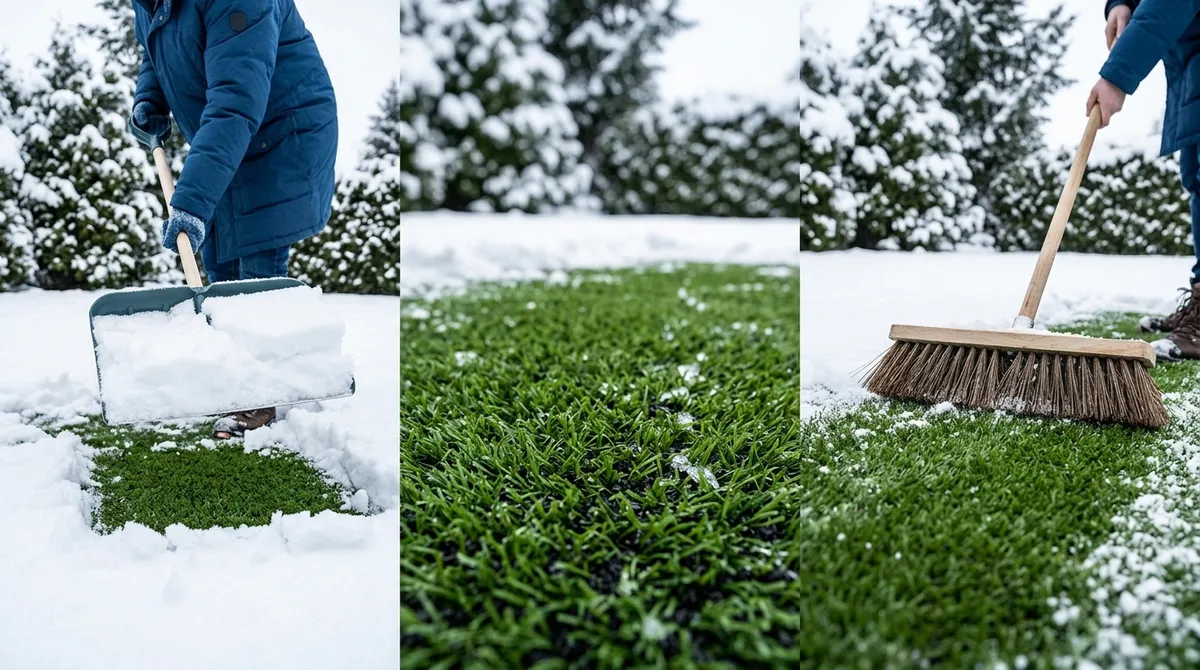
- Use a plastic snow shovel for heavy accumulation. If you need to clear snow, use a plastic shovel — never metal. Metal can snag and damage turf fibers. Keep the shovel blade slightly above the surface to avoid catching the blades.
- Avoid metal snow blowers. Gas or electric snow blowers with metal parts can harm the turf. If you must use one, keep it elevated and move carefully.
- Skip the rock salt. Traditional ice melt products with rock salt can damage some turf systems and harm the underlying base. Use sand for traction instead, or choose a turf-safe de-icer.
- Brush fibers after snow removal. Once snow is cleared, use a stiff-bristled broom or turf rake to fluff up the fibers and restore their upright position.
What to Avoid During Winter on Artificial Turf
There are a few things that can cause problems if you’re not careful. Keep these in mind during winter months:
- Do not use metal shovels or tools directly on the turf surface
- Avoid placing heavy objects like snowblowers or outdoor heaters directly on the turf for extended periods
- Don’t use harsh chemical de-icers that aren’t labeled as turf-safe
- Avoid driving vehicles over the turf — this can compress the base and damage drainage
- Don’t ignore ice buildup — frozen water on the surface can become slippery and should be cleared safely
How Long Will Artificial Turf Last Through Chicago Winters
This is one of the most common questions homeowners ask — and the answer is reassuring. With proper installation and basic care, artificial turf lasts 15 to 25 years, even in harsh climates like Chicago’s. The key word there is proper installation. A well-installed turf system with a quality base and drainage layer will hold up far better than a cheaply installed one.
That’s why working with experienced professionals matters. At Serenity Landscape Group, our team has over two decades of experience helping Chicago-area homeowners and businesses choose and install the right outdoor solutions for our unique climate. From the initial design to the final installation, we make sure every detail is done right. You can also check out our installation process to see exactly how we approach each project.
Industry resources like Landscape Illinois also provide helpful guidance on best practices for landscaping in Illinois climates, which can give you confidence that you’re making an informed decision.
Is Artificial Turf Right for Your Property
Artificial turf is a great fit for many types of properties in the Chicago area. Here’s a quick look at who benefits most:
- Suburban homeowners who want a lush, green yard year-round without the seasonal damage and spring repair costs
- Families with kids and pets who need a safe, mud-free play area even during snowmelt season
- Commercial property managers looking for durable, low-maintenance green space that always looks professional
- Small business owners who want attractive curb appeal without ongoing lawn care expenses
- Urban condo owners with rooftop or small outdoor spaces that need a clean, functional green surface
- New home builders who want to offer buyers a turnkey, low-maintenance outdoor solution
If any of these sound like you, it’s worth exploring your options. You can also browse our gallery of our work to see real installations across the Chicago area and get inspired for your own space.
Pairing Artificial Turf with Other Landscaping Features
Artificial turf works even better when it’s part of a thoughtful overall landscape design. Pair it with complementary features to create a truly stunning outdoor space:
- Pavers and pathways — Clean stone paths alongside turf look beautiful and practical year-round. See how pavers can enhance your landscape design.
- Retaining walls — Structural support that also adds visual interest. Learn more about retaining walls and how they work with turf areas.
- Outdoor lighting — Illuminate your turf area and enjoy it even on winter evenings. Explore lighting and sound options for your yard.
- Fire pits — A cozy fire pit near your turf area creates a warm gathering spot even in cold weather. Check out our fire pit designs for inspiration.
- Pergolas and pavilions — Covered outdoor structures extend the usability of your turf space. View our pergolas and pavilions for ideas.
Combining these elements creates a landscape that’s functional, beautiful, and ready for every season. For more design inspiration, take a look at how to create a landscape design that transforms your space.
What to Look for in a Quality Turf Installation
Not all artificial turf is created equal. When evaluating your options, keep these quality indicators in mind:
- Fiber material and density. Look for high-quality PE fibers with a dense pile. Thicker, denser turf holds up better under snow weight and foot traffic.
- Drainage rate. Ask about the drainage capacity — a good system should drain at least 30 inches of water per hour per square yard to handle heavy snowmelt.
- Base preparation. A crushed aggregate base layer is essential for stability and drainage in freeze-thaw conditions common in Chicago winters.
- Warranty coverage. Reputable installers offer long warranties — sometimes up to 25 years — which tells you a lot about the product’s durability and the company’s confidence in their work.
- Professional installation. Expert installation ensures the turf is secured properly so it won’t shift, bubble, or separate during heavy snow and temperature fluctuations. Resources like the ICPI Certified Installer network can help you identify qualified professionals in your area.
Ready to Enjoy a Snow-Proof Lawn Year-Round
Artificial turf is one of the smartest landscaping investments you can make in a snowy climate like Chicago’s. It handles heavy snow with ease, drains quickly when snow melts, bounces back without damage, and keeps looking great season after season. With a lifespan of 15 to 25 years and minimal maintenance requirements, it pays for itself over time — in money saved on lawn care, repairs, and lost beauty during long winters.
Whether you’re dreaming of a lush backyard retreat, a clean commercial property, or a pet-friendly play space your family can enjoy all year, artificial turf could be the perfect solution. Combine it with softscapes, pavers, lighting, or a cozy fire pit, and you have an outdoor space that truly shines in every season. To learn more about our softscape options and how they complement artificial turf, explore our full range of services.
Ready to get started? Request your free estimate today and let our team help you design the perfect year-round landscape for your home or business. You can also call us directly at (630) 359-5139 — we’d love to talk through your vision and show you what’s possible.
FAQs
Q: Does artificial turf get damaged by heavy snow?
A: Great news — artificial turf is built to handle heavy snow without lasting damage! High-quality synthetic fibers are flexible enough to bend under snow weight and spring back to their original position once the snow melts. As long as you use proper snow removal tools (like a plastic shovel), your turf will look great all winter long.
Q: How does artificial turf drain when snow melts?
A: Artificial turf features a perforated backing that acts like a built-in drainage system. As snow melts, water flows down through the turf layers and drains into the ground below — no puddles, no mud, no mess. This is one of the biggest advantages over natural grass, which can become a soggy, muddy disaster after snowmelt.
Q: Can I use salt or de-icers on artificial turf in winter?
A: It’s best to avoid traditional rock salt on artificial turf, as it can damage some turf systems and affect the underlying base material. Instead, use sand for traction on icy surfaces, or choose a de-icing product that is specifically labeled as turf-safe. When in doubt, let light snow melt naturally — your turf’s drainage system will handle the water just fine!
Q: How long does artificial turf last in Chicago’s snowy climate?
A: With proper installation and basic care, high-quality artificial turf can last anywhere from 15 to 25 years — even in Chicago’s harsh winters. The key is professional installation with a solid drainage base that can handle freeze-thaw cycles. Many top installers back their products with long warranties, which is a great sign of lasting quality.
Q: Is artificial turf a good choice for Chicago-area landscaping projects?
A: Absolutely! Artificial turf is an excellent choice for Chicago homeowners and commercial property managers who want a beautiful, low-maintenance outdoor space year-round. It handles heavy snow, drains quickly during snowmelt, and requires far less upkeep than natural grass — making it a smart long-term investment for our tough Midwest climate.