Key Takeaways
-
Proper base preparation with 3-4 inches of compacted, free-draining crushed rock is the single most critical step; skipping this causes lawns to dip, puddle, or shift within 1-2 years.
-
Design drainage intentionally with 20-30 inches per hour drainage rates and account for downspouts and low spots; standing water after rain indicates your drainage plan needs attention before installation.
-
Choose the correct infill type from day one (silica sand, coated sand, zeolite, or crumb rubber) since replacement costs $0.30-$1.75 per pound and affects odor, durability, and comfort.
-
Verify HOA rules, local permits, and stormwater management requirements before starting; strict Chicago-area HOA regulations can force costly removals if overlooked.
-
Plan for heat management and pet needs upfront by selecting heat-reflective turf, adding shade structures, and using odor-resistant infill; synthetic grass can get significantly hotter than natural grass in direct sun.
-
Expect installation costs of $2-$8 per square foot ($5,757 average) and lifespan of 10+ years with proper maintenance; regular fiber brushing and debris removal protect your investment long-term.
Thinking about fake lawn grass installation for your Chicago-area yard? You’re going to love the idea of skipping mowing forever, but here’s the thing: a beautiful synthetic lawn only happens when the install is done right. We’ve walked hundreds of homeowners through this process over the years, and honestly, the same handful of mistakes keep popping up again and again. The good news? Every single one is completely avoidable once you know what to look for.
Whether you’re a suburban homeowner tired of soggy clay soil, a condo owner with a tiny rooftop patch, or a business owner wanting a lawn that always looks sharp, this guide is for you. We’ll walk through the five biggest mistakes people make with fake lawn grass installation, share real numbers on cost and lifespan, and help you feel confident before you sign any contract. Let’s get into it.
Mistake 1: Skipping Proper Base Preparation
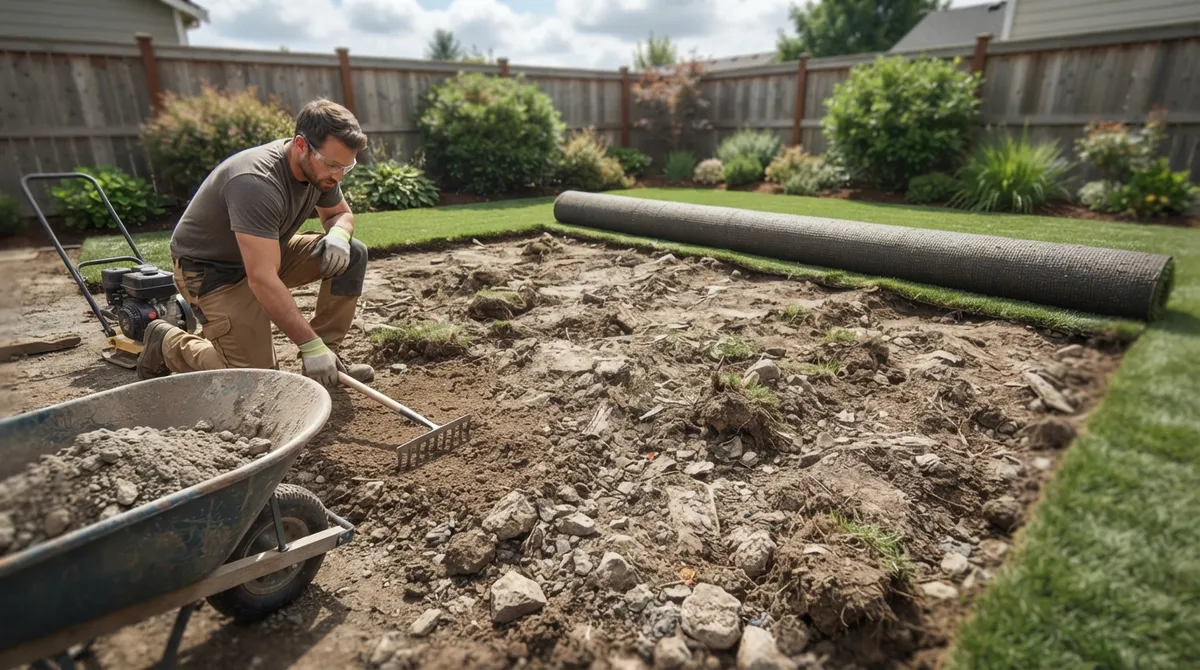
This is the big one, friends. So many people think fake grass installation is just “roll it out and go.” It is not. The base underneath your turf is what makes or breaks the whole project.
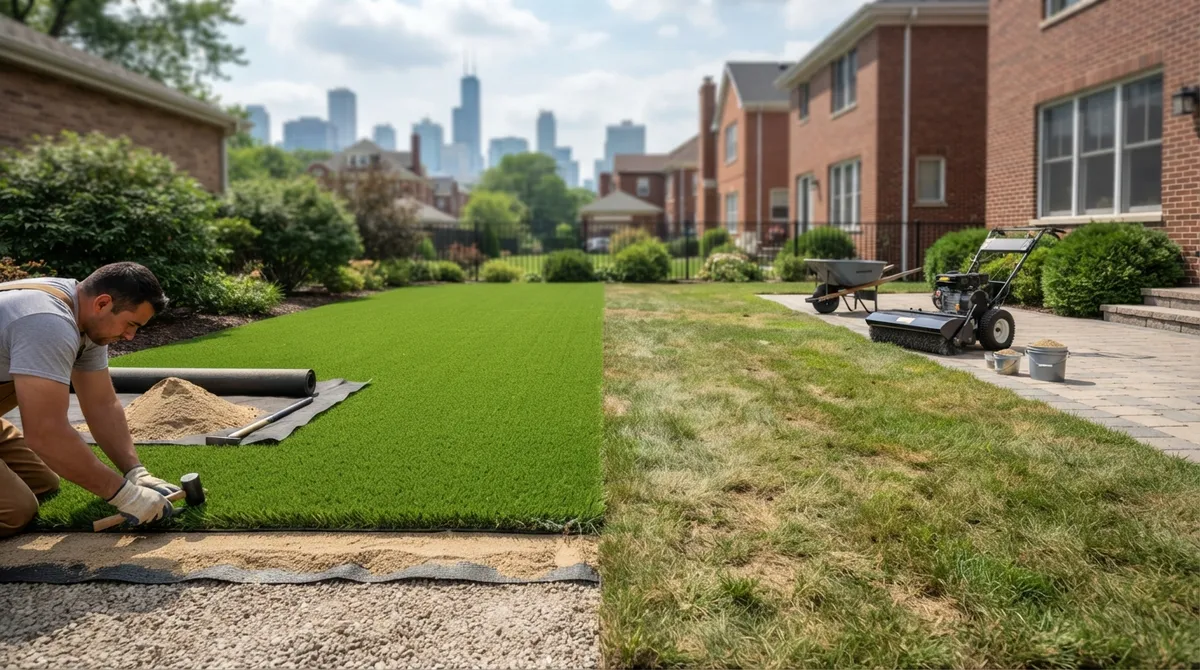
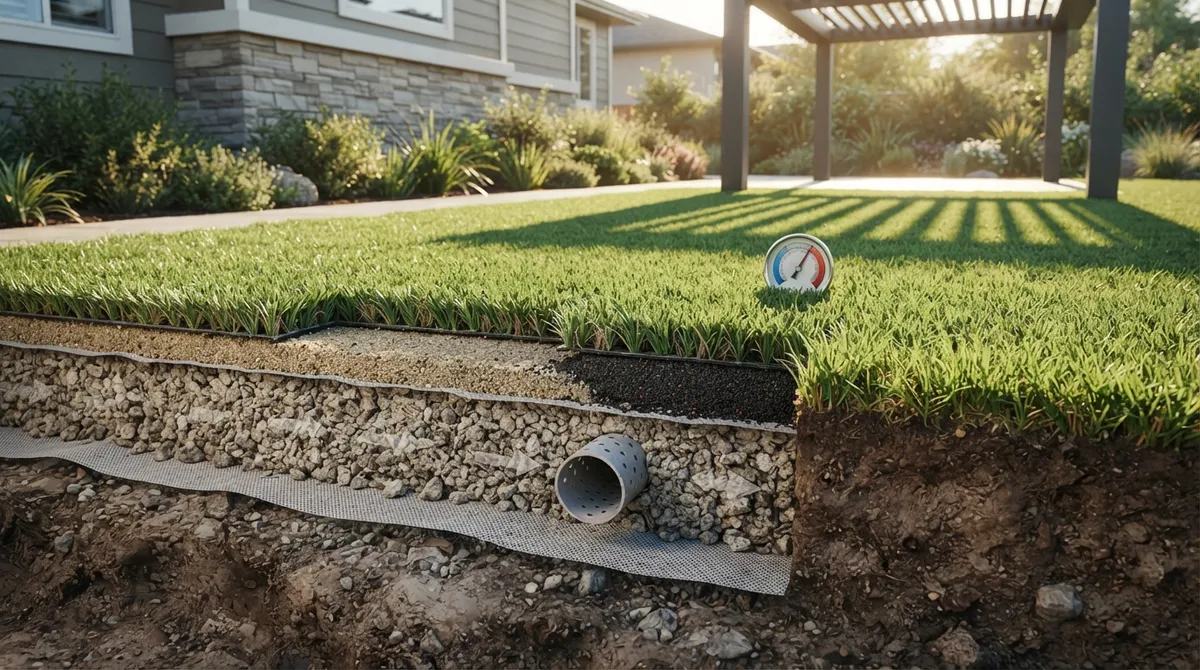
A solid base usually means removing the old grass, digging down a few inches, and packing in compacted aggregate. Published specifications commonly call for about 3 to 4 inches of compacted, free-draining crushed rock, though your exact depth depends on your soil, climate, and how the space will be used. Skip this step, and you’ll end up with a lawn that dips, puddles, or shifts within a year or two.
What a Proper Base Involves
- Removing existing turf and several inches of native soil
- Grading the subgrade so water flows away from your home
- Laying a permeable geotextile weed barrier
- Adding and compacting crushed-rock aggregate to roughly 90% compaction
- Installing sturdy edging to hold everything in place
Our team follows detailed base specs on every project because we’ve seen what happens when contractors cut corners here. If you want to see this process explained in more detail, check out our breakdown of the key stages of artificial turf installation.
Mistake 2: Ignoring Drainage Planning
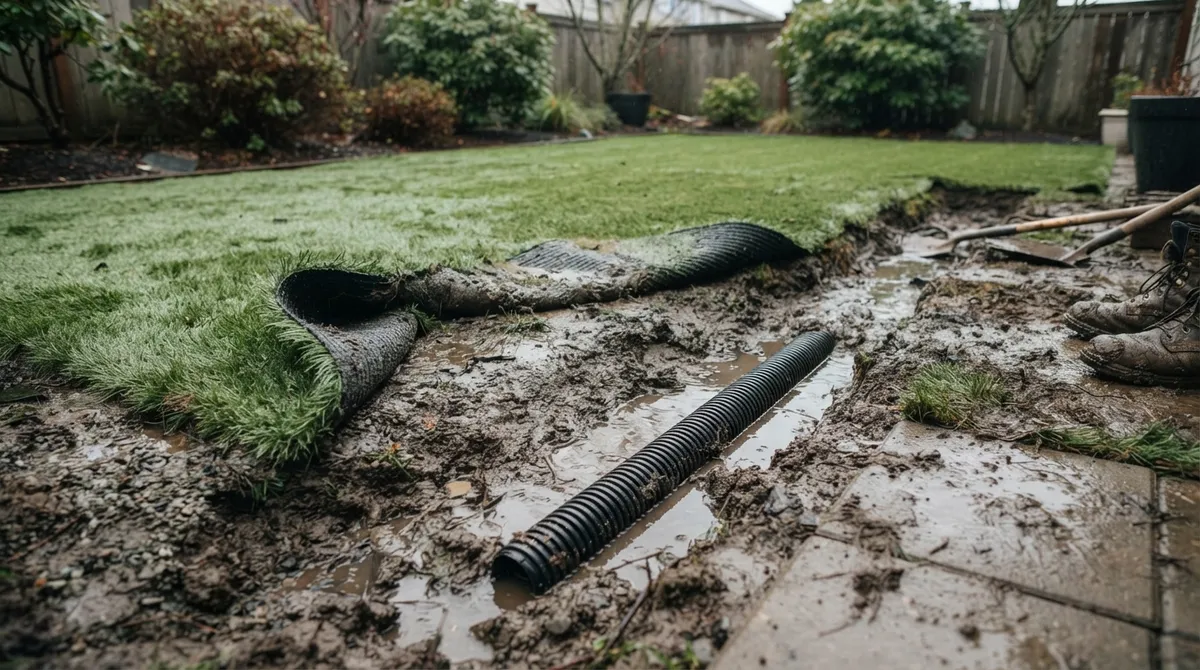
Chicago weather is no joke. Between spring downpours and heavy snowmelt, your synthetic lawn needs somewhere for water to go. A lot of homeowners assume artificial grass just “drains itself” because it’s not soil. That’s a myth that causes real headaches later.
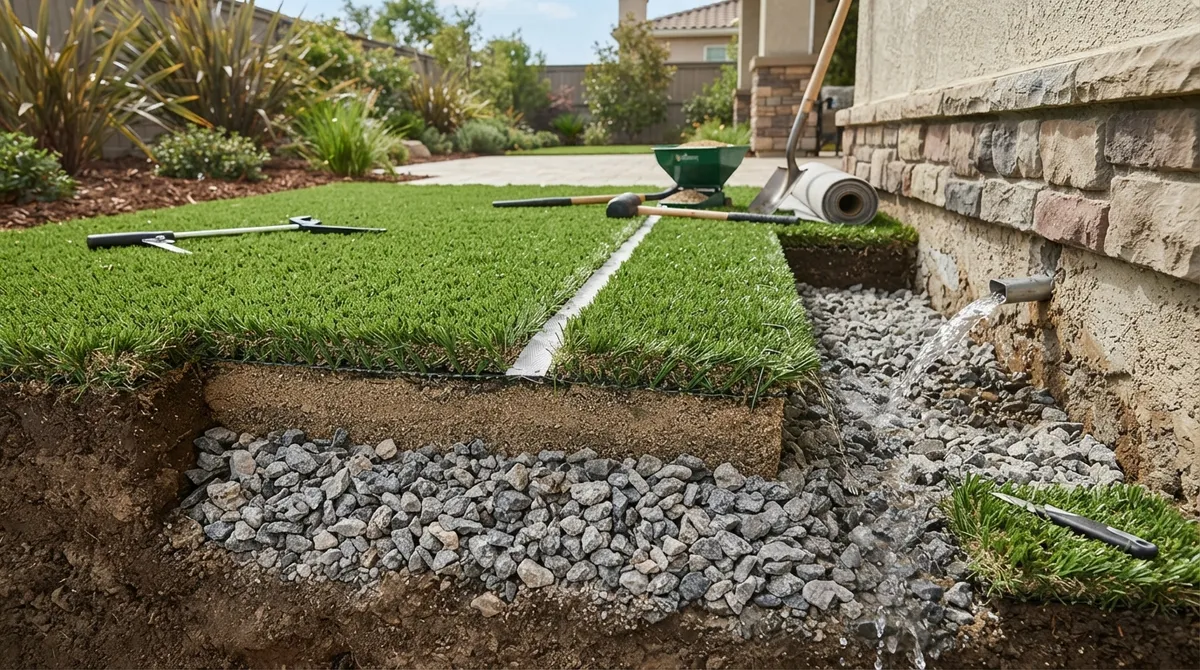
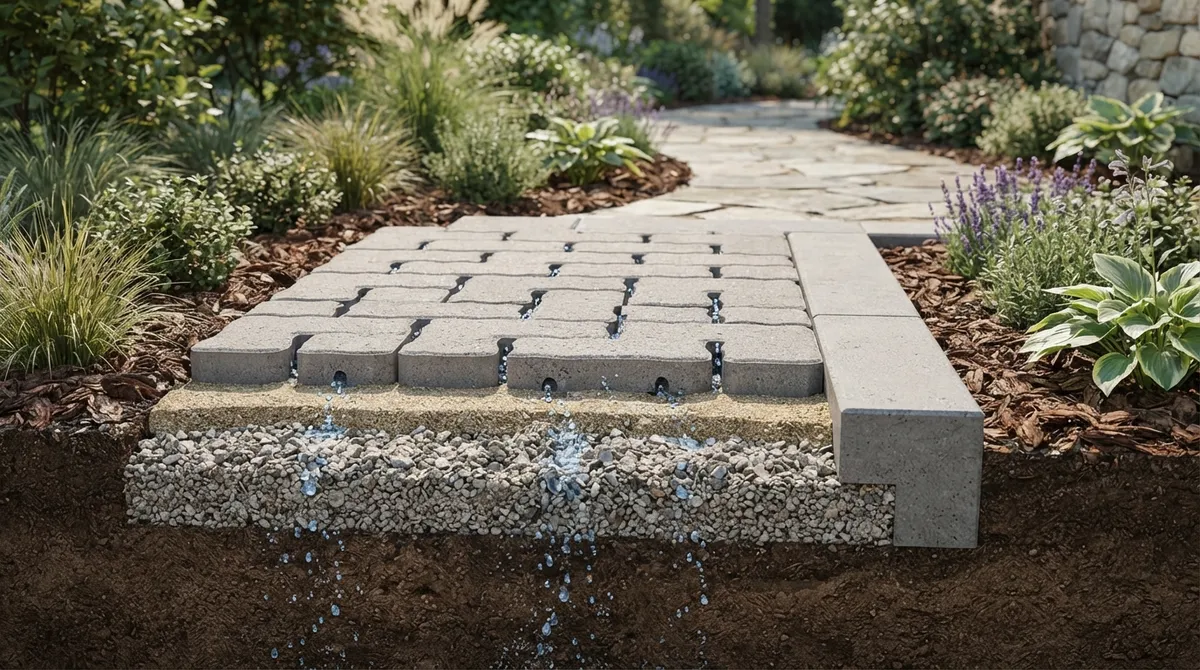
Drainage needs to be designed on purpose, not left to chance. Industry specifications often call for drainage rates of at least 20 to 30 inches per hour through the turf system. Some municipal standards, like those in Santa Ana, California, require a minimum percolation rate of 30 inches per hour along with a 3-inch crushed-stone subbase. Your installer should account for low spots, downspouts, slope, and any areas where your soil already struggles to drain.
Signs Your Drainage Plan Needs Attention
- Standing water appears in your yard after rain, even before installation
- Your downspouts drain directly into the planned turf area
- Your yard sits in a low spot compared to neighboring properties
- You have heavy clay soil common throughout the Chicago suburbs
- You’re installing turf near a pool, patio, or paver walkway
If your yard has ongoing water issues, it’s worth discussing options with a team experienced in how synthetic grass drainage systems work before you commit to a design. Pairing your turf project with proper retaining walls or grading can also help manage water on sloped properties.
Mistake 3: Choosing the Wrong Infill (or Skipping It)
Infill is the material spread between the turf fibers, and it does more work than people realize. It helps the blades stand up straight, adds weight so the turf doesn’t shift, and improves the overall feel underfoot. Skip it, or pick the wrong type, and your lawn can look flat, feel rough, or develop odor problems faster than expected.
| Infill Type | Best For | Things to Consider |
|---|---|---|
| Silica sand | General residential lawns | Affordable, widely available, needs occasional topping off |
| Coated sand (antimicrobial) | Homes with pets | Helps reduce odor buildup, costs a bit more |
| Zeolite | Pet-heavy households | Absorbs odors well, may need more frequent replenishing |
| Crumb rubber | Play areas, sports use | Restricted in some jurisdictions, can retain heat |
According to Angi’s 2026 cost data, infill replacement runs about $0.30 to $1.75 per pound, so getting the right type from the start saves money down the road. We put together a helpful guide on infill types for artificial grass that actually work if you want to dig deeper into the options.
Mistake 4: Not Planning for Heat, Pets, and Everyday Use
Here’s something people don’t always think about until it’s too late: artificial grass can get hot. Really hot. On a sunny summer afternoon, synthetic turf can become noticeably hotter than natural grass, especially in full sun with no shade nearby.
If you have kids who love running barefoot or a dog who lounges in the yard, this matters. The fix isn’t complicated, but it does require planning ahead:
- Choose a turf product designed with heat-reflective technology
- Plan shade structures like a pergola or pavilion near the lawn area
- Consider a quick rinse with a hose on the hottest days
- Ask your installer about odor-resistant infill if you have pets
- Avoid installing turf in areas with zero shade coverage if possible
Pet owners especially benefit from planning ahead. We’ve written extensively about cleaning artificial turf from pet waste, and it’s much easier when the right infill and drainage were built in from day one. For families with dogs, our guide on non-toxic synthetic grass for pets is worth a read too.
Mistake 5: Overlooking Permits, HOA Rules, and Local Regulations
This mistake catches a lot of people off guard, especially in the Chicago suburbs where HOA rules can be strict. Some communities have specific requirements about synthetic turf, from approved product types to installation guidelines. Skipping this step can mean costly changes later, or worse, having to remove work that’s already done.
Steps to Take Before You Start
- Check your HOA guidelines for any turf-related restrictions
- Contact your local municipality about permit requirements
- Review stormwater management rules if your property has drainage concerns
- Confirm product warranty terms with your installer in writing
- Ask about any fire-code requirements if turf will be near a fire pit or grill
Working with a landscaping company familiar with local codes saves you a huge headache. Organizations like Landscape Illinois and certified professionals through ICPI Certified Installer programs can help you understand what quality, code-compliant work looks like in our region.
What Does Fake Lawn Grass Installation Actually Cost?
Let’s talk numbers, because everyone wants to know this part. According to Angi’s 2026 cost data, the average artificial-grass installation runs about $5,757, with most projects falling somewhere between $1,300 and $15,000. On a per-square-foot basis, expect roughly $2 to $8, depending on site prep, drainage needs, turf quality, and access to your property.
| Cost Category | Typical Range |
|---|---|
| Full installation (average) | $5,757 (range $1,300–$15,000) |
| Per square foot | $2–$8 |
| Ongoing maintenance/cleaning | $0.25–$0.35 per sq ft |
| Repairs or replacement | $2–$10 per sq ft |
| Infill replacement | $0.30–$1.75 per pound |
These numbers vary quite a bit based on your specific yard. If you want a clearer breakdown of pricing for your property, our article on fake lawn cost factors Chicago homeowners should know walks through what drives the price up or down.
How Long Does Artificial Turf Actually Last?
With proper installation and reasonable care, a residential synthetic lawn can last well over a decade. That said, lifespan depends heavily on foot traffic, sun exposure, and how well the base was prepared in the first place. This is exactly why cutting corners on Mistake 1 (the base) tends to shorten a lawn’s life dramatically.
Regular upkeep matters too. Removing leaves and debris, brushing fibers that get matted down, and checking seams periodically all help your investment go the distance. We’ve outlined simple habits in our artificial turf maintenance tips guide that keep lawns looking fresh year after year.
Weighing the Environmental Trade-Offs Honestly
We believe in giving you the full picture, not just the highlight reel. Artificial turf does reduce watering and mowing, and a 2025 industry report estimates water savings of roughly 33% to 50% compared to natural grass in similar conditions. That’s meaningful, especially during dry Illinois summers.
At the same time, synthetic turf is made from plastic materials. It offers little habitat value for pollinators, doesn’t sequester carbon the way living plants do, and can be tricky to recycle at the end of its life. If sustainability is a top priority for you, it’s worth discussing a mixed approach with your landscaper, combining turf in high-traffic zones with native plantings elsewhere. Our softscapes services can help balance greenery and low-maintenance turf beautifully.
Where Fake Lawn Grass Installation Works Best
Not every yard needs full synthetic coverage, and that’s okay. Here are situations where artificial turf tends to shine:
- Shaded backyard corners where natural grass struggles to grow
- Small urban patios and rooftop spaces in the city
- High-traffic commercial entryways that need to always look tidy
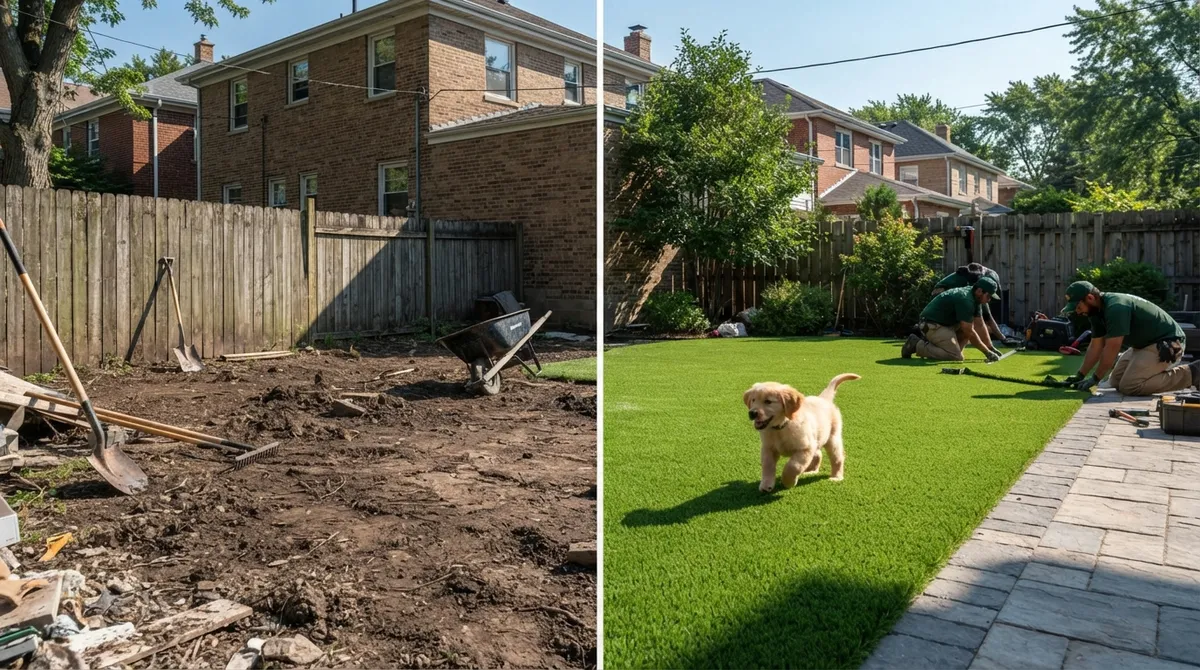
- Dog runs and pet play areas prone to muddy patches
- Areas around pools, pavers, and fire pits where mud is a constant problem
If you’re weighing turf against other ground cover options for a tricky spot, our article on grass alternatives for wet backyards covers several practical choices side by side.
Ready to Get Your Fake Lawn Grass Installation Done Right?
Here’s the honest truth: fake lawn grass installation isn’t hard to get right, but it does take experience, careful planning, and attention to the details most homeowners never think to ask about. From base depth to drainage to infill selection, every step matters for a lawn that stays gorgeous for years, not just months.
At Serenity Landscape Group, we’ve spent over two decades helping Chicago-area homeowners and businesses create outdoor spaces they genuinely love. Our proven process covers everything from initial design through installation and long-term care, and you can browse real results in our gallery of completed projects. We’d be honored to help make your fake lawn grass installation a total success story. Ready to get started? Get a Free Estimate today, or feel free to call us at (630) 359-5139 to chat about your project.
FAQs
Q: How much does fake lawn grass installation cost per square foot?
A: Most homeowners pay between $2 and $8 per square foot, with the national average landing around $5,757 for a full project according to 2026 cost data. The final price depends on site prep, drainage needs, and turf quality, so it’s worth getting a personalized quote for your yard.
Q: What is the correct base depth for artificial grass installation?
A: Most specifications call for about 3 to 4 inches of compacted, free-draining aggregate, though this can vary based on your soil and climate. Getting this step right is honestly the single most important part of a lasting installation, so don’t let anyone skip it.
Q: Does artificial grass need drainage and a weed barrier?
A: Yes, absolutely! A properly installed synthetic lawn needs a permeable weed barrier and a base designed to drain water away, often at rates of 20 to 30 inches per hour. Skipping this step is one of the fastest ways to end up with puddling or soggy spots.
Q: How long does artificial turf last in a residential yard?
A: With quality installation and basic upkeep, most residential synthetic lawns last well over a decade. Lifespan really comes down to how well the base was prepared and how much foot traffic the area gets.
Q: Is artificial grass safe for dogs, children, and pets?
A: Yes, when the right infill and drainage are chosen, synthetic turf can be a fantastic, low-mess option for pets and kids alike. We do recommend planning for heat management and choosing odor-resistant infill if you have furry family members.