Key Takeaways
-
Ground prep is the largest cost driver, not the turf itself; removing existing lawn, grading, compacting sub-base, and installing drainage can add significantly to your quote, especially in Chicago's heavy clay soil.
-
Small yards cost more per square foot due to fixed labor minimums and delivery charges, while larger lawns achieve better economy of scale; always get a site-specific estimate rather than relying on generic per-square-foot pricing.
-
Always verify whether quotes include full installation (excavation, base, membrane, edging, infill, labor) versus supply-only pricing; low online prices typically only cover the turf roll and will miss major cost components.
-
Site complications like restricted access, sloped terrain, rooftop installations, and poor drainage significantly impact labor costs; disclose all property challenges upfront to contractors for accurate quotes.
-
Premium-grade turf (thicker, denser) justifies higher upfront costs for high-traffic areas and pet owners, as budget turf flattens quickly and may not drain well, requiring premature replacement.
-
Detailed quotes should itemize site measurements, removal costs, sub-base materials, drainage plans, turf grade/warranty, labor timeline, and total cost; vague lump-sum quotes hide surprise expenses.
So you’re thinking about the cost to lay artificial grass, and honestly? We’re so glad you’re here. Whether you’re a busy Chicago suburb homeowner tired of fighting clay soil, a condo owner with a tiny rooftop dreaming of green, or a property manager juggling curb appeal and budgets, this guide is for you. Let’s chat about what really drives artificial grass installation prices, and more importantly, the sneaky mistakes that can make your project cost way more than it should.
Here’s the good news: knowing what to watch for puts you back in control. We’ll walk through five common pitfalls, share real pricing ranges, and give you the confidence to get a fair, accurate quote. Grab a cup of coffee, and let’s dig in together.
Mistake 1: Assuming One Price Fits Every Lawn
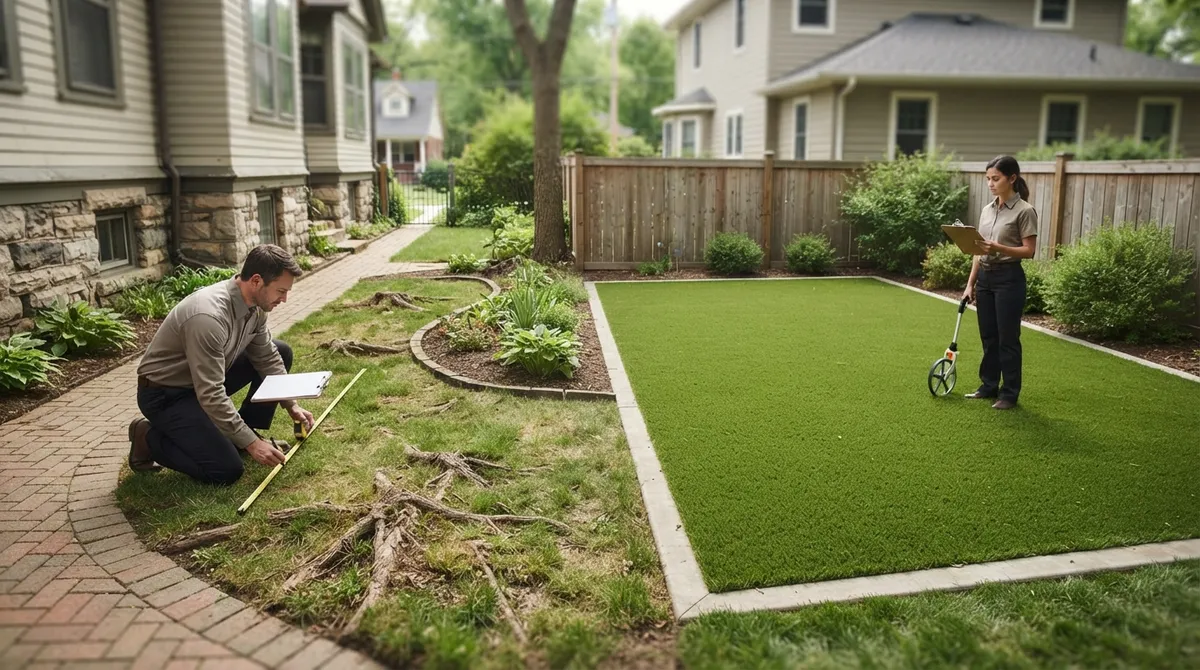
A lot of folks hear a single “per square foot” number and assume that’s what they’ll pay, no matter their yard. That’s rarely how it works. The cost to lay artificial grass typically depends on your lawn’s size, shape, soil type, and how much prep work is needed before the turf even goes down.
In broader industry pricing guides, fully installed synthetic turf commonly runs in a wide range once you account for materials, sub-base, and labor. Small yards often cost more per square foot because contractors still need to cover delivery, cutting, and minimum labor time. Larger, simpler lawns tend to average out cheaper per square foot.
- Small courtyards or dog runs: higher cost per square foot due to fixed labor minimums
- Mid-size suburban backyards: more balanced, average pricing
- Large commercial or HOA common areas: better economy of scale, but more material needed overall
- Irregular shapes with lots of curves: extra cutting and seaming time
- Multiple separate zones: added mobilization and setup costs each time
If you want a number that actually applies to your property, skip the generic online calculators. A proper site visit tells the real story. Our team at Serenity Landscape Group can walk your yard and give you a number based on your actual space, not a guess. You can always get a free estimate before making any decisions.
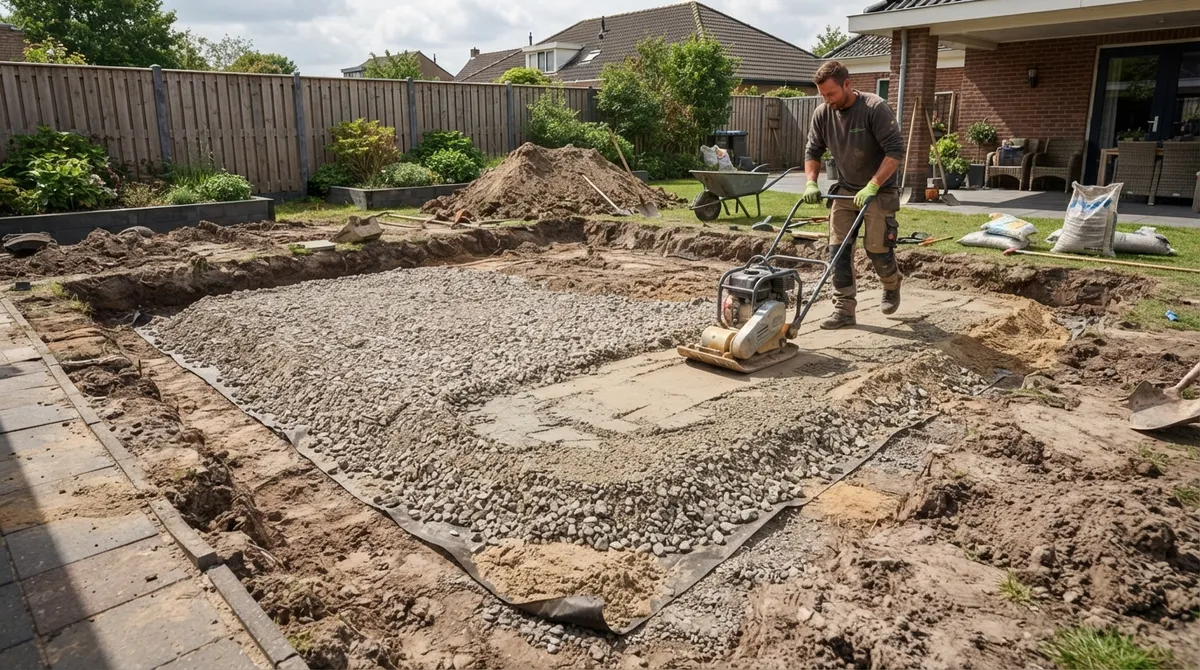
Mistake 2: Forgetting That Ground Prep Is the Real Cost Driver
This is probably the biggest surprise for first-time buyers. The turf itself is often the smallest piece of the puzzle. What really moves the needle on price is what happens underneath it.
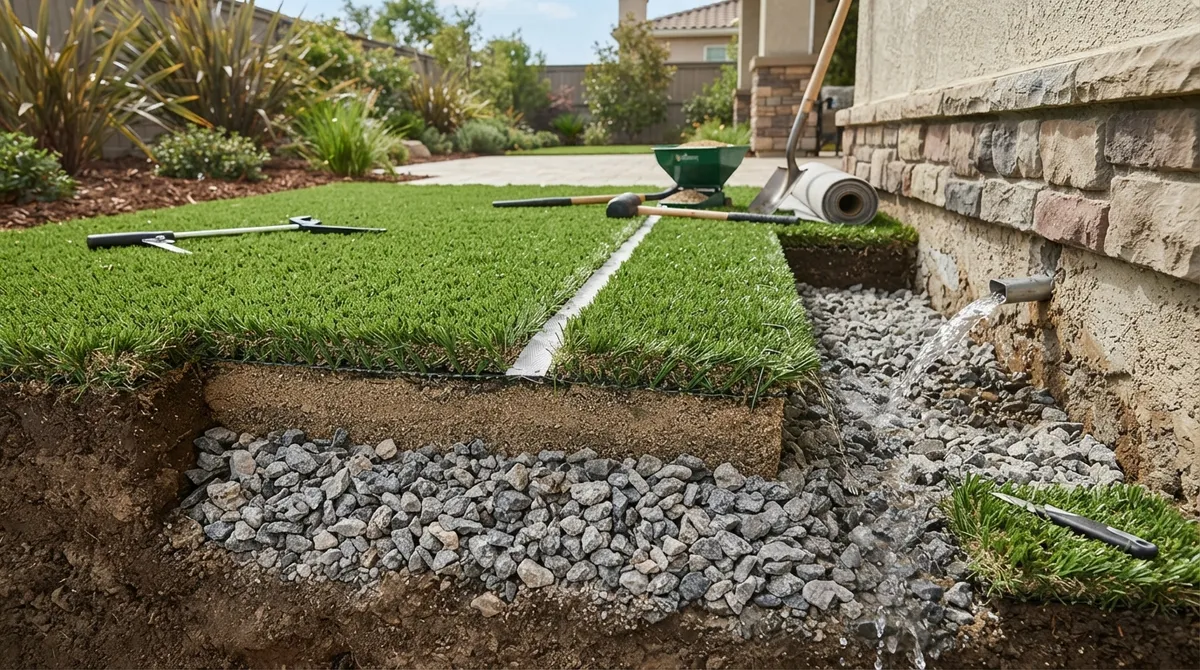
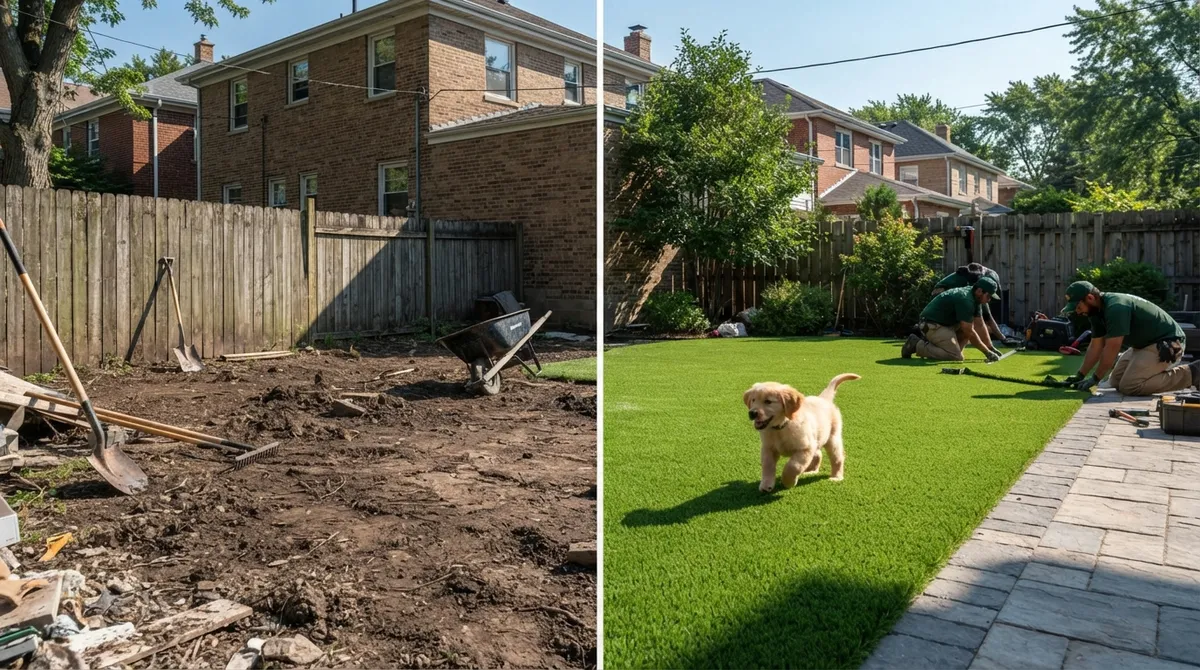
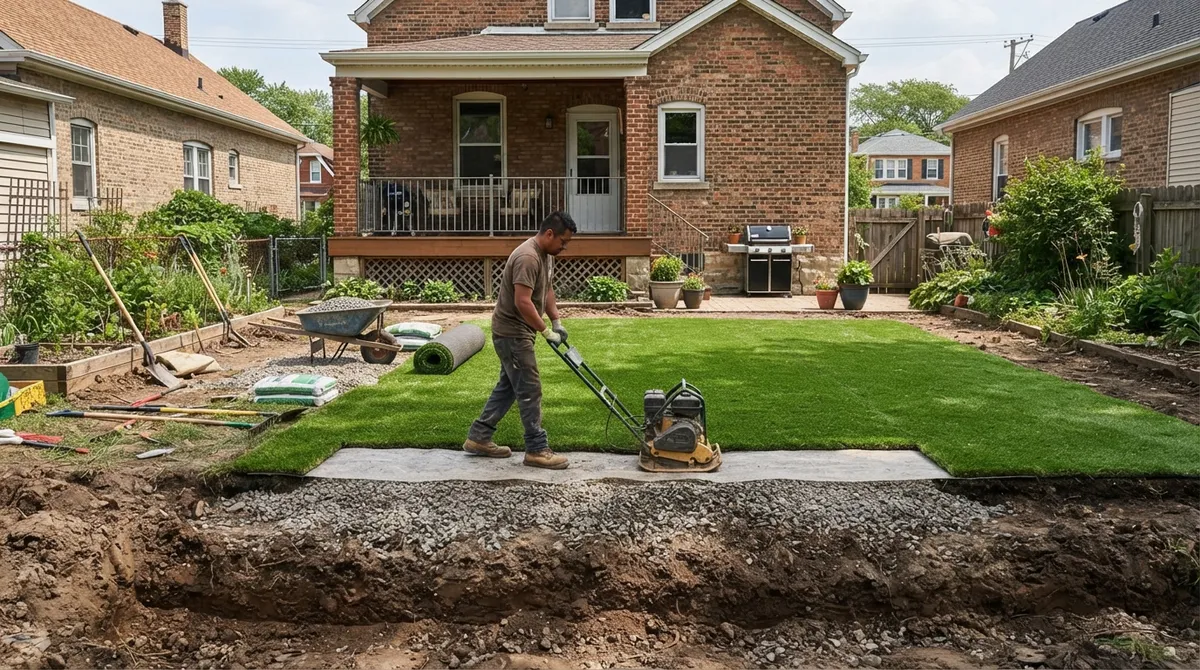
Chicago-area soil can be tricky. We deal with heavy clay, poor drainage, and old sod that needs to go before anything new goes in. Removing an existing lawn, hauling away debris, grading the site, and building a proper compacted base takes real labor and equipment.
What Ground Prep Usually Includes
- Removing the existing grass, weeds, or old hardscape material
- Hauling away and disposing of soil, sod, and debris
- Grading the area to create proper drainage slope
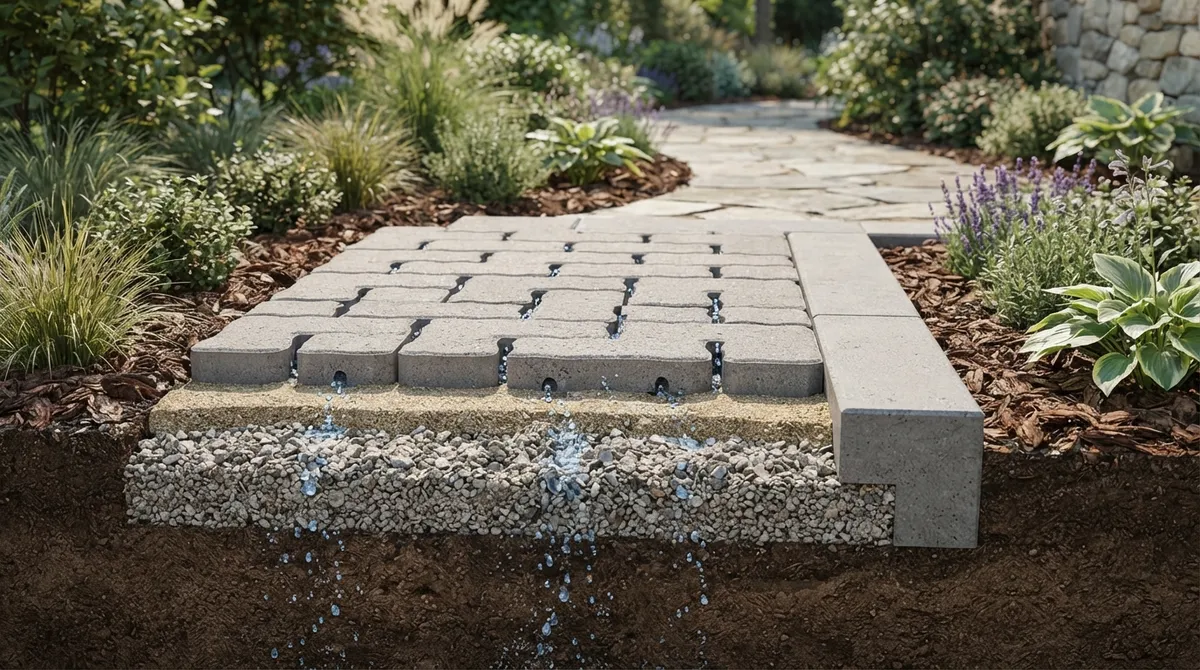
- Laying and compacting a sub-base, usually crushed stone or aggregate
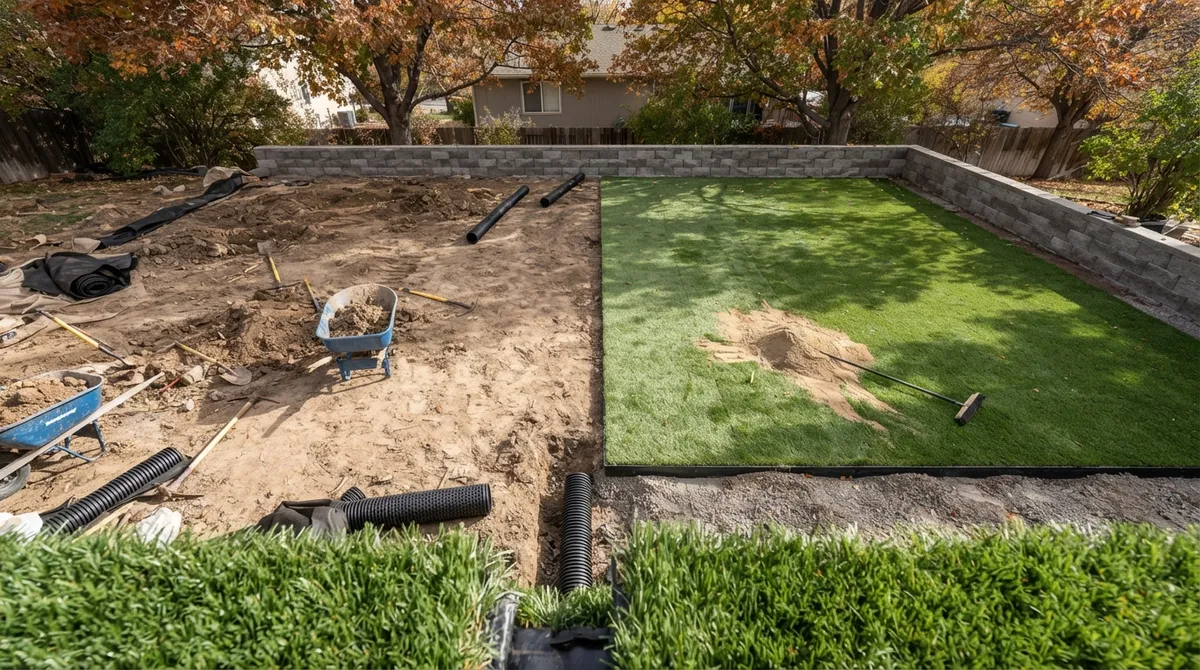
- Installing a weed barrier membrane to stop future growth
- Rolling out and securing the turf with edging and seams
- Adding infill material for stability and a natural feel
Skip any of these steps and you’re asking for trouble. Poor prep leads to drainage problems, lumpy turf, and weeds poking through within a year or two. If your yard has heavy clay, tree roots, or an old patio you want removed, expect that to add noticeably to your quote. Heavy groundwork like removing an old base can add a meaningful chunk to the total project cost.
Curious what a solid base actually looks like? Check out our breakdown of the best base materials for turf installation to see why this step matters so much.
Mistake 3: Comparing Supply-Only Prices to Full Installation Quotes
This mistake trips up a lot of smart, budget-conscious homeowners. You see a low price online for artificial turf rolls and assume that’s your total cost. But supply-only pricing and fully installed pricing are two very different animals.
| Pricing Type | What’s Included | Typical Range |
|---|---|---|
| Supply-only (budget grade) | Turf roll only, no labor or base | Lower end of material cost |
| Supply-only (mid to premium) | Higher density, realistic turf, longer warranty | Mid to upper material cost |
| Fully installed (standard) | Excavation, base, membrane, turf, edging, labor | Mid-range full project cost |
| Fully installed (complex site) | Heavy prep, drainage upgrades, difficult access | Higher end of full project cost |
The takeaway here is simple. Always ask a contractor whether their quote includes excavation, disposal, base material, weed membrane, edging, seaming, and infill. If a number sounds too good, it probably only covers the turf roll. This is one reason working with an established company matters, since organizations like Landscape Illinois emphasize transparent, detailed scopes of work for exactly this reason.
Mistake 4: Ignoring Access, Drainage, and Site Complications
Every property has its quirks, and yours is no exception. Rooftop terraces, narrow side yards, sloped lots, and areas with limited vehicle access all add time and labor to a project. If a crew has to hand-carry materials up three flights of stairs or through a narrow gate, that takes longer than driving equipment right up to the yard.
Common Site Challenges That Affect Pricing
- Restricted access requiring manual excavation instead of machine work
- Long wheelbarrow runs from the truck to the install site
- Sloped yards needing extra grading or small retaining features
- Rooftop or balcony installs with weight and drainage considerations
- Existing trees with root systems that must be worked around carefully
- Poor natural drainage requiring extra gravel depth or drain lines
Urban condo owners dealing with rooftop spaces should pay special attention here. Weight limits, drainage systems, and building regulations all play a role. We’ve covered this in detail in our guide on rooftop terrace turf design, which is worth a read if you’re working with limited square footage.
For suburban homeowners dealing with soggy backyards or drainage headaches, artificial turf can actually be part of the solution. Take a look at our article on grass alternatives for wet backyards to see how proper drainage design solves long-term problems.
Mistake 5: Choosing Turf Quality Based on Price Alone
We understand the temptation. Budget turf looks cheaper on paper, and it’s easy to think “grass is grass.” But pile height, density, and material quality make a real difference in how your lawn looks and performs over the years.
Turf Quality Comparison
| Grade | Typical Use | Pile Height | Expected Lifespan |
|---|---|---|---|
| Budget | Low-traffic decorative areas | Shorter, less dense | Shorter lifespan |
| Mid-range | Standard residential lawns | 30-40mm, good density | Solid long-term performance |
| Premium | High-traffic, pets, commercial spaces | Thicker, more realistic | Longest lifespan, best warranty |
Families with kids and dogs, in particular, should think carefully here. Cheap turf can flatten quickly under heavy foot traffic and may not drain well for pet waste. If that’s your situation, our guide on the best artificial grass for dogs in Chicago breaks down exactly what to look for.
Commercial property managers and small business owners should also weigh durability against foot traffic patterns. A restaurant patio or retail entryway sees a lot more wear than a quiet backyard corner, so premium-grade turf often pays for itself over time through fewer replacements.
What a Fair, Detailed Quote Should Include
Before you sign anything, make sure your quote spells out every part of the job. Vague quotes are where surprise costs hide.
- Site measurements and total square footage
- Removal and disposal of existing lawn or hardscape
- Sub-base material type and compaction method
- Weed membrane installation
- Drainage plan, especially for low-lying or shaded areas
- Turf grade, pile height, and warranty details
- Edging, seaming, and infill materials
- Labor timeline and any access-related surcharges
- Total cost including taxes and cleanup
A good contractor will walk you through each of these line by line, not just hand you a lump sum. This transparency also aligns with standards promoted by groups like the ICPI Certified Installer program, which trains professionals to follow best practices in hardscape and turf-related site work.
How Long Does the Installation Actually Take?
Most residential artificial grass projects take one to three days from start to finish. Larger commercial installations, or those with heavy excavation needs, can take longer. Weather, soil conditions, and site access all play a role in the final timeline.
New home builders in Aurora and surrounding suburbs often coordinate turf installation as one of the final steps before handing over a property. Planning this into your construction timeline avoids delays and keeps your project on schedule. If you’re managing multiple properties, our installation process page shows exactly how we structure timelines for smooth handoffs.
Is Artificial Grass Maintenance-Free?
We wish we could say yes, but that’s not quite true. Artificial turf needs occasional brushing to keep fibers upright, debris removal, and rinsing to keep it looking fresh. Pet areas need extra attention for hygiene and odor control.
- Brush the turf every few weeks to prevent matting
- Remove leaves and debris regularly, especially in fall
- Rinse periodically to clear dust and pollen
- Use pet-safe infill and clean waste promptly in dog areas
- Inspect seams and edges once or twice a year
The good news? This is far less work than mowing, watering, and fertilizing a natural lawn every week. For a deeper look at long-term upkeep, check our guide on artificial turf maintenance tips.
Bringing It All Together
The cost to lay artificial grass depends on far more than a single per-square-foot number. Ground prep, drainage, access, turf quality, and site complexity all shape your final price. Avoiding these five mistakes puts you in a much stronger position to budget accurately and avoid surprises down the road.
Whether you’re refreshing a suburban backyard, upgrading a rooftop terrace, or planning turnkey landscaping for a new development, getting a detailed, honest quote makes all the difference. Our team has spent over two decades helping Chicagoland homeowners and businesses get this right, and we’d love to help you too. Feel free to call us at (630) 359-5139 to talk through your project, or explore our gallery of completed work for inspiration before you decide.
Ready to see what your yard could look like? Get a free estimate from Serenity Landscape Group today, and let’s create an outdoor space you’ll love for years to come.
FAQs
Q: How much does it cost to lay artificial grass per square foot?
A: Costs vary quite a bit based on your yard’s size, shape, and ground conditions, but most fully installed projects land in a moderate to mid-range price per square foot. Smaller yards often cost more per square foot due to minimum labor charges, while larger areas tend to average out cheaper. The best way to know your exact number is to get a site-specific estimate from a local professional.
Q: Does the installation price include removing my old lawn?
A: It should, but always double check! A complete quote typically covers removing the existing grass, hauling away debris, grading the site, and building a proper sub-base before the turf goes down. If a quote seems unusually low, ask directly whether removal and disposal are included.
Q: What’s the difference between supply-only and fully installed turf pricing?
A: Supply-only pricing covers just the turf roll itself, while fully installed pricing includes excavation, base material, weed membrane, edging, seaming, infill, and labor. Supply-only numbers are always going to look smaller, so make sure you’re comparing apples to apples when you get quotes.
Q: How long does artificial grass installation take?
A: Most residential projects take one to three days, depending on the size of your yard and how much ground prep is needed. Larger commercial jobs or sites with tricky access or drainage issues can take a bit longer. We’ll always give you a realistic timeline before work begins so there are no surprises.
Q: Is artificial grass really maintenance-free?
A: Not entirely, but it’s a lot easier than caring for a natural lawn! You’ll still need to brush it occasionally, clear away debris, and rinse it now and then to keep it looking fresh. For pet owners, a little extra attention to cleaning helps keep things odor-free and hygienic.