Key Takeaways
-
Professional fake grass installation typically costs $8-$15 per square foot for residential projects, with total budgets ranging from $2,000-$22,500 depending on yard size.
-
An itemized quote should include turf material ($2-$8/sq ft), excavation, compacted base, grading, weed barrier, infill, edging, and labor—missing items often lead to unexpected costs.
-
Small yards cost more per square foot due to fixed crew setup and travel costs; larger, simple-shaped lawns with easy equipment access have lower unit pricing.
-
Fake grass saves $4,000+ annually on mowing and water (up to 99,000 gallons yearly), but has a realistic lifespan of 8-10 years with proper care, making long-term cost comparison essential.
-
Key cost drivers include turf quality/density, pet-specific features, yard shape/curves, soil conditions, drainage needs, and local labor rates—always get local quotes rather than relying on national averages.
-
Extra costs to budget separately include lawn removal ($0.88-$1.84/sq ft), landscape edging ($2-$11.50/linear ft), drainage fixes, and upgraded turf with pet-friendly or cooling features.
If you’ve ever stared at your patchy, muddy, or thirsty lawn and thought, “There has to be an easier way,” you’re not alone. Many Chicago-area homeowners and business owners are looking at fake grass, and the first question is always the same: what is the fake grass cost, really?
The honest answer is that it depends. Fake grass usually costs more upfront than sod, but it can cut back on mowing, watering, and weekend yard work. In 2026, a practical starting budget for a professionally installed lawn is about $8 to $15 per square foot, though published estimates run from roughly $6 to $22.
In this guide, we’ll walk through what drives the price, what a quote should include, how to budget for your yard, and how the long-term math works out. Think of it as a friendly chat with someone who has seen hundreds of these projects. Let’s dig in.
How Much Does Fake Grass Cost Per Square Foot?
For most residential projects, the fake grass cost lands between $8 and $15 per square foot installed. That number covers the turf, the prep work, and the labor. Prices vary because every yard is different.
Here is what major cost guides reported for 2026:
- HomeAdvisor: a typical total range of $3,245 to $8,711, with an average near $5,783, and professional installation at about $4 to $9 per square foot.
- Angi: a broad installed range of about $6 to $22 per square foot, with labor around $4 to $9 per square foot.
- Thumbtack: a national project range of about $2,709 to $7,660, averaging near $4,569. Smaller projects under 1,500 square feet may run $7 to $15 per square foot.
Why do the numbers differ so much? Each guide measures different project sizes and scopes. Some include removal and drainage work, and some do not. That’s why you should never rely on one national average. Local labor rates, site conditions, and the turf you choose all change the final number.
What Is Included in an Installed Fake Grass Quote?
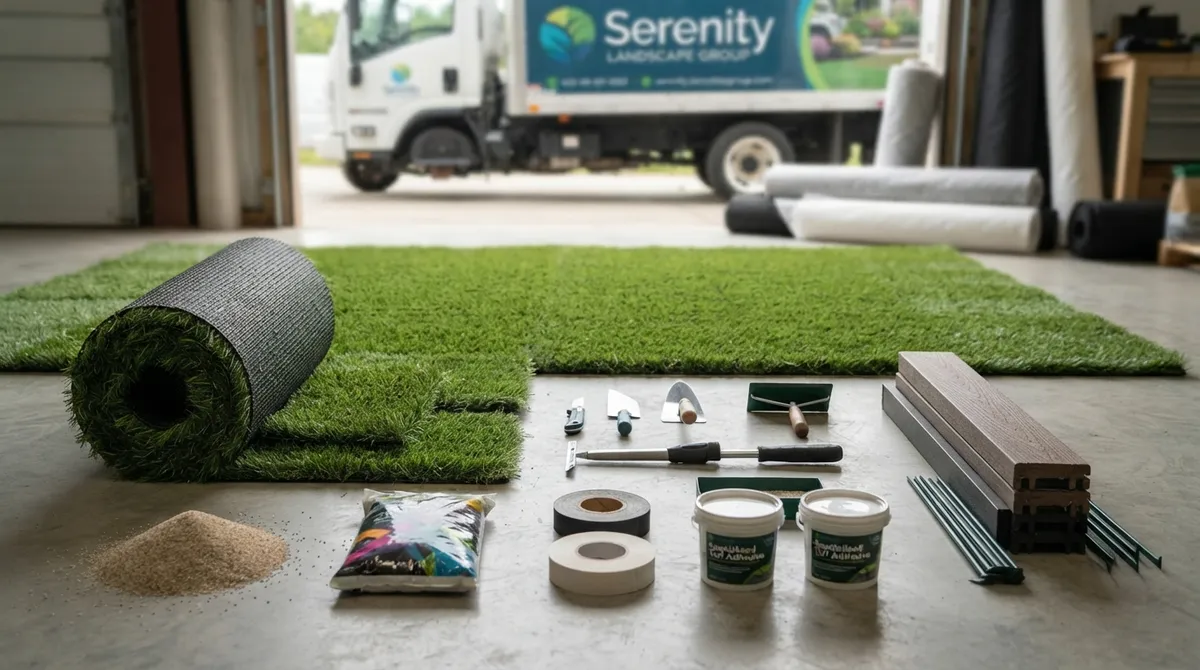
The turf itself is only one slice of the price. Turf material alone is often quoted at about $2 to $8 per square foot. The rest of the cost comes from the work that happens under and around the turf. That hidden work is what makes a lawn look good and drain well for years.
A solid professional quote may include:
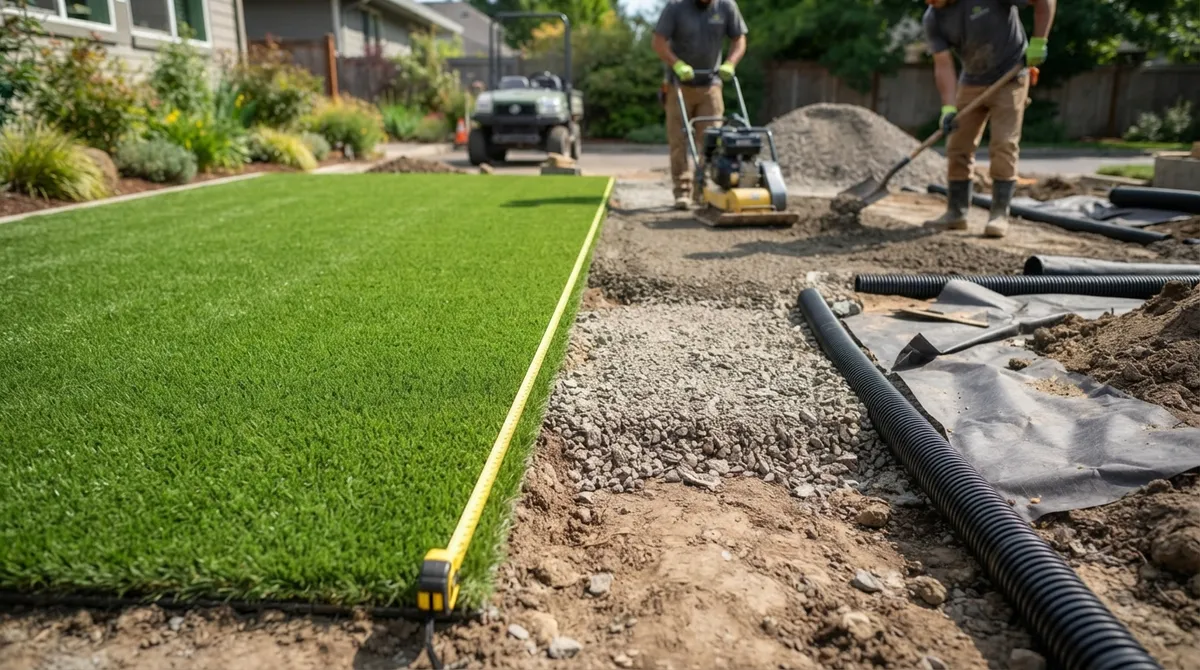
- Excavation and disposal: removing the old lawn and soil to the right depth.
- Compacted aggregate base: the stable layer that keeps your lawn flat and helps water drain.
- Grading: shaping the surface so water moves away from your home.
- Weed barrier: a layer that helps block weeds from pushing through.
- Turf, seams, and infill: the visible grass, plus the materials that hold blades upright and secure the edges.
- Edging and labor: the borders that keep everything neat and the crew time to install it.
Always ask for an itemized quote. Some estimates leave out drainage, removal, or other site work, which can lead to surprises later. If you’re curious about the base layer, our guide to the best base materials for turf installation explains why it matters so much.
What Makes Fake Grass Cost More or Less?
Think of your quote like a recipe. Each ingredient changes the final dish. Here are the biggest factors that move the price up or down.
- Turf quality: fiber type, pile height, and density all affect price. Denser, higher-grade turf costs more but often looks and feels better.
- Pet-specific features: antimicrobial backing and special infill can add cost, but they make cleanup easier.
- Yard size and shape: curves, tight corners, and odd shapes mean more cutting and more labor.
- Access: if equipment can’t reach your backyard easily, crews may need to haul materials by hand.
- Existing lawn removal: tearing out old grass takes time and disposal fees.
- Soil, slope, and drainage: clay soil, steep slopes, or soggy spots need extra prep, which is common around Chicago.
- Edging: borders add cost, depending on the material you pick.
- Local labor rates: prices in the Chicago suburbs can differ from other regions.
Size matters in a surprising way. Small installations often cost more per square foot because fixed costs, like crew travel and equipment setup, get spread over less area. A big, open, simple-shaped lawn often has a lower unit price, even though the total bill is higher.
Fake Grass Cost by Project Size
Here is a quick budgeting table using the common $8 to $15 per square foot range. These are estimates before any extras, so treat them as a starting point.
| Project Size | Low Estimate ($8/sq ft) | High Estimate ($15/sq ft) |
|---|---|---|
| 250 sq ft (small patio or dog run) | $2,000 | $3,750 |
| 500 sq ft (small yard) | $4,000 | $7,500 |
| 1,000 sq ft (average backyard) | $8,000 | $15,000 |
| 1,500 sq ft (larger yard) | $12,000 | $22,500 |
To build your own estimate, measure your turf area and multiply it by a local installed-price range. Then add separate allowances for excavation, hauling, drainage, edging, and any upgrades. For example, 500 square feet at $8 to $15 per square foot comes to about $4,000 to $7,500 before extras.
Want a deeper look at budgeting? Our post on how to budget for artificial grass installation costs walks through the process step by step.
Extra Costs to Plan For
A few add-ons can nudge your total higher. None of them are bad news. They just help you plan well so there are no surprises.
- Lawn removal: LawnStarter’s 2026 guide puts grass removal at roughly $0.88 to $1.84 per square foot.
- Landscape edging: the same guide reports about $2 to $11.50 per linear foot, depending on the material.
- Drainage fixes: soggy yards may need extra gravel, grading, or a dry well.
- Upgraded turf: softer blades, cooler fibers, or pet-friendly backing cost more per square foot.
These are guide estimates, not fixed prices, so use them for planning rather than as exact numbers. Drainage is especially important in our region. If your yard holds water, take a look at how turf drainage systems work before you finalize your plan.
Is Fake Grass Cheaper Than Real Grass Over Time?
This is where the story gets interesting. Natural sod costs less to install, but it keeps costing money every month. Think of it like buying a cheap printer and then paying for ink forever.
With real grass, you pay for:
- Weekly mowing, either your time or a crew’s
- Water, which adds up fast in summer
- Fertilizer, weed control, and seed
- Reseeding or repairs after winter damage or heavy foot traffic
Artificial turf generally needs less mowing and no routine lawn irrigation. On water use, a 2022 Western Resource Advocates report cites a Synthetic Turf Council estimate that an 1,800-square-foot artificial lawn could save about 99,000 gallons of water each year. Savings vary a lot by climate and irrigation habits, so your numbers may differ.
That said, fake grass is not maintenance-free. You’ll still brush it, clear leaves and debris, rinse it now and then, and clean up after pets. For a side-by-side look, check out these cost-benefit facts on artificial turf versus real grass.
How Long Does Fake Grass Last?
Lifespan is a big part of the cost story, and honestly, the claims vary. A 2022 Western Resource Advocates report cites roughly 8 to 10 years before residential turf loses its appearance. Some installer and consumer guides claim 15 to 25 years with proper care.
The truth is somewhere in the middle and depends on:
- The quality of the turf you choose
- How well the base was prepared
- How much foot traffic and pet use it gets
- How often you brush and clean it
Treat lifespan as product- and installation-dependent, not as a guarantee. When you compare costs, plan for eventual removal or replacement too. If you want local insight, read about artificial turf lifespan in Chicago and how our climate plays a role.
Fake Grass Cost for Different Property Types
Different properties have different needs, so the cost looks a little different for each.
Suburban Homes
Suburban homeowners often want a clean, green lawn that meets HOA standards and handles kids, pets, and backyard parties. A mid-grade turf with a strong base usually hits the sweet spot. If you’re in the western suburbs, a helpful starting point is how to choose backyard turf in the Chicago suburbs.
Urban Condos and Rooftops
Small spaces cost more per square foot, but they also need far less turf. Rooftops add extra planning for weight, drainage, and access. Our guide on rooftop artificial turf covers the details.
Commercial Properties and Small Businesses
Offices, shops, and restaurants like turf because it stays tidy year-round and saves on upkeep. Larger, simple areas can bring the price per square foot down. See why commercial artificial turf is a smart choice in Chicago.
New Home Builders
Builders often want turnkey outdoor spaces that help homes sell faster. Turf delivers instant curb appeal without waiting for seed to grow, which is a big win on tight timelines.
Tips to Get the Best Value on Fake Grass
You don’t have to cut corners to keep costs sensible. A little planning goes a long way.
- Measure your space first. Knowing your square footage helps you spot fair quotes.
- Get itemized quotes. Compare what’s included, not just the bottom line.
- Don’t skimp on the base. A weak base causes dips, puddles, and early wear.
- Match the turf to your lifestyle. Pets, kids, and shade all call for different products.
- Hire a pro. Seams, grading, and drainage are tricky, and mistakes get expensive. Learn why professional turf installation beats DIY.
Also look for installers who follow industry standards. Groups like Landscape Illinois connect homeowners with trusted local professionals, and the ICPI Certified Installer program helps you find skilled hardscape installers if your project also includes patios or walkways.
Pairing Turf With Other Landscape Features
Here’s a fun bonus. Many of our clients pair their new lawn with pavers, fire pits, or a pergola. Doing it all in one plan can save on mobilization and keeps the design cohesive. You can browse our gallery of past work for inspiration.
At Serenity Landscape Group, we’ve spent over two decades designing and building outdoor spaces across the Chicago area. Our artificial turf installation service covers everything from prep to final brushing, so you know exactly what you’re paying for.
Ready to Price Out Your Fake Grass Project?
The fake grass cost for your yard comes down to size, site conditions, turf quality, and the prep work underneath. Expect roughly $8 to $15 per square foot installed as a starting point, and always compare itemized quotes. Over time, savings on mowing, watering, and upkeep can help balance the higher upfront price, though lifespan and maintenance still matter.
If you’d like real numbers for your own yard, we’d love to help. Get a free estimate from our team, or call us at (630) 359-5139 to talk through your project. Let’s turn your yard into a space you can’t wait to step outside and enjoy.
FAQs
Q: How much does fake grass cost per square foot installed?
A: Most residential projects land around $8 to $15 per square foot installed, though published estimates range from about $6 to $22. Your final price depends on turf quality, site prep, drainage, access, and local labor rates, so an itemized quote is your best friend.
Q: How much does it cost to install artificial grass in a 500- or 1,000-square-foot yard?
A: At $8 to $15 per square foot, a 500-square-foot yard runs roughly $4,000 to $7,500, and a 1,000-square-foot yard runs about $8,000 to $15,000. Those figures come before extras like lawn removal, drainage work, or edging, so plan a little wiggle room.
Q: Is artificial grass cheaper than natural grass over time?
A: Fake grass costs more upfront, but it can save money on mowing, watering, and lawn care over the years. The real answer depends on your local water and lawn-care costs, how long your turf lasts, and the maintenance and eventual replacement you plan for.
Q: Does artificial grass cost more for pets or a sloped yard?
A: It can. Pet-friendly features like antimicrobial backing and special infill add to the price, and slopes or curves mean extra labor and materials. The good news is that these upgrades often make daily life easier, so many families find them worth it.
Q: How long does artificial grass last, and what maintenance does it need?
A: Estimates range from about 8 to 10 years up to 15 to 25 years, depending on turf quality, installation, and use. Plan on regular brushing, clearing debris, occasional rinsing, and pet-waste cleanup to keep it looking its best.