Key Takeaways
-
Use warm color temperature (2,700K or lower) for outdoor lighting to make stone, brick, wood, and plants look natural; avoid cool bluish light that feels harsh in gardens.
-
Follow the five principles of responsible lighting: use light only when needed, direct it only where needed, use minimal brightness (pathways 300 lumens or less), control timing with sensors/timers, and choose warm colors to save energy and respect neighbors.
-
Choose shielded LED fixtures that aim downward (no higher than 80 degrees from vertical) to eliminate glare, prevent light pollution, and keep light off neighboring properties and the night sky.
-
Plan your lighting design by walking the property at night, listing goals, mapping zones, selecting fixture types for specific jobs, and adding controls like timers or motion sensors set to five minutes or less.
-
Perform seasonal maintenance (spring and fall) including lens cleaning, connection checks, fixture re-aiming as plants grow, and prompt replacement of failed parts to maintain safety and appearance.
-
Mix four lighting techniques—path lighting for walkways, step lighting for safety, downlighting for natural ambiance, and accent lighting for focal features—to create layered, balanced outdoor lighting.
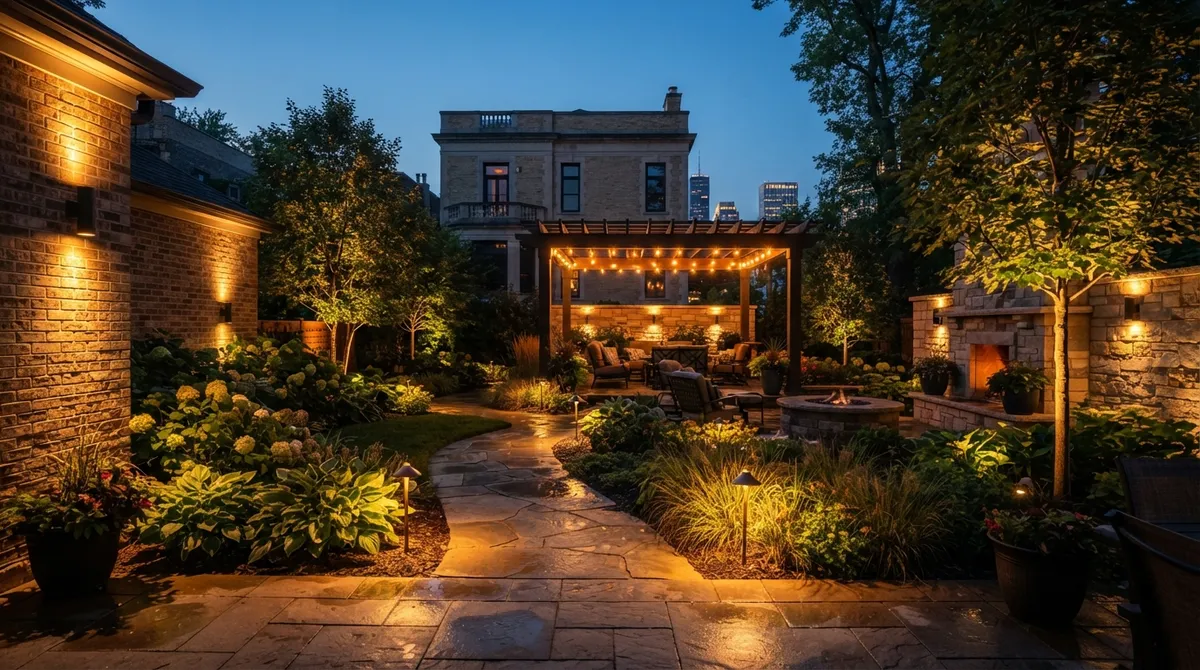
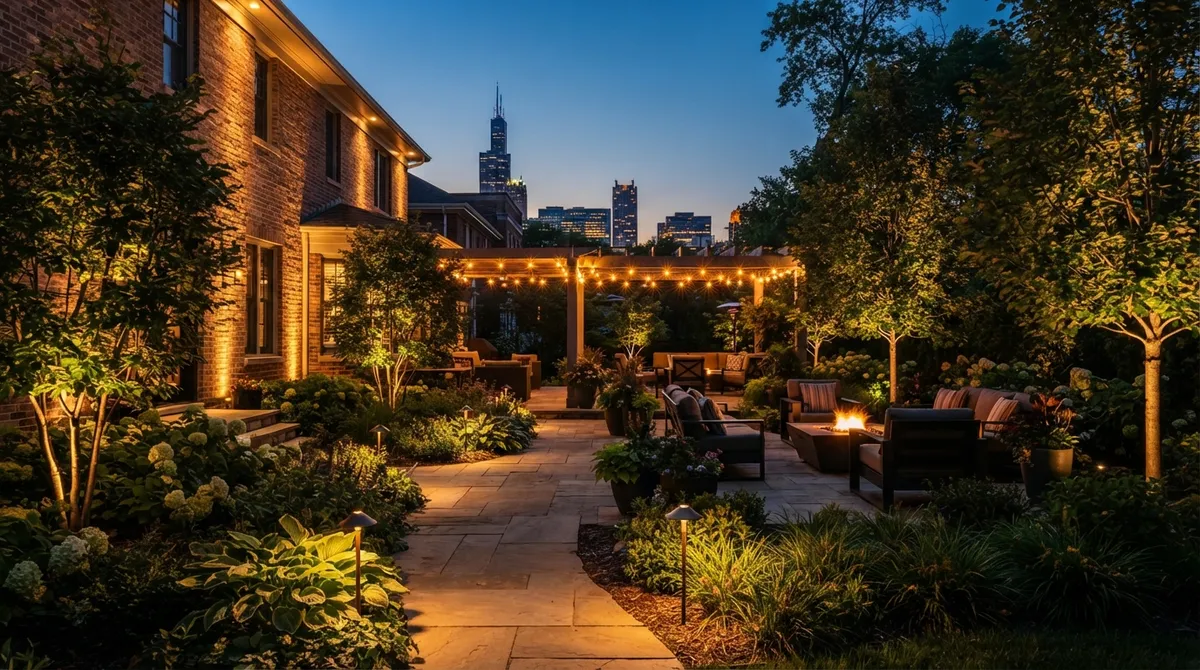
Picture this: the sun slips behind your Chicago-area home, and instead of heading inside, you stay out. A warm glow lights your patio steps. Soft light washes over a favorite tree. Your yard feels like a cozy extra room. That is the magic of well-planned outdoor lighting.
Good lighting does more than help you see in the dark. It makes paths safer, shows off your landscaping, and stretches your enjoyment of the yard well past sunset. And with long winter evenings in the Midwest, that extra glow matters.
But there is a right way and a wrong way to do it. Too many bright fixtures can cause glare, annoy the neighbors, and make a yard feel like a parking lot. In this friendly guide, we will walk through what landscape lighting is, the main techniques, how to plan a design, and how to keep it working for years. Let’s light things up the smart way!
What Is Landscape Outdoor Lighting?
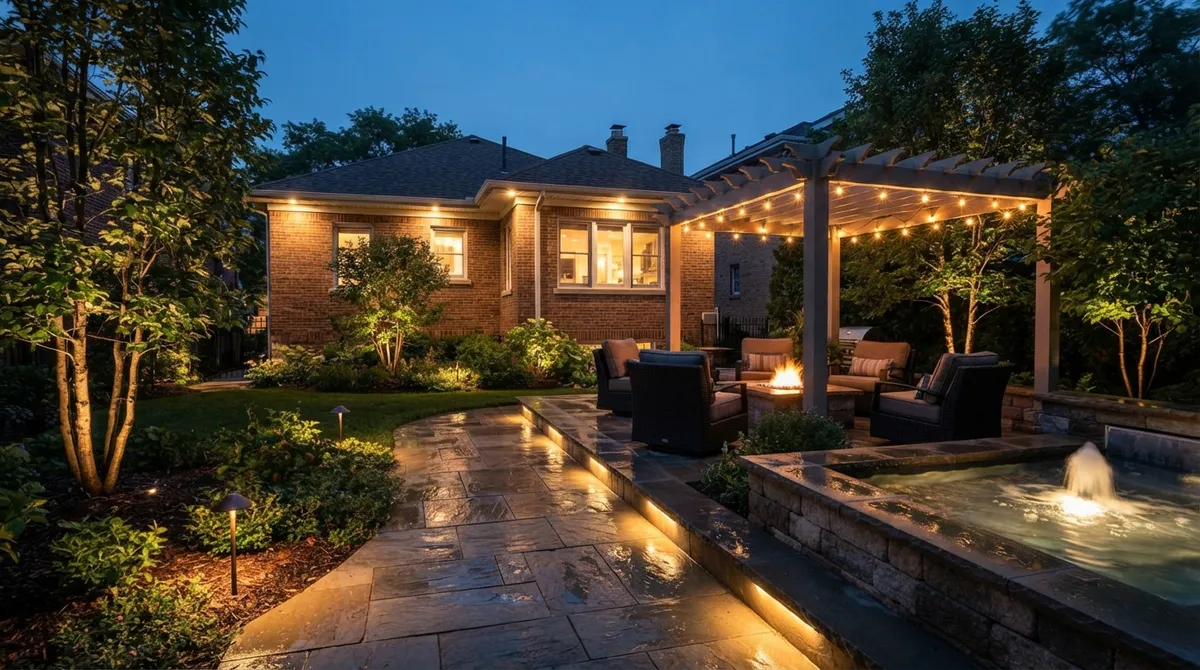
Landscape outdoor lighting is planned light for the spaces around your home or business. It covers paths, steps, entrances, patios, gardens, trees, and water features. The goal is simple: put light where you need it, when you need it.
A great design balances four things:
- Visibility: You can see where you are walking.
- Usability: Patios and entertaining areas work after dark.
- Appearance: Your best features stand out.
- Respect for others: Neighbors and the night sky are not overwhelmed.
Think of lighting as the final layer of your landscape. Plants, pavers, and structures set the stage. Light brings them to life at night. If you are planning a bigger project, our guide on how to create a landscape design that transforms your space shows how lighting fits into the whole picture.
Why Outdoor Lighting Matters for Chicago-Area Properties
Chicagoland has a lot of dark hours for much of the year. By mid-winter, the sun is down before many of us leave work. That makes lighting a daily need, not just a bonus.
Here is how different property owners benefit:
- Suburban homeowners: Lighting boosts curb appeal, makes entry paths safer, and turns patios into evening hangouts. It also helps you stay within HOA standards when fixtures are shielded and tasteful.
- Urban condo owners: Small patios and rooftop spaces feel bigger and more inviting with a few well-placed fixtures.
- Commercial property managers: Lit entrances, walkways, and parking edges improve safety and make a property look polished and professional.
- New home builders: A finished lighting package helps buyers picture themselves living there, which makes a turnkey landscape stand out.
- Small business owners: Warm lighting around patios and storefronts draws customers in and sets the mood.
The Main Types of Landscape Lighting
Not every fixture does the same job. Pros mix a few techniques to build a layered look. Fixture placement and beam direction matter just as much as the fixture itself.
Path and Area Lighting
These low fixtures light walkways, driveways edges, and garden beds. They help people move safely and keep guests from tripping. Soft, low-level light works best here. If you are building a new walkway, check out our ideas in walkway paver design and plan the lighting at the same time.
Step and Wall Lighting
Changes in level are where most outdoor slips happen. Small lights tucked into risers, walls, or stair sides make steps clear without harsh glare. They also look great on seat walls and planters.
Downlighting
Fixtures mounted in trees or on structures aim light down, like soft moonlight. This gives a natural, gentle wash over patios, lawns, and garden beds. It is a favorite for entertaining areas because it flatters people and plants alike.
Accent Lighting
Accent lights highlight a feature you love: a specimen tree, a stone wall, a fountain, or the texture of your home’s siding. Aim carefully so the light lands on the feature and not in anyone’s eyes.
A Quick Comparison of Lighting Techniques
| Technique | Best For | Look and Feel | Key Tip |
|---|---|---|---|
| Path and area lighting | Walkways, drive edges, garden beds | Soft pools of light | Space fixtures to avoid bright spots |
| Step and wall lighting | Stairs, seat walls, retaining walls | Subtle and safe | Hide the source to cut glare |
| Downlighting | Patios, trees, pergolas | Natural moonlight effect | Mount high and aim down |
| Accent lighting | Trees, stonework, water features | Dramatic focal points | Keep beams narrow and aimed |
The Five Principles of Responsible Outdoor Lighting
Want a simple rulebook? DarkSky and the Illuminating Engineering Society share five principles for responsible outdoor lighting. They are easy to remember and make any design better:
- Use light only when it is needed. If no one is using an area, it does not need to glow.
- Direct light only where it is needed. Aim it at the path, step, or feature, not the sky or the neighbor’s window.
- Use no more brightness than necessary. A little light goes a long way outdoors.
- Control when light is on. Use timers, dimmers, or sensors.
- Choose warmer-colored light where possible. It looks cozy and is easier on the night environment.
Following these rules keeps your yard beautiful and neighborly. It also tends to save energy and money.
How Bright Should Your Lights Be?
Most people use far more light than they need. Outdoors, your eyes adjust quickly, so softer light feels plenty bright. DarkSky’s 2025 home-lighting guidance offers helpful starting points. These are general recommendations, not code requirements:
| Area | Suggested Output |
|---|---|
| Pathways | 300 lumens or less per fixture |
| Work areas (like outside a garage) | About 300 to 800 lumens |
| Total home exterior | Below 1,000 lumens where practical |
A pro can help you hit the right balance for your site, since every yard is different.
What Color Temperature Works Best?
Color temperature is measured in Kelvins (K). Lower numbers look warm and golden. Higher numbers look cool and bluish. For most landscapes, warm is the winner.
DarkSky’s home guidance prefers 2,700 K or lower. Light at 3,000 K or lower is generally seen as warm. Warm light makes stone, brick, wood, and greenery look rich and natural. Cool, bluish light can feel harsh and clinical in a garden.
Are LED Landscape Lights Worth It?
LED fixtures are now the go-to choice for landscape lighting, and for good reason. The U.S. Department of Energy notes that well-designed LED outdoor lights can give the light you need with less energy and better evenness than older high-intensity-discharge sources.
That said, results depend on the fixture, its optics, the power supply, and the overall design. The DOE explains energy effectiveness as a mix of three things: how efficient the light source is, how well the fixture directs light, and how much light actually reaches the target without spilling elsewhere. So a smart design matters as much as the bulb.
LEDs also last a long time, which means fewer bulb changes and less fuss. For a busy homeowner or a property manager with many fixtures, that is a real win.
Cut Glare and Light Pollution
Nobody likes a blinding light in the face. Glare is one of the most common mistakes in DIY lighting. Here are easy ways to avoid it:
- Choose shielded fixtures that keep the bulb from being seen directly.
- Aim light downward. DarkSky suggests keeping aim no higher than 80 degrees from straight down.
- Avoid unnecessary uplight. Light shining into the sky wastes energy and adds to skyglow.
- Keep spill off neighboring properties. This is a big deal in tight suburban lots and city blocks.
- Use the lowest practical brightness. More is not always better.
Use Timers, Dimmers, and Sensors
Controls are the secret to smart lighting. They keep your lights working for you instead of running all night for no reason.
- Timers: Turn decorative lights on at dusk and off at a set hour.
- Dimmers: Fine-tune the mood for dinner parties or quiet evenings.
- Motion sensors: Great for security spots and side yards. DarkSky suggests a duration of five minutes or less.
DarkSky also discourages dusk-to-dawn operation when lighting is not needed. Set your controls to match how you actually use the space.
How to Plan a Landscape Lighting Design
A little planning saves a lot of headaches. Here is a simple process we follow with clients:
- Walk the property at night. Notice dark spots, trip hazards, and the features you want to show off.
- List your goals. Safety, entertaining, curb appeal, security, or all of the above.
- Map your zones. Entry, driveway, walkways, patio, garden beds, trees, and water features.
- Pick the right fixtures. Match each fixture type to the job it needs to do.
- Plan wiring and transformers. Think about where cables will run and where equipment will be easy to reach.
- Add controls. Choose timers, dimmers, or sensors that fit your routine.
- Test and adjust at night. Final aiming is best done after dark.
Think ahead about mature plant growth, irrigation, and drainage, too. A shrub that is tiny today may block a light in three years. Our team can help you build lighting into your softscapes so the two work together.
Pair Lighting With Your Favorite Outdoor Features
Lighting shines brightest when it highlights great design. Here are some pairings our clients love:
- Patios and walkways: Subtle lights set into or beside pavers make evening strolls safe and pretty.
- Retaining walls: Wall lights add depth and show off the stone. Learn more about retaining walls and how they can double as a lighting canvas.
- Fire pits: A glowing fire pit plus soft path lights equals the perfect gathering spot. Browse ideas in 12 fire pits that transform backyards in 2026.
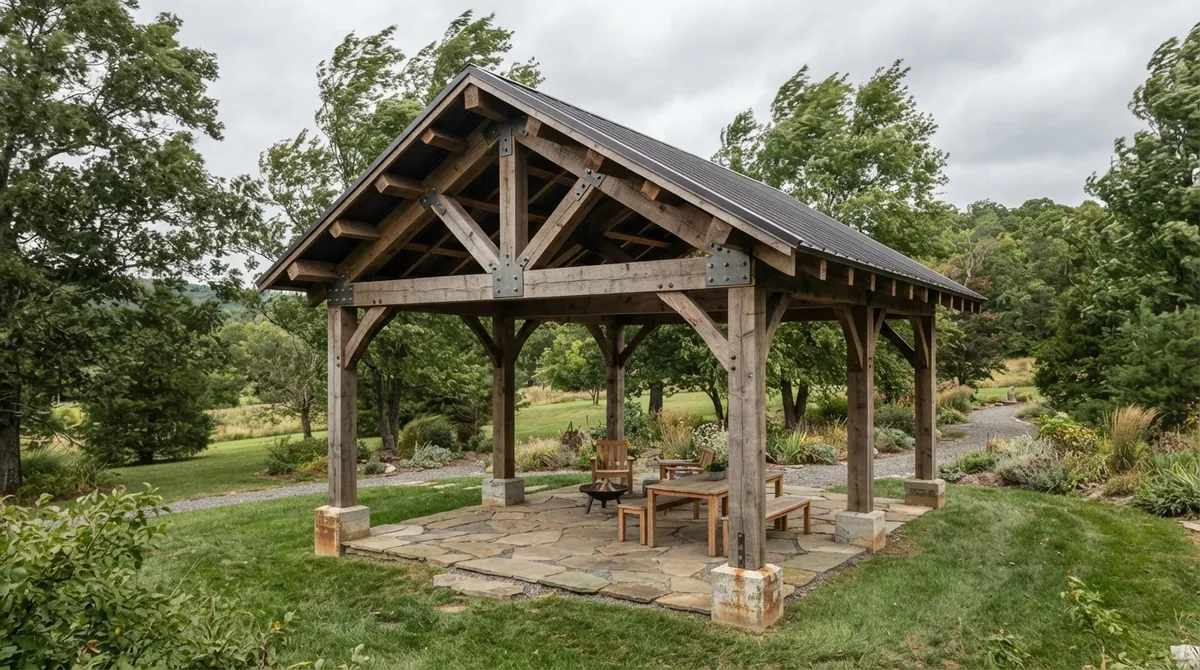
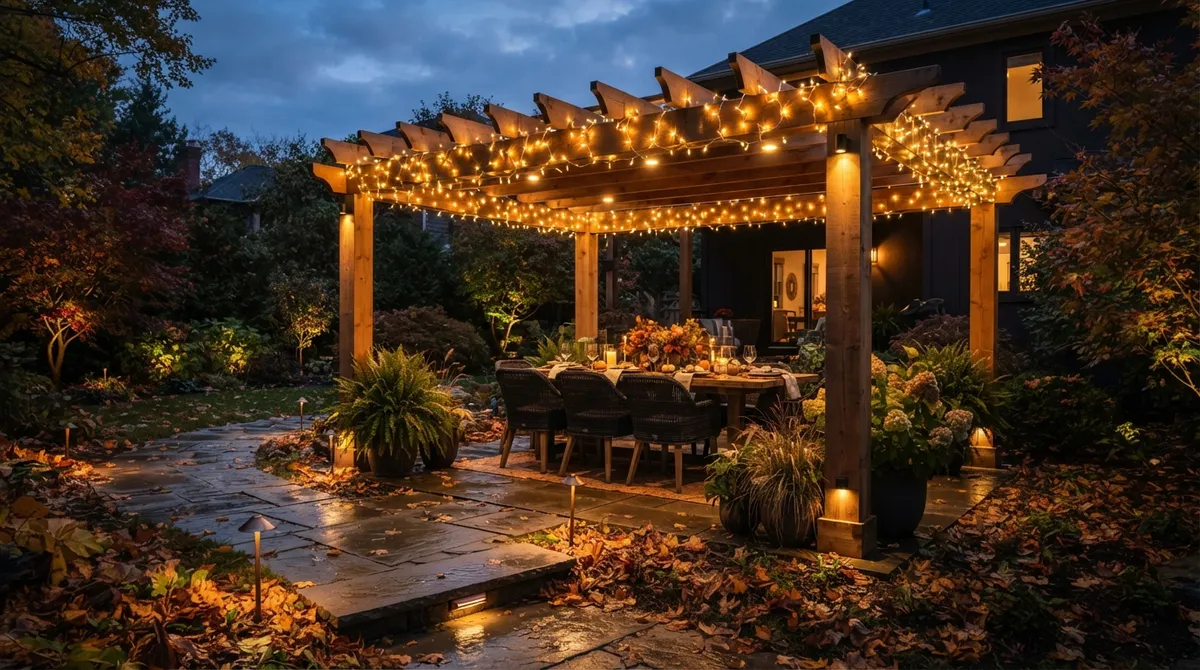
- Pergolas and pavilions: Mounted fixtures or string lights create an outdoor room. See pergolas and pavilions for inspiration.
We also offer lighting and sound services so you can plan the whole evening experience in one place. For more design sparks, read our landscape lighting ideas for a Chicago yard in 2026.
Check Local Rules Before You Install
Before you dig, check your local electrical, building, and lighting rules. Low-voltage landscape systems are common and friendlier for installation, but requirements still vary from town to town. Any mains-voltage work and required permits should be handled by qualified professionals following local code.
If you live in an HOA community, check the lighting guidelines too. Many associations have rules on brightness, color, and fixture style. The good news is that warm, shielded, low-level lighting usually fits right in.
It also helps to work with trained landscape pros. Industry groups like Landscape Illinois are a helpful place to learn what good standards look like in our region.
Keep Your Lighting Looking Great
Landscape lighting is not set-and-forget. A little care keeps it bright and safe. Plan on these simple maintenance habits:
- Clean lenses to remove dust, pollen, and hard-water spots.
- Check connections for corrosion or loose wiring, especially after Chicago winters.
- Re-aim fixtures as plants grow or snow and storms nudge them out of place.
- Replace failed parts promptly so you do not end up with dark gaps.
- Trim plants that block beams or hide fixtures.
- Keep equipment accessible so transformers and timers are easy to service.
A seasonal check-up each spring and fall is a smart rhythm. It catches small problems before they turn into big ones. And if your property needs ongoing care, our team can fold lighting checks into regular service visits.
Common Outdoor Lighting Mistakes to Avoid
- Going too bright. Harsh light feels like a stadium, not a garden.
- Skipping a plan. Random fixtures create spotty, uneven results.
- Ignoring glare. Always check what the light looks like from where people stand and sit.
- Forgetting plant growth. Today’s perfect aim may be blocked next season.
- Leaving lights on all night. Controls save energy and respect your neighbors.
- Picking cool white by default. Warm tones almost always look better outdoors.
Many hardscape and lighting problems come from rushing the planning stage. Our post on 7 hardscaping mistakes to avoid in your outdoor space covers more pitfalls worth knowing about.
Ready to Light Up Your Landscape?
Great outdoor lighting does not need to be complicated. Start with a clear plan, use only the light you need, choose warm and shielded fixtures, add smart controls, and keep up with simple maintenance. Do that, and your yard will feel safer, prettier, and more welcoming every single evening.
At Serenity Landscape Group, we have spent over two decades helping Chicago-area homes and businesses turn their outdoor spaces into places people love. Lighting is one of our favorite ways to make a landscape feel complete. If you are ready to see what your yard could look like after dark, get a free estimate or call us at (630) 359-5139. We would love to help you build an evening glow you will enjoy for years.
FAQs
Q: What is landscape lighting, and what does it include?
A: Landscape lighting is planned light for outdoor spaces like paths, steps, entrances, patios, gardens, trees, and water features. It mixes path lights, step lights, downlighting, and accent lighting to keep your yard safe and beautiful after dark.
Q: What color temperature is best for outdoor landscape lighting?
A: Warm light is the way to go! DarkSky prefers 2,700 K or lower for home lighting, and 3,000 K or lower is generally seen as warm. It makes stone, wood, and plants look rich and natural instead of harsh.
Q: Should landscape lights be on timers or motion sensors?
A: Yes, controls are a smart idea. Timers and dimmers keep decorative lights from running all night, and motion sensors work well for security spots, ideally set to five minutes or less. This saves energy and keeps your yard neighbor-friendly.
Q: Are LED landscape lights energy efficient?
A: They sure can be! The U.S. Department of Energy notes that well-designed LED outdoor lights can deliver the light you need with less energy and better evenness than older sources. Real results depend on the fixture, optics, power supply, and overall design.
Q: How often should landscape lighting be maintained?
A: A check-up each spring and fall is a great habit. Clean the lenses, check connections, re-aim fixtures, replace failed parts, and trim plants that block the light as your landscape grows and changes.