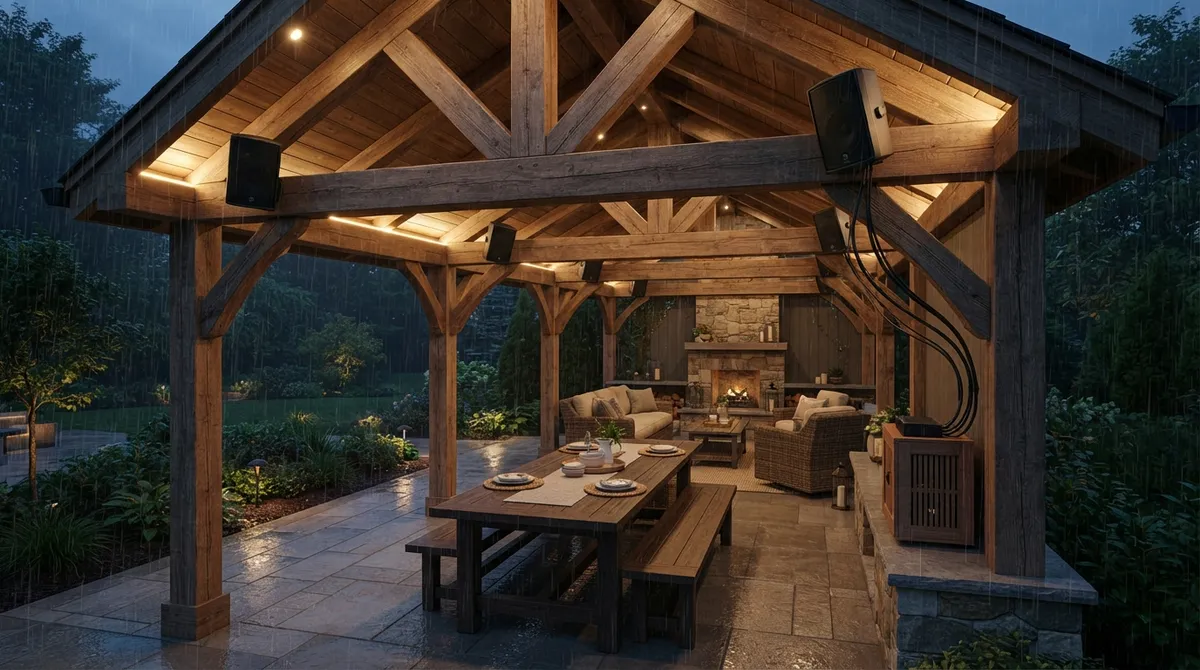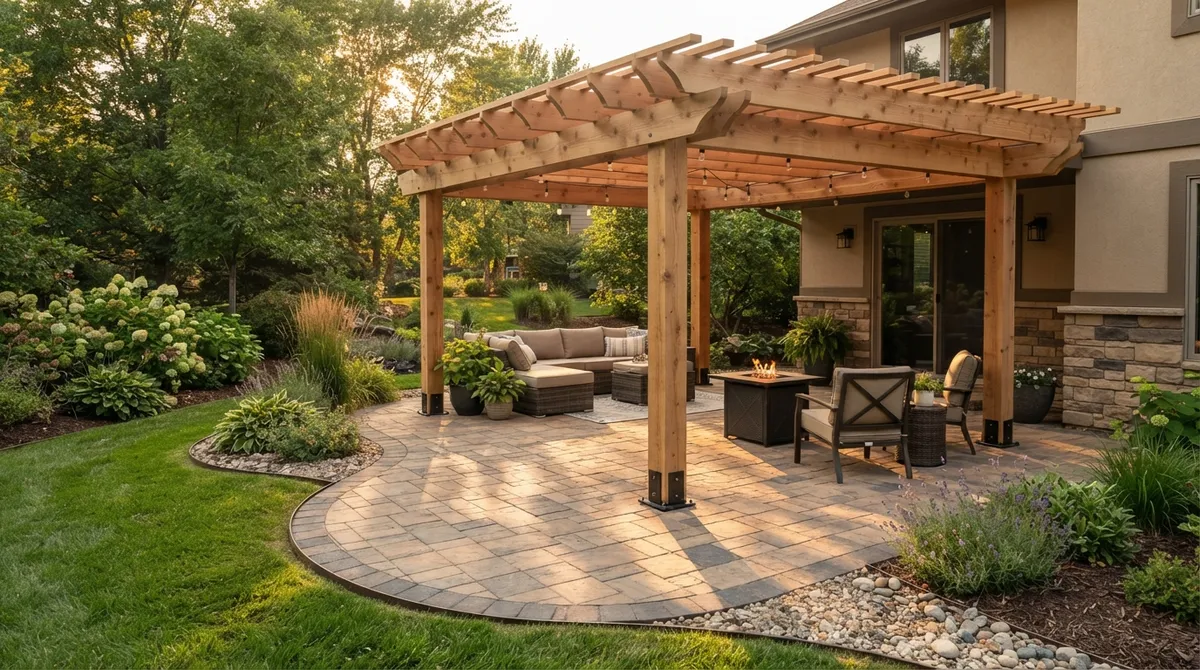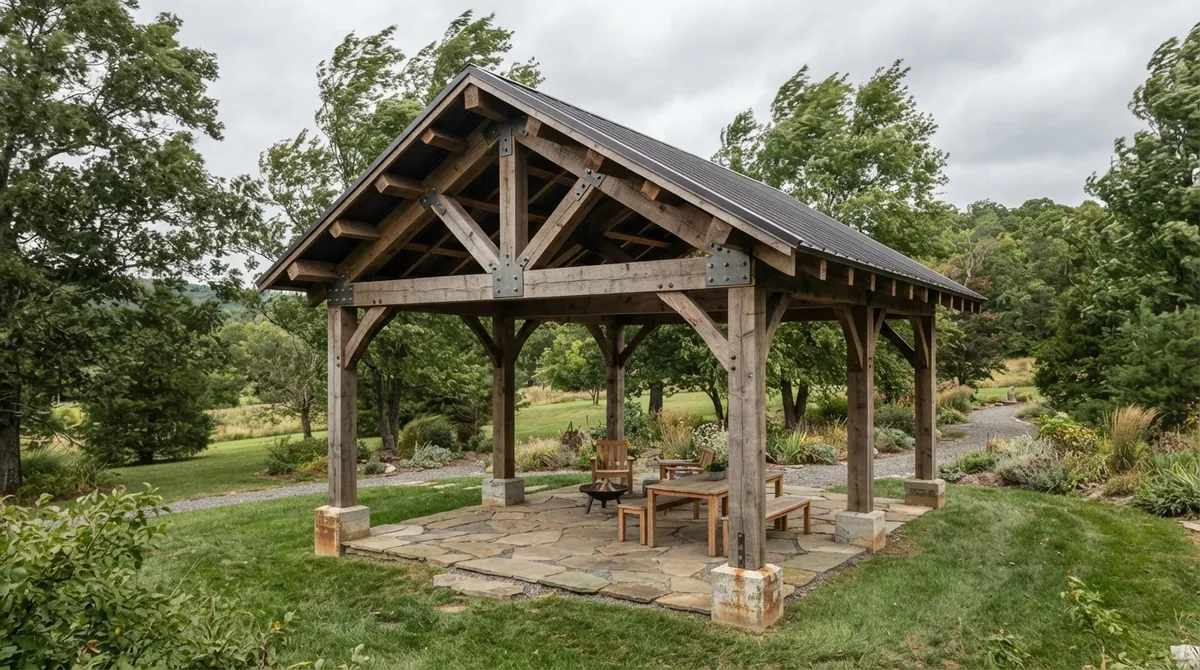
Key Takeaways
-
Wind uplift on the roof is the main structural threat for open pavilions, so the roof, beams, posts, connectors, and footings must work together as one continuous load path to the ground.
-
Pavilions should never rely on posts set on pavers or shallow footings; anchoring must match calculated site loads and extend below the frost line, especially in Chicago-area winters.
-
Choose a sheltered spot such as the lee side of the house or behind healthy mature trees, but avoid placing it under weak, dead, or leaning trees and unstable slopes.
-
Adding solid screens, curtains, or privacy walls can turn an open pavilion into a sail and raise structural loads, so tell your designer about future accessories at the planning stage.
-
Check local building codes and permits early, since wind design often references ASCE/SEI 7 with local amendments, and have a qualified professional run load calculations for your site.
-
Use corrosion-resistant hardware and inspect bolts, straps, post bases, and footings each season, and store or secure loose furniture and decor before storms.
Picture this: you finally finish your dream backyard pavilion, pour a glass of lemonade, and settle in. Then a gust rolls across the lawn and your cushions go flying. Sound familiar? If you live in the Chicago area, you already know the wind here has a mind of its own. Open fields, lake breezes, and sudden storm fronts can all put a pavilion to the test.
The good news is that great pavilion design for windy yards is very doable. It starts with smart planning, strong structure, and a little help from the landscape itself. In this guide, we will walk through where to place your pavilion, how to build it, what roof shapes work best, and how to care for it. We will keep things simple and friendly, so you can feel confident before you break ground.
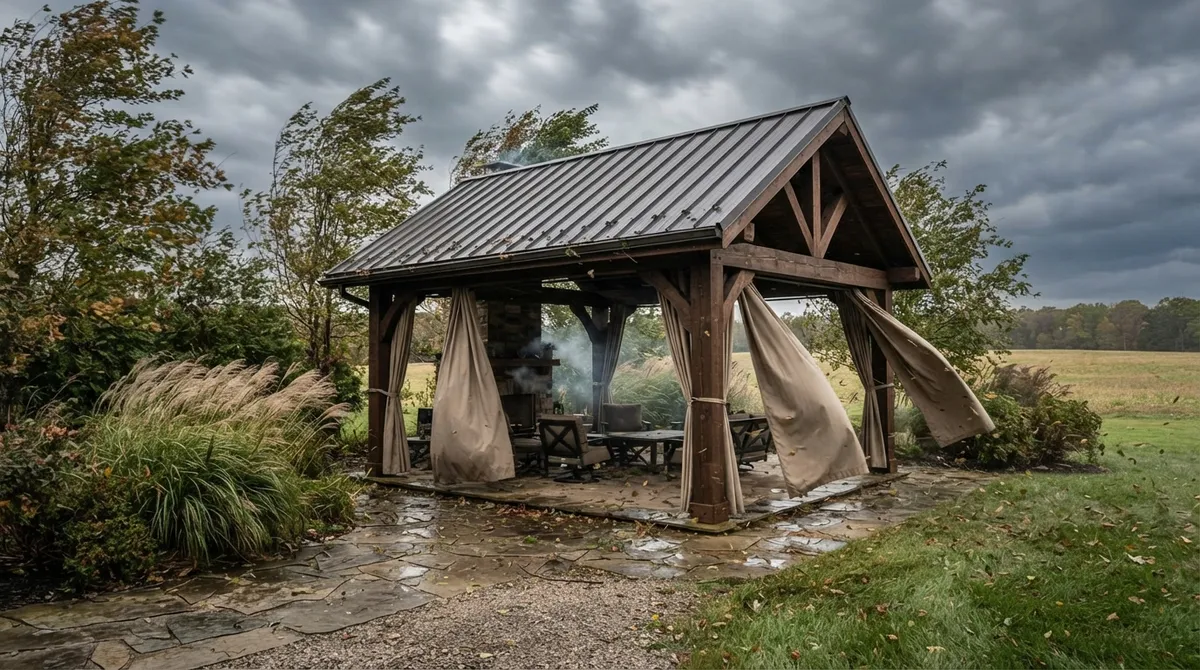
Why Wind Is Such a Big Deal for Pavilions
A pavilion has a roof but usually no walls. That open design feels airy and inviting, but it also means wind can hit the roof from above and push up from below. Engineers call this uplift, and it is the main thing to plan for.
Wind also pushes sideways on the roof and posts. So a safe pavilion needs every part to work together as one team: the roof, beams, posts, connectors, and footings. If one link is weak, the whole structure can suffer.
Here is the part many folks miss. The usual wind speed in your region is only one piece of the puzzle. Your yard has its own personality. A home on an open lot behind a farm field feels more wind than a tucked-in yard surrounded by mature trees and neighboring houses.
What Changes How Much Wind Your Pavilion Feels
- Site exposure, such as open fields, ridges, or large lots
- Nearby buildings, trees, and fences that block or funnel wind
- Pavilion height, width, and length
- Roof shape and pitch
- Overhang size
- Whether you add walls, screens, or curtains later
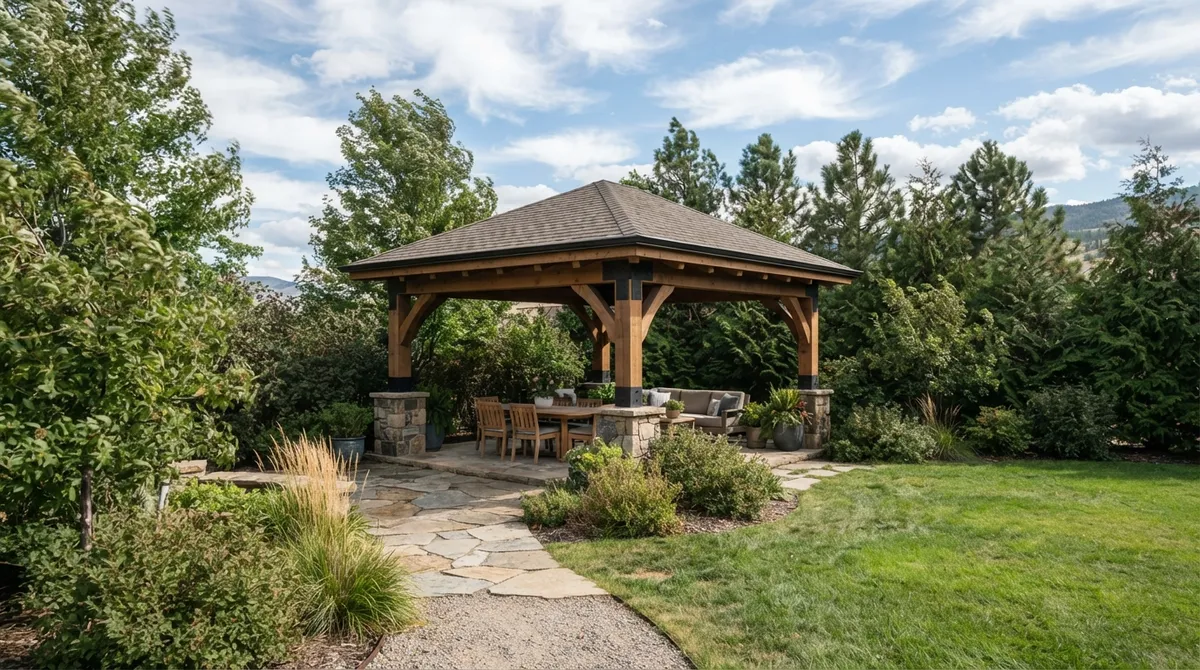
Where Should You Place a Pavilion in a Windy Yard?
Placement is your first and cheapest wind defense. Before any digging, spend a few days noticing where the breeze comes from. Many Chicago-area yards get their strongest gusts from the west and northwest, but your lot may differ.
A landscape professional can help you read the land. We look at wind direction, slopes, drainage, and existing plantings. Then we look for a naturally sheltered spot, such as the lee side of your house or a stand of healthy, mature trees.
A quick word of caution. Trees can help, but they can also cause trouble. Avoid placing a pavilion right under weak, dead, or leaning trees. Falling limbs are a hazard in a storm. Keep local setbacks in mind, too, and stay clear of unstable slopes.
Steps for Picking a Sheltered Spot
- Watch your yard on breezy days and note where the wind comes from.
- Mark the spots that feel calm, such as near the house or behind a solid fence.
- Check for hazards like dead trees, steep slopes, and drainage problems.
- Confirm property setbacks and any HOA rules.
- Walk the final spot with a landscape pro before you commit.
Siting can lower your exposure, but it never replaces proper structural design. Think of it as one helpful layer, not the whole plan.
How Does a Pavilion Handle Wind? The Load Path Idea
Strong wind-ready pavilions rely on what is called a continuous load path. That is a fancy way of saying the forces from the roof travel all the way down to the ground without any weak links.
Wind lifts the roof. The roof framing passes that pull to the beams. The beams pass it to the posts. The posts pass it to the footings or a properly designed slab. Each handoff needs the right connectors, such as post bases, hold-downs, bolts, and straps.
This is why simply setting posts on top of pavers is not a safe plan. Shallow or undersized footings are not reliable either. The anchoring has to match the calculated loads for your site.
Key Parts of a Wind-Ready Structure
| Component | What It Does | What to Look For |
|---|---|---|
| Roof framing | Carries wind and weather loads to the beams | Structural-grade lumber or steel, tied together with proper connectors |
| Beams and posts | Move forces down toward the ground | Correct size and spacing from engineered plans |
| Connectors | Hold every joint against uplift and sideways force | Corrosion-resistant hold-downs, straps, and bolts |
| Footings or slab | Anchor the whole structure to the ground | Engineered footing depth and size, set below the frost line |
Chicago winters add another twist. Frost can heave shallow footings, so depth matters for both wind and cold. A qualified designer will size footings for your exact conditions.
What Is the Best Pavilion Roof Shape for High Winds?
There is no single magic roof for every yard. The best choice depends on your site, size, and style. Still, a few ideas can guide you.
Roofs with big overhangs can catch a lot of uplift. Trimming overhangs or designing them with extra support can help. Lower-profile roofs generally expose less surface to wind than tall, steep ones. Strong, well-connected framing matters more than the shape alone.
| Roof Style | Wind Considerations | Best For |
|---|---|---|
| Low-pitch gable | Familiar shape; needs strong ridge and rafter connections | Classic backyard looks |
| Hip roof | Slopes on all sides, which can help manage wind flow | Exposed yards that need extra stability |
| Flat or low-slope roof | Low profile; drainage and uplift need careful design | Modern designs and smaller spaces |
| Large overhang designs | Higher uplift on the edges | Shade-focused spaces with engineered support |
Your final roof choice should come from a design professional who can run the numbers for your site. We love helping clients balance beauty with strength, so the pavilion looks great and stays put.
Do You Need a Permit or an Engineer?
Most likely, yes, at least a permit. In the United States, your locally adopted building code decides the wind rules. Many codes point to a standard called ASCE/SEI 7, and the edition in force can vary by town. Local amendments matter, too.
Wind design is not one-size-fits-all. For open structures like pavilions, the standard includes a minimum design wind force based on projected frontal area. But the exact calculation and code edition should always be confirmed by a qualified design professional. Please do not rely on a generic online estimate or a random footing size you found in a forum.
Here is a simple path to get it right:
- Call your local building department to learn what permits and plans you need.
- Ask which code edition and wind requirements apply to your address.
- Work with a qualified design professional for load calculations when required.
- Choose a builder who follows the approved plans and manufacturer instructions.
At Serenity Landscape Group, we guide homeowners and property managers through this process every day, so there are no surprises later. You can also read about how we work on our process page.
Will Walls, Screens, or Curtains Make a Pavilion Less Wind-Resistant?
This one surprises many people. Adding privacy panels, curtains, or solid screens can change how wind moves through and around the pavilion. In some cases, it can raise the loads on the structure.
Think of an open pavilion like an umbrella with the wind passing through. Close in the sides, and it starts to act more like a sail. That does not mean you cannot add screens. It just means the final layout, including planned accessories, should be reviewed rather than assuming the original open design still works.
If you dream of curtains or privacy walls, tell your designer at the start. It is much easier to plan for them upfront than to retrofit later.
Materials and Connectors That Stand Up to Wind
Good materials support long-term performance, but material choice alone does not make a pavilion wind-resistant. Structure and anchoring come first. Then quality materials help everything last.
- Structural-grade framing: Use lumber, steel, or engineered products rated for the job.
- Corrosion-resistant hardware: Chicago’s snow, salt, and moisture can rust weak connectors fast.
- Quality fasteners: Follow the manufacturer’s installation instructions exactly.
- Durable roofing: Choose roofing that is properly fastened for your wind exposure.
A strong pavilion looks even better on a solid base. Many of our clients pair their pavilion with a paver patio so the whole space feels connected. If you are curious, check out our guide on how to design a stunning paver patio, and read more about what pavilions are and how they can transform your outdoor space.
Using Landscaping to Calm the Wind
Landscaping cannot replace proper anchoring, but it can make your pavilion area much more comfortable. Smart plantings and hardscape features soften gusts and make the space feel cozier.
Landscape Ideas That Help
- Layered plantings: A mix of trees, shrubs, and tall grasses slows wind better than a single row.
- Staggered placement: Leave breathing room between plants and the pavilion so branches do not rub or fall on the roof.
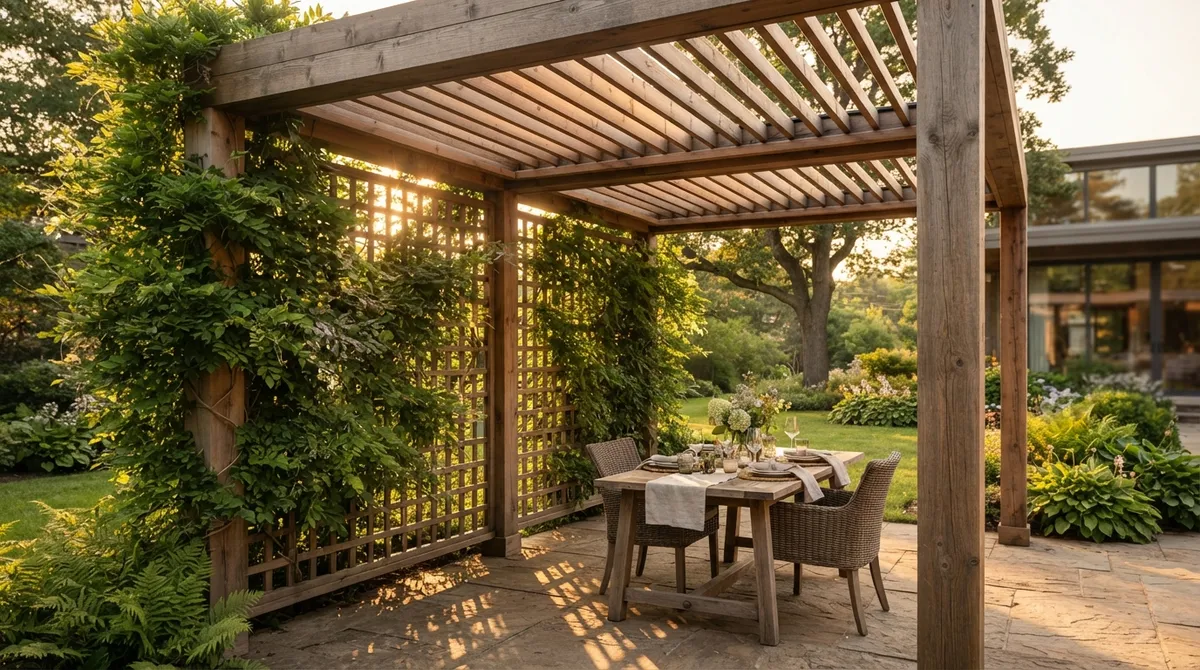
- Garden walls and fences: Partial barriers can break up strong gusts.
- Raised beds and terraces: These can reshape airflow while adding beauty.
Our softscapes team loves designing planting plans that guard against wind, and our retaining walls can help shape sloped yards into calmer, more usable spaces. For ideas on sturdy, stylish ground surfaces, see our post on landscape pavers for Chicago homes.
You can also learn more about regional planting choices from Landscape Illinois, and if you plan a paver base around your pavilion, look for an installer certified through ICPI-certified installer resources. For deeper technical guidance on wind and building safety, the FEMA design guide is a helpful reference.
How to Prepare Your Pavilion for a Windstorm
Even a well-built pavilion needs a little care. A few easy habits go a long way, especially as we head into fall and winter in 2026.
- Clear the space. Store or tie down lightweight chairs, umbrellas, and decor before a storm.
- Secure or remove accessories. Take down curtains, banners, and detachable screens.
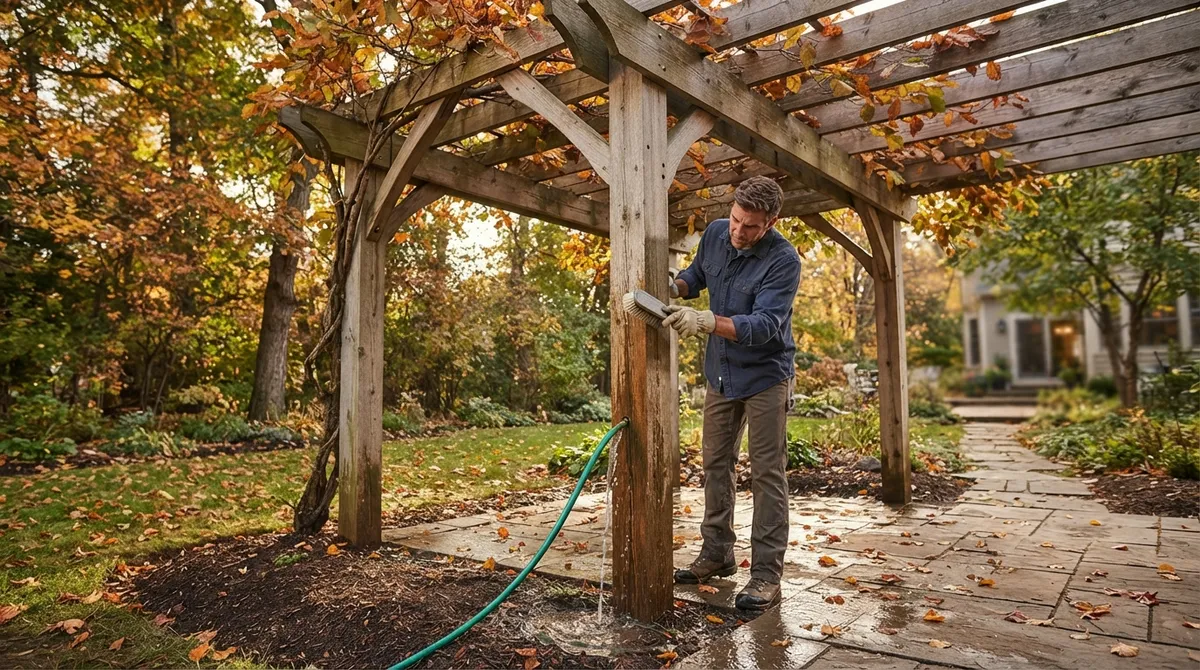
- Check connections. Look at bolts, straps, and post bases for rust, looseness, or movement.
- Inspect footings. Watch for cracks, heaving, or settling after freeze and thaw cycles.
- Trim nearby trees. Remove dead or weak branches before storm season.
A quick seasonal check takes less than an hour and can save you from big repairs. If you ever notice a loose or damaged connection, call a pro before the next big storm.
Bring Your Wind-Ready Pavilion to Life
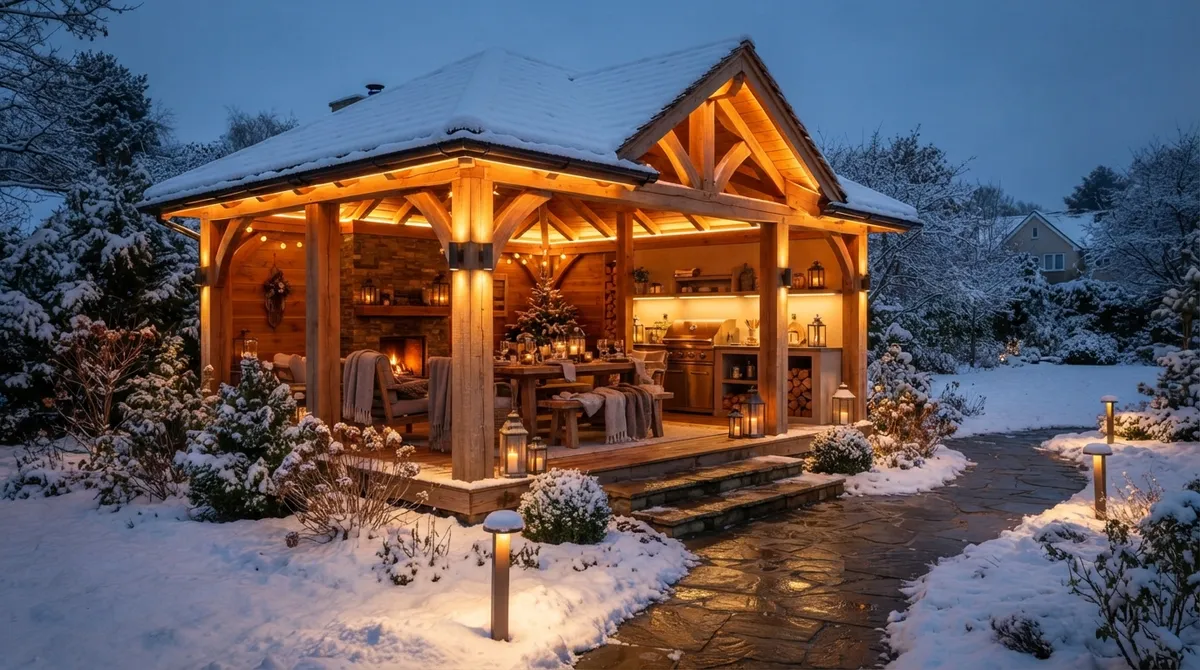
The best pavilion design for windy yards blends smart siting, engineered structure, quality materials, and thoughtful landscaping. When all four work together, you get a space that feels safe, calm, and beautiful in every season.
At Serenity Landscape Group, we have spent over two decades turning Chicago-area outdoor spaces into places people love. From pavilions and pergolas to pavers, lighting, and fire features, we plan the whole picture so everything works together. Ready to talk about your yard? Get a free estimate today, or call us at (630) 359-5139 and let’s start designing a pavilion that stands strong and feels like home.
FAQs
Q: How should a pavilion be anchored in a windy yard?
A: A pavilion needs a continuous load path from the roof all the way down to engineered footings or a properly designed slab. Post bases, hold-downs, bolts, and straps must match the calculated loads for your site. Simply setting posts on pavers or using shallow footings is not a safe plan.
Q: Where is the best place to put a pavilion to reduce wind exposure?
A: Look for a naturally sheltered spot, such as the lee side of your house or near healthy, mature plantings. Watch your yard on breezy days to learn where gusts come from. Just be sure to avoid weak trees, unstable slopes, and anything that breaks your local setback rules.
Q: Will adding privacy screens or curtains make my pavilion less wind-resistant?
A: It can. Solid or partly solid walls, screens, and curtains change how wind pushes on the structure and may raise the loads. Share your accessory plans with your designer early so the final layout can be reviewed as a whole.
Q: Do I need a permit or an engineer to build a backyard pavilion?
A: Often you will need at least a permit, and many projects benefit from engineered plans. Your local building department decides which code edition and wind rules apply. A qualified design professional can confirm the right calculations for your exact site.
Q: How can I prepare my pavilion and outdoor furniture for a windstorm?
A: Store or secure loose furniture, cushions, and decor before the storm hits. Take down curtains and detachable screens, and trim any weak branches nearby. A quick check of your connectors and footings each season also helps your pavilion stay strong.