Key Takeaways
-
Installed paver patio costs vary widely (roughly $8 to $30+ per square foot depending on source), so get a site visit and written quote for an accurate price.
-
Base preparation, compaction, and edge restraint matter more than the pavers themselves; weak bases cause settling and shifting later.
-
Proper drainage is critical: aim for about 1/4 inch of fall per foot (roughly a 2% grade) to move water away from your home.
-
Unlike poured slabs that crack as a whole, damaged or settled pavers can be lifted, fixed, and reset individually, saving repair time and money.
-
Routine care is simple: sweep often, rinse as needed, check joint sand every few years, and follow your manufacturer's guidance on sealing.
-
Permeable pavers with wider joints and open-graded base can help manage stormwater but require careful design, installation, and upkeep.
Picture your backyard on a warm Saturday morning. Coffee in hand, bare feet on a smooth, sturdy surface, and not a wobbly spot in sight. That is the promise of a well-built patio made from concrete patio pavers. Homeowners across Chicagoland love them because they look great, handle our wild weather swings, and can be repaired one piece at a time.
But here is the thing. A beautiful paver patio is about more than pretty stones. What lies beneath them matters just as much. In this friendly guide, we will walk you through what concrete patio pavers are, how they are installed, what they cost in 2026, and how to care for them. Whether you are a suburban homeowner, a busy property manager, or a builder planning turnkey outdoor spaces, you will find clear answers here. Let’s dig in!
What Are Concrete Patio Pavers?
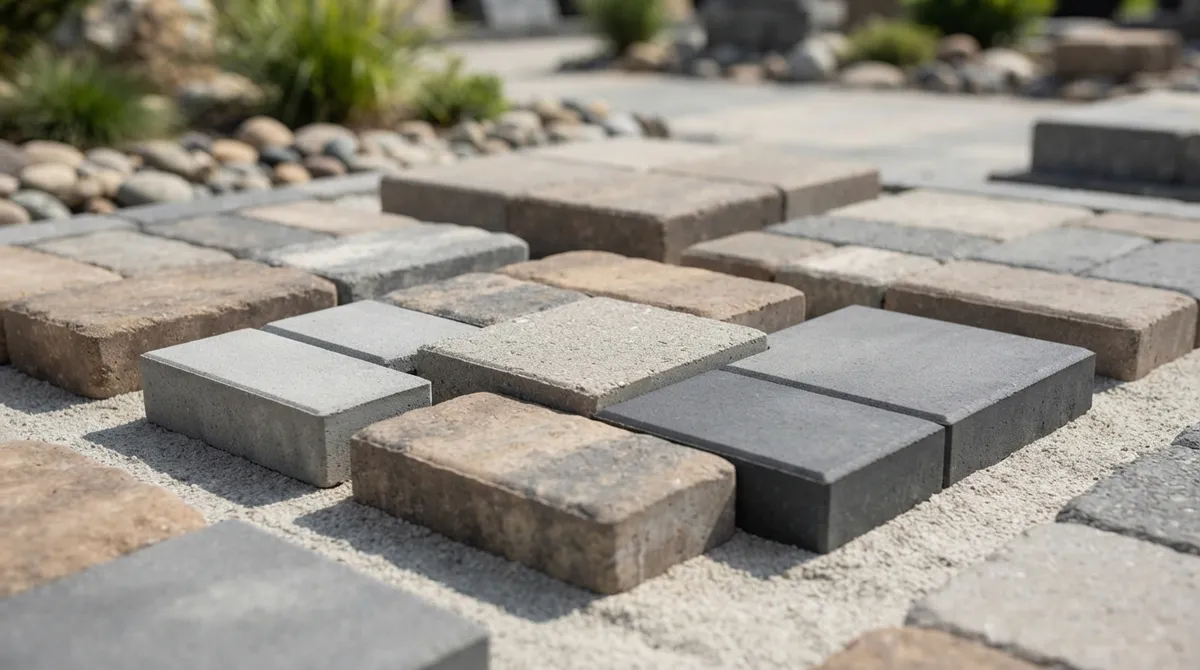
In landscaping, concrete patio pavers are individual precast concrete units. Crews lay them in an interlocking or patterned surface. They are not the same as a poured concrete slab, which is one big piece that can crack as a whole.
These pavers come in many shapes, sizes, colors, textures, and finishes. That means you can match nearly any style, from a classic cottage look to a clean, modern design. If you want to see what is possible, take a peek at our paver services or browse the gallery of our work.
Why Homeowners Choose Concrete Pavers
- Design freedom: Pick from many colors, textures, and patterns.
- Repair-friendly: A damaged or settled area can often be lifted, fixed, and reset.
- Comfortable underfoot: Many finishes offer good traction for pool decks and patios.
- Long service life: With good installation and care, cost guides often cite 25 to 50 years or more.
- Modular fit: Curves, borders, steps, and transitions are all possible.
Keep in mind that lifespan figures are estimates, not promises. Climate, soil, drainage, and workmanship all play a part.
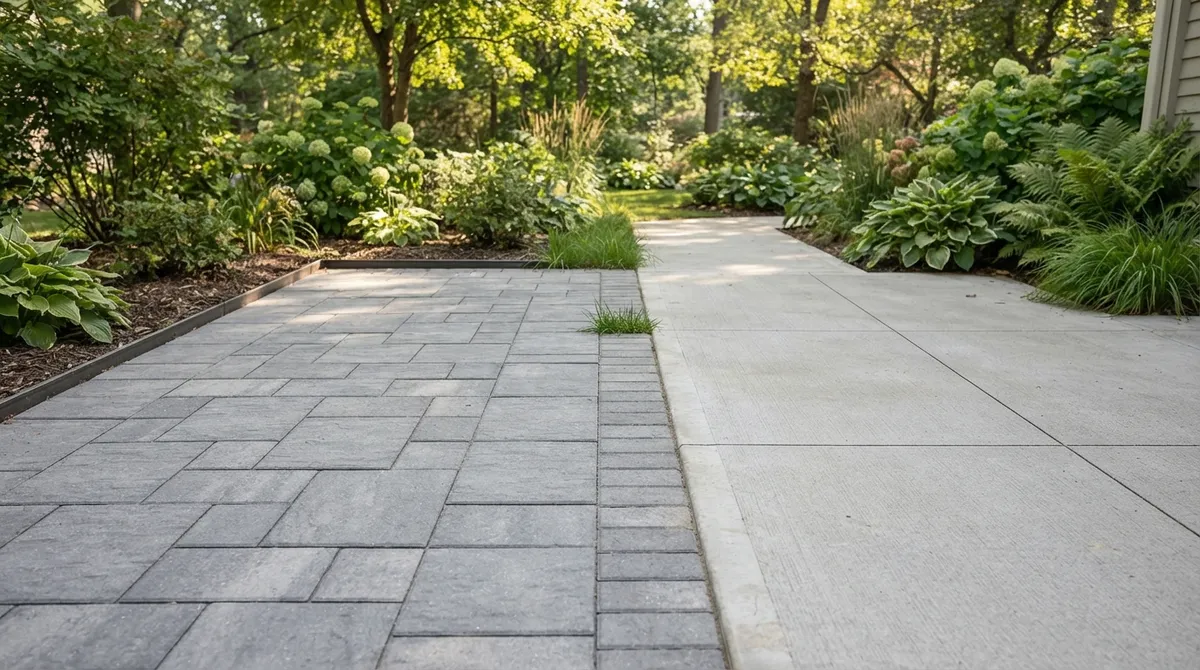
Concrete Pavers vs. Poured Concrete
This is one of the most common questions we hear. Both can work well. The right choice depends on your goals, budget, and site. Here is a quick side-by-side look.
| Feature | Concrete Patio Pavers | Poured Concrete Slab |
|---|---|---|
| Appearance | Many colors, shapes, and patterns | More limited, often stamped or stained |
| Repairs | Lift and reset or replace individual units | Cracks often need patching or replacing sections |
| Flexibility | Interlocking system moves slightly with the ground | Rigid, so it can crack when soil shifts |
| Installation effort | More detailed labor for base and layout | Quicker pour, but needs curing time |
| Upfront cost | Often higher | Often lower |
Pavers can still shift or settle if the base, drainage, or edge restraint is poor. That is why the work below the surface is so important. For a deeper look at materials, our guide on concrete vs. natural stone pavers can help you compare.
How a Paver Patio Is Built, Step by Step
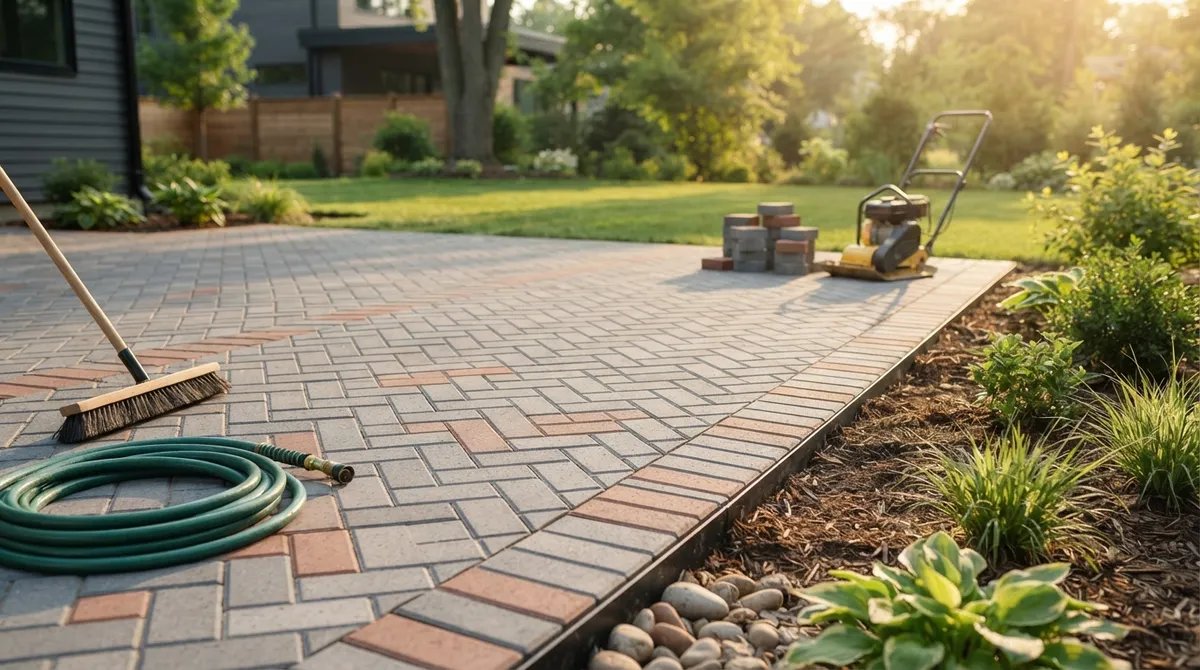
A durable patio depends on site preparation as much as the pavers themselves. Here is how a professional crew typically builds one. You can also see our overall approach on our process page.
- Assess the site. The crew checks soil, slope, and drainage. They also note nearby structures and local requirements.
- Excavate. The area is dug out to the depth needed for the base and pavers.
- Compact the base. Crushed aggregate goes in and is compacted in layers. Base depth is chosen for your soil, climate, drainage, and expected loads. There is no one-size-fits-all number.
- Screed the bedding layer. A thin, level layer of bedding material creates a smooth surface for the pavers.
- Place the pavers. Units are set in the chosen pattern. Cuts are made where needed.
- Install edge restraints. These hold the pavers in place and keep the edges from spreading.
- Fill the joints. Joint sand is swept in and compacted to lock the pavers together.
If you want to see how this fits into a bigger plan, our article on how to design a stunning paver patio is a great next read.
Why Drainage Matters So Much
Water is the number one enemy of a patio. A patio should slope to move water away from your home and prevent puddles. A commonly cited target is about 1/4 inch of fall per foot, which is roughly a 2% grade. Your actual design should fit your property, nearby structures, and local rules.
In the Chicago area, heavy clay soil and freeze-thaw cycles make this even more important. Good grading and a strong base help keep your patio level through all four seasons. The ICPI Certified Installer program is one helpful place to learn about industry installation standards.
Popular Paver Patterns and Design Ideas
Your pattern changes both the look and the labor involved. Here are the most common choices:
- Running bond: A simple, classic brick-like layout that is quick to install.
- Herringbone: A strong, interlocking pattern that looks polished.
- Basket weave: A traditional look with pairs of pavers alternating direction.
- Modular patterns: Mixed sizes that create a relaxed, natural feel.
Curves, borders, steps, and detailed layouts take more cutting and planning. That adds labor and material, so they can affect your price. Think of it like choosing between a simple sweater and a hand-knit one. Both are lovely, but one takes more time!
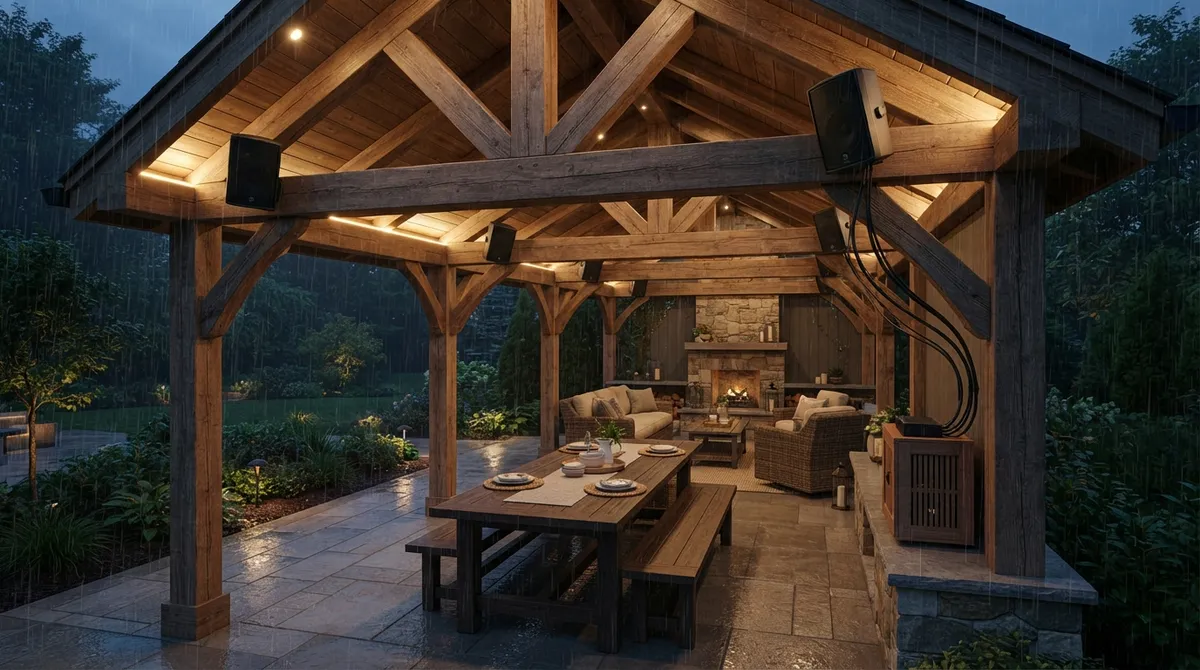
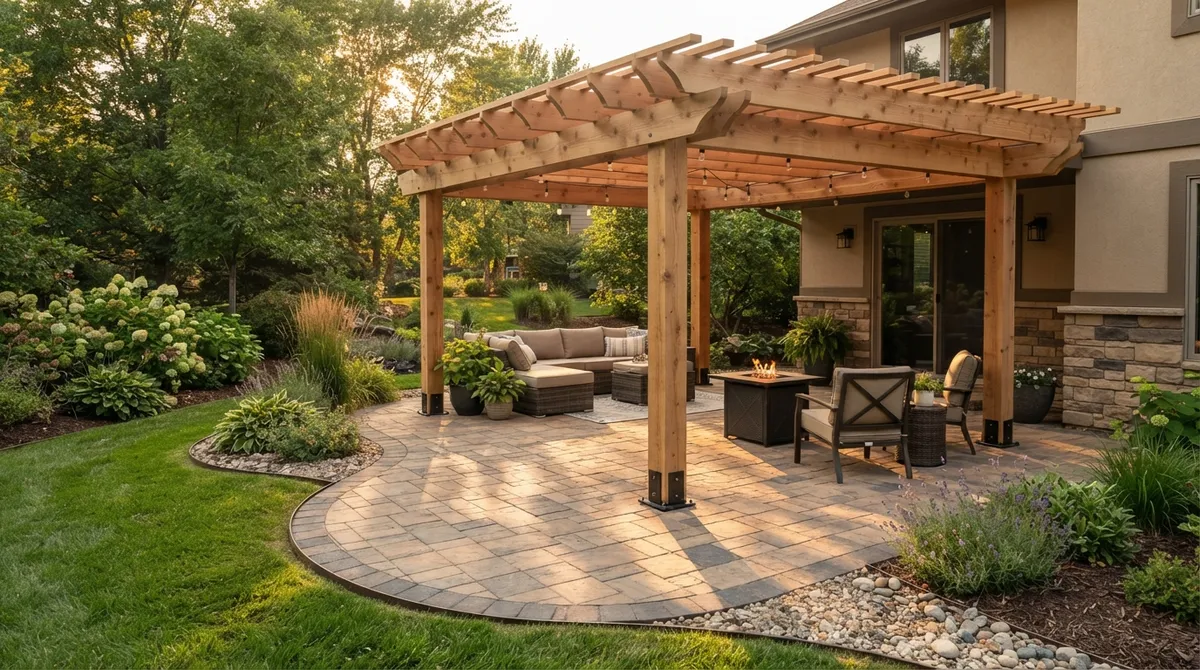
Want to go beyond a plain patio? Many clients add features such as fire pits, pergolas and pavilions, and lighting and sound. These touches turn a flat surface into a true outdoor room. For inspiration, check out these fire pit paver patio ideas.
What Do Concrete Patio Pavers Cost in 2026?
Let’s talk money. Prices vary a lot by region, project size, paver choice, site access, and prep work. Treat every number below as a rough estimate, not a fixed rate.
| Cost Item | Estimated Range (2026) |
|---|---|
| Installed paver patio, per square foot | Roughly $8 to $25 in some guides; $12 to $30 or more in others |
| Example 300 sq ft paver patio | About $3,000 to $6,000 in one cost guide |
| Typical 200 to 400 sq ft patio (all materials) | About $1,800 to $10,500 in one cost guide |
These figures may leave out extra work such as major grading, drainage fixes, demolition, or premium finishes. They also come from different sources, so they will not match perfectly. The best way to get a true number is a site visit and a written quote.
What Drives Your Price Up or Down
- Site conditions: Slopes, poor soil, or tight access add labor.
- Design complexity: Curves, borders, and detailed patterns take more time.
- Paver selection: Premium textures and colors can cost more.
- Drainage needs: Extra drainage work adds to the total.
- Demolition: Removing an old patio or slab is an added step.
If you want help reading a bid, try our tips on how to read landscape quotes and compare them fairly.
How to Care for Concrete Patio Pavers
The good news? Maintenance is pretty simple. A little regular care keeps your patio looking fresh.
- Sweep often. This clears dirt and leaves that can stain or sprout weeds.
- Wash as needed. A gentle rinse or occasional wash lifts grime.
- Check the joint sand. Cost guides often suggest checking or refilling it every few years.
- Watch for settling. If you spot a dip or loose area, address drainage or the base early.
- Consider sealing. This is optional for many products.
About sealing: it can change color and boost stain resistance, but it adds cost and future upkeep. Some guides quote resealing every 2 to 3 years. Always follow your paver maker’s guidance rather than a general schedule.
Fixing a Problem Spot
Here is where pavers really shine. If one area settles or a unit gets damaged, a crew can often lift the pavers, correct the base, and reset or replace them. That is usually simpler than repairing a cracked poured slab. Just remember that repeat settling often points to a base, drainage, or edge issue that needs a real fix.
A Note on Permeable Concrete Pavers
Permeable pavers are a special system, not just regular pavers with bigger gaps. They use wider joints and an open-graded aggregate base that lets rain soak into the ground. They can be a smart pick for managing stormwater, which matters to property managers and builders around Chicago.
They do need proper design, careful installation, and regular upkeep to keep water flowing through. If stormwater is a concern on your site, talk with a pro early. You can also learn about local plant and landscape standards through Landscape Illinois.
Who Benefits Most From Concrete Patio Pavers?
Paver patios fit many different needs around the Chicago area:
- Suburban homeowners: Create a backyard retreat that meets HOA standards and handles tough soil and winters.
- Urban condo owners: Use space-smart layouts and low-maintenance surfaces on small patios and terraces.
- Commercial property managers: Boost curb appeal and manage stormwater with durable, repairable surfaces.
- New home builders: Deliver turnkey outdoor spaces that appeal to buyers.
- Small business owners: Add welcoming, walkable patios for restaurants and shops.
Not sure whether to start with hardscape or plants? Our guide on choosing between landscaping and hardscaping can point you in the right direction. And if you want to avoid costly errors, read about hardscaping mistakes to avoid.
Why Work With a Professional Installer
A paver patio looks simple once it is done. But the real skill is in the hidden parts: grading, base prep, compaction, and edge restraint. Mistakes there can cause sinking and shifting later.
At Serenity Landscape Group, we have spent over two decades transforming outdoor spaces across the greater Chicago area. We handle everything from design to installation, so your patio fits your lifestyle and your yard. Want to know how to pick the right crew? Here is our advice on choosing professional paver installation. You can also read more about our team.
Ready to Build Your Dream Patio?
Concrete patio pavers give you a lasting, good-looking, and repairable surface for outdoor living. Success comes down to smart design, a strong base, and good drainage. Get those right, and you will enjoy your patio for many years.
If you are ready to start planning, we would love to help. Request your free estimate or call us at (630) 359-5139 to talk through your ideas. Let’s turn your outdoor space into your favorite spot to relax, gather, and enjoy every season.
FAQs
Q: How much do concrete patio pavers cost to install per square foot?
A: In 2026, published estimates range widely, from roughly $8 to $25 per square foot in some guides and $12 to $30 or more in others. Your price depends on your site, design, paver choice, and prep work, so a written quote is the best way to get a real number.
Q: Are concrete pavers better than a poured concrete patio?
A: It depends on what you value most! Pavers offer more design choices and can be repaired one piece at a time, while poured slabs often cost less upfront. Pavers can still settle if the base or drainage is weak, so good installation matters either way.
Q: How long do concrete patio pavers last?
A: Cost guides often estimate 25 to 50 years or more when pavers are installed well and cared for. That is an estimate, not a guarantee, since climate, soil, drainage, and workmanship all affect how long your patio lasts.
Q: Do concrete patio pavers need to be sealed?
A: Sealing is optional for many products. It can change the color and help resist stains, but it adds cost and future upkeep, so follow your paver manufacturer’s guidance before deciding.
Q: Can individual concrete patio pavers be replaced or repaired?
A: Yes, and that is one of their biggest perks. A crew can often lift a damaged or settled area, fix the base, and reset or replace the pavers, which is usually simpler than repairing a cracked slab.