Key Takeaways
-
Compare landscape designers using portfolios of similar projects, references, proof of liability insurance, and a written scope before choosing anyone.
-
Ask whether the design fee includes plants, materials, permits, and installation, since design-only fees often exclude these costs.
-
Local designers understand regional challenges like freeze-thaw cycles, heavy clay soil, and drainage, which helps avoid expensive redo work later.
-
Landscape designers typically handle residential plans, while landscape architects are state-licensed and handle regulated work like complex grading or drainage.
-
Check village or HOA rules and permit requirements early, especially for retaining walls, patios, fences, and major grading, since approvals can take time.
-
Choose between design-only and design-and-installation: design-only lets you bid out the build, while design-build keeps one team accountable for the plan and the work.
You have a yard with potential. Maybe it is a bare new-build lot in Aurora. Maybe it is a small city terrace in Chicago. Maybe it is a suburban backyard with heavy clay soil and a soggy corner that never dries out. You type “landscape designer near me” into your phone, and suddenly you have dozens of choices and no clue where to begin.
Take a breath. You are in good company, and this is a fun step. A good designer turns your hopes into a real plan that fits your property, your budget, and your lifestyle. This guide walks you through what a local designer does, what it costs in 2026, how to compare providers, and which questions to ask before you sign anything. We will keep it simple and friendly, just like a chat over the back fence.
What Does a Landscape Designer Near Me Actually Do?
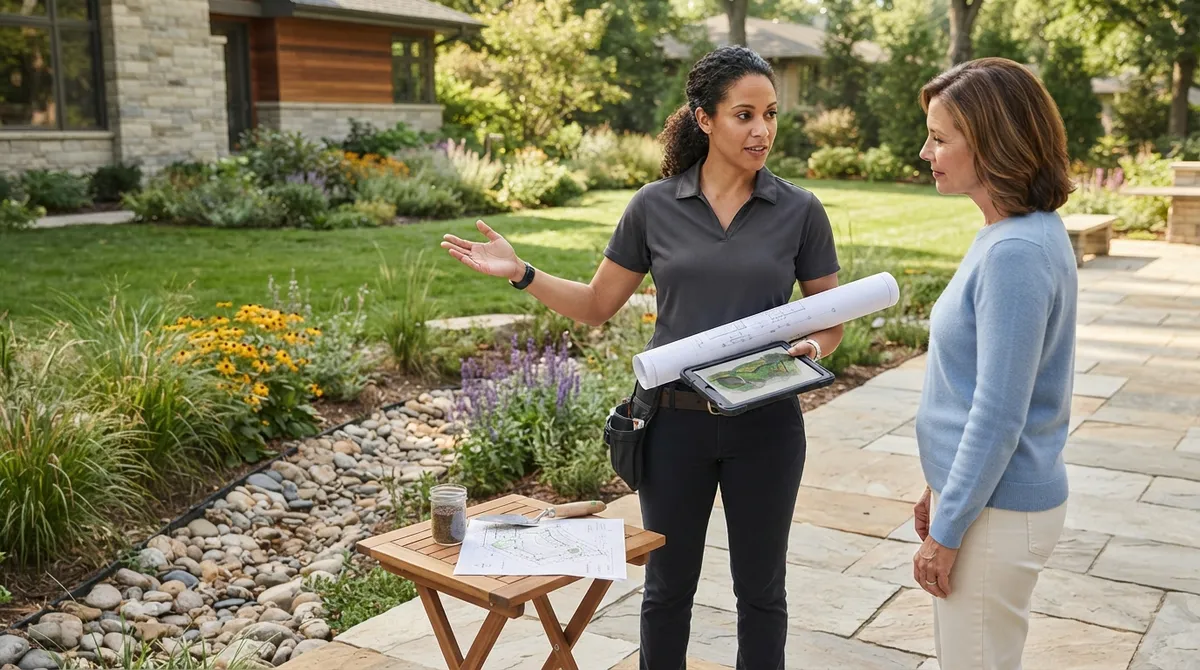
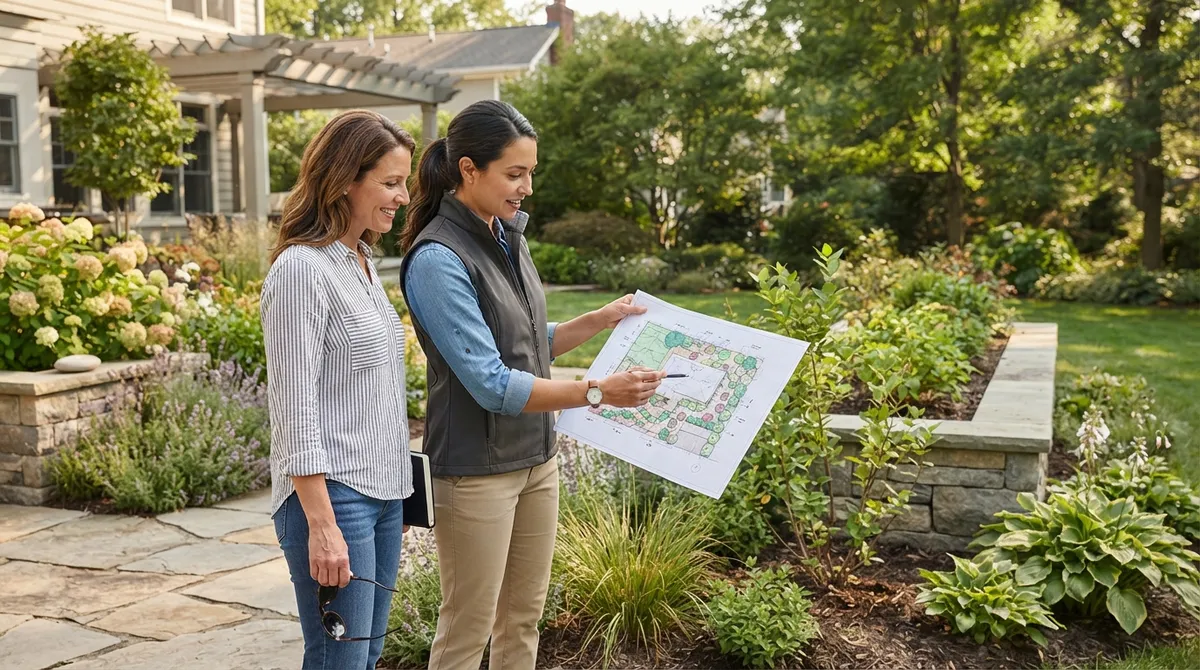
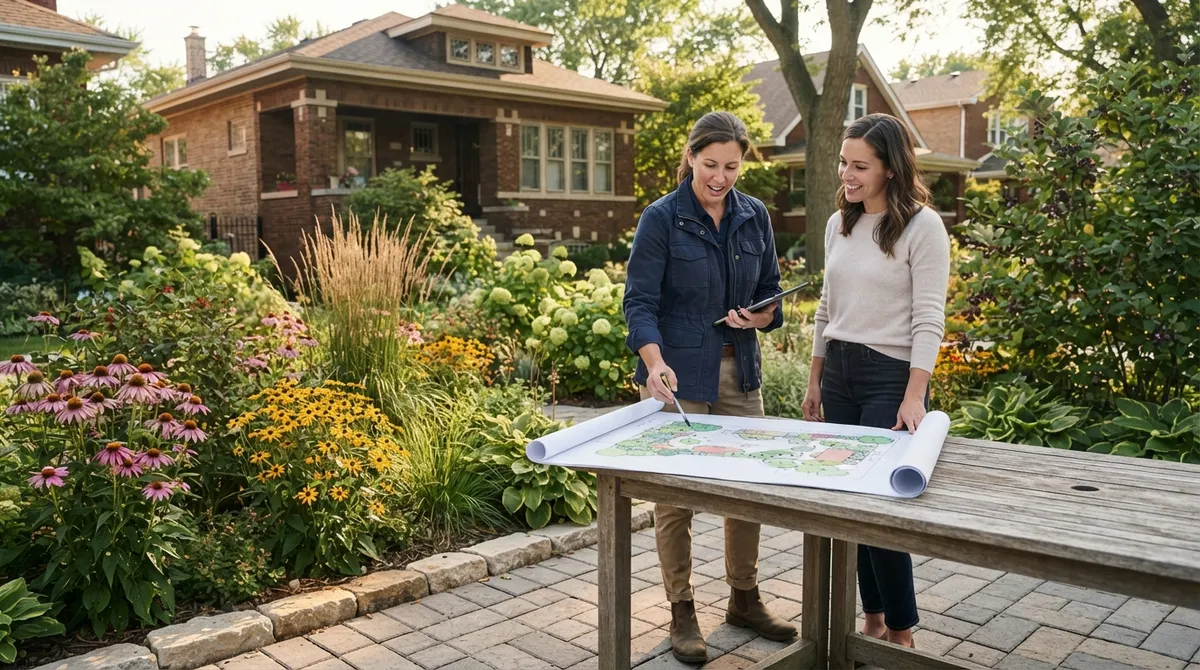
A landscape designer helps you plan an outdoor space around how your property really works. That means the layout, the sun and shade, the soil, the drainage, the climate, your budget, and what you want to enjoy out there. Searching for a landscape designer near me is smart because local pros know your region’s weather, plants, and rules.
Typical residential services often include:
- Site assessment: measuring the yard and noting slopes, soil, sun, and drainage.
- Concept plans: early sketches that show how spaces could flow.
- Plant and material selection: choosing plants, stone, and finishes that suit your site.
- Hardscape layouts: patios, walkways, walls, and seating areas.
- Extras: irrigation, lighting, grading, and help coordinating installation.
Not every designer offers every item. That is why a written scope matters, and we will get to that soon.
Why Does Local Experience Matter in the Chicago Area?
Chicagoland is not an easy place to garden. We deal with freezing winters, hot humid summers, heavy clay soil, and plenty of spring rain. A plant that thrives in another state may struggle here. A patio base that works in sandy soil may heave after a few freeze-thaw cycles.
A local designer understands these quirks. They know which native plants handle our winters. They know how to plan drainage for clay soil. They also know village rules, permit needs, and HOA standards in nearby suburbs. That local knowledge saves you from expensive redo jobs later.
Want a peek at the kind of results local experience can deliver? Browse the gallery of our work to see real Chicagoland projects.
Landscape Designer vs. Landscape Architect: What Is the Difference?
These two titles sound alike, but they are not the same thing. Landscape designers usually focus on gardens and residential plans. Landscape architects are licensed professionals. According to the American Society of Landscape Architects, landscape architects are licensed in all 50 states, though the exact rules and regulated activities vary by state.
Here is a quick side-by-side look:
| Feature | Landscape Designer | Landscape Architect |
|---|---|---|
| Typical focus | Residential gardens, patios, planting plans | Larger or regulated projects, site engineering, public spaces |
| Licensing | Varies; often not state licensed | State licensed; rules vary |
| Best for | Backyard makeovers, curb appeal, outdoor living | Complex grading, drainage, or public-safety work |
If your project involves complex grading, major drainage changes, or public-safety concerns, check your local rules. You may need a licensed landscape architect or an engineer. For help understanding when walls need extra planning, read what a retaining wall is and whether you need one.
How Much Does a Landscape Designer Cost in 2026?
Here is the honest answer: it depends. Fees change with your location, the size of your yard, how complex the project is, and what is included. One 2025 pricing guide estimates many residential design projects at roughly $2,000 to $8,000. That is a broad commercial estimate, not a national standard, so please get local quotes.
Some other numbers you may see in pricing guides:
- Hourly rates: about $50 to $150 per hour, with higher rates in pricey markets.
- Initial consultations: around $100 to $300 in some areas.
- Simple concept plans: roughly $500 to $1,500 in some markets.
Treat these as rough guideposts. Always ask what each fee covers. Design-only fees usually do not include plants, materials, permits, or installation labor unless the proposal clearly says so.
Want help reading estimates side by side? Our guide on how to read landscape quotes and compare them fairly is a great place to start.
How Do You Compare Local Landscape Designers?
Once you have a short list, it is time to compare. Do not just pick the lowest price or the prettiest website. Follow these steps:
- Review portfolios. Look for projects similar to yours in size, style, and budget.
- Check references. Call past clients and ask about communication, timelines, and surprises.
- Confirm insurance. Ask for proof of liability coverage and, if needed, workers’ compensation.
- Ask about local know-how. A good pro should mention native plants, soil, drainage, water rules, and permits without being prompted.
- Get a written scope. Never rely on a handshake alone.
- Gauge the vibe. You will talk with this person a lot. You should feel heard and respected.
You can also see how an experienced local team approaches the work by reading how to choose landscape design services that transform your yard.
What Should a Written Proposal Include?
A clear proposal protects both you and the designer. It keeps everyone on the same page and prevents sticker shock. Look for these items:
- Site measurements and a survey of existing conditions
- Drawings or renderings you will receive
- Plant and material schedules
- The number of revision rounds included
- An estimated design timeline
- Total fees and payment schedule
- Whether installation, site visits, or follow-up support are included
If something is missing, ask. A good designer will happily explain it. Clear paperwork is a sign of a professional who values your trust.
Design-Only or Design and Installation: Which Is Better?
Some designers only create the plan. Others also build it. Both can work well. The right choice depends on your comfort level and your project.
| Option | Pros | Cons |
|---|---|---|
| Design-only | Lets you collect bids from different installers; you keep control | You must coordinate the build yourself; designer may not oversee quality |
| Design and installation | One team, one vision; fewer handoffs and miscommunications | You should still confirm that pricing is clear and itemized |
Many homeowners love the one-team approach because the people who dream up the plan also understand how to build it. At Serenity Landscape Group, we bring over 20 years of Chicagoland experience to both design and installation, so your plan does not get lost in translation. You can see how we work on our process page.
What Do Different Property Owners Need From a Designer?
Not every property needs the same thing. Here is how a designer can help different folks across the Chicago area:
Suburban Homeowners
You want curb appeal, an outdoor living area, and plans that meet HOA standards. A designer can balance beauty with tough clay soil and drainage problems. Ideas like patios, fire features, and layered plantings often top the wish list. Our guide to creating a landscape design that transforms your space offers more inspiration.
Urban Condo Owners
Space is tight, so every inch counts. A designer can plan low-maintenance rooftop or terrace layouts that cool urban heat and follow city rules. Container plantings, smart seating, and soft lighting make small spaces feel bigger.
Commercial Property Managers and Small Business Owners
Offices, shops, and restaurants need curb appeal, safe walkways, stormwater plans, and seasonal color that welcome guests. Low-maintenance design saves money long term. Learn more about choosing commercial landscaping services that deliver results.
New Home Builders
Builders want turnkey outdoor features that help homes sell fast. A designer who can also install keeps schedules tight and quality consistent across multiple lots.
Do You Need Permits or HOA Approval?
Often, yes. Many villages and cities require permits for retaining walls, major grading, fences, patios, and some drainage work. HOAs may have rules about plant types, materials, colors, and structures. Rules vary by town, so check before you build.
A seasoned local designer will know what to ask your village or HOA. They can often prepare drawings that make approvals smoother. It is far cheaper to ask first than to tear something out later.
How Long Does a Residential Landscape Design Take?
Timelines depend on size and complexity. A small planting plan might take a couple of weeks. A full backyard design with hardscape, lighting, and several revision rounds may take a month or more. Winter can also slow site visits, since snow hides the ground.
Ask for an estimated design timeline in writing. Also ask when installation could begin, since good crews often book up in spring and summer. Planning ahead gets you a better spot on the calendar.
How Can a Design Plan Save You Money?
It may sound backwards, but paying for a plan can save cash. A solid design helps you:
- Phase the project: build in stages as your budget allows without losing the big picture.
- Avoid costly changes: fixing mistakes mid-install is expensive.
- Pick the right materials: durable choices last longer in Chicago winters.
- Coordinate plants and hardscape: everything works together from day one.
Want to dodge common errors? Check out 7 hardscaping mistakes to avoid in your outdoor space before you finalize your plan.
What Questions Should You Ask Before Hiring?
Bring this list to your first meeting. It keeps things friendly and focused:
- What services are included in your design fee?
- How many revisions do I get?
- Can you share similar local projects and references?
- Are you insured, and can you show proof?
- Do you handle installation, or will I hire someone else?
- How do you plan for clay soil, drainage, and our winters?
- Will you help with permits or HOA submittals?
- What is the timeline from kickoff to final plan?
You can also find helpful organizations that support quality work in our region, such as Landscape Illinois. For paver and hardscape projects, the ICPI Certified Installer program is a useful standard to look for. To check licensing rules for landscape architects, the ASLA licensure guide explains how requirements differ from state to state.
Which Features Should You Think About in Your Design?
Before your first meeting, daydream a little. What do you want to do outside? Here are popular features Chicagoland clients ask about:
- Paver patios and walkways for durable, good-looking outdoor rooms
- Fire pits that stretch your season into the cool months
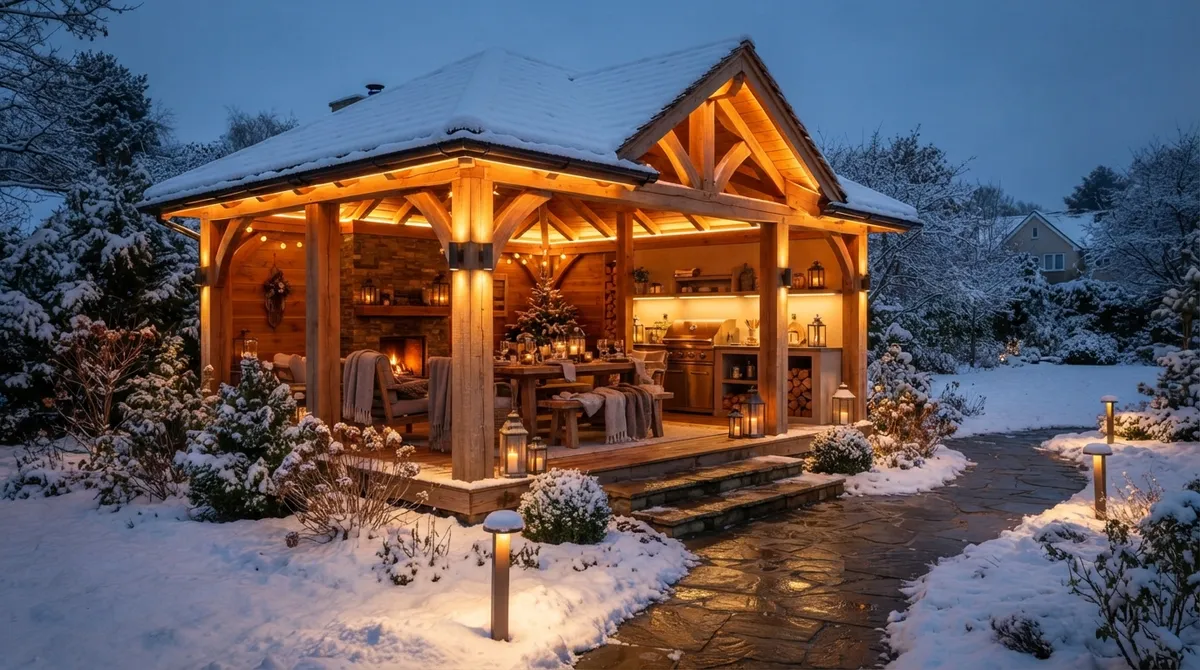
- Pergolas and pavilions for shade and style
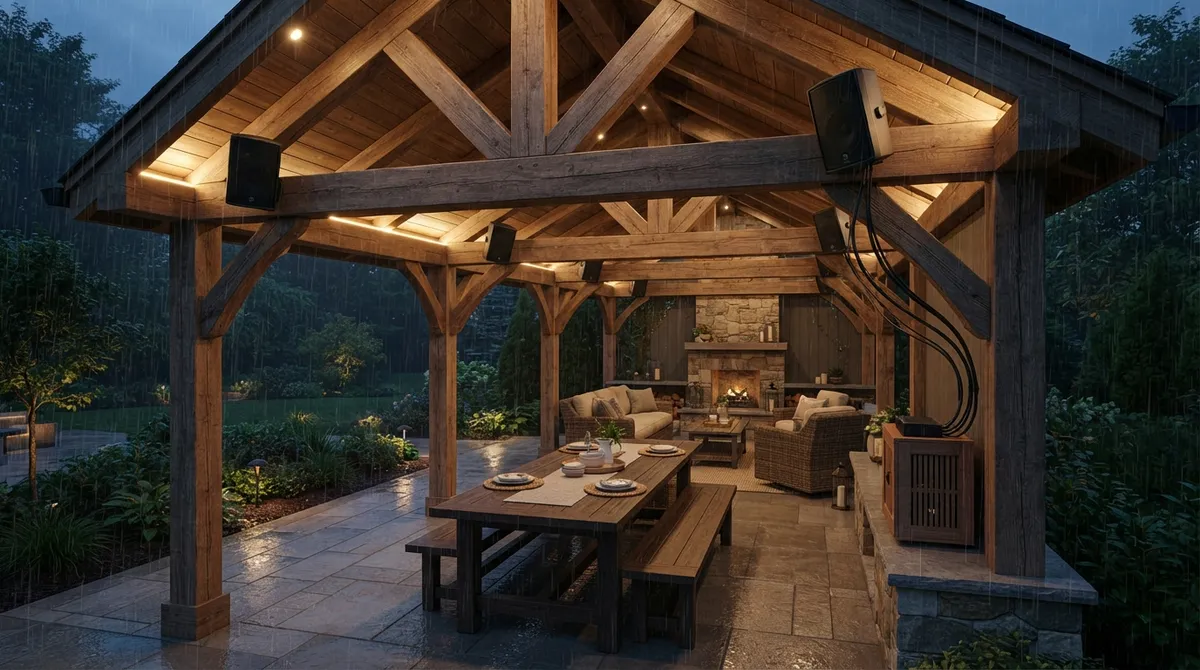
- Landscape lighting and sound for evenings outdoors
- Softscapes such as beds, shrubs, trees, and lawns
- Retaining walls to tame slopes and add usable space
Bring photos, magazine clippings, or Pinterest boards. Visuals help a designer understand your taste faster than words can.
Ready to Start Your Search?
Finding the right landscape designer near you does not have to feel overwhelming. Start with your goals, set a realistic budget, and compare a few local pros using portfolios, references, insurance, and written scopes. Ask lots of questions. The right partner will welcome them.
Remember that every great backyard begins with a good plan. When you are ready to talk it through with a team that has spent over 20 years shaping Chicagoland landscapes, request a free estimate or call us at (630) 359-5139. We would love to help you create an outdoor space you will enjoy for years to come.
FAQs
Q: How do I find a reputable landscape designer near me?
A: Start by reviewing portfolios of projects like yours, then call a few references. Confirm insurance, ask for a written scope, and make sure they know local soil, climate, and permit rules. A friendly, clear communicator is a great sign.
Q: How much does a landscape designer cost near me?
A: Costs vary by location and project size. One 2025 guide estimates many residential designs at roughly $2,000 to $8,000, with hourly rates around $50 to $150. Local quotes are the best way to get a true number for your yard.
Q: Do landscape designers also install the design?
A: Some do and some do not. Many designers create the plan only, while design-build companies handle both steps. Ask up front what your fee includes so there are no surprises.
Q: What is the difference between a landscape designer and a landscape architect?
A: Landscape designers usually focus on residential gardens and outdoor living plans. Landscape architects are state-licensed professionals who may handle regulated work like complex grading or drainage. Rules vary by state, so check local requirements.
Q: Do I need permits or HOA approval for a landscaping project?
A: Often you do, especially for retaining walls, patios, fences, and major grading. Your village or HOA sets the rules, so check before work begins. A good local designer can guide you through the process.