Key Takeaways
-
Natural stone retaining walls solve erosion, soil shifting, and unusable terrain problems while enhancing curb appeal and property value for commercial sites.
-
Proper drainage system design — including gravel backfill and perforated pipe — is critical to wall longevity; poor drainage is the most common cause of early wall failure.
-
Natural stone outlasts concrete block and timber options, lasting 50+ years with minimal maintenance, making it a smart long-term investment despite higher upfront costs.
-
Commercial retaining walls above 4 feet typically require permits and structural engineering approval in Chicago; hire contractors who handle permitting and follow ICPI Certified Installer standards.
-
Limestone, granite, fieldstone, and bluestone are popular choices; work with contractors to select stone matching your aesthetic goals, site soil conditions, and budget constraints.
-
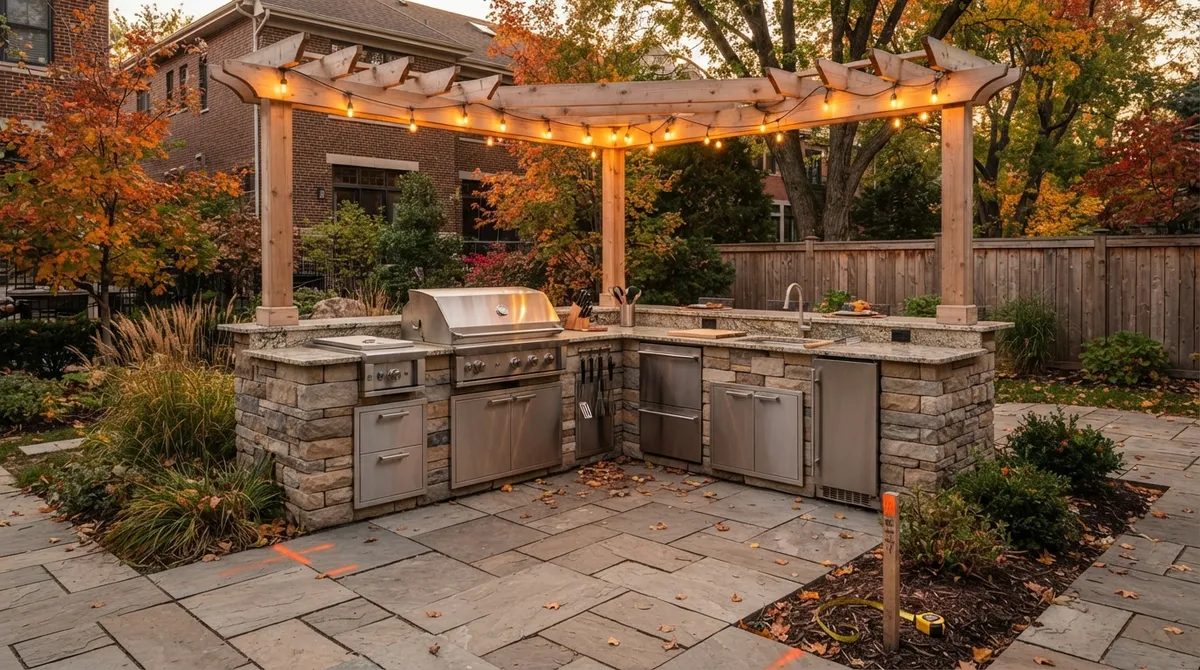
Integrating retaining walls with pavers, plantings, landscape lighting, and outdoor structures creates cohesive hardscape designs that maximize usable space and enhance property functionality.
If your commercial property has a slope, uneven terrain, or ongoing erosion issues, you already know how frustrating it can be. Runoff damages landscaping. Soil shifts. Usable space disappears. The good news? Natural stone commercial retaining walls solve all of these problems — and they look stunning while doing it. Whether you manage an office complex, own a retail storefront, or are developing a new residential community, a well-built stone retaining wall transforms a challenging site into a polished, functional outdoor space. In this guide, we’ll walk you through everything you need to know to make the right choice for your property.
What Are Natural Stone Commercial Retaining Walls?
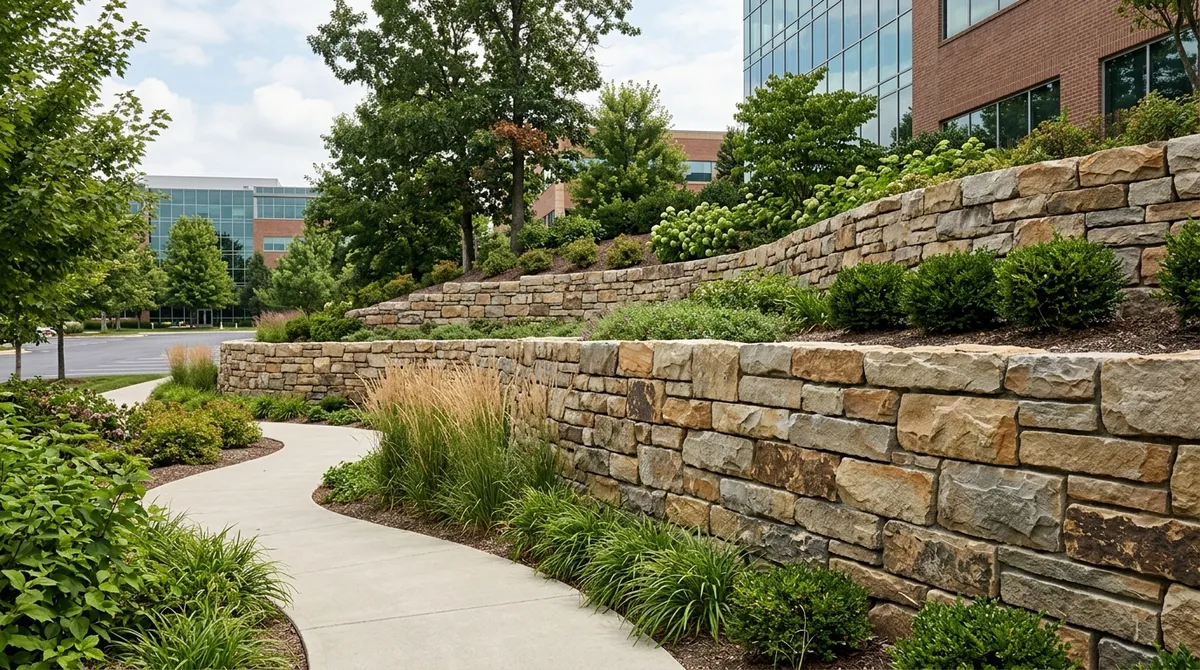
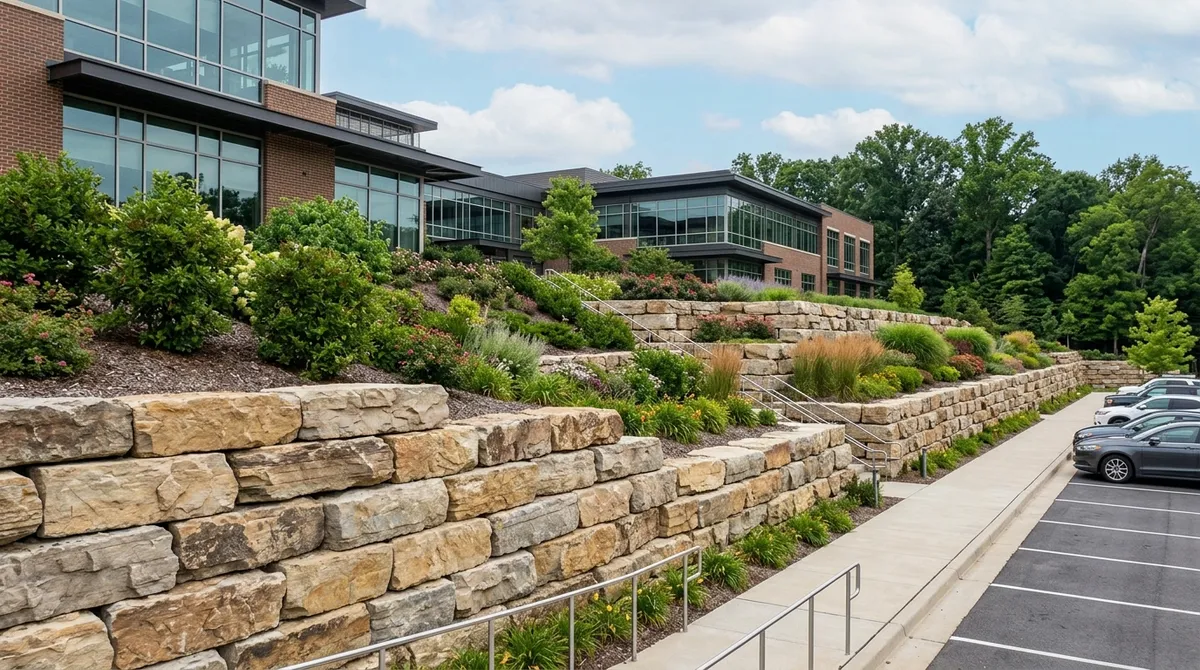
A natural stone commercial retaining wall is a landscape structure built to hold back soil on a sloped or graded site. It uses real stone — such as limestone, fieldstone, granite, or bluestone — to create a strong, attractive barrier. These walls manage grade changes, prevent erosion, and create flat, usable areas on otherwise difficult terrain. You can learn more about the basics in this helpful resource on what a retaining wall is and whether you need one.
Natural stone walls differ from concrete block or timber walls. They offer a premium, organic look that blends beautifully with the surrounding landscape. For commercial properties where appearance matters — think restaurants, hotels, corporate campuses, or retail centers — that visual upgrade makes a real difference in curb appeal and first impressions.
Why Commercial Properties Need Retaining Walls
Sloped commercial sites present real challenges. Without proper support, soil erodes, drainage becomes a problem, and usable land shrinks. Slope stabilization is a critical part of commercial landscape planning, especially here in the greater Chicago area where freeze-thaw cycles put extra stress on the ground.
Here are the most common reasons commercial property owners invest in retaining walls:
- Stabilize sloped terrain to prevent soil movement
- Control stormwater runoff and reduce flooding risks
- Create level areas for patios, walkways, and seating
- Improve safety by eliminating drop-offs and unstable slopes
- Boost curb appeal and overall property value
- Define planting beds and outdoor amenity zones
Commercial sites also face higher demands than residential ones. Higher foot traffic, heavier loads, and stricter safety standards mean your wall needs proper engineering from the start. Understanding how earth retention systems work on commercial properties is a great first step.
Advantages of Natural Stone Over Other Materials
You have options when it comes to retaining wall materials. Concrete blocks, timber, and poured concrete all have their place. But natural stone stands out for commercial applications where both function and appearance are priorities. Here’s a quick side-by-side comparison:
| Feature | Natural Stone | Concrete Block | Timber |
|---|---|---|---|
| Aesthetic Appeal | High — organic, premium look | Moderate — uniform appearance | Low — ages and deteriorates |
| Durability | Very High — lasts decades | High — long-lasting | Low — susceptible to rot |
| Maintenance | Minimal | Low | High |
| Customization | High — many stone types and patterns | Moderate — limited profiles | Low |
| Cost | Higher upfront investment | Moderate | Lower upfront, higher long-term |
| Environmental Fit | Excellent — natural material | Moderate | Poor over time |
Natural stone walls do cost more upfront than basic concrete options. However, experienced contractors and landscape professionals consistently market them as a long-term value upgrade. You get better durability, minimal maintenance, and a visual result that genuinely enhances your property. That’s a smart investment for any commercial site. For more on the value of stonework in outdoor spaces, check out why stonework is the secret to a stunning outdoor space.
Common Types of Natural Stone Used for Retaining Walls
Not all natural stone is the same. The type of stone you choose affects the wall’s look, strength, and cost. Here are the most popular options landscaping contractors use for commercial retaining walls:
- Limestone: A classic choice for the Chicago area. It’s durable, widely available, and offers a clean, neutral tone that pairs well with most commercial landscapes.
- Fieldstone: Rounded, natural-looking stones that create a rustic, organic aesthetic. Great for properties that want a softer, more natural feel.
- Granite: Extremely hard and long-lasting. Granite walls handle heavy loads well, making them ideal for high-traffic commercial sites.
- Bluestone: A popular choice for its blue-gray tones. It adds a sophisticated, upscale look to commercial patios and wall features.
- Sandstone: Warm earth tones that work well in natural garden settings. It’s softer than granite, so placement matters for structural applications.
Your landscaping contractor will help you choose the right stone based on your site conditions, design goals, and budget. The retaining wall services page at Serenity Landscape Group is a great place to explore your options with an experienced team.
How Natural Stone Retaining Walls Create Usable Outdoor Spaces
One of the biggest benefits of a well-designed retaining wall system is how it unlocks usable land. A sloped commercial site might seem like wasted space. But with the right wall placement and terracing, you can create level zones for all sorts of uses.
Here are some popular ways commercial properties use retaining walls to expand functional space:
- Outdoor seating areas and patio zones for restaurants and cafes
- Walkways and pedestrian pathways along graded terrain
- Raised planting beds for seasonal color and greenery
- Parking lot borders and grade transitions
- Retention pond edges and drainage channels
- Terraced landscaping around building entrances
When paired with commercial pavers or softscape plantings, a natural stone retaining wall becomes a focal point rather than just a functional feature. It ties the whole landscape together beautifully. You can explore inspiring examples in the gallery of our work.
Step-by-Step: How to Plan Your Natural Stone Retaining Wall Project
Planning a retaining wall for a commercial property takes more thought than a simple residential garden wall. Here’s a step-by-step process to help you move from idea to installation with confidence.
- Assess your site: Walk your property with a landscaping professional. Identify slopes, drainage patterns, soil type, and areas where erosion or pooling occurs. This shapes every decision that follows.
- Define your goals: Are you primarily solving an erosion problem? Creating outdoor seating space? Improving curb appeal? Knowing your priorities helps your contractor design the right solution.
- Choose your stone type: Work with your contractor to select stone that fits your aesthetic goals, site conditions, and budget. Consider color, texture, and how the stone will look alongside your building’s exterior.
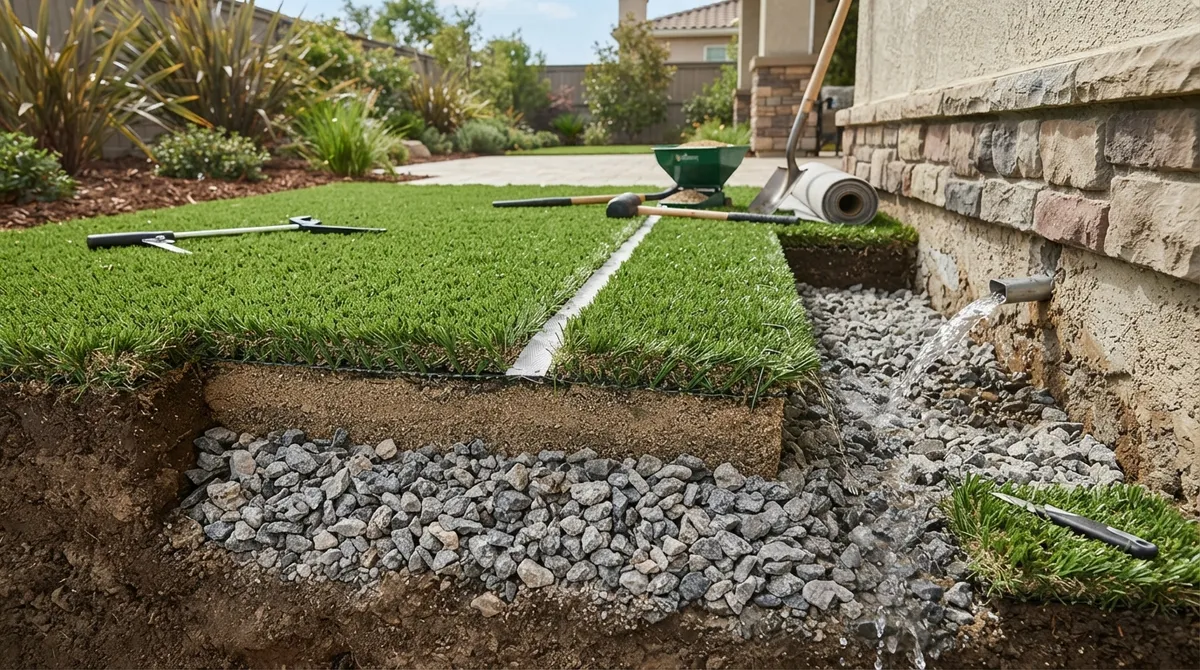
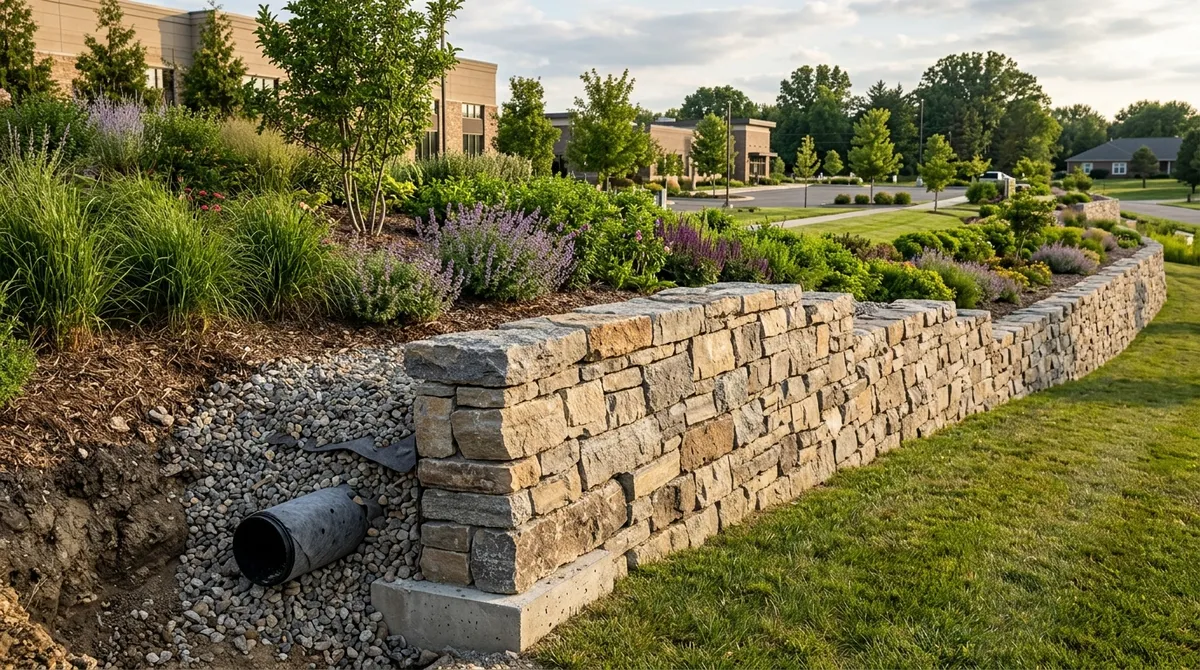
- Plan for drainage: This is critical. Every retaining wall needs a drainage system behind it — typically gravel backfill and perforated pipe — to manage water pressure and prevent wall failure. Poor drainage is one of the most common reasons walls fail early. Learn more about how retaining walls and drainage systems work together.
- Check permit requirements: Commercial retaining walls above a certain height typically require permits and may need engineering approval. Your contractor should handle this, but always confirm upfront.
- Review the installation plan: A good contractor will walk you through the design before breaking ground. Review wall heights, stone placement, drainage details, and how the wall connects to surrounding landscape features.
- Schedule installation: Timing matters in Chicago. Spring and early fall are ideal for retaining wall installation, avoiding the frozen ground of winter and the intense heat of midsummer.
Working with a contractor who follows a clear, client-first process makes all the difference. You can learn about Serenity Landscape Group’s project process to see how a well-structured plan comes together from start to finish.
Engineering and Drainage: The Details That Make or Break Your Wall
Here’s the truth — a beautiful natural stone retaining wall that isn’t properly engineered won’t last. Commercial sites put serious demands on retaining walls. Soil pressure, water accumulation, vehicle loads, and freeze-thaw cycles in the Chicago climate can all cause a poorly built wall to shift, crack, or collapse.
Proper installation always includes:
- A solid, compacted base below the frost line
- Gravel drainage layer directly behind the wall
- Perforated drain pipe to direct water away
- Proper batter (slight backward lean) to counter soil pressure
- Correct stone sizing and placement for stability
For taller walls or walls on high-load commercial sites, a structural engineer may need to review and stamp the design. The ICPI Certified Installer standards are a useful reference point for understanding what quality installation looks like. Choosing a contractor who builds to these standards protects your investment long-term. You can also explore key anchored retaining wall construction facts to understand the structural considerations involved.
Permits, Codes, and What to Expect from Your Contractor
Commercial retaining wall projects in the Chicago metropolitan area typically require permits when walls exceed a certain height — often 4 feet or more. Your contractor should be familiar with local municipal requirements and handle the permitting process on your behalf.
A qualified commercial landscape contractor will:
- Pull all necessary permits before starting work
- Coordinate with engineers if structural review is required
- Follow local building codes for wall height and drainage
- Provide documentation and as-built records after completion
Industry organizations like Landscape Illinois provide resources that help consumers identify qualified, professional contractors in the state. Always ask for proof of licensing, insurance, and references before hiring. You can also read more about how to choose commercial landscaping services that deliver real results.
Combining Retaining Walls with Other Hardscape Features
Natural stone retaining walls look even better when they’re part of a larger, cohesive hardscape design. Think of the wall as a framework — and everything else builds off it. When you integrate your retaining wall with other landscape elements, the whole property feels intentional and polished.
Popular pairings that work beautifully together include:
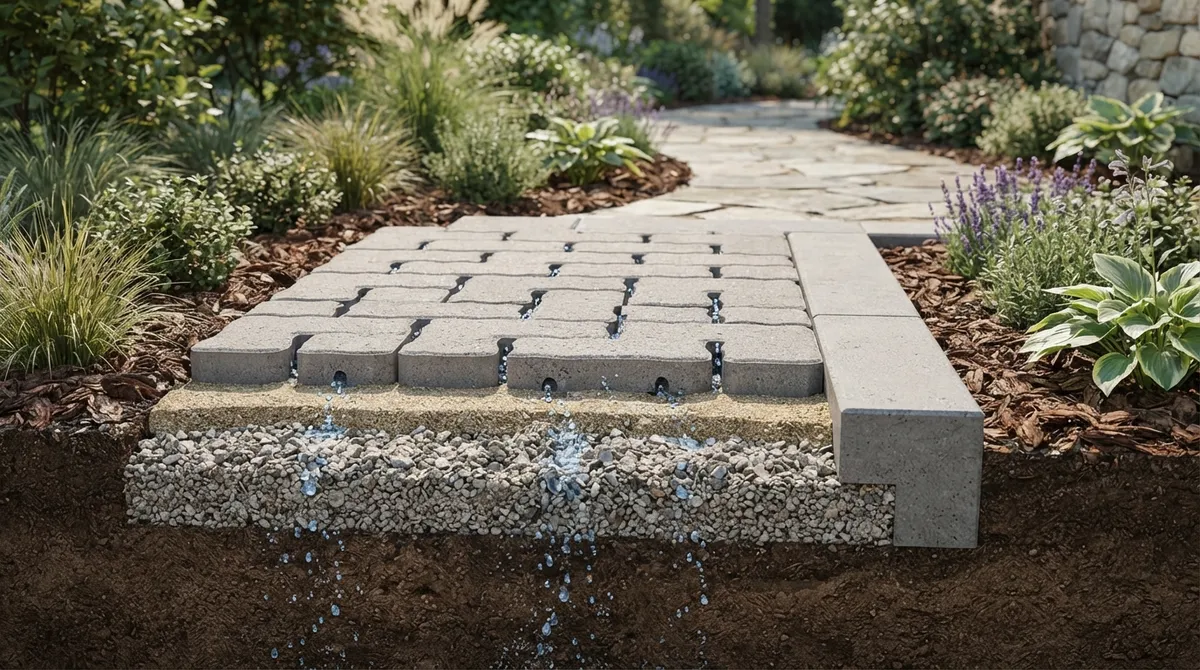
- Stone retaining walls with paver patios and walkways for seamless transitions
- Tiered walls with softscape plantings tucked into each terrace level
- Wall-integrated landscape lighting to highlight stone texture at night
- Retaining walls near fire pit areas for elevated outdoor entertaining spaces
- Walls alongside pergolas or pavilions to create defined outdoor rooms
This kind of integrated design approach is exactly what sets high-end commercial landscapes apart. It’s also how properties managed by commercial lawn maintenance professionals stay looking sharp season after season. For broader inspiration, explore 11 ways to transform your outdoor spaces in 2026.
How Long Do Natural Stone Retaining Walls Last?
One of the best things about natural stone is its longevity. A properly built natural stone retaining wall can last 50 years or more with minimal maintenance. Stone doesn’t rot like timber, and it handles the Chicago freeze-thaw cycle far better than other materials when installed correctly.
To keep your wall performing well over time:
- Inspect the wall annually for any signs of movement, cracking, or drainage issues
- Keep the drainage system clear of debris and sediment buildup
- Address any small shifts or displaced stones promptly before they become larger problems
- Trim vegetation that grows too close and could put pressure on the wall structure
The minimal maintenance requirements of natural stone make it one of the smartest long-term investments for commercial outdoor spaces. For broader context on commercial hardscaping decisions, the landscaping vs. hardscaping guide is a helpful read.
Ready to Transform Your Commercial Property?
Natural stone commercial retaining walls do more than hold back soil — they elevate the entire look and function of your outdoor space. From managing erosion and runoff to creating beautiful terraced areas for customers and guests, these walls are a smart investment for any commercial property in the greater Chicago area.
At Serenity Landscape Group, we’ve spent over two decades building retaining walls, hardscapes, and complete outdoor environments for commercial and residential clients across Chicagoland. We know what it takes to build a wall that’s both beautiful and built to last — through Chicago winters and everything in between.
If you’re ready to explore what natural stone can do for your commercial property, we’d love to help you get started. Request your free estimate today and let’s design a landscape that works as hard as you do — and looks incredible doing it.
FAQs
Q: What is a natural stone commercial retaining wall?
A: A natural stone commercial retaining wall is a landscape structure built from real stone — like limestone, granite, or fieldstone — to hold back soil, manage grade changes, and control erosion on a business property. It combines structural function with a premium, natural appearance that enhances your outdoor space. These walls are a popular choice for commercial sites where both performance and curb appeal really matter.
Q: Why do commercial properties need retaining walls?
A: Commercial properties with sloped or uneven terrain need retaining walls to stabilize soil, manage stormwater runoff, and create flat, usable outdoor areas. Without a properly built wall, erosion can damage landscaping, create safety hazards, and reduce the amount of functional space on your site. A well-designed retaining wall solves these problems while also making your property look polished and inviting.
Q: How much do natural stone retaining walls cost for commercial properties?
A: Natural stone retaining walls typically cost more upfront than concrete block alternatives, but they offer excellent long-term value thanks to their durability and low maintenance requirements. The exact cost depends on factors like wall height, length, stone type, drainage requirements, and site conditions. We recommend contacting a professional landscaping contractor for a site-specific estimate tailored to your property.
Q: Do commercial retaining walls require permits or engineering approval?
A: Yes, in most Chicago-area municipalities, commercial retaining walls above a certain height — often 4 feet or more — require permits and may need a structural engineer’s review. A qualified contractor will handle the permitting process on your behalf and ensure the wall meets all local building codes. Always confirm this with your contractor before work begins to avoid costly surprises down the road.
Q: How long do natural stone retaining walls last?
A: A properly built natural stone retaining wall can last 50 years or more with minimal upkeep — making it one of the most durable retaining wall options available. Stone handles Chicago’s freeze-thaw cycles well and doesn’t rot or degrade like timber. Annual inspections and keeping the drainage system clear are really all it takes to keep your wall looking great and performing strong for decades.