Key Takeaways
-
Chicago suburbs’ clay soil, freeze-thaw winters, and shade make natural grass difficult; synthetic turf solves all these problems without sunlight, drainage, or seasonal issues.
-
Professional installation quality is critical—proper excavation, grading, base preparation, and seaming directly impact durability; poor installation leads to bumpy surfaces, drainage failure, and lifting edges.
-
General backyard turf costs $8–$12.25 per sq ft (2026) with professional installation; well-installed systems last 15–20 years, making upfront costs reasonable when spread over time.
-
Choose turf based on specific use: decorative lawns need longer pile heights (1.5–2.5 inches), pet turf requires antimicrobial properties and high drainage rates, and putting greens need precision contouring.
-
Vet installers carefully—verify residential backyard experience, local project portfolios, written warranties, knowledge of Chicago drainage conditions, and references from neighboring homeowners.
-
Maintenance is minimal but necessary: monthly rinsing, seasonal brushing, debris removal, and spring edge inspections keep turf looking new and extend its 15–20 year lifespan.
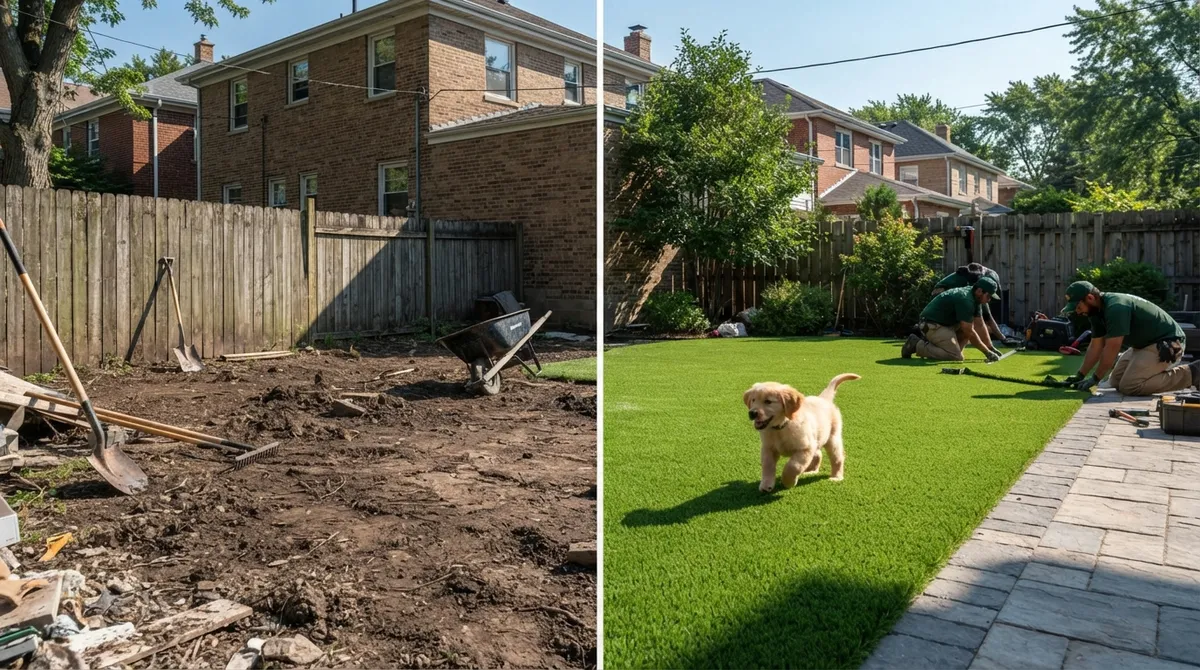
If you’ve ever spent a summer weekend fighting brown patches, mud, or uneven grass in your backyard, you’re not alone. Suburban Chicago homeowners deal with some tough lawn conditions — clay-heavy soil, harsh freeze-thaw winters, and shaded yards that make natural grass a constant struggle. The good news? Backyard turf installation has become one of the most popular landscape upgrades in the Chicago suburbs, and it’s easy to see why.
Modern synthetic grass looks great, holds up to kids and pets, and saves you hours of mowing and watering every single week. Whether you’re dreaming of a lush green lawn, a safe play area, or even a backyard putting green, turf can make it happen year-round. But choosing the right product and installer makes all the difference — especially here in Chicagoland. Let’s walk through everything you need to know to make a smart, confident decision.
Why Chicago Suburbs Are Perfect for Backyard Turf
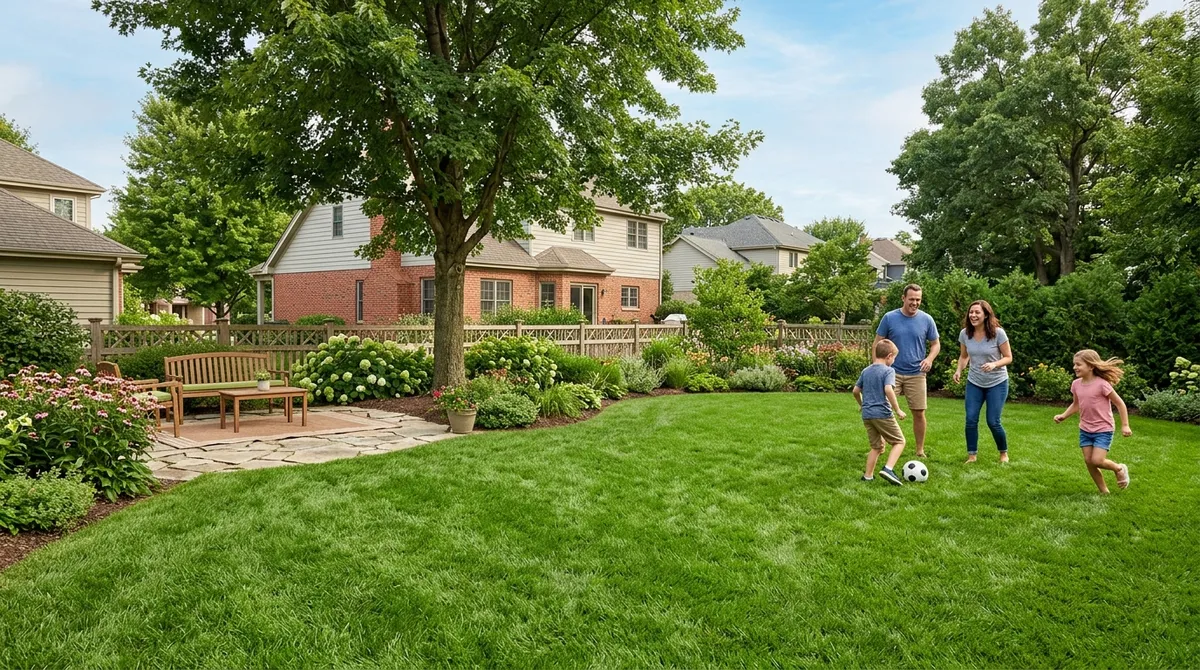
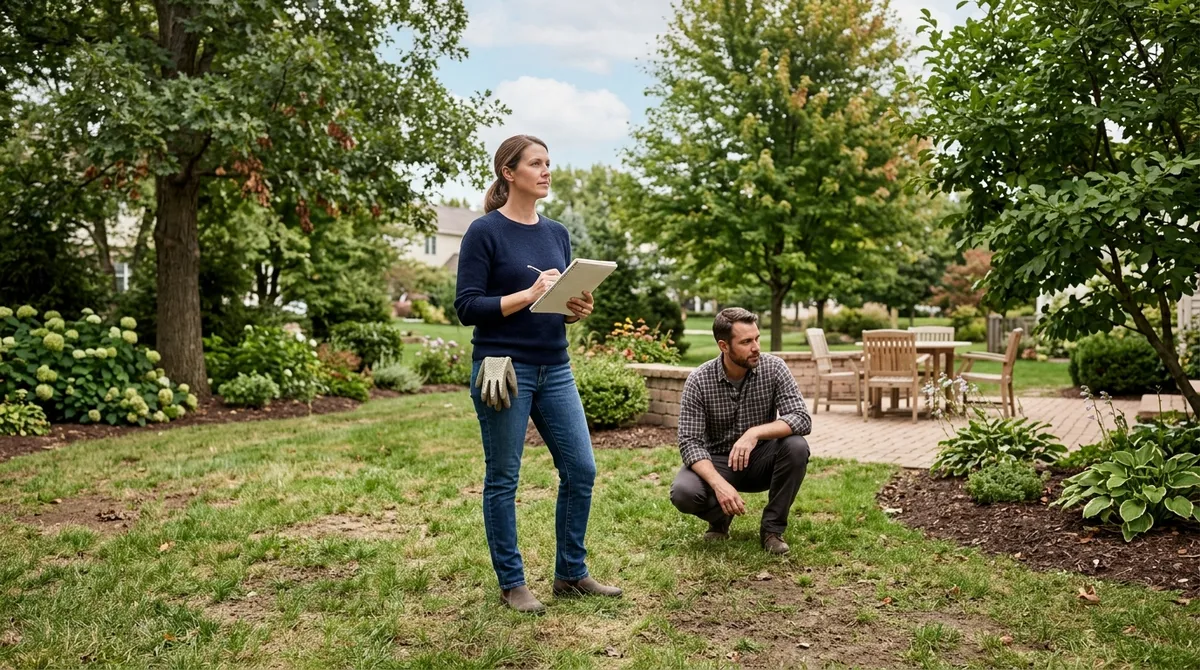
The Chicago suburbs present some unique challenges for natural grass. Clay soil drains poorly, leading to soggy, muddy yards after rain. Winters are brutal, and the freeze-thaw cycle can heave and crack soil, leaving lawns patchy and uneven by spring. Then there’s shade — many suburban yards have large mature trees that block enough sunlight to thin out natural grass over time.
Synthetic turf solves all of these problems in one shot. It doesn’t need sunlight to stay green, it won’t turn into a mud pit after heavy rain, and it shrugs off Illinois winters without missing a beat. If you’ve struggled with wet backyard grass alternatives, turf is worth a serious look. You can also explore synthetic grass solutions for shaded areas — a perfect fit for many suburban properties.
Step 1: Identify Your Backyard Turf Goals
Before you call an installer, get clear on what you actually want from your backyard turf. Your goals will shape every decision that follows — from the type of turf you choose to the way your base is prepared. Think about how you use your backyard today and how you want to use it after the upgrade.
Here are the most common backyard turf applications in the Chicago suburbs:
- Decorative lawn turf — A lush, green, low-maintenance alternative to natural grass for the whole backyard
- Pet turf — Specially designed synthetic grass with enhanced drainage and odor control for dogs and cats
- Play area turf — Soft, safe surfaces for kids’ play zones, swing sets, and recreational spaces
- Putting greens — Custom-contoured synthetic greens for golf practice right in your own backyard
- Rooftop or condo spaces — Turf for urban decks, balconies, and rooftop terraces where natural grass isn’t possible
- High-traffic zones — Areas near patios, gates, or pathways where natural grass gets worn down quickly
Once you know your primary goal, you’ll be in a much better position to choose the right turf product. For example, pet-friendly turf has different specifications than decorative lawn turf. And a custom backyard putting green in Chicago requires precision contouring that a standard lawn installation doesn’t need.
Step 2: Understand Turf Costs in the Chicago Area
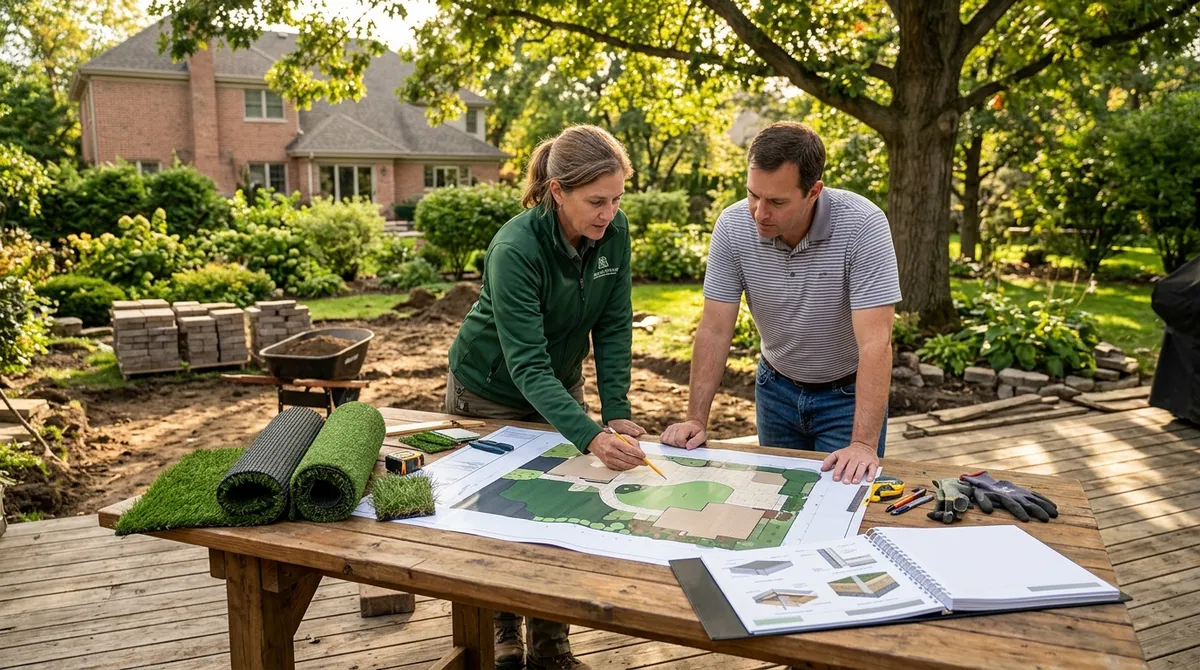
Budget planning is an important early step. Backyard turf in the Chicago suburbs is an investment, but it pays back over time through reduced maintenance costs, water savings, and added property value. Knowing the numbers upfront helps you plan wisely.
| Turf Application | Typical Cost Per Sq Ft (2026) | Best For |
|---|---|---|
| General Backyard Turf | $8 – $12.25 | Decorative lawns, play areas, pet zones |
| Putting Green Turf | $14 – $20 | Golf practice greens, custom contoured surfaces |
| Specialty Pet Turf | $9 – $13 | Dog runs, pet-friendly backyards |
| Rooftop/Deck Turf | $10 – $14 | Urban spaces, condos, rooftop terraces |
Keep in mind that these figures include professional installation, base preparation, and materials. A well-installed backyard turf system in Illinois can last 15 to 20 years, making the upfront cost very reasonable when spread over time. Learn more about artificial turf lifespan in Chicago to understand what affects longevity. You can also review cost-benefit facts comparing artificial turf to real grass to see the full financial picture.
Step 3: Choose the Right Turf Product
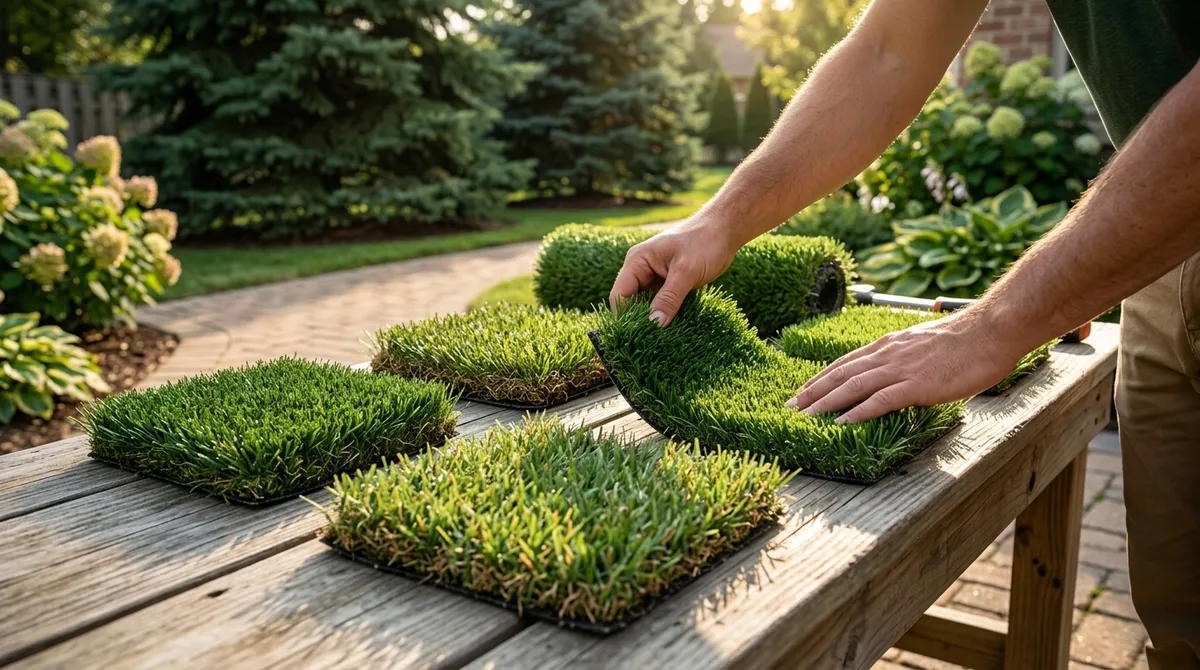
Not all synthetic grass is the same. Turf products vary by fiber type, pile height, blade shape, color blend, and infill compatibility. Choosing the right product for your specific use case is critical to long-term satisfaction. Here’s how to think about it:
Key Turf Product Features to Evaluate
- Pile height — Shorter piles (1–1.5 inches) work well for putting greens and high-traffic areas. Longer piles (1.5–2.5 inches) look more natural for decorative lawns.
- Blade shape — W-shaped and S-shaped blades stand up better over time and mimic natural grass more closely than flat blades.
- Drainage rate — Chicago gets significant rainfall. Look for turf with a drainage rate of at least 30 inches per hour to handle heavy storms without pooling.
- Infill type — Infill stabilizes the turf, supports blade posture, and can add cushioning. Options include crumb rubber, silica sand, and organic materials. Each has different performance traits — explore infill types for artificial grass to find the right fit.
- Color and texture — Quality turf blends multiple shades of green with brown thatch fibers to look realistic in all seasons.
For pet owners, prioritize turf with antimicrobial properties and a high drainage rate. For families with young children, look for products with extra cushioning and a soft texture. The benefits of synthetic grass for families go well beyond just looks — safety and comfort matter just as much.
Step 4: Understand What Good Installation Looks Like
Here’s the truth: even the best turf product will fail if it’s installed poorly. In the Chicago suburbs, proper installation is especially important because of local soil conditions and weather extremes. Professional installers know how to handle clay soil, manage drainage, and prepare a base that holds up through Illinois winters.
A quality backyard turf Chicago suburbs installation follows these essential steps:
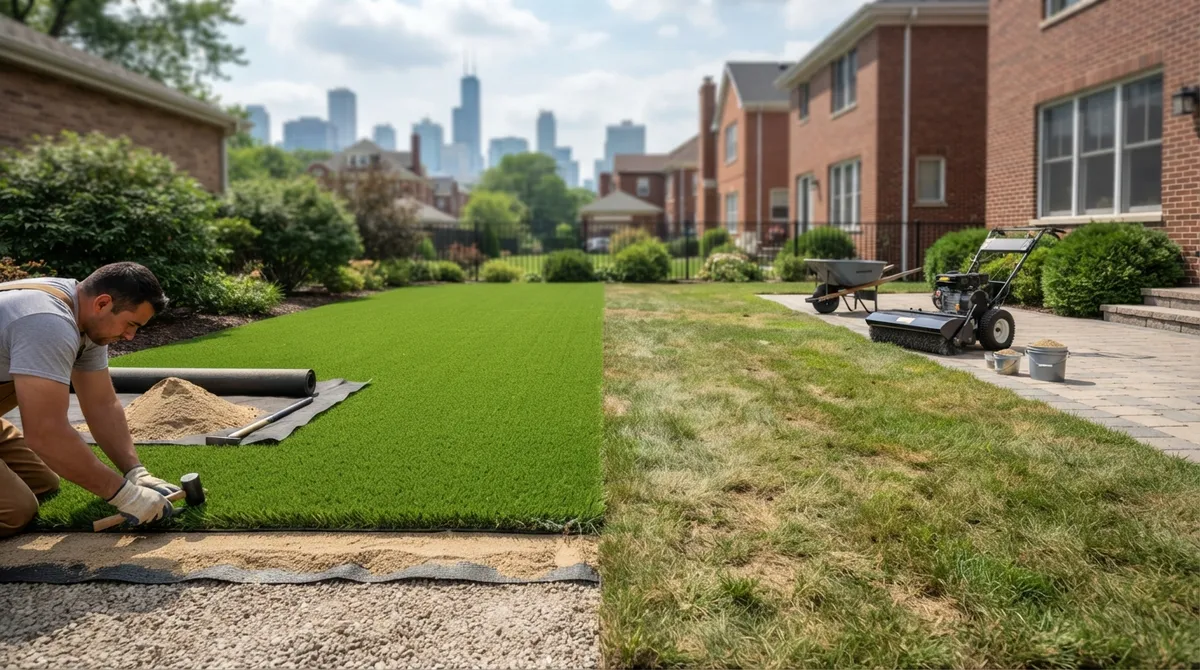
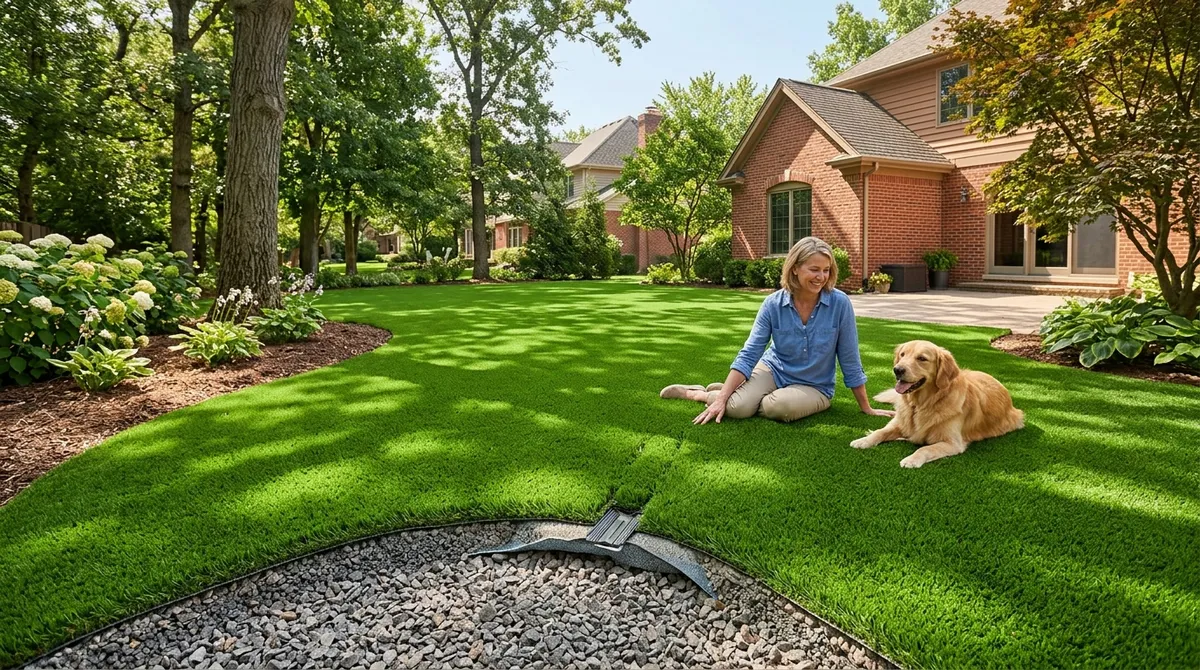
- Excavation — Remove existing grass and soil to a depth of 3–4 inches to create room for the base layer.
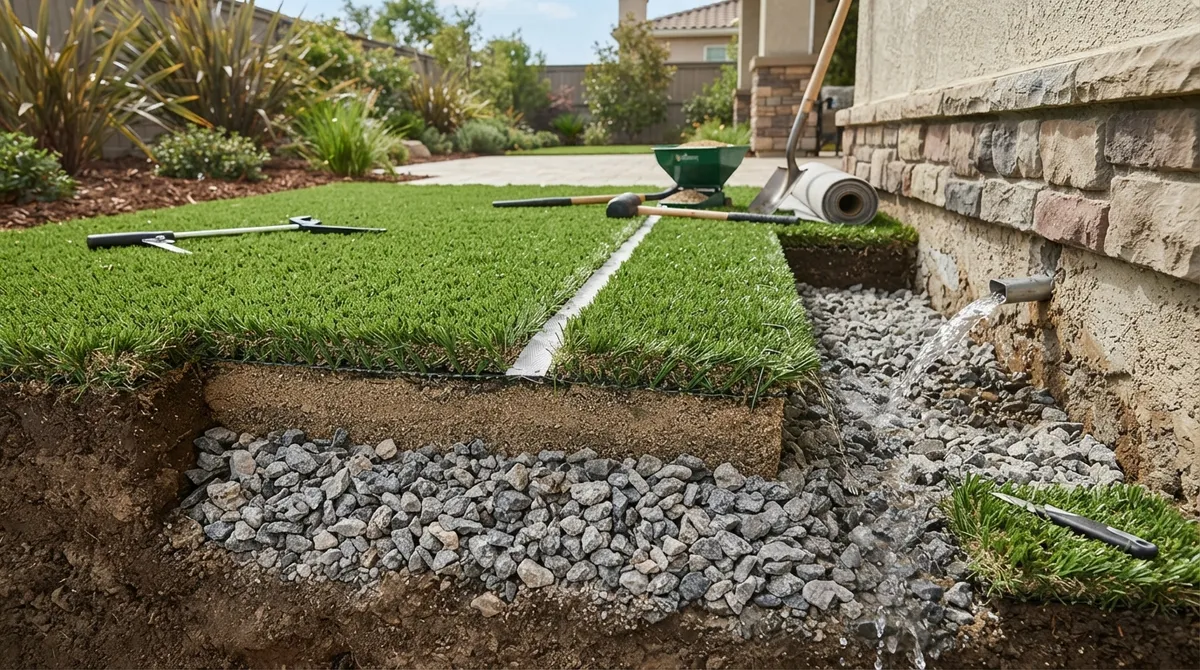
- Grading — Shape the subgrade to promote proper water drainage away from structures.
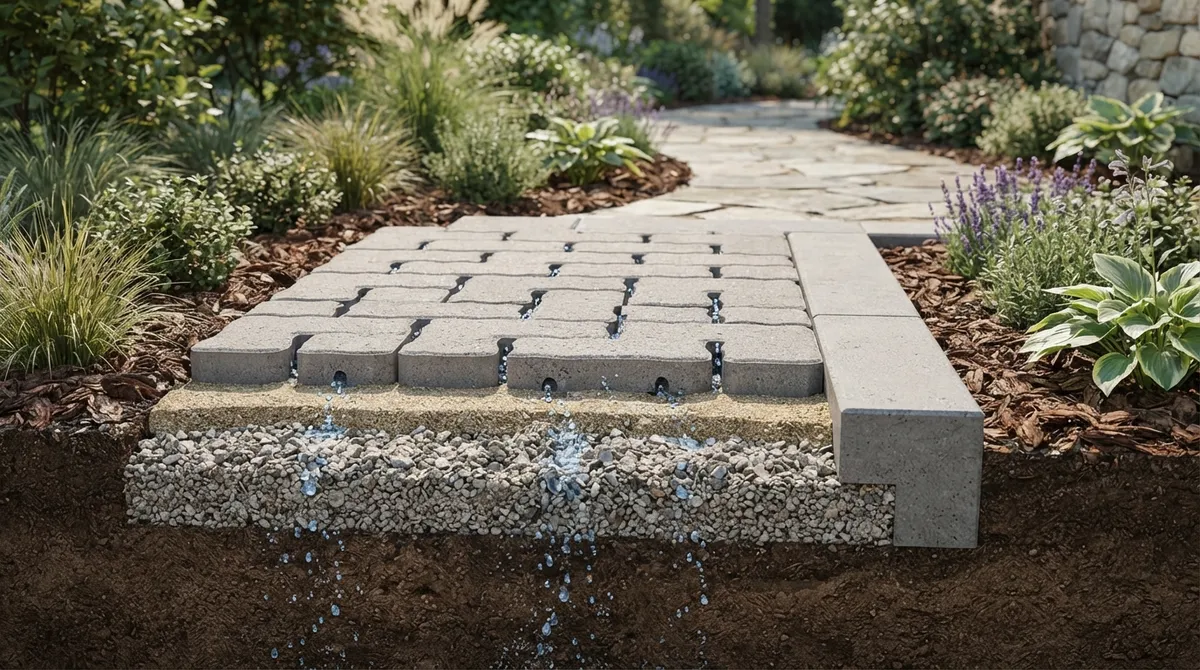
- Base installation — Compact a layer of crushed aggregate (typically decomposed granite or Class II base) to create a stable, permeable foundation. See the best base materials for turf installation for more detail.
- Weed barrier — Install a permeable weed barrier fabric to prevent unwanted growth beneath the turf surface.
- Turf laying and seaming — Roll out and cut turf panels, carefully aligning seams so they’re virtually invisible.
- Edge restraints — Secure the perimeter with bender board or nailing strips to keep edges tight and tidy.
- Infill application and brushing — Apply infill material evenly and brush turf fibers upright for a natural, lush appearance.
Skipping or rushing any of these steps leads to problems — bumpy surfaces, poor drainage, visible seams, or edges that lift over time. Review the 5 key stages of the artificial turf installation process and avoid the pitfalls outlined in 7 artificial turf installation mistakes to avoid in Chicago.
Step 5: Vet Your Turf Installer Carefully
Choosing the right installer is just as important as choosing the right product. The Chicago suburbs have many turf companies, so knowing what to look for helps you find someone you can trust. Industry resources like Landscape Illinois can help you find reputable professionals who follow best practices in the state.
Use this checklist when evaluating potential installers:
- Do they specialize in residential backyard turf, or mainly commercial work?
- Can they show you a portfolio of completed suburban Chicago projects?
- Do they offer a written warranty on both materials and labor?
- Are they knowledgeable about Chicago-area drainage and soil conditions?
- Do they provide a detailed written quote before any work begins?
- Can they provide references from local homeowners?
At Serenity Landscape Group, we bring over two decades of experience transforming outdoor spaces across Chicagoland. Our team understands local conditions inside and out, and we customize every installation to perform beautifully for the long haul. You can explore our project process and gallery of our work to see what a professional installation really looks like.
Step 6: Plan for Long-Term Turf Maintenance
One of the biggest selling points of backyard turf in the Chicago suburbs is how little maintenance it needs compared to natural grass. No mowing. No fertilizing. No reseeding. But “low maintenance” doesn’t mean “no maintenance.” A little regular care keeps your turf looking its best for years.
Simple Backyard Turf Maintenance Routine
- Rinse regularly — Hose down the turf monthly, or more often if you have pets, to remove dust, debris, and odors
- Brush the fibers — Use a stiff-bristle broom or power brush a few times per year to keep blades standing upright
- Remove debris promptly — Clear leaves, sticks, and organic material before they break down and encourage weed growth
- Spot-clean pet areas — Rinse pet waste areas immediately and use enzyme cleaners when needed. See our guide on cleaning artificial turf from pet waste
- Inspect edges annually — Check perimeter edges and seams each spring to catch any lifting before it becomes a bigger problem
- Manage heat in summer — Mist the turf with water on very hot days to cool the surface quickly
With this simple routine, your synthetic lawn can easily reach its full 15–20 year lifespan. For a deeper dive, check out 7 artificial turf maintenance tips that keep it looking new and learn how to maximize your artificial turf lifespan in Illinois.
How Turf Fits Into Your Bigger Backyard Vision
Backyard turf doesn’t have to stand alone. The best backyard transformations combine synthetic grass with hardscaping features that complement and enhance each other. Think of turf as the foundation of your outdoor living space — then build around it.
Popular pairings with backyard turf include:
- Paver patios and walkways that border the turf area and create defined outdoor zones
- Fire pits positioned near the turf for cozy evening gatherings
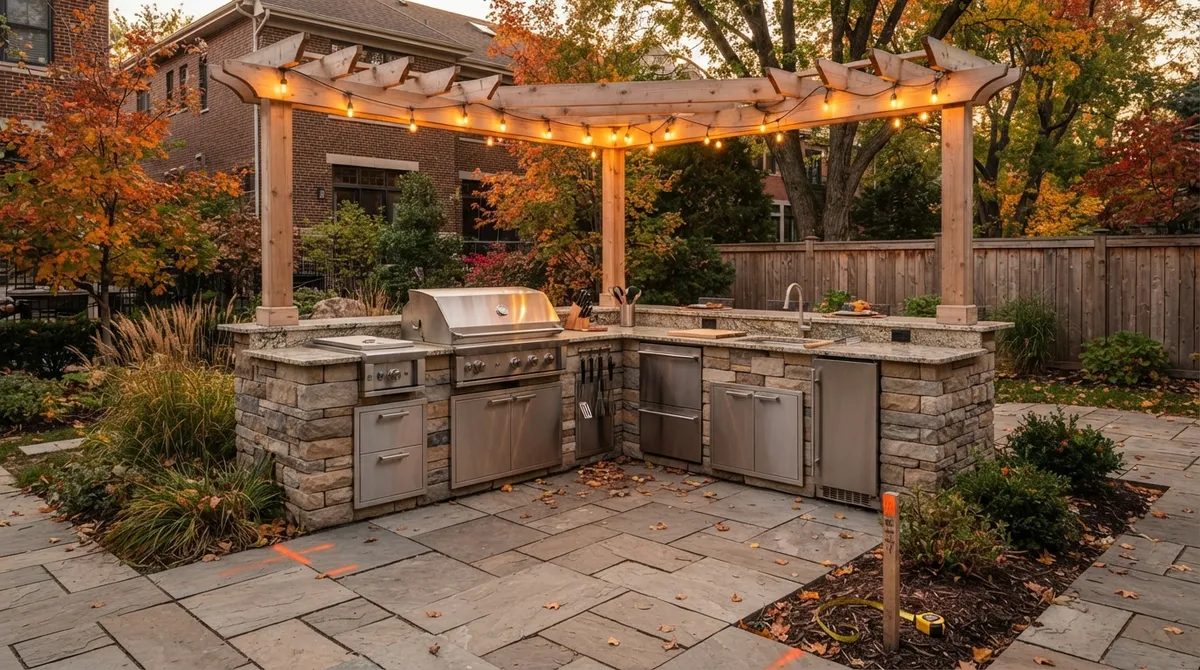
- Pergolas and pavilions that provide shade over turf-covered relaxation zones
- Landscape lighting that makes your turf backyard shine after dark
- Retaining walls that terrace sloped yards and create level turf areas
If you’re looking for broader inspiration, 11 ways to transform your outdoor spaces in 2026 is a great place to start. Working with a certified landscape professional — look for designations from organizations like the ICPI Certified Installer program — ensures your entire project is built to last. You can also browse the softscape services we offer to round out your design with beautiful plantings and garden elements.
Is Backyard Turf Right for You?
Here’s a quick side-by-side to help you decide if backyard turf makes sense for your Chicago suburban home:
| Situation | Natural Grass | Backyard Turf |
|---|---|---|
| Shaded yard with thin grass | Struggles | Thrives — no sunlight needed |
| High-traffic areas (kids, pets) | Gets worn and muddy | Durable and always green |
| Clay soil with poor drainage | Leads to soggy, muddy spots | Engineered drainage handles it |
| Busy homeowner, less maintenance | Weekly mowing required | Minimal upkeep needed |
| Putting green or specialty use | Not feasible | Custom options available |
| Year-round green appearance | Browns in summer/winter | Green 365 days a year |
If two or more of these situations describe your yard, backyard turf in the Chicago suburbs is almost certainly worth exploring. And if you want to see the full comparison, artificial turf vs. natural grass for Midwest winters breaks it down in detail. For those still on the fence, is artificial turf worth it? walks through the honest pros and cons.
Ready to Transform Your Backyard?
Choosing backyard turf in the Chicago suburbs doesn’t have to feel overwhelming. When you take it step by step — define your goals, understand costs, pick the right product, hire a skilled installer, and commit to simple maintenance — you’ll end up with an outdoor space you genuinely love using every single day.
Whether you want a lush green lawn that stays perfect year-round, a safe play space for your kids, a pet-friendly yard without the mud, or a stunning backyard putting green, the right turf installation makes it all possible. The Chicago suburbs are full of homeowners who’ve already made the switch and never looked back.
If you’re ready to take the next step, request your free estimate from Serenity Landscape Group today, or feel free to call us at (630) 359-5139 to talk through your backyard vision with our friendly team. We’d love to help you create an outdoor space that brings you joy for the next 20 years and beyond.
FAQs
Q: How much does backyard turf cost in the Chicago suburbs?
A: Great question! In 2026, most general backyard turf installations in the Chicago suburbs run between $8 and $12.25 per square foot, including materials and professional installation. Specialty options like putting greens typically cost $14 to $20 per square foot due to the custom contouring involved.
Q: Does artificial turf hold up in Chicago winters?
A: Absolutely — and honestly, this is one of the best things about backyard turf in the Chicago suburbs! High-quality synthetic grass is designed to handle freeze-thaw cycles, heavy snow, and cold temperatures without cracking, browning, or losing its shape. When spring rolls around, your turf will look just as green and fresh as it did in fall.
Q: How long does backyard turf last in Illinois?
A: When professionally installed and properly maintained, backyard turf in Illinois can last 15 to 20 years — sometimes even longer. The key factors are installation quality (especially base preparation), the product you choose, and how consistently you perform basic upkeep like rinsing and brushing.
Q: Is backyard turf safe for pets and kids?
A: Yes! Modern synthetic grass products are designed with families and pets in mind. Pet-specific turf offers enhanced drainage and antimicrobial properties to control odors, while play-area turf provides a soft, cushioned surface that’s gentle on little knees. Always ask your installer about child- and pet-safe infill options when choosing your product.
Q: Can turf be installed in a shaded backyard?
A: That’s actually one of the biggest advantages of backyard turf! Unlike natural grass, synthetic grass doesn’t need sunlight to stay green and lush. If you have a heavily shaded yard with large trees blocking light, turf is one of the smartest solutions available — it will look beautiful year-round without any help from the sun.