Key Takeaways
-
Steel sheet piling is the standard choice for deep commercial excavations and high-load situations, while vinyl is preferred for waterfront and corrosion-prone areas; composite offers a mid-range alternative combining strength with corrosion resistance.
-
Commercial sheet piling walls excel in challenging soil conditions like sandy, saturated, or high water table environments where standard retaining walls fail; they’re especially valuable for deep excavations, waterfront protection, and slope stabilization on commercial properties.
-
Sheet piling walls can be temporary during construction and reused elsewhere, or permanently installed for long-term shoreline barriers and structural retention; this flexibility makes them cost-effective for various project phases.
-
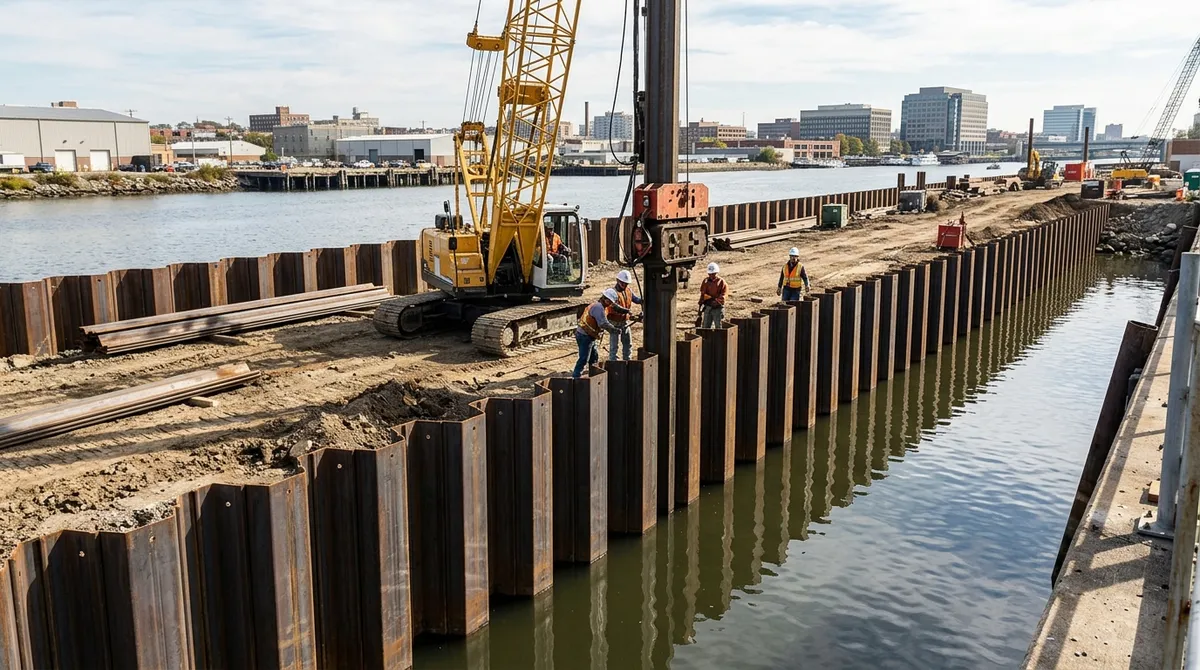
Installation methods vary by site conditions: vibratory hammers for most soils, impact hammers for dense layers, and hydraulic press-in equipment for urban areas requiring minimal vibration and noise.
-
Tiebacks and bracing systems significantly increase wall stability and load capacity for taller walls, allowing engineers to safely handle greater depths and loads on heavily loaded sites.
-
Working with experienced contractors familiar with local soil and groundwater conditions is critical; the right team understands both structural engineering and landscape design integration for optimal performance and aesthetics.
If you manage a commercial property or are planning a major site development project in the Chicago area, you’ve probably heard the term commercial sheet piling walls come up. Maybe your contractor mentioned it, or perhaps you’re dealing with a sloped yard, soft soil, or a waterfront area that needs serious structural support. Either way, you’re in the right place.
Sheet piling walls are one of the most powerful tools in commercial landscaping and site development. They solve problems that standard retaining walls simply can’t handle — think deep excavations, high groundwater, and challenging soil conditions. Understanding how they work can help you make smarter decisions for your property and your budget.
Let’s walk through 12 key facts about commercial sheet piling walls that every property owner, manager, or developer should know before breaking ground.
What Are Commercial Sheet Piling Walls?
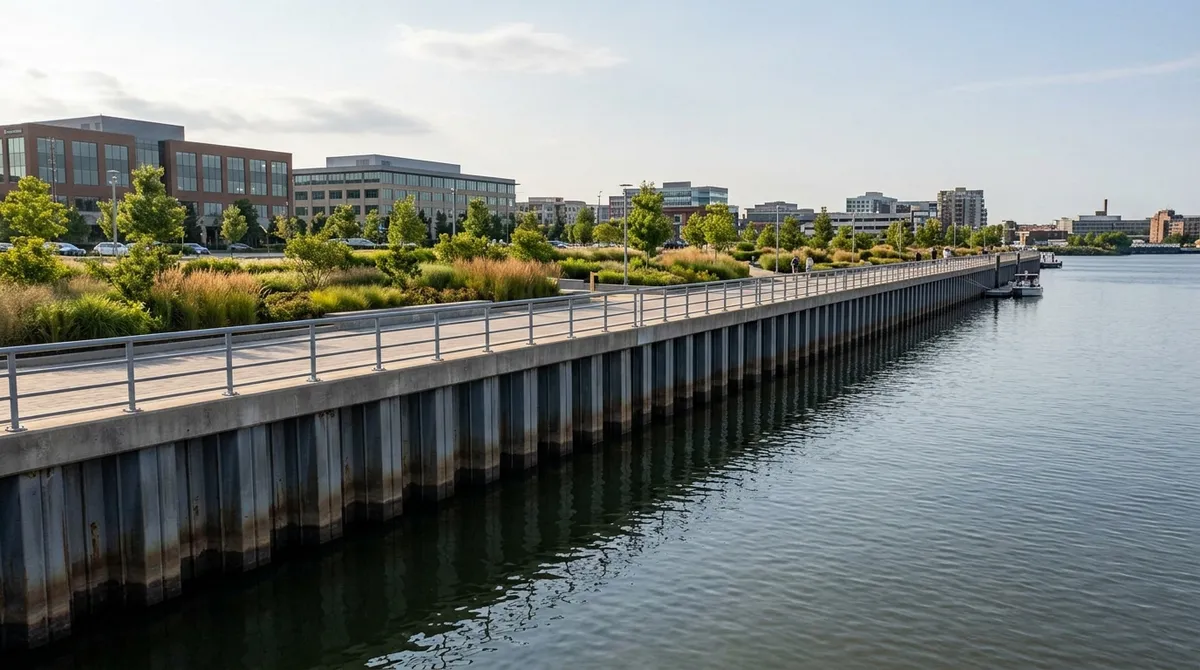
A commercial sheet piling wall is made up of prefabricated interlocking sections driven into the ground to create a continuous, solid barrier. Think of it like a row of giant puzzle pieces pushed deep into the earth side by side. The interlocking design creates a tight seal that resists both soil pressure and water movement.
These walls are commonly used in landscaping and site development for retaining walls, slope stabilization, excavation support, and waterfront protection. They go far beyond what a typical garden retaining wall can do. If you want to understand more about when a retaining wall is the right call, check out this helpful guide on what a retaining wall is and whether you need one.
12 Commercial Sheet Piling Wall Facts Every Property Owner Should Know
1. They Are Built from Interlocking Sections
Each sheet pile is a prefabricated panel with specially shaped edges. These edges lock together when driven into the ground. The result is a continuous wall without gaps. This design is what makes commercial sheet piling walls so effective at holding back both soil and water.
2. Three Main Materials Are Used
Not all sheet piling walls are made the same way. Here are the three most common materials:
- Steel: Best for deep excavations and high-load situations. Steel is strong, durable, and reusable.
- Vinyl: Great for waterfront and lower-load applications. Vinyl resists corrosion and works well near water.
- Composite: A newer option that combines strength with corrosion resistance for mid-range applications.
Steel sheet piling is generally considered the standard choice for deep commercial excavations. Vinyl is often preferred for shoreline and stormwater management projects where corrosion is a concern. Resources from Landscape Illinois can help you understand regional material preferences and industry standards.
3. They Work Great in Sandy and Wet Soils
One of the biggest advantages of commercial sheet piling walls is their performance in challenging soil conditions. They are especially effective in sandy soils and areas with a high water table. In these environments, dewatering is difficult or impractical, making sheet piling a smart solution. This is a common issue across many Chicago-area commercial sites.
4. They Can Be Temporary or Permanent
Here’s something many people don’t realize: sheet piling walls can be either temporary or permanent. During construction, they are often used as temporary excavation support. Once the project is complete, they can be removed and reused elsewhere. For long-term property protection — like a permanent shoreline barrier or a structural retaining wall — sheet piles are designed to stay in place for decades.
5. Several Installation Methods Are Available
How a sheet pile is driven into the ground depends on the site and the project goals. The three most common installation methods are:
- Vibratory hammers: Fast and efficient for most soil types. Creates less noise than impact methods.
- Impact hammers: Delivers powerful blows to drive piles through harder soils or dense layers.
- Hydraulic press-in equipment: Very quiet and precise. Ideal for urban sites or sensitive locations where vibration is a concern.
Your contractor will recommend the best method based on the soil conditions, depth needed, and proximity to existing structures.
6. Design Is More Complex Than Standard Retaining Walls
Designing a commercial sheet piling wall is a detailed process. Engineers and landscape professionals consider several factors before choosing the right system. These include:
- Soil type and composition
- Groundwater levels
- Earth pressure from the surrounding soil
- Wall depth requirements
- Whether tiebacks or bracing are needed
- Acceptable structural deflection limits
This is why it’s so important to work with an experienced team. If you’re curious about how professional earth retention systems work on commercial properties, that resource breaks it down in plain language.
7. They Solve Problems Standard Retaining Walls Can’t
Standard landscape retaining walls are excellent for gentle slopes, garden beds, and moderate soil retention. But they have limits. When you’re dealing with deep cuts in the ground, soft or saturated soils, or waterfront areas, commercial sheet piling walls are the stronger answer. They’re built to handle the kind of pressure and water exposure that would overwhelm a traditional block or stone wall.
If your project involves serious grading challenges, it’s worth reading about common commercial landscape grading wall mistakes to avoid.
8. They Are Widely Used in Commercial Landscaping Projects
You might think of sheet piling as something only used in massive construction projects. But in commercial landscaping, these walls show up in a wide range of applications:
- Retention pond edges and shoreline protection
- Slope stabilization on commercial campuses
- Excavation support during parking lot or building construction
- Flood control barriers on commercial properties
- Grade changes on large commercial sites with mixed terrain
Understanding retaining walls for retention ponds can give you a clearer picture of how these systems integrate with stormwater management on your site.
9. Material Comparison at a Glance
Choosing the right material makes a big difference in long-term performance. Here’s a side-by-side comparison to help you think it through:
| Material | Best For | Key Advantage | Common Use |
|---|---|---|---|
| Steel | Deep excavations, heavy loads | High strength, reusable | Construction support, grade changes |
| Vinyl | Waterfront, low-load sites | Corrosion resistant | Shorelines, ponds, low-water areas |
| Composite | Mid-range applications | Strength + corrosion resistance | Versatile commercial landscaping |
10. Tiebacks and Bracing Increase Wall Stability
For taller or more heavily loaded sheet piling walls, engineers often add tiebacks or bracing systems. Tiebacks are anchors driven into the soil behind the wall to provide extra holding power. Bracing is used on the active side of the wall to prevent it from leaning. These additions allow commercial sheet piling walls to handle much greater depths and loads safely.
For a deeper look at how anchored wall systems work, see these anchored retaining wall construction facts.
11. They Can Support Slope Stabilization on Large Properties
Commercial properties with steep or unstable slopes face real risks — erosion, soil movement, and even structural damage to pavement or buildings. Commercial sheet piling walls can be used to stabilize these slopes quickly and effectively. This is especially valuable on sites where vegetation alone won’t hold the soil in place. If you’re wondering whether your property needs this kind of help, this guide on commercial property slope stabilization is a great starting point.
12. Working with the Right Contractor Makes All the Difference
Sheet piling is a specialized service. The right contractor brings engineering knowledge, the right equipment, and real-world experience with local soil and groundwater conditions. In the Chicago area, where clay, sandy soils, and high water tables are common, this expertise matters a lot. Look for contractors who understand both the structural and landscaping sides of the project.
When evaluating your options, it helps to know what a commercial retaining wall contractor actually does and how to find the right fit for your project. The team at ICPI Certified Installer resources can help you verify contractor qualifications and standards.
When Should You Choose Sheet Piling Over a Standard Retaining Wall?
This is one of the most common questions we hear. The short answer: choose sheet piling when the conditions go beyond what a traditional wall can handle. Here are the key situations where commercial sheet piling walls are the better choice:
- Your site has soft, sandy, or waterlogged soil
- You need to retain soil at significant depth (more than a few feet)
- There is a high water table on or near the property
- You need a temporary wall during active construction or excavation
- Your property is near a shoreline, pond, or flood-prone area
For standard landscaping scenarios — garden beds, mild slope management, aesthetic borders — a conventional retaining wall solution will serve you well. But for the tough jobs, sheet piling is in a class of its own.
How Does Cost Factor In?
Commercial sheet piling walls are a significant investment compared to standard retaining walls. Costs vary widely depending on the material chosen (steel vs. vinyl vs. composite), wall depth and length, installation method, site access, and whether tiebacks or bracing are needed.
That said, they often save money in the long run by preventing soil erosion, slope failure, and flooding damage — all of which can be far more costly to repair. Getting a detailed site assessment before budgeting is always the smartest move. You can also explore how site development retaining walls are planned for long-term durability to understand what goes into a well-designed system.
Integrating Sheet Piling with Your Overall Landscape Design
One thing that surprises many commercial clients is how well sheet piling walls can integrate into a finished landscape design. While they are structural at their core, the walls can be finished, faced, or surrounded by plantings and hardscaping elements that make them look intentional and polished.
At Serenity Landscape Group, we bring over two decades of experience working on complex commercial landscape projects across the greater Chicago area. We understand how to combine structural solutions like sheet piling with beautiful landscape design so your property looks great and performs well year after year. Whether you need commercial lawn maintenance to complement your new earthwork or a full outdoor transformation, we’ve got you covered.
For property managers looking to understand the bigger picture of how to choose commercial landscaping services that deliver results, that article walks you through what to look for in a professional partner.
Final Thoughts on Commercial Sheet Piling Walls
Commercial sheet piling walls are a smart, durable, and versatile solution for challenging commercial landscape and site development projects. Whether you’re managing a slope, protecting a shoreline, supporting a deep excavation, or battling high groundwater, these systems deliver performance that standard walls simply can’t match.
The key is working with a team that understands both the structural engineering and the landscape design side of the equation — so your project is safe, functional, and beautiful. Ready to explore your options? Request your free estimate today and let’s talk about the best solution for your commercial property.
FAQs
Q: What is a commercial sheet piling wall?
A: A commercial sheet piling wall is a continuous barrier made from interlocking prefabricated sections driven into the ground. In commercial landscaping, it’s used to retain soil, support excavations, protect shorelines, and manage water on challenging sites. Think of it as the heavy-duty cousin of a traditional retaining wall!
Q: When should a landscaping project use sheet piling instead of a standard retaining wall?
A: Sheet piling is the right call when you’re dealing with deep soil cuts, soft or sandy soils, high groundwater, or waterfront areas. If a standard retaining wall doesn’t have the depth or water resistance your project needs, commercial sheet piling walls step in to get the job done safely and effectively.
Q: What materials are used for commercial sheet piling walls in landscaping?
A: The three most common materials are steel, vinyl, and composite. Steel is the go-to for deep excavations and heavy loads, vinyl shines in corrosion-prone waterfront settings, and composite offers a solid middle ground for versatile commercial applications. Your contractor can help you pick the best fit for your specific site.
Q: Are commercial sheet piling walls permanent or temporary?
A: They can be either! During construction, sheet piling walls are often used as temporary support and then removed and reused once the project wraps up. For long-term needs like shoreline protection or permanent slope stabilization, they’re designed to stay in place and perform for decades.
Q: Can commercial sheet piling walls handle high groundwater or flooding?
A: Absolutely — that’s actually one of their biggest strengths! Commercial sheet piling walls are especially effective in areas with a high water table or flood-prone conditions where dewatering isn’t practical. Their interlocking design creates a tight barrier that resists both soil pressure and water movement, making them a top choice for wet Chicago-area sites.