Key Takeaways
-
Commercial hardscape contractors specialize in durable outdoor structures like patios, walkways, retaining walls, and paver installations that significantly impact property value, customer attraction, and employee morale.
-
Commercial hardscape projects differ fundamentally from residential work in scale, traffic load, compliance requirements, and timeline—verify your contractor has specific commercial experience, not just residential credentials.
-
Prioritize contractors with verifiable qualifications including general liability insurance, ICPI Certified Installer status, ADA compliance knowledge, and a strong portfolio of completed commercial projects with references.
-
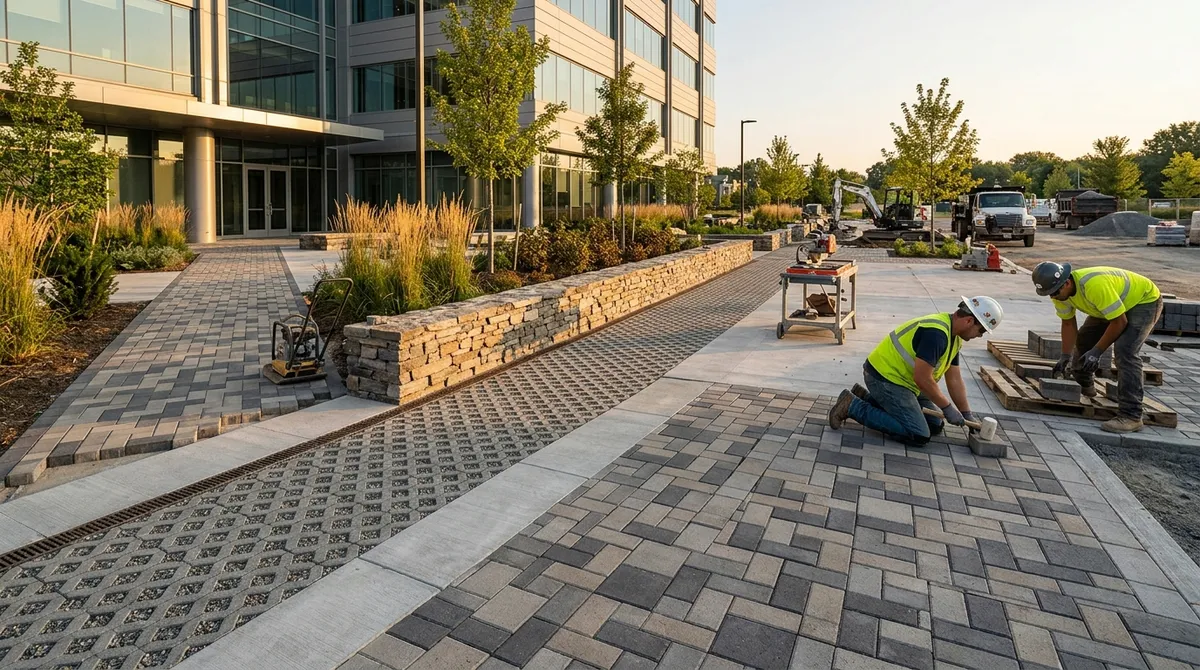
Material selection is critical for Chicago properties; concrete pavers and clay brick pavers offer superior freeze-thaw resistance, while permeable pavers help manage stormwater and meet green building standards.
-
Ask contractors upfront about permitting, engineering reviews, project timeline, warranty coverage, crew consistency, and how they handle unexpected site conditions to avoid costly surprises mid-project.
-
Budget for ongoing maintenance services including regular cleaning, joint sand replenishment, seasonal inspections, and snow management to ensure long-term performance and protect your hardscape investment.
If you manage a commercial property, you already know how much first impressions matter. A well-designed outdoor space can attract customers, boost employee morale, and even raise property value. That’s where commercial hardscape contractors come in. These are the skilled professionals who design and build the non-living features of your outdoor space — think patios, walkways, retaining walls, plazas, and paver installations.
But hiring the right contractor isn’t always straightforward. With so many options out there, it can feel overwhelming. Whether you manage an office building, a retail center, or a multifamily property in the greater Chicago area, this guide breaks down everything you need to know. Let’s walk through six key things that will help you make a smart, confident decision for your property.
1. Understand What Commercial Hardscape Contractors Actually Do
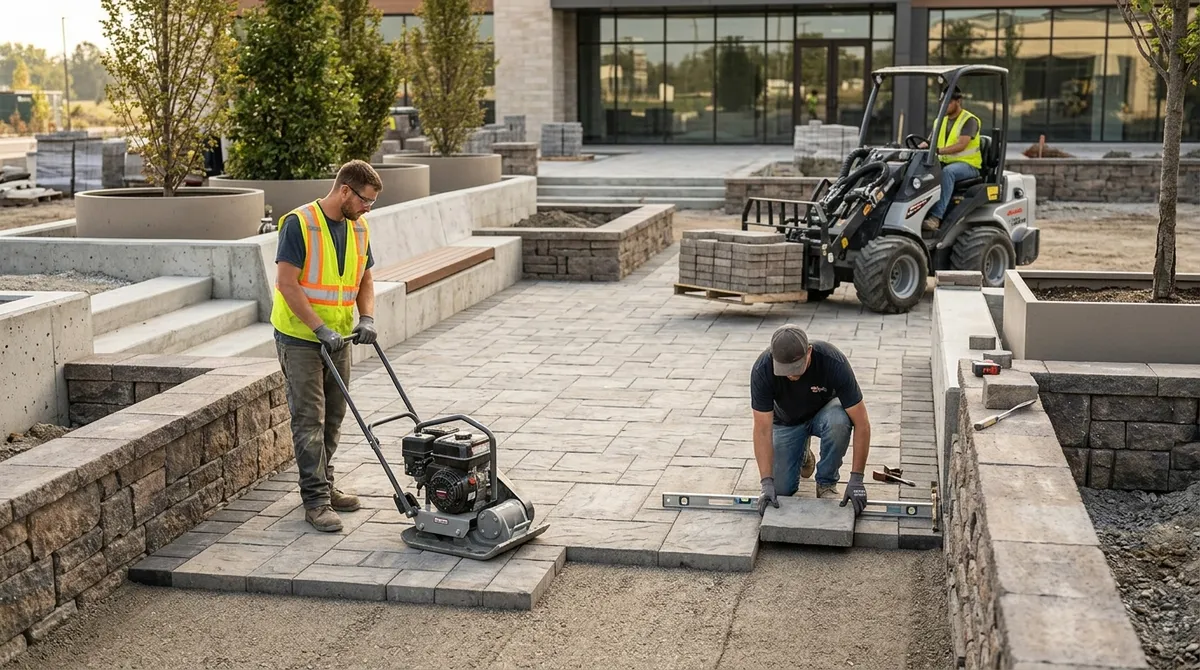
Commercial hardscape contractors specialize in building durable, functional outdoor structures for business properties. Their work goes far beyond laying a few bricks. They plan and install features that shape how people move through, experience, and interact with your outdoor space.
Here’s a quick look at the most common hardscape services they offer:
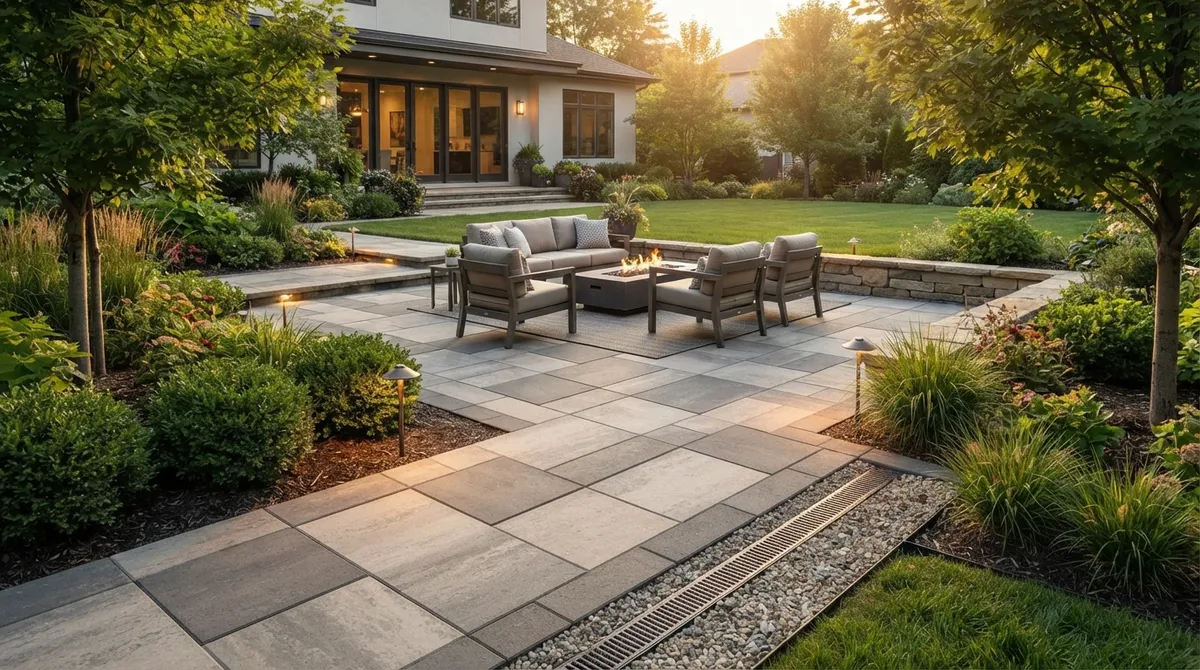
- Paver patios and plazas — Great for outdoor seating, gathering areas, or building entrances
- Walkways and pathways — Safe, attractive routes that guide visitors through your property
- Retaining walls — Structural solutions for sloped land, drainage control, and erosion prevention
- Driveways and parking areas — Paver-based surfaces that handle heavy traffic beautifully
- Fire pits and outdoor amenity features — Ideal for hospitality, multifamily, or corporate campuses
- Pergolas and shade structures — Functional additions that define outdoor spaces
Many full-service commercial landscape firms also combine hardscaping with softscape design, lighting, and ongoing maintenance to deliver a truly cohesive outdoor environment.
2. Know the Difference Between Residential and Commercial Projects
Commercial hardscape work is not the same as residential hardscaping. The scale, materials, compliance requirements, and timeline expectations are all very different. Understanding this helps you set realistic expectations from the start.
Here’s a simple comparison to help clarify:
| Factor | Residential Hardscaping | Commercial Hardscaping |
|---|---|---|
| Scale | Smaller projects, single properties | Large-scale, multi-zone installations |
| Traffic Load | Light foot traffic | Heavy foot and vehicle traffic |
| Compliance | Basic local permits | ADA compliance, municipal codes, engineering review |
| Materials | Standard-grade pavers and stone | Heavy-duty, high-load-rated materials |
| Timeline | Days to a few weeks | Weeks to several months |
| Budget | Lower investment | Larger investment, phased options available |
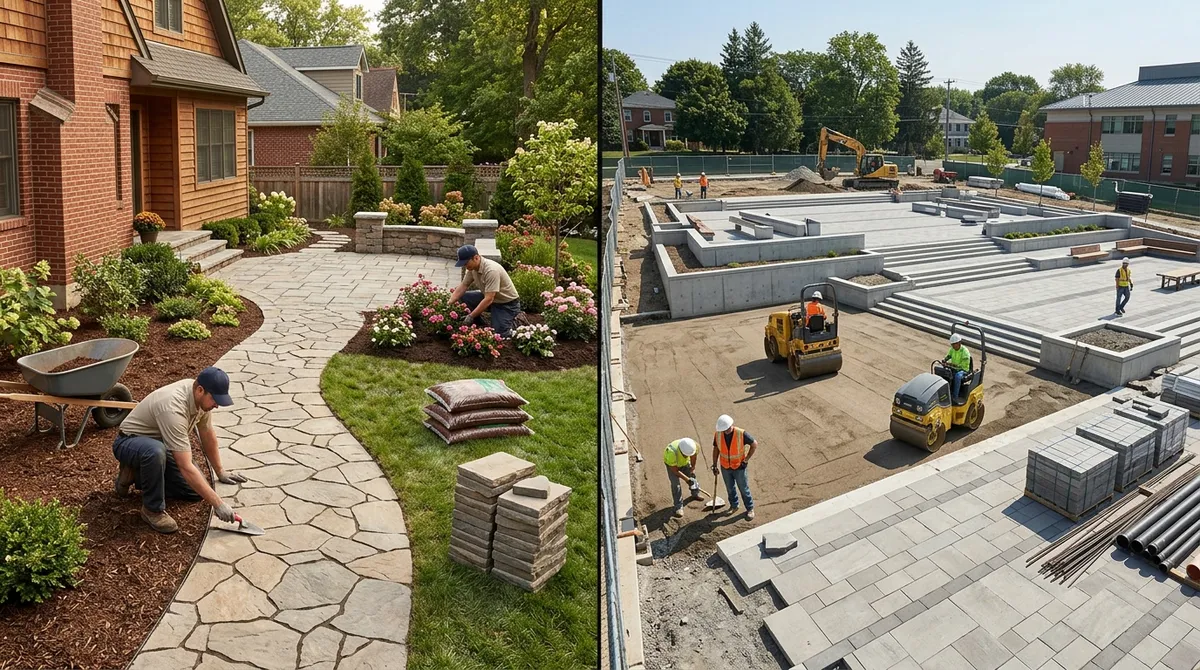
Commercial projects also require contractors who understand commercial retaining wall systems and site grading at a professional level. Always verify that your contractor has specific experience with commercial-scale work, not just residential projects.
3. Look for These Key Qualifications and Certifications
Not every contractor who claims to do commercial hardscaping has the credentials to back it up. Here’s what to look for before you sign any contract.
The most important qualifications include:
- Licensing and insurance — Always ask for proof of general liability insurance and a valid contractor’s license in Illinois
- Industry certifications — Look for contractors who are recognized by organizations like ICPI Certified Installers, which signals professional paver installation standards
- Portfolio of commercial projects — Ask to see completed work similar in scope to your project
- References from commercial clients — Property managers, HOAs, and business owners who can speak to the contractor’s reliability
- Knowledge of ADA compliance — Commercial walkways and entrances must meet federal accessibility standards
You can also look for members of Landscape Illinois, the state’s premier professional association for landscape contractors. Membership signals a commitment to ethical, professional standards in the industry.
4. Understand What Materials Work Best for Commercial Hardscapes
Material selection is one of the most important decisions in any commercial hardscape project. The right materials affect durability, safety, maintenance needs, and the overall look of your property. Chicago’s freeze-thaw climate makes this even more important to get right.
Here are the most popular material options and what makes each one shine:
- Concrete pavers — Extremely durable, easy to repair individually, and available in countless styles. Great for high-traffic commercial areas. Learn more about how concrete pavers transform outdoor spaces.
- Clay brick pavers — Classic, timeless look with excellent freeze-thaw resistance. A smart long-term investment for commercial entrances and plazas.
- Natural stone — Premium appearance that creates a high-end feel. Works well for upscale retail, hospitality, or corporate campuses.
- Segmental retaining wall blocks — Engineered for structural stability on commercial sites with grading challenges.
- Permeable pavers — Allow stormwater to drain through the surface, helping properties manage water runoff and meet green building standards.
Your contractor should walk you through material options that fit your budget, your site’s specific conditions, and your long-term maintenance goals. If you’re curious about what works best locally, explore why landscape pavers are such a smart choice for Chicago properties.
5. Ask the Right Questions Before Hiring
Once you’ve narrowed down your list of commercial hardscape contractors, it’s time to have some real conversations. The questions you ask upfront can save you a lot of headaches later. Here’s a practical list to bring to your first consultation.
Questions every commercial property manager should ask:
- How many commercial hardscape projects have you completed in the past three years?
- Do you handle permitting, engineering reviews, and ADA compliance, or is that our responsibility?
- What is your project timeline from design approval to final installation?
- How do you handle unexpected site conditions or material changes mid-project?
- Do you offer a warranty on both materials and labor?
- Will the same crew be on-site throughout the project, or do you subcontract portions of the work?
A trustworthy contractor will answer these questions clearly and confidently. If they seem evasive or unprepared, that’s a red flag. Also, be sure to ask about their design and installation process so you know exactly what to expect at each stage of the project.
It also helps to review their past work visually. Check out a gallery of completed projects to see the quality and range of their craftsmanship before committing.
6. Consider the Full Scope: Hardscape Plus Ongoing Maintenance
Here’s something many property managers overlook: a beautifully installed hardscape is only half the story. Long-term performance depends on proper upkeep. When you hire commercial hardscape contractors, ask whether they also offer ongoing maintenance services or partner with a team that does.
Ongoing care for commercial hardscapes typically includes:
- Regular cleaning of pavers and stone surfaces to prevent staining and moss buildup
- Joint sand replenishment to keep pavers stable and locked in place
- Inspection and repair of retaining walls after freeze-thaw cycles
- Seasonal adjustments to lighting systems integrated into the hardscape
- Snow and ice management to protect paver surfaces during Chicago winters
At Serenity Landscape Group, we believe a great outdoor space deserves great ongoing care. That’s why we offer commercial lawn maintenance alongside our hardscape installation services. From the first design conversation to seasonal upkeep, our team is with you every step of the way.
For properties that want to add warmth and character to their outdoor spaces, we also install fire pits, pergolas and pavilions, and landscape lighting and sound systems that take commercial spaces from ordinary to truly memorable.
It’s also worth considering how hardscaping integrates with your overall property strategy. You might find this guide on how to choose commercial landscaping services helpful when evaluating the big picture.
Quick Reference: What to Expect at Each Stage of a Commercial Hardscape Project
Here’s a simple overview of how a typical commercial hardscape project unfolds from start to finish:
| Stage | What Happens | Who’s Involved |
|---|---|---|
| 1. Consultation | Site visit, needs assessment, budget discussion | Property manager + contractor |
| 2. Design | Layout plans, material selection, renderings | Landscape designer + client |
| 3. Permitting | Permit applications, engineering reviews if needed | Contractor + local municipality |
| 4. Site Prep | Grading, excavation, base material installation | Installation crew |
| 5. Installation | Paver laying, wall construction, feature installation | Installation crew |
| 6. Final Review | Walkthrough, punch list, client sign-off | Property manager + contractor |
Understanding this process helps you plan around business operations and communicate clearly with your contractor at every stage. For more inspiration on what’s possible, explore 7 ways commercial landscaping can boost your business in 2026.
Why Hardscaping Is a Smart Investment for Commercial Properties
Let’s be honest — commercial hardscape projects are a meaningful financial commitment. But the return on that investment is real and measurable. Well-designed outdoor spaces increase foot traffic, improve tenant satisfaction, reduce long-term maintenance costs, and elevate your property’s overall market value.
Properties with attractive, functional hardscape features also tend to lease faster and retain tenants longer. Whether you’re a small business owner sprucing up a restaurant patio or a property manager upgrading an office campus, investing in quality hardscape work pays dividends for years to come.
Curious about how good landscaping directly affects your bottom line? Read more about how curb appeal landscaping transforms property value.
Wrapping It All Up
Finding the right commercial hardscape contractor doesn’t have to be stressful. When you know what to look for, what questions to ask, and what the process looks like, you’re in a great position to make a confident decision. Focus on experience, credentials, material knowledge, and a contractor who treats your property like their own.
At Serenity Landscape Group, we’ve spent over two decades helping commercial clients across the greater Chicago metropolitan area build outdoor spaces that are beautiful, durable, and built to last. We’d love to help you do the same.
Ready to get started? Request your free estimate today and let’s talk about what we can build together for your property.
FAQs
Q: What is the difference between a hardscape contractor and a general landscaping company?
A: A hardscape contractor focuses specifically on designing and building non-living outdoor structures like pavers, retaining walls, and walkways. Many full-service landscaping companies offer both hardscape and softscape services under one roof, which can make project coordination much easier for you!
Q: How long does a commercial hardscape project typically take?
A: The timeline really depends on the size and complexity of your project. Smaller installations might wrap up in a few weeks, while larger commercial plazas or multi-zone installations can take several months from design to final walkthrough. A good contractor will give you a clear schedule upfront.
Q: Do commercial hardscape contractors handle permits and ADA compliance?
A: Most experienced commercial hardscape contractors manage the permitting process and ensure all installations meet local codes and ADA accessibility requirements. Always confirm this in your contract so there are no surprises down the road.
Q: What materials hold up best for commercial hardscaping in Chicago’s climate?
A: Concrete pavers and clay brick pavers are both excellent choices for Chicago’s freeze-thaw climate because they allow for individual replacement if damage occurs. Natural stone is also a beautiful, durable option for premium commercial applications. Your contractor can help you choose what’s right for your specific site.
Q: How do I maintain commercial hardscape features after installation?
A: Regular maintenance includes cleaning surfaces, replenishing joint sand, inspecting retaining walls seasonally, and managing snow and ice carefully during winter. Many commercial landscape companies offer ongoing maintenance packages that make it easy to keep everything looking great year-round.