Key Takeaways
-
Chicago’s freeze-thaw cycles demand durable materials like Unilock or Techo-Bloc segmental blocks; walls exceeding 3 feet require a licensed Illinois structural engineer’s design, which is a non-negotiable safety requirement.
-
Retaining walls exceeding 3 feet need structural engineer involvement and proper permitting ($50 for walls ≤3 feet, $100 for walls >3 feet); professional installation handles all compliance and avoids costly failures.
-
Segmental retaining walls are the most popular residential choice in Chicago, offering dozens of color/texture options, freeze-thaw resistance, and lower costs than natural stone while maintaining decades of durability.
-
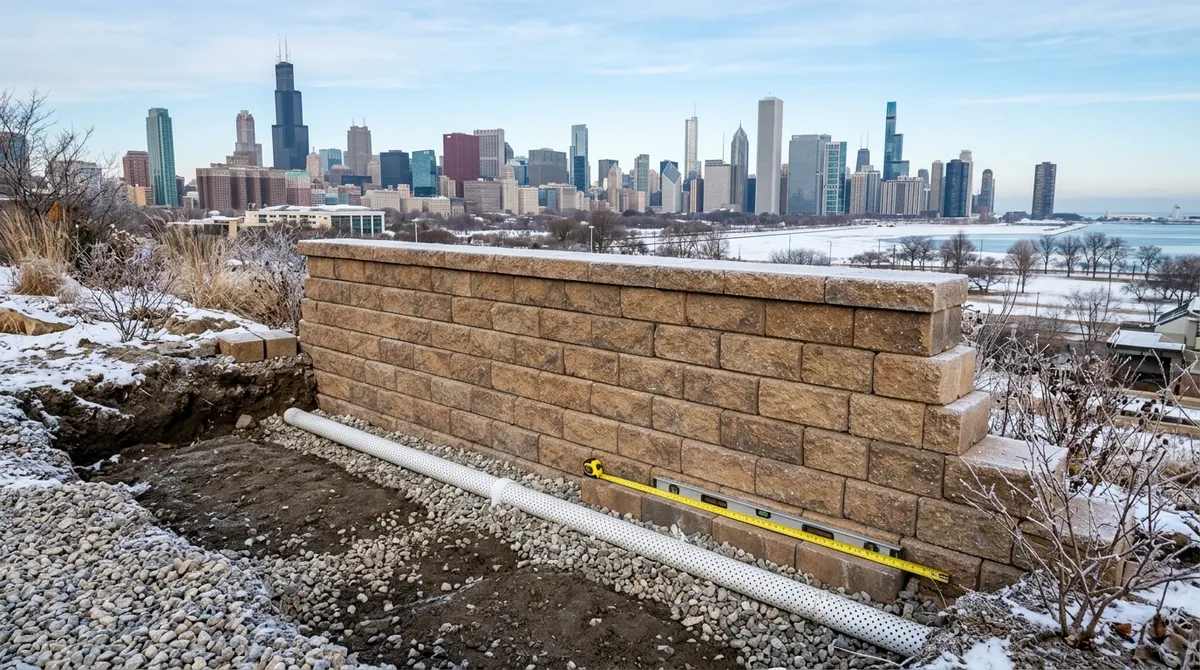
Proper drainage with perforated pipe and compacted CA-6 stone (minimum 4 inches base) is critical; inadequate drainage causes hydrostatic pressure that pushes walls outward, especially with Chicago’s heavy rainfall.
-
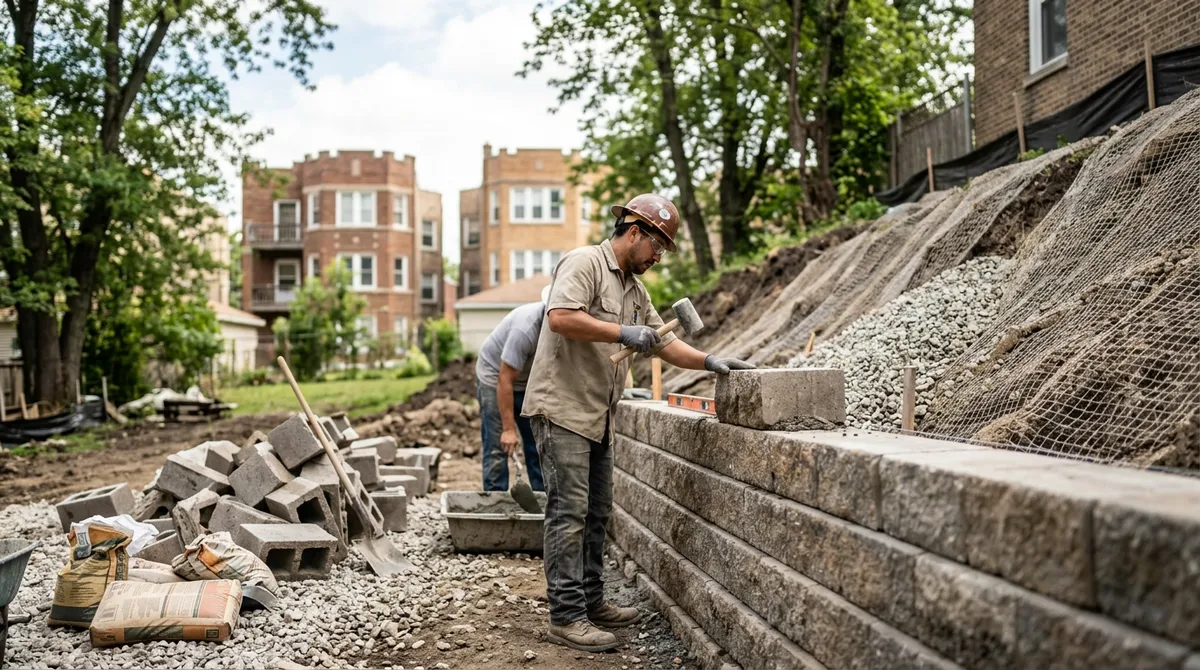
Professional installation includes site assessment, permit application, proper excavation (6-inch minimum trench), base preparation, wall construction with correct batter, and drainage installation—skipping steps leads to cracks and failure.
-
Retaining walls transform unusable sloped yards into functional terraced gardens and patios while protecting foundations from soil erosion and water damage caused by clay-heavy soils and spring rains.
If your Chicago-area property has a slope, you already know the headaches it can bring. Soil washing away after every rainstorm. Unusable yard space that just sits there. Water creeping toward your foundation. These are real problems — and site development retaining walls in Chicago are one of the best solutions available. Whether you’re a homeowner in the suburbs, a commercial property manager, or a builder breaking ground on a new development, the right retaining wall transforms a problem landscape into a polished, functional space.
Chicago’s climate makes this even more important. Our freeze-thaw cycles are brutal on outdoor structures, which means wall design and material selection matter more here than almost anywhere else. Done right, a retaining wall lasts decades and adds serious value. Done wrong, it cracks, shifts, and fails within a few years. In this guide, we’re breaking down the 3 types of site development retaining walls that Chicago landscaping pros rely on most — and everything you need to know before getting started.
Why Retaining Walls Matter So Much in Chicago
Chicago’s soil and weather conditions create a perfect storm for landscape erosion. Heavy spring rains, clay-heavy soils, and repeated freezing and thawing push and pull on your ground all year long. A well-built retaining wall holds that soil in place, protecting your yard, your foundation, and your investment. You can learn more about this in our guide on why retaining walls transform sloped yards into usable spaces.
Retaining walls also do something really exciting — they create usable space. A steep slope becomes a beautiful terraced garden. A crumbling hillside becomes a level patio. That’s the magic of thoughtful site development, and it’s why so many Chicago homeowners and property managers are investing in these structures in 2026. For more on the broader possibilities, explore our retaining walls service page.
Permits and Rules You Need to Know First
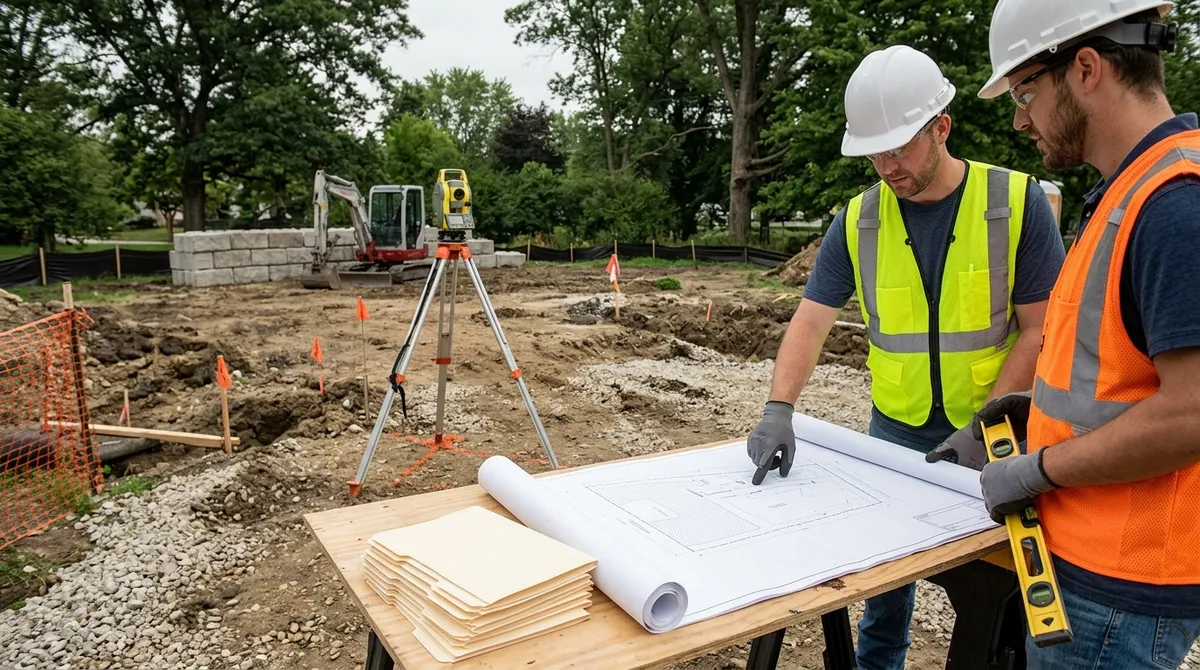
Before any wall goes in the ground, let’s talk about permits. In many Chicago suburbs — including Schaumburg — you need a permit to install or repair a retaining wall. Here’s a quick breakdown of what to expect:
- Walls 3 feet or less above adjacent grade: $50 permit fee
- Walls greater than 3 feet above adjacent grade: $100 permit fee
- Minimum trench depth required: 6 inches
- Minimum base thickness: 4 inches of CA-6 compactable stone
- Minimum inspection notice: 24 hours in advance
One big rule to keep in mind: walls exceeding 3 feet above adjacent grade require plans designed and sealed by a licensed Illinois structural engineer. This isn’t optional — it’s a safety requirement that protects your property and everyone around it. Our article on retaining wall engineering services explains this process in detail.
Working with a professional landscaping team means all of this is handled for you. Landscape Illinois is a great resource for finding licensed professionals who understand local regulations and building codes.
The 3 Retaining Wall Types Chicago Pros Love Most
Not all retaining walls are created equal. The best choice for your property depends on your slope, soil type, aesthetic goals, and budget. Here are the 3 site development retaining wall types that consistently deliver the best results in the Chicago area.
1. Segmental Retaining Walls (Interlocking Block)
Segmental retaining walls are by far the most popular choice for residential site development in Chicago. These walls use interlocking concrete blocks — brands like Unilock and Techo-Bloc are widely trusted — that lock together to form a strong, stable structure. They’re engineered specifically for Chicago’s freeze-thaw climate, which is a huge advantage.
Here’s why so many homeowners and builders love them:
- Available in dozens of colors, textures, and sizes
- Resistant to salt, UV fading, and moisture damage
- Can be installed on most soil types with proper base preparation
- Ideal for walls under 4 feet for residential applications
- Lower cost than natural stone for comparable performance
Professional installation includes a deep, laser-leveled, compacted CA-6 stone base — at least 4 inches thick — to ensure the wall stays plumb and stable for decades. Curious about how installation works step by step? Check out our guide on how segmental retaining wall installation works.
Segmental walls pair beautifully with pavers, garden beds, and outdoor living spaces. If you’re thinking about a complete backyard transformation, browse our gallery of our work to see real examples from Chicago-area projects.
2. Natural Stone Retaining Walls
For properties where elegance and character matter most, natural stone retaining walls are a stunning choice. Bluestone, granite, and fieldstone are commonly used in the Chicago area — each offering a distinct look that blends naturally with the landscape.
Natural stone walls are especially popular for:
- High-end residential properties in Chicago suburbs
- Historic or traditionally styled homes
- Garden terracing and decorative landscape features
- Commercial properties seeking a premium aesthetic
The key to a long-lasting natural stone wall in Chicago is expert craftsmanship. Each stone must be carefully selected and placed to ensure proper drainage and structural integrity. Without adequate drainage built into the wall, hydrostatic pressure from our heavy rains can push the wall outward over time. Our article on how to choose natural stone commercial retaining walls walks through what to look for.
Natural stone walls cost more than segmental block, but they offer a timeless look that’s genuinely hard to replicate. Many of our clients say their stone walls become the centerpiece of their entire landscape design. For ideas on combining stonework with other features, see our piece on why stonework is the secret to a stunning outdoor space.
3. Concrete Block Retaining Walls (For Larger-Scale Projects)
When site development requires serious structural support — think large slopes, commercial grading, or walls exceeding 4 feet — concrete block retaining walls are the go-to solution. These walls are engineered for strength and longevity, often used in commercial property development and new home construction throughout the Chicago metro area.
They’re the right call when:
- The wall needs to retain a large volume of soil
- The project involves commercial or multi-unit residential development
- Foundation protection is a primary concern
- A structural engineer is involved in the design
These walls must comply with Illinois structural engineering standards, especially for taller installations. Working with a certified installer is essential. ICPI Certified Installers are trained to meet these technical demands. For a deep dive into planning these larger projects, our guide on how to plan commercial concrete block retaining walls that last is a great starting point.
At Serenity Landscape Group, we’ve completed large-scale site development retaining wall projects across the greater Chicago area for over two decades. We handle everything from permitting to engineering coordination to final installation, so you don’t have to stress about the details. You can learn more about our approach on our process page.
How to Choose the Right Wall for Your Project
Choosing the best retaining wall for your property comes down to a few key factors. Use this comparison table to get a quick overview:
| Wall Type | Best For | Height Range | Aesthetic Appeal | Relative Cost |
|---|---|---|---|---|
| Segmental Block | Residential, suburban homeowners | Up to 4 feet (residential) | Modern, clean, versatile | Moderate |
| Natural Stone | Premium homes, decorative features | Up to 3–4 feet typically | Timeless, elegant, unique | Higher |
| Concrete Block | Commercial, large slopes, new builds | 4+ feet with engineer | Functional, structural | Varies by scale |
If you’re still not sure which direction to go, our guide on what a retaining wall is and whether you need one is a helpful place to start. You can also read about how to choose between landscaping and hardscaping for your yard to see the bigger picture.
What Professional Installation Actually Looks Like
A quality retaining wall installation follows a clear, proven process. Here’s what the steps look like when done right:
- Site assessment and design: Evaluate slope, soil conditions, drainage patterns, and intended use of the space.
- Permit application: Submit plans to the local municipality and secure required approvals before work begins.
- Excavation: Dig a trench to a minimum depth of 6 inches to create a stable starting point.
- Base preparation: Install and compact at least 4 inches of CA-6 stone to create a firm, level foundation.
- Wall construction: Lay blocks or stone with proper batter (backward lean), drainage aggregate, and geogrid reinforcement where needed.
- Drainage installation: Add perforated pipe and drainage stone behind the wall to manage water pressure effectively.
- Backfill and compaction: Fill behind the wall in lifts, compacting each layer to prevent settling.
- Final inspection: Schedule a municipal inspection with at least 24 hours’ notice to confirm code compliance.
Skipping any of these steps leads to walls that lean, crack, or fail entirely. That’s exactly why professional installation is worth every dollar. For more on common mistakes, check out our article on 7 hardscaping mistakes to avoid in your outdoor space.
Retaining Walls and Drainage — A Critical Pairing
One thing many people overlook is how closely retaining walls and drainage work together. In Chicago, we get significant rainfall — and without proper drainage built into your wall, water pressure builds behind it and causes failure. A well-designed wall always includes a drainage layer of clean stone and a perforated pipe to carry water away safely. You can explore how this works in our resource on retaining walls vs. drainage systems for stormwater management.
Good drainage also protects your foundation, prevents basement leaks, and keeps your landscaping healthy. It’s not just about the wall itself — it’s about the whole system working together. The State of Illinois encourages property owners to manage stormwater responsibly, and a properly drained retaining wall is one of the most effective ways to do that on sloped properties.
Bring It All Together with a Full Landscape Design
Retaining walls work best when they’re part of a larger outdoor vision. Pair your new wall with beautiful pavers for a patio, add softscaping for color and texture, or finish the space with landscape lighting for evening ambiance. The possibilities are genuinely exciting.
At Serenity Landscape Group, we love helping Chicago-area homeowners, property managers, and developers see the full potential of their outdoor spaces. A retaining wall isn’t just a functional fix — it’s the foundation for something beautiful. Visit our about page to learn more about our team and our two-decade track record across Chicagoland.
Ready to Start Your Retaining Wall Project?
Site development retaining walls in Chicago are one of the smartest investments you can make in your property. They solve real problems, create usable space, and add lasting value — all while standing up to Chicago’s demanding climate. Whether you’re drawn to the versatility of segmental block, the elegance of natural stone, or the strength of concrete block for a larger project, there’s a solution that’s right for you.
Don’t let a sloped, eroding, or unusable yard hold your property back any longer. Our team at Serenity Landscape Group is ready to help you design and build a retaining wall that looks great and performs beautifully for decades. Request your free estimate today and take the first step toward a landscape you’ll love — or call us directly at (630) 359-5139 to talk through your project with one of our friendly team members.
FAQs
Q: Do I need a permit to install a retaining wall in Chicago?
A: Yes — in most Chicago suburbs, you’ll need a permit before installing or repairing a retaining wall. In Schaumburg, for example, permit fees range from $50 for walls 3 feet or under to $100 for walls taller than 3 feet. A professional landscaping team can handle the permitting process for you, which makes everything much smoother!
Q: How tall can a retaining wall be without needing a structural engineer in Illinois?
A: In Illinois, retaining walls exceeding 3 feet above the adjacent grade typically require plans designed and sealed by a licensed structural engineer. Below that height, standard permitting usually applies. It’s always a good idea to check with your local municipality, since rules can vary by suburb.
Q: What materials work best for retaining walls in Chicago’s freeze-thaw climate?
A: Chicago’s freeze-thaw cycles demand durable, weather-resistant materials. Top choices include Unilock and Techo-Bloc segmental blocks, bluestone, granite, and quality brick — all of which resist salt damage, UV fading, and moisture. These materials are specifically designed to hold up through decades of Chicago winters without cracking or crumbling.
Q: How deep should the base be for a retaining wall in Chicago?
A: A solid retaining wall in Chicago needs a trench at least 6 inches deep, filled with a minimum of 4 inches of compacted CA-6 stone as the foundation. This deep, stable base is essential for preventing shifting and settling caused by Chicago’s heavy clay soils and freeze-thaw pressure cycles.
Q: Can retaining walls help with drainage problems on my Chicago property?
A: Absolutely — and this is one of the biggest benefits! A properly built retaining wall includes drainage stone and perforated piping behind the wall to carry water away safely. This reduces water pressure on the wall itself and helps protect your foundation, prevent soil erosion, and keep your landscaping healthy all year long.