Key Takeaways
-
Artificial turf costs $9-$16 per square foot for professional installation, while natural sod is cheaper upfront but costs $250-$350 annually in maintenance, watering, and mowing.
-
Request itemized quotes covering removal, base prep, drainage, turf material, infill, seams, and edging to compare bids fairly, as quote ranges vary widely based on included services.
-
Turf material fiber type significantly affects price: polyethylene costs $2-$5/sq ft, polypropylene $2-$7/sq ft, and nylon $5-$8/sq ft, with thicker, denser options generally lasting longer.
-
An 1,800-square-foot artificial lawn could save approximately 99,000 gallons of water annually, though actual savings vary based on climate, water rates, and your previous irrigation habits.
-
Budget for eventual replacement after 8-10 years of use, as artificial turf lifespan varies with product quality, sun exposure, and usage intensity rather than lasting indefinitely.
-
Site challenges like poor soil drainage, slopes, tight access, and custom borders significantly increase installation costs beyond the base price per square foot.
Let’s be honest: a lush green lawn is lovely, but nobody dreams about mowing it every Saturday. If you’ve wondered whether synthetic turf could save you time and money, you’re in good company. Many Chicago-area homeowners ask us the same thing every spring. The big question is almost always about artificial lawn cost and how it stacks up against traditional sod.
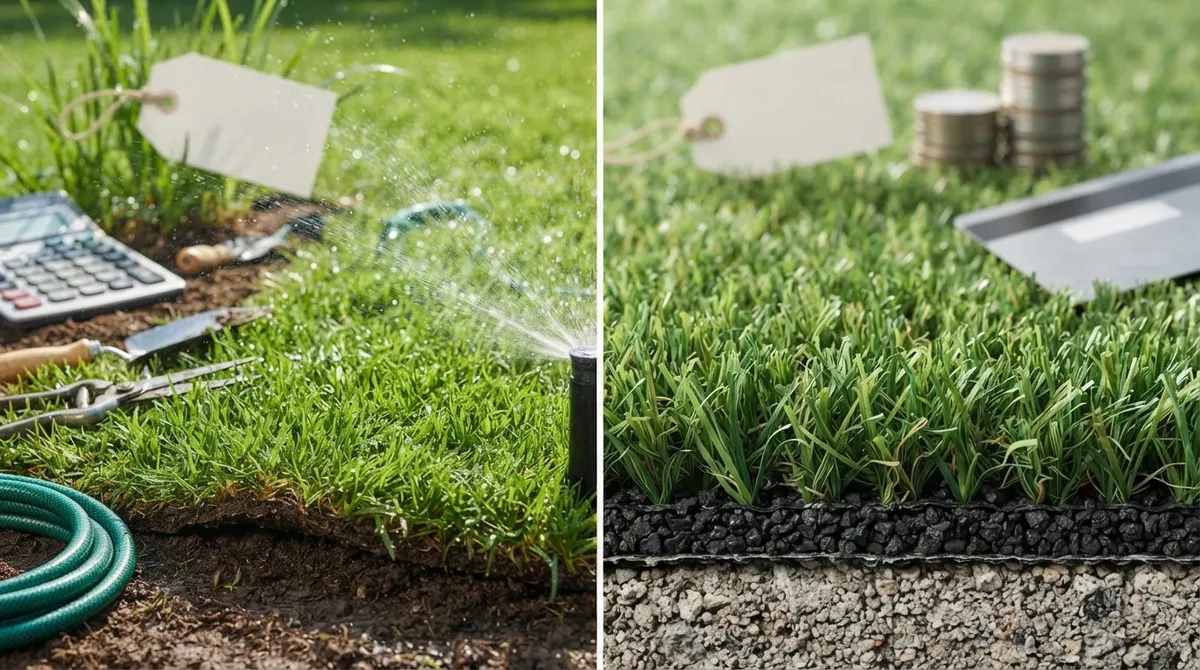
Here’s the short answer. Artificial turf costs more up front. Natural sod costs more month after month. Which one wins depends on your yard, your water bills, and how long you plan to stay put.
In this friendly guide, we’ll walk through real 2026 price ranges, show you what’s inside a quote, and compare the long-term costs of both options. By the end, you’ll know exactly how to budget with confidence.
What Does Artificial Lawn Cost in 2026?
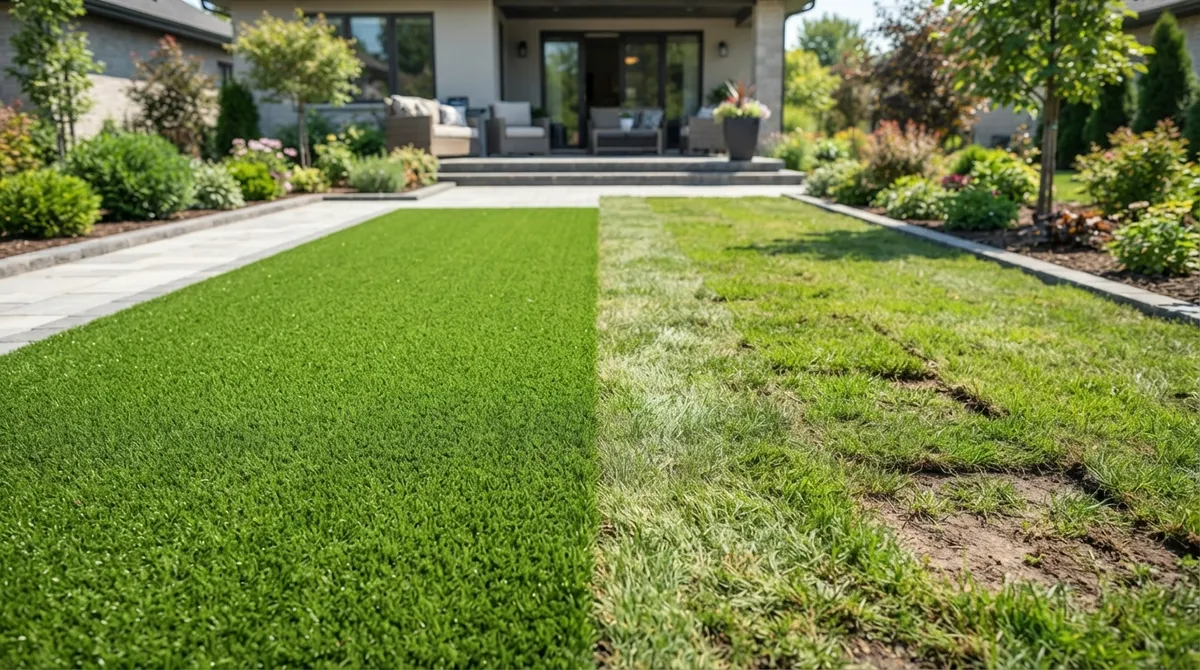
Published U.S. cost guides vary a lot. Recent estimates range from about $6 to $22 per square foot. That’s a wide spread, so let’s make it practical. For many professionally installed residential yards, a good planning range is roughly $9 to $16 per square foot.
National averages help, too. HomeAdvisor’s 2025 guide reports an average artificial grass installation cost of $5,781. Angi’s 2026 guide lists an average of $5,757, with most homeowners paying anywhere from $1,300 to $15,000. These are national figures, so your local bid may look different.
Why such a big range? Quotes don’t always include the same things. One bid may cover only turf and labor. Another may include lawn removal, base prep, drainage work, and edging. That’s why you should always ask for an itemized scope.
Quick Budget Examples
To estimate your project, measure your lawn area and multiply by a local installed price. Here are some illustrative examples at $9 to $16 per square foot. These are not guaranteed bids.
| Lawn Size | Estimated Installed Cost | Best Fit |
|---|---|---|
| 300 sq. ft. | $2,700 – $4,800 | Small urban yard or condo patio |
| 500 sq. ft. | $4,500 – $8,000 | Townhome or small backyard |
| 1,000 sq. ft. | $9,000 – $16,000 | Typical suburban backyard |
| 1,800 sq. ft. | $16,200 – $28,800 | Larger suburban lawn |
Smaller jobs often cost more per square foot. Crew setup and prep work get spread over less area. Bigger, simple jobs usually have a lower unit price, though the total is higher.
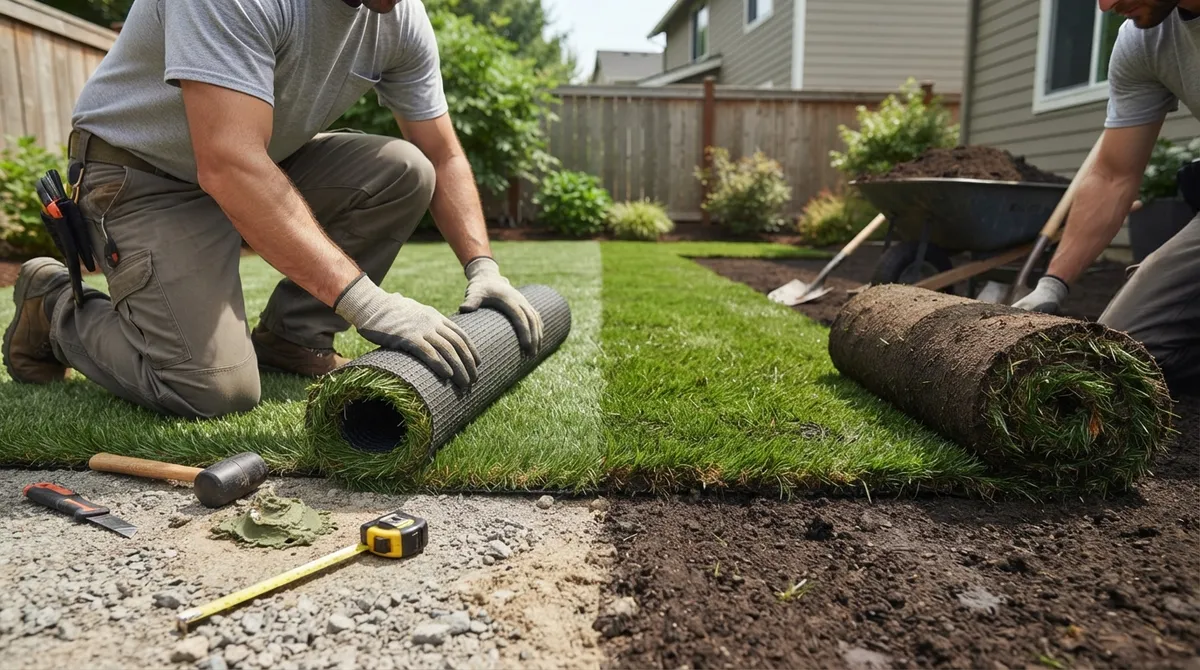
Artificial Lawn Cost vs. Natural Sod: The Upfront Price
Now for the head-to-head part. Artificial turf is a bigger first purchase. Sod is cheaper on day one but asks for more from you over time.
Sod installation prices vary by region and grass type. Because pricing changes so much from one yard to the next, we’ll focus on what the price covers rather than quoting a single number. If you want a deeper dive on this exact matchup, our team wrote about imitation grass versus natural sod and what wins on cost.
Here’s a simple side-by-side look at how the two options compare.
| Cost Factor | Artificial Turf | Natural Sod |
|---|---|---|
| Upfront installation | Higher | Lower |
| Watering | Little to none | Ongoing, seasonal |
| Mowing and fertilizing | None | Regular |
| Annual care | About $250–$350 (estimate) | Varies by service level |
| Expected lifespan | About 8–10 years (cited estimate) | Ongoing with proper care |
| Replacement | Required eventually | Patching and reseeding as needed |
Notice that neither option is free of upkeep. Artificial turf is low maintenance, not no maintenance. We’ll cover that next.
What’s Inside an Artificial Turf Quote?
A good quote tells a clear story. Ask your contractor to list each piece so you can compare bids fairly. Most professional installations include some or all of these items:
- Turf material: The grass itself, chosen by fiber type, pile height, density, and backing.
- Existing lawn removal: Stripping and hauling away old sod and weeds.
- Excavation and grading: Shaping the ground so water moves away from your home.
- Compacted aggregate base: A firm, drainable layer that keeps the turf smooth and flat.
- Weed barrier: A fabric layer that helps limit weeds below the surface.
- Infill: Material that helps fibers stand up and gives the lawn a natural feel.
- Seams and edging: The finishing details that make it look polished.
- Labor and cleanup: The crew’s time and site cleanup when the job is done.
If you’re curious how the pieces fit together, our guide on the 5 key stages of the artificial turf installation process walks through each step. The base layer matters a lot, so you may also like our look at the best base materials for turf installation.
How Turf Material Changes the Price
The turf itself is a major cost driver. Angi reports turf material prices of roughly $2 to $8 per square foot overall. The fiber type makes a difference.
- Polyethylene ($2–$5 per sq. ft.): A popular residential choice. It tends to feel soft and look natural.
- Polypropylene ($2–$7 per sq. ft.): Often a lower-cost option, though quality varies by product.
- Nylon ($5–$8 per sq. ft.): Generally the most expensive. It’s known for strength and bounce-back.
Pile height, density, backing, and warranty also affect price. A thicker, denser turf with a stronger warranty usually costs more but may hold up better. If you’re still choosing, our article on how to choose artificial turf for your backyard can help you narrow it down.
What Makes Your Artificial Lawn Cost Go Up?
Two yards of the same size can get very different quotes. Here’s what usually pushes the price higher.
- Tough access: Narrow gates or no equipment path mean more hand labor.
- Soil correction and excavation: Heavy clay, a common Chicago-area challenge, may need extra work.
- Drainage needs: Wet spots or poor grading can add materials and time.
- Slopes and curves: Irregular shapes create more cuts and more seams.
- Custom borders: Paver edging, planters, or integrated features add labor and materials.
Speaking of wet yards, drainage is a smart place to invest. You can read more in our post on why synthetic grass drains better than natural lawns.
Design details matter for the budget, too. Pairing turf with a paver patio or walkway is a favorite upgrade. It looks great, but it adds to the total. Our paver services can be planned alongside your turf so everything fits together as one clean design.
The Long-Term Math: Maintenance, Water, and Replacement
Here’s where a lot of homeowners get surprised, in a good way. A sod lawn quietly costs you money all season through water, mowing, fertilizer, and weed control. Artificial turf takes most of that off your plate.
But we want to be straight with you. Artificial turf isn’t a magic money machine. You’ll still brush the fibers, rinse away dust, and clear leaves and debris. Pet owners may need to treat odors. One consumer guide estimates annual maintenance at about $250 to $350, though your real costs depend on how the lawn is used.
Our artificial turf maintenance tips show how little effort it takes to keep a lawn looking fresh.
Water Savings Are Real, but They Vary
A 2022 Western Resource Advocates report cites an estimate that an 1,800-square-foot artificial lawn could save about 99,000 gallons of water a year. That’s a cited estimate, not a promise. Your savings depend on your climate, your water rates, and how much you watered before. If you rarely irrigated, you’ll save less.
Plan for Replacement
The same report cites a typical residential turf lifespan of about 8 to 10 years. Real product life varies with quality, sun, and use. Smart budgeting means thinking about eventual removal and replacement, not just the first invoice. For local insight, check out artificial turf lifespan in Chicago.
So is artificial turf cheaper than sod over time? It can be, especially for yards that would need heavy irrigation and regular service. But it isn’t automatic. Compare lifecycle costs, not just the sticker price.
Which Option Fits You Best?
Every property has its own story. Here’s how we’d think about it for different folks around Chicagoland.
- Suburban homeowners: If you’re tired of weekend mowing and want a tidy look that meets HOA standards, turf can be a great fit. Sod may suit you if you love the feel of living grass and don’t mind the routine.
- Urban condo owners: Small patios and rooftops are where turf shines. It stays green without watering. See how it works on rooftops in Chicago.
- Commercial property managers: High-traffic areas can wear out sod fast. Turf offers steady curb appeal with a predictable upkeep plan.
- New home builders: Turf delivers a finished look right away, which buyers love.
- Small business owners: A restaurant patio or storefront needs to look sharp all season, and turf helps with that.
Smart Ways to Budget for Your Project
Ready to put numbers on paper? Follow these steps for a smoother planning process.
- Measure your space. Sketch the area and note curves, slopes, and obstacles.
- Decide how you’ll use it. Pets, kids, and entertaining all affect turf choice.
- Ask for itemized quotes. Request line items for removal, base, turf, seams, and edging.
- Compare apples to apples. Make sure each bid covers the same scope and warranty.
- Add the long view. Think about upkeep, water savings, and future replacement.
For more help, take a look at our post on how to budget for artificial grass installation costs and our guide to reading landscape quotes and comparing them fairly.
It also pays to hire a team that does the prep work right. A great-looking turf lawn starts underground. Learn more about why professional installation beats DIY. You can also browse local landscaping standards through Landscape Illinois, a trusted industry organization.
A Smarter Way to Decide
Think of your yard as a long-term partner. Sod is the lower-priced start with steady yearly effort. Artificial turf is the higher-priced start with less effort down the road. Neither is wrong. The right pick matches your budget, your time, and your goals.
If you want to see what a finished project can look like, browse our gallery of our work. And if you’re ready to explore options, our artificial turf installation page explains how we approach each yard.
Ready to Price Your Dream Lawn?
Artificial lawn cost doesn’t have to feel confusing. Plan around a realistic range of about $9 to $16 per square foot for many professional installs. Then confirm the details with itemized, local quotes. Weigh the upfront price against water, upkeep, and replacement, and you’ll make a choice you feel good about.
At Serenity Landscape Group, we’ve spent over two decades turning Chicagoland outdoor spaces into places people love. Whether you’re picturing a low-maintenance backyard or a polished commercial entrance, we’d love to help. Get a free estimate today, or call us at (630) 359-5139 to talk through your project. We can’t wait to help you create a lawn you’ll enjoy for years.
FAQs
Q: How much does artificial lawn installation cost per square foot?
A: Published U.S. guides show a wide range, roughly $6 to $22 per square foot. Many professionally installed residential projects land around $9 to $16 per square foot. Your final price depends on turf choice, site prep, drainage, and design details.
Q: How much would a 500- or 1,000-square-foot yard cost?
A: At $9 to $16 per square foot, a 500-square-foot lawn would run about $4,500 to $8,000. A 1,000-square-foot lawn would be about $9,000 to $16,000. These are estimates, so ask for a local itemized bid.
Q: Is artificial grass cheaper than natural sod over time?
A: It can be, especially if your yard needs lots of watering, mowing, and treatments. But it isn’t guaranteed. Water savings depend on your climate and past habits, and you’ll need to plan for eventual replacement.
Q: How long does artificial turf last?
A: One report cites an estimated residential lifespan of about 8 to 10 years. Real life varies with product quality, sun exposure, and how much the lawn is used. Good installation and regular care help it last.
Q: What maintenance does artificial grass need?
A: You’ll remove debris, rinse the surface, and brush the fibers now and then. Pet owners may need to handle odors, and infill can shift in busy spots. One consumer guide estimates annual care at about $250 to $350, depending on use.