Key Takeaways
-
Inspect posts, beams, rafters, and fasteners early in fall, before the first hard freeze, so you have time to repair damage and order parts before snow arrives.
-
Only seal or stain wood once it is completely dry, and follow the product label’s weather and temperature limits; reapply when the old finish looks chalky, faded, or patchy.
-
Clear leaves, pine needles, and dirt from beams, rafters, and drainage channels, since trapped debris holds moisture against the structure for months.
-
Take down shade sails, fabric canopies, cushions, and string lights not rated for winter, then store them clean and dry to prevent mildew and wind damage.
-
Do not rely on a general snow rule; check your pergola’s manual or contact the manufacturer to learn its specific snow capacity, and never stand under a structure that looks overloaded.
-
Make sure water drains away from post footings and trim vines and overhanging branches, then call a professional if you see leaning posts, sagging beams, or deep rot.
Picture this: it’s a crisp October morning in Chicagoland, the leaves are turning, and your pergola is still standing tall over the patio where you spent all summer. Now is the perfect moment to give it some love. Pergola maintenance before winter is one of the easiest ways to protect your investment, and it only takes a weekend or two.
Our Midwest winters are no joke. Freezing rain, heavy snow, and wild temperature swings can find every weak spot in a pergola. A little prep in the fall can help you avoid warped beams, loose posts, and costly spring repairs.
In this friendly guide, we walk you through 10 simple steps to get your pergola ready. Whether you own a backyard retreat in the suburbs, a rooftop pergola in the city, or a shade structure at a restaurant or office, these tips will help you head into winter with confidence. Let’s dig in!
Why Pergola Maintenance Before Winter Matters
A pergola spends its whole life outdoors. Rain, sun, and wind all take a small bite out of it each season. Winter adds moisture, freezing, and extra weight on top of that.
When water gets into wood, joints, or fasteners and then freezes, it can expand and cause cracks, rot, or loose connections. Debris that sits on beams holds moisture against the material for months. Small problems you ignore in October can turn into big ones by April.
The good news? Most fall care is simple. You are mainly looking for damage, clearing out debris, protecting materials, and putting away anything that is not built for cold weather. If you ever feel unsure about something you find, a pro can take a look. We cover that in step 10.
10 Steps for Pergola Maintenance Before Winter
Here is a quick overview of the steps before we dive into each one. Think of it as your fall checklist.
- Schedule your inspection before freezing weather
- Check posts, beams, rafters, and connections
- Clear debris from the roof, beams, and drainage
- Clean the structure with the right products
- Seal or stain wood once it is fully dry
- Remove shade sails, canopies, and cushions
- Check the ground and drainage at the post bases
- Trim nearby plants and branches
- Know your snow plan and follow your documentation
- Call a professional when safety is unclear
1. Schedule Your Inspection Before Freezing Weather
Timing matters. Pick a dry, mild day in early to mid fall and walk around your pergola with a notepad. In the Chicago area, aim to finish well before the first hard freeze.
Doing this early gives you time to fix problems, let stains or sealers dry, and order any replacement parts. Waiting until the first snowfall means you may be stuck with whatever you find until spring.
2. Check Posts, Beams, Rafters, and Connections
Look closely at every structural part. You are hunting for anything that has moved, cracked, rusted, or softened over the season.
- Posts: Look for leaning, cracks, or soft spots near the base.
- Beams and rafters: Check for sagging, splitting, or discolored areas that may signal rot.
- Brackets and anchors: Make sure they are snug and not rusty or bent.
- Fasteners: Tighten loose bolts and screws, and replace any that are corroded.
If you spot structural concerns, repair them before winter or ask a qualified professional to help. A wobbly connection is much easier to fix now than under a load of snow. If you are still deciding on a style or material, our guide to stunning pergola designs can help you plan upgrades that stand up to the seasons.
3. Clear Debris From the Roof, Beams, and Drainage
Leaves, pine needles, and dirt may look harmless, but they act like a wet sponge. They hold moisture against your pergola and block water from draining during rain or snowmelt.
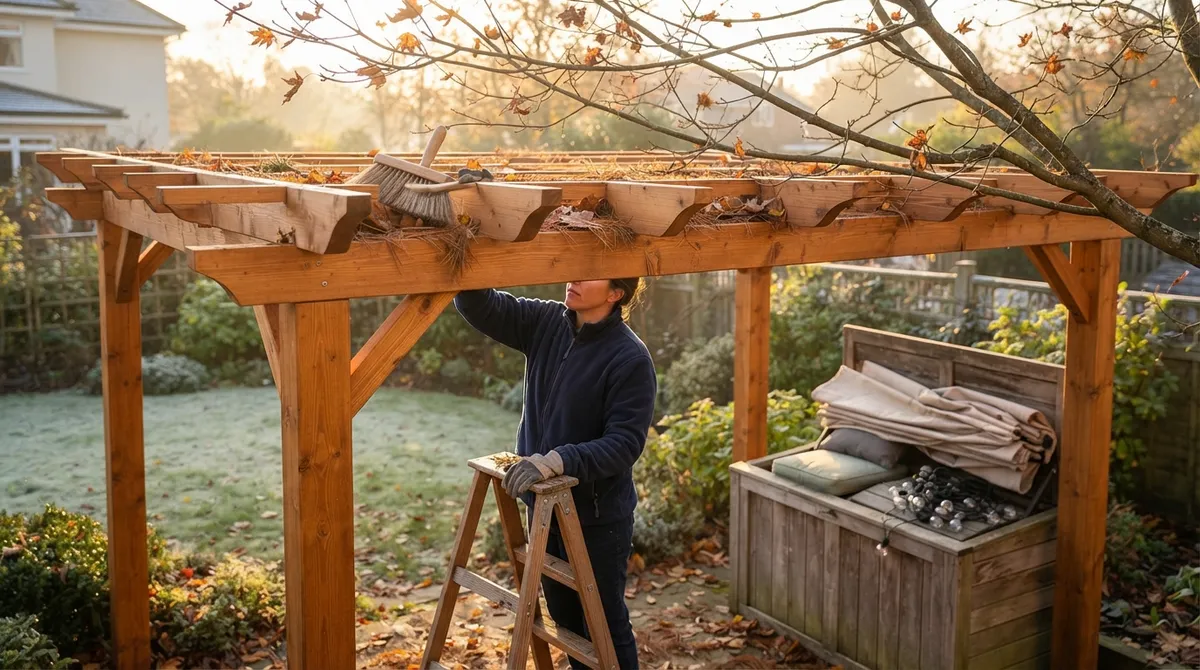
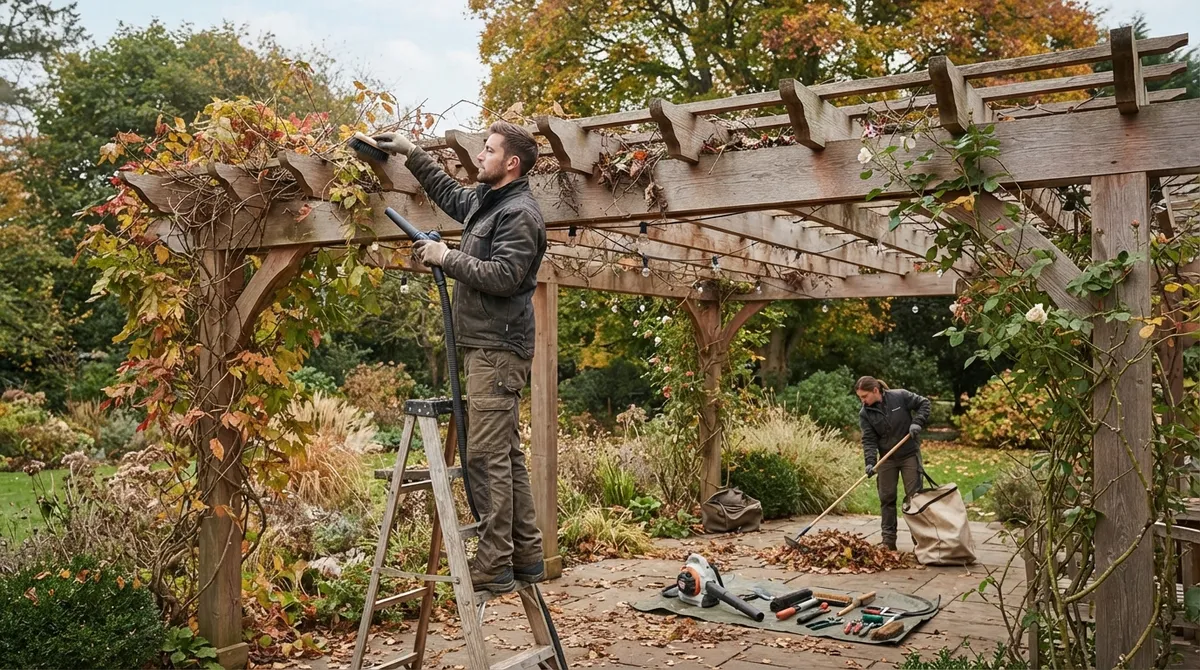
Use a soft broom or a leaf blower to clear the tops of beams and rafters. If your pergola has roof panels, gutters, or drainage channels, clear those out too. Wear gloves, use a sturdy ladder, and ask a helper to hold it steady.
For a deeper cleaning routine, check out our fall cleaning steps for pergola beams and posts.
4. Clean the Structure With the Right Products
Once the big debris is gone, give the pergola a gentle wash. Dirt, pollen, mildew, and grime can trap moisture and wear down finishes.
Use a mild cleaner that is made for your pergola’s material, and follow the label directions. Avoid harsh tools that could scratch finishes or panels. Always check your pergola manufacturer’s care instructions first, since different materials need different care.
After washing, let everything dry completely. This is key before you move on to sealing.
5. Seal or Stain Wood Once It Is Fully Dry
If you have a wood pergola, a fresh coat of stain or sealer is one of the best things you can do. It helps block moisture, which is a big deal when temperatures swing above and below freezing.
Here are a few simple rules:
- Only apply products to fully dry wood. Never coat damp wood.
- Choose a stain or sealer that is compatible with your wood and any existing finish.
- Follow the product label for weather and temperature limits, and do not apply it outside those conditions.
- Check your pergola maker’s care guide for approved products.
Not every pergola needs a new coat every year. If the existing finish still beads water and looks even, you may be fine. If it looks chalky, faded, or patchy, it is time. You can also read more in our post on how to protect your wood pergola this winter.
6. Remove Shade Sails, Canopies, and Cushions
Soft goods and winter do not mix well. Fabric canopies and shade sails can collect snow, hold moisture, and get ripped by strong winds.
Take down and store anything that is not specifically rated for winter exposure by its manufacturer. That includes:
- Shade sails and fabric canopies
- Outdoor curtains and drapes
- Cushions, pillows, and rugs
- Hanging planters and decor
- String lights that are not made for cold weather
Make sure everything is clean and dry before storing it so you do not get mildew. Fold it neatly and keep it in a dry spot like a garage or storage bin. Come spring, you will thank yourself!
7. Check the Ground and Drainage at the Post Bases
Water is the number one enemy of any outdoor structure. Take a look at where your posts meet the ground or patio. You want water to flow away from the footings, not pool around them.
Look for low spots, soil that has settled, or mulch piled against the posts. Add soil or gravel to build gentle slopes away from the base if needed. If you notice standing water or erosion near your pergola, you may have a bigger drainage issue.
Pergolas installed on pavers should also be checked for shifting or settling around the posts. Fixing small gaps now keeps freeze and thaw cycles from making them worse.
8. Trim Nearby Plants and Branches
Climbing vines and overgrown shrubs can look lovely in summer. In winter, they can trap moisture against your pergola and rub on the wood as the wind blows.
Trim back any plants that touch the structure, and give vines a light haircut. Also look up! Remove nearby branches that could fall under the weight of snow or ice and land on your pergola.
This is a good time to think about your whole yard, too. Healthy softscapes look great and keep working for you through the colder months when they are trimmed and cared for properly.
9. Know Your Snow Plan and Follow Your Documentation
Here is where we want to be extra careful. There is no one-size-fits-all answer for how much snow a pergola can hold. Snow capacity depends on the design, materials, condition, roof setup, and local conditions.
So please do not rely on a general rule you read online. Instead, pull out the manual or documentation that came with your pergola, or contact the manufacturer or installer. They can tell you what your specific structure is rated for.
Here is a quick look at how to think about different pergola types:
| Pergola Type | What to Check Before Winter | Important Reminder |
|---|---|---|
| Open-slat wood pergola | Beam condition, finish, post connections | Debris and snow can still collect on top |
| Solid or paneled roof | Panels, seals, gutters, drainage channels | Follow the maker’s snow guidance |
| Louvered or motorized roof | Louver movement, motor, and controls | Never force operation if frozen or blocked |
| Fabric or shade sail cover | Fabric rating and attachment points | Remove unless rated for winter |
If you have a louvered or motorized roof, follow the operating instructions for winter use. Do not force the louvers if they are frozen or blocked by ice, because that can damage the system.
If snow does pile up and removal is needed, follow the manufacturer’s guidance. Use a soft tool and work from a safe position. Skip metal shovels, since they can scratch finishes or panels. And never stand under a structure that looks overloaded or damaged.
10. Call a Professional When Safety Is Unclear
Most fall pergola care is very doable on your own. But sometimes it is smart to bring in a pro. Reach out to a landscaping or pergola specialist if you notice:
- Leaning posts or sagging beams
- Significant rot or deep cracks
- Loose or corroded structural connections
- Motorized or louvered systems that are not working right
- Drainage problems around the footings
A trained eye can spot issues you might miss and fix them safely. At Serenity Landscape Group, we have been helping Chicagoland homeowners and businesses care for their outdoor structures for over two decades. We are always happy to take a look.
Quick Pre-Winter Pergola Checklist
Keep this handy list on your phone or fridge as you work through your fall to-dos.
| Task | Best Timing | Done? |
|---|---|---|
| Inspect posts, beams, and fasteners | Early fall | ☐ |
| Clear debris and drainage channels | Mid fall | ☐ |
| Clean the structure and let it dry | Mid fall, dry weather | ☐ |
| Seal or stain wood (if needed) | After full drying, within product limits | ☐ |
| Remove canopies and cushions | Before first freeze | ☐ |
| Check ground drainage at post bases | Anytime in fall | ☐ |
| Trim plants and nearby branches | Late fall | ☐ |
| Review snow guidance in your manual | Before first snowfall | ☐ |
Different Properties, Different Priorities
Every outdoor space is a little different, so your focus may shift depending on your property.
Suburban homeowners often have larger wood pergolas surrounded by lawn and trees. Falling branches and drainage around the footings tend to be the top concerns, and a fresh sealer coat goes a long way.
Urban condo owners with rooftop or small-space pergolas should pay extra attention to wind, secure anchors, and removing loose cushions and decor that could blow away. Always follow your building’s rules and your structure’s documentation.
Commercial property managers and small business owners with patio shade structures should put a seasonal checklist on the calendar. A tidy, safe pergola keeps your property looking sharp and protects guests. Ask your landscape partner about commercial lawn maintenance and seasonal property care that fits together.
New home builders can give buyers a big boost by handing over a pergola care sheet with the keys, so new owners know exactly how to protect their investment in the first winter.
Planning Ahead for Spring
The work you do now pays off when the snow melts. A well-cared-for pergola looks better, lasts longer, and is ready for outdoor dinners the moment the weather warms up.
If you are dreaming about upgrading your outdoor space for next year, fall is also a great time to start planning. Pairing a pergola with fire pits and outdoor lighting creates a cozy spot you can enjoy long into the cooler months. You can also browse our gallery of our work for fresh ideas.
For more helpful resources on caring for outdoor spaces, groups like Landscape Illinois offer industry guidance, and the ICPI Certified Installer program is a great place to learn about quality hardscape installation. For general home maintenance and safety tips during cold months, the Ready.gov winter weather guide is also worth a bookmark.
Ready to Winterize With Confidence?
Taking care of your pergola before winter does not have to be stressful. Walk the structure, clear the debris, protect the materials, put away the soft goods, and follow your manufacturer’s guidance when it comes to snow. You will be amazed at how much a few hours of effort can save you later.
If you would rather have an expert in your corner, we are here for you. Get a Free Estimate from our team, or call us at (630) 359-5139 and let’s talk about getting your outdoor space ready for the season ahead. Here’s to a cozy winter and a gorgeous spring!
FAQs
Q: How do I prepare a pergola for winter?
A: Start with a fall inspection of the posts, beams, and fasteners, then clear debris, clean the structure, and seal wood once it is fully dry. Take down shade sails and cushions, check drainage at the post bases, and trim nearby branches. Always follow your pergola manufacturer’s care instructions.
Q: Should I remove a pergola canopy or shade sail before snow?
A: Yes, in most cases. Fabric canopies and shade sails can hold snow and moisture and get damaged by wind, so take them down and store them clean and dry unless the manufacturer says they are rated for winter exposure.
Q: How much snow can my pergola safely hold?
A: There is no universal number, because snow capacity depends on your pergola’s design, materials, condition, and roof setup. Check your documentation or contact the manufacturer or installer, and call a professional if you are unsure.
Q: Do I need to seal or stain a wood pergola before winter?
A: A fresh coat helps block moisture, especially if the old finish looks faded, chalky, or patchy. Only apply a compatible stain or sealer to fully dry wood, and follow the product label for weather and temperature limits.
Q: When should I hire a professional for winter pergola care?
A: Call a pro if you see leaning posts, sagging beams, deep rot, loose structural connections, drainage problems, or a louvered system that is not working right. It is always better to ask when safety is in question.