Key Takeaways
-
Choose between open-sided and screened pavilions based on your wind exposure: open sides suit mild early-fall evenings, while screens or removable panels extend use into windy late fall.
-
Never use outdoor heaters in an enclosed pavilion due to fire and carbon monoxide risks; always follow manufacturer clearances and check local permit and ventilation rules first.
-
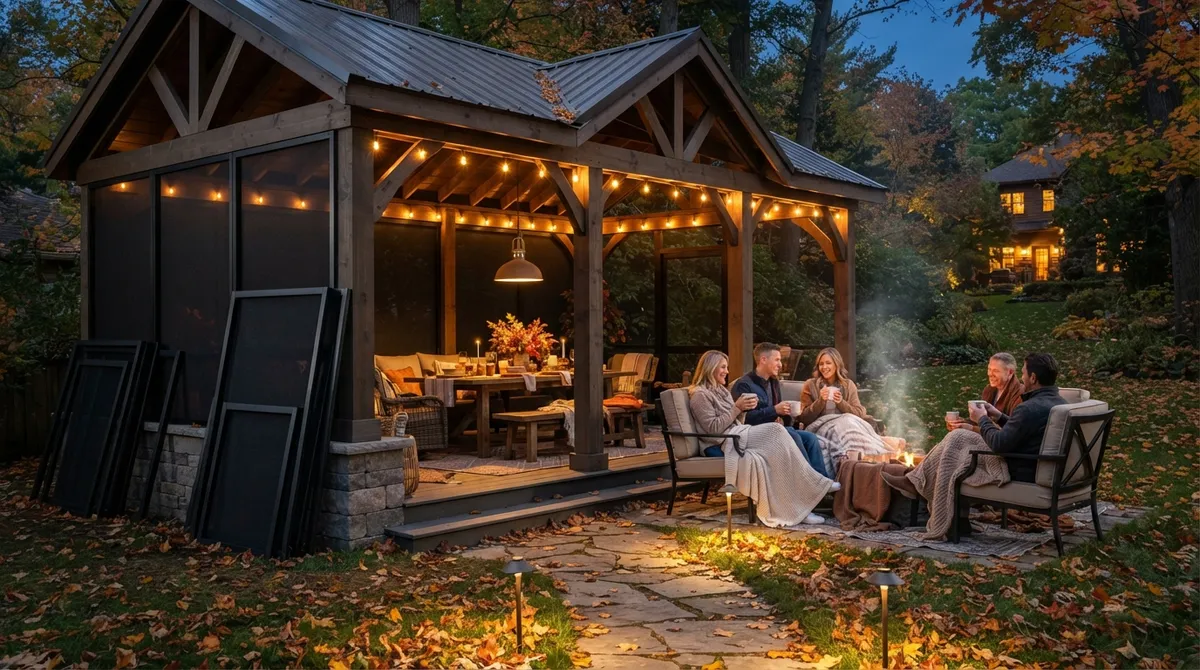
A removable-panel design offers the best of both worlds, letting you keep sides open in September and add panels as temperatures drop.
-
Use layered, warm-toned lighting: task lights over dining and prep areas, string lights under the roofline, and low path lights for safe footing on wet leaves.
-
Position seating with chairs' backs to the prevailing breeze and add weather-resistant cushions, throws, and a warm drinks station to boost guest comfort.
-
Frame the pavilion with ornamental grasses, evergreen wind screens, and seasonal containers, and keep fallen leaves clear of flames, heaters, and drainage paths.
There is something special about a crisp October evening in Chicagoland. The leaves turn gold, the air smells like woodsmoke, and everyone wants to gather outside one more time before winter. But a backyard that felt perfect in July can feel drafty and damp by late fall. That is where a well-planned pavilion makes all the difference.
If you are gathering backyard pavilion ideas for fall entertaining, one big question comes up fast: should you keep the sides open, or add screens and wind protection? Both choices can work beautifully. Each one changes how your space feels, how guests move around, and how safely you can add heat.
In this friendly guide, we compare open-sided and screened pavilions side by side. You will also find ideas for seating, lighting, fire features, and fall plantings. Think of it as a chat with a neighbor who happens to love outdoor spaces. Let’s dive in.
Why a Pavilion Is a Smart Fall Entertaining Space
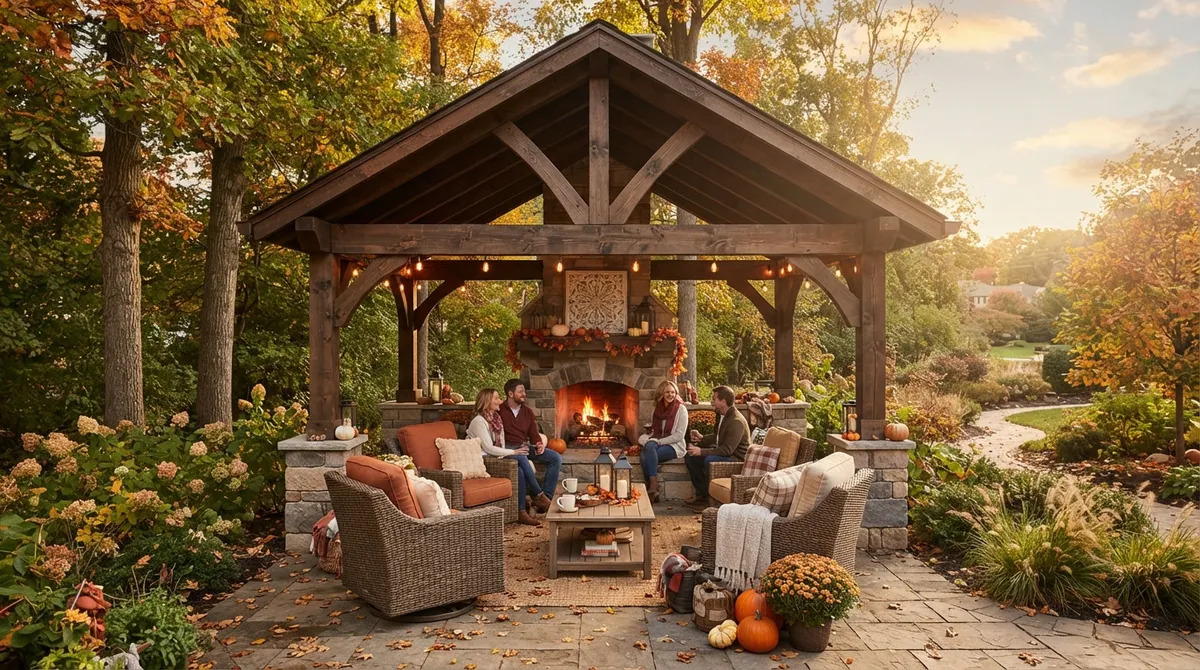
A pavilion gives you a roof over your head without closing you off from the garden. The roof shelters guests from light rain and falling leaves. The open feel keeps you connected to the colors of the season.
That is the big difference between a pavilion and an indoor room. You still get fresh air and views, but you also get a spot to set out food, drinks, and cozy seating. If you are new to the idea, this guide on what pavilions are and how they can transform your outdoor space is a helpful starting point.
Fall adds a few new challenges, though. Days get shorter, temperatures dip, and wind picks up. A pavilion built for fall needs to handle all three. A good plan covers:
- Shelter from rain, leaves, and wind
- Safe, comfortable heat
- Layered lighting for early sunsets
- Clear, well-lit paths from the house
- Landscaping that frames the space and sheds leaves easily
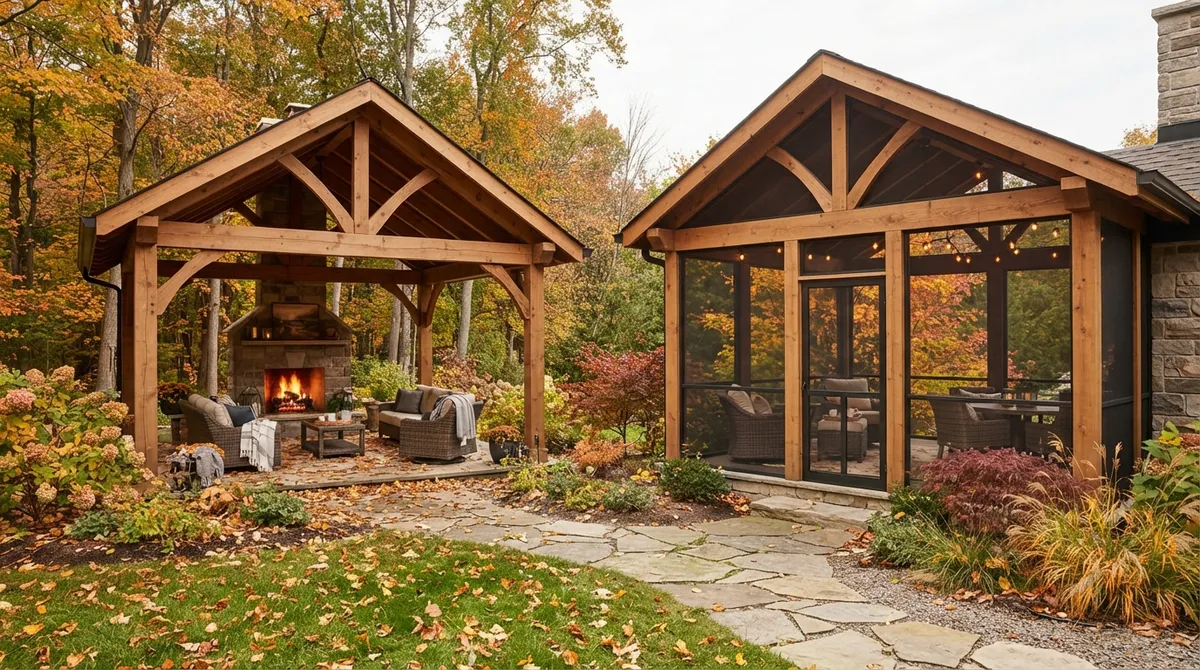
The Two Contenders: Open-Sided vs. Screened
Let’s meet our two options. An open-sided pavilion has a roof and posts, but no walls. It is airy, social, and easy to enter from any direction. A screened or wind-protected pavilion adds removable screens, panels, or carefully placed walls and plantings to block wind and chill.
Here is a quick side-by-side look:
| Feature | Open-Sided Pavilion | Screened or Wind-Protected Pavilion |
|---|---|---|
| Airflow | Excellent | Good, with controlled openings |
| Wind protection | Limited without planning | Strong, especially with removable panels |
| Garden connection | Wide-open views | Framed views |
| Heat retention | Lower | Higher |
| Heater safety | Easier to ventilate | Needs careful design and ventilation |
| Best for | Early fall, mild evenings | Late fall, windy yards |
Neither one is the clear winner for every yard. The right pick depends on your wind, your guests, and how late into the season you want to entertain.
Open-Sided Pavilions: Airy, Social, and Easy
Open-sided pavilions are the classic choice. Guests can drift in and out, kids can run through, and the cook never feels cut off from the party. You also get the best views of your fall color.
What We Love About Open Sides
Open designs shine in September and early October. Evenings are mild, and the breeze feels refreshing. Because air moves freely, they are also the easiest layout for adding a fire feature safely.
- Great flow: Guests can enter from the house, the patio, or the lawn.
- Natural ventilation: Smoke and heat disperse more easily.
- Garden views: Maples, oaks, and ornamental grasses become living art.
What to Watch Out For
The trade-off is wind. A breeze that feels lovely in July can feel sharp in November. Open pavilions also let in blowing rain if the wind shifts. You can fix much of this with smart placement. Think about prevailing winds before you pick a spot, and use evergreen shrubs or a low wall to take the edge off.
Screened and Wind-Protected Pavilions: Cozy and Calm
If your yard sits in an open lot or catches strong gusts, screening may be your best friend. Removable screens, side panels, or a solid back wall help hold in warmth and keep napkins from flying off the table.
What We Love About Screens
Screening stretches your season. A protected pavilion can feel comfortable well into late fall, especially with the right seating and heat. It also keeps leaves from blowing across your serving table.
- Wind relief: Even a single protected side can change the whole feel.
- Flexibility: Removable panels let you open up on warm days.
- Cozy feel: Guests tend to linger longer in a sheltered space.
The Safety Piece You Cannot Skip
Here is the important part. The more enclosed your pavilion becomes, the more careful you must be with any fuel-burning heater or fire feature. Never use outdoor heaters in an enclosed space. They can create fire and carbon monoxide risks.
Safety guidance from Ontario’s Technical Standards and Safety Authority notes that for one covered configuration (an overhead cover with three side walls), at least 30% of the perimeter must stay permanently open. Rules differ by product and by town, so always check your heater’s instructions and your local requirements before you install anything.
Head-to-Head: How They Compare for Fall Entertaining
Let’s put the two designs through the real-life tests your guests will notice.
Comfort on a Chilly Night
Screened pavilions win here. Blocking wind makes a bigger difference than most people expect. Add weather-resistant cushions and cozy throws, and your guests will stay put.
Safety and Ventilation
Open-sided pavilions win. They make it simpler to place fire features and heat safely. If you choose a screened design, plan permanent openings and follow every clearance rule.
Views and Atmosphere
Open-sided wins for big, sweeping views. Screened designs can still feel magical when the panels frame a favorite tree or garden bed.
Flexibility Across the Season
This one is a tie, if you plan well. A pavilion with removable screens gives you the best of both worlds. Keep the sides open in September, then add panels as the temperature drops.
Seating and Layout Ideas That Work in Either Style
No matter which style you pick, the layout decides whether your party flows or feels crowded. Try creating distinct zones so guests can move freely.
- A dining zone: Place a long table under the roof, close to the house for easy trips with food.
- A fireside lounge: Set sofas and chairs around a fire feature to create a natural gathering spot.
- A serving or kitchen zone: Keep the grill or beverage station off to one side so cooks are not in the middle of traffic.
- Clear paths: Keep walkways between the house, pavilion, and yard open and well lit.
For more on arranging tables and traffic flow, take a look at our guide on how to plan a pavilion layout for outdoor dining in 2026. Also, place seating with the wind in mind. Put chairs with their backs to the breeze, and guests will feel warmer right away.
Warmth Beyond the Heater: Cozy Fall Comfort
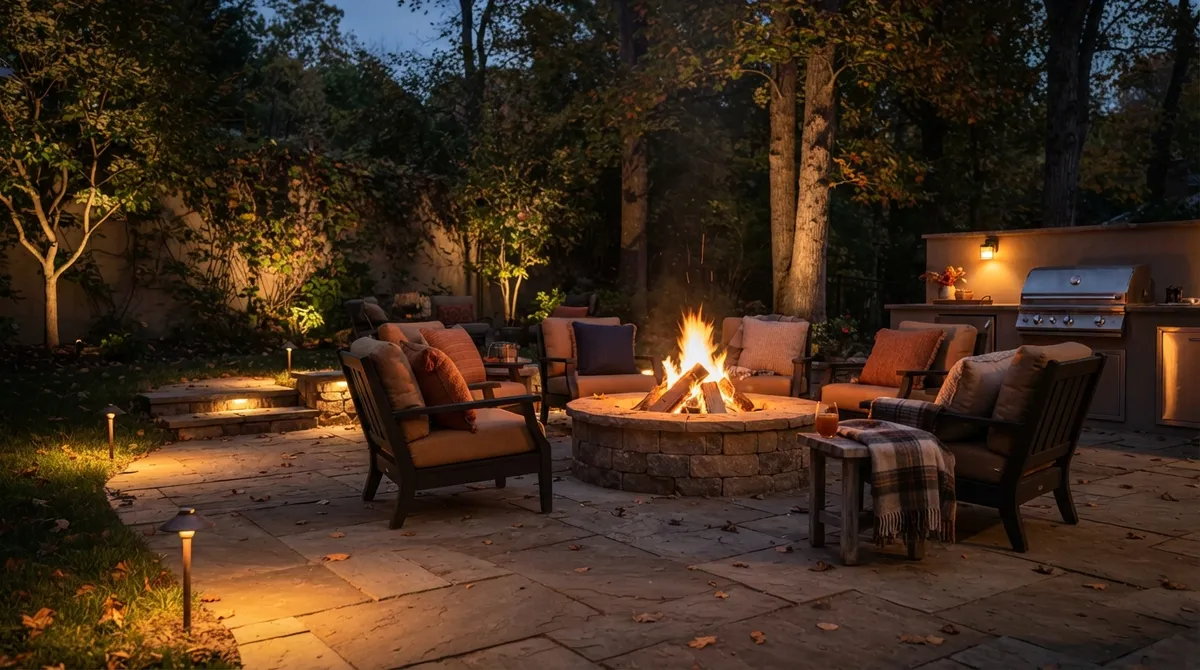
Heat is wonderful, but comfort comes from more than a heater. A few simple touches can make a pavilion feel like a warm living room.
- Weather-resistant cushions: They handle damp evenings and wipe clean after gatherings.
- Soft throws: Keep a basket of blankets within reach.
- Storage nearby: A deck box or cabinet protects textiles between parties.
- Warm drinks station: Hot cider or cocoa warms guests from the inside out.
These little details turn a nice pavilion into the spot everyone wants to hang out in.
Fire Features: The Heart of Fall Gatherings
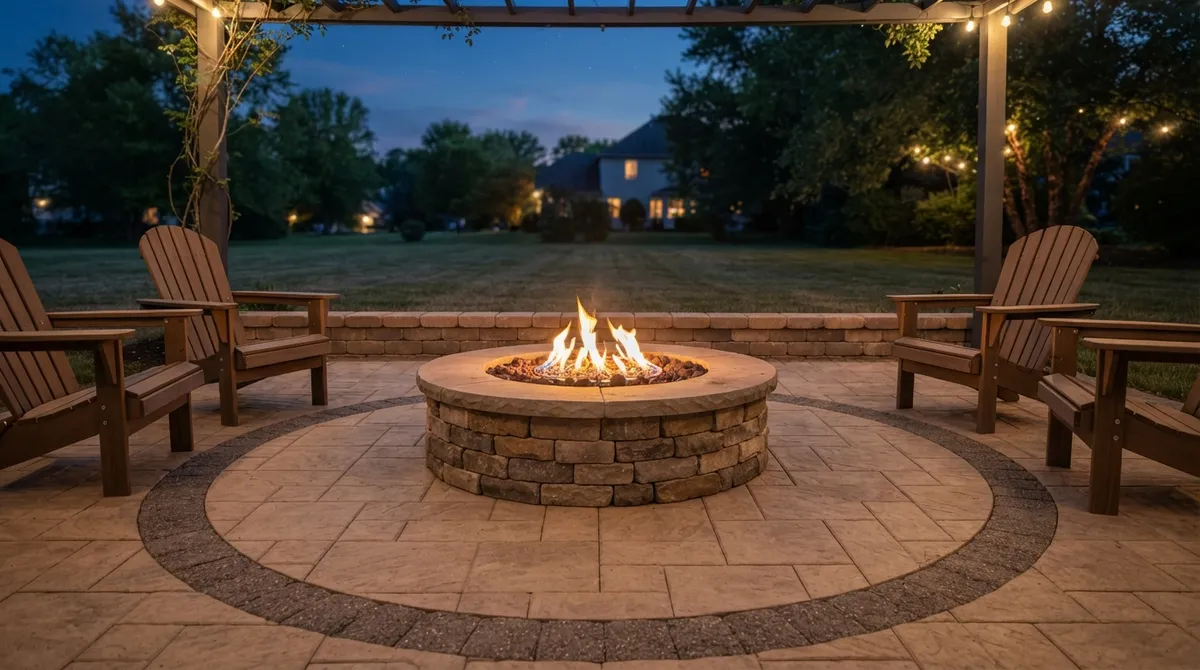
A fire feature gives your pavilion a natural focal point. Guests are drawn to it like a magnet. It also extends your evenings, since warmth and flickering light make a cool night feel inviting.
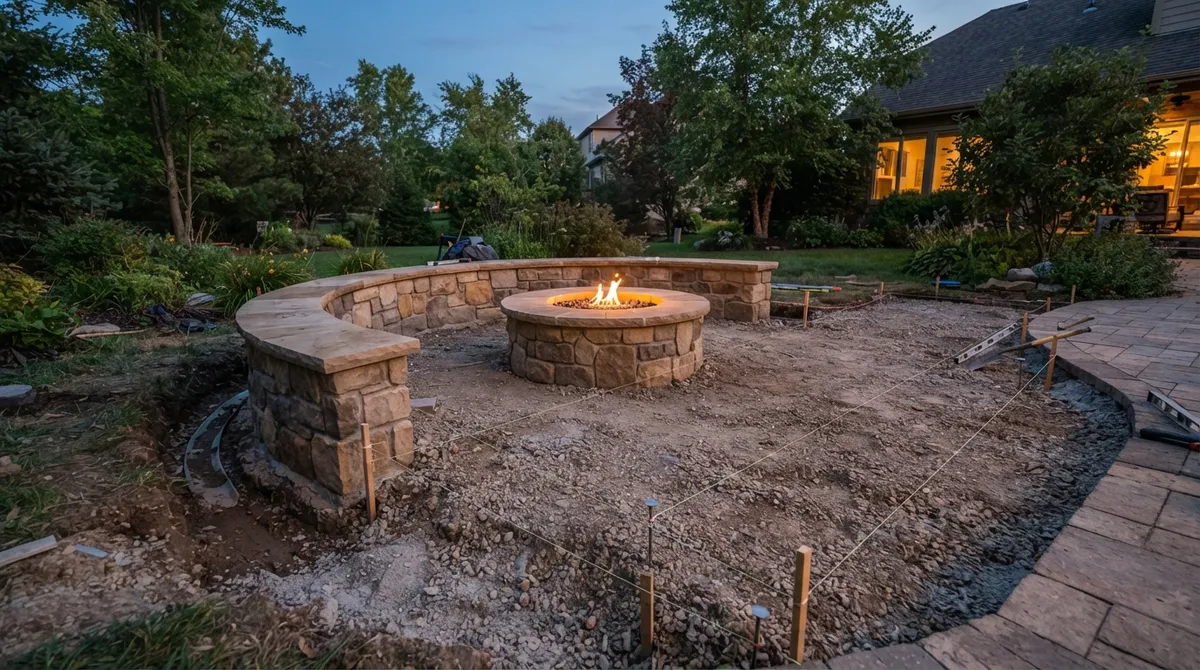
You can choose a wood-burning pit, a gas fire table, or even a full outdoor fireplace. Browse our fire pit options or get inspired by 12 fire pits that transform backyards in 2026. For a sturdy, good-looking base, consider a paver patio designed around a fire pit.
A few safety reminders keep the fun going:
- Choose a location and fuel type that suits your site.
- Have a qualified professional address clearances, ventilation, and local fire rules.
- Check whether your town requires a permit for a fireplace or fixed gas line.
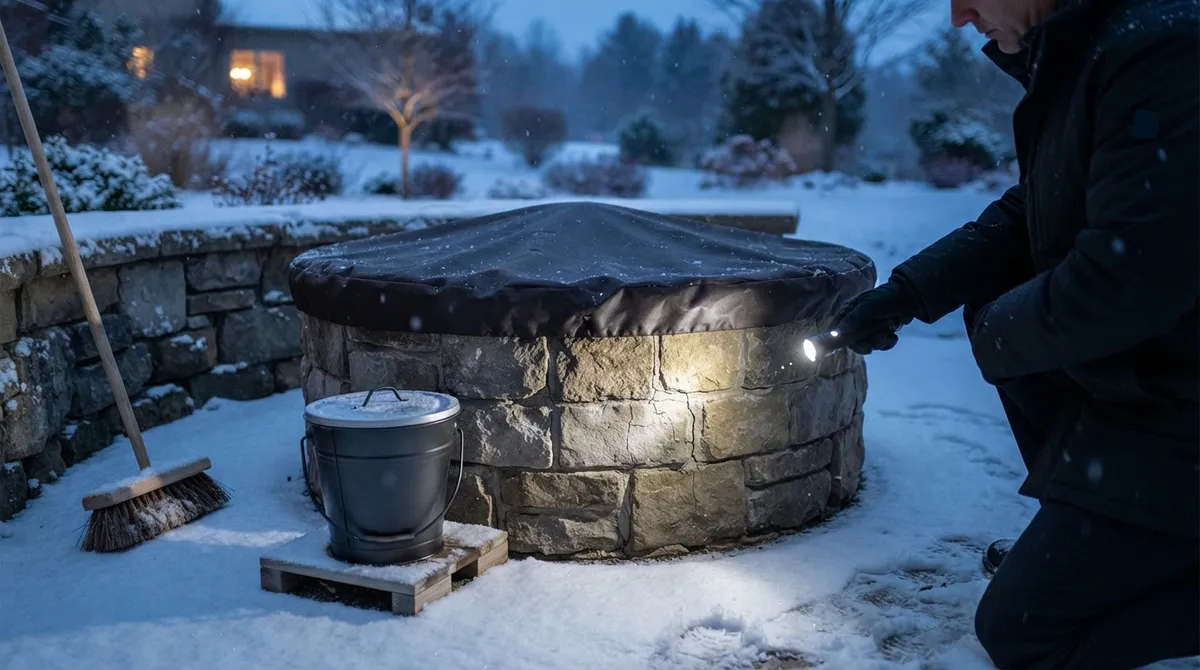
- Keep leaves, cushions, and decor away from flames.
Patio heaters under a roof need extra care. Follow the manufacturer’s clearance and installation instructions, and only use them in configurations the product allows.
Lighting That Makes Fall Evenings Glow
When the sun sets at five o’clock, lighting does the heavy lifting. The best approach is layered, warm-toned light that feels soft instead of harsh.
- Task lighting: Place brighter, focused lights over the dining table and food-prep areas.
- Ambient lighting: Use overhead fixtures or string lights under the roofline for a gentle glow.
- Path and step lighting: Low-level lights keep guests safe on wet, leaf-covered walkways.
Use outdoor-rated fixtures and have them installed properly, since wet leaves and damp air are tough on wiring. Our lighting and sound services can tie it all together, and you can find more ideas in these landscape lighting ideas for Chicago yards. For cozy ambiance, you might add music from one of these outdoor sound systems for covered pavilions.
Landscaping That Makes Your Pavilion Feel Connected
A pavilion should feel like part of the garden, not a box dropped onto the lawn. Smart planting frames the space and adds that classic autumn color.
- Ornamental grasses: They sway in the breeze and glow in golden light.
- Native, locally suited plants: They handle Chicago weather and look right at home.
- Seasonal containers: Mums, pumpkins, and kale add easy pops of color.
- Evergreen screens: They block wind and keep the view green after the leaves fall.
Keep plants and fallen leaves clear of flames, heaters, paths, and drainage routes. A tidy edge keeps things safe and looking sharp. To dive deeper, read about designing softscapes that transform your outdoor space. If your yard has tricky grades, a retaining wall can create a level spot for your pavilion.
Professional resources like Landscape Illinois can also help you find plant choices and best practices suited to our region.
So, Which Should You Choose?
Here is an easy way to decide. Ask yourself these questions:
- How windy is my yard? A very windy lot points toward screens or wind protection.
- How late do I want to entertain? If you love November gatherings, lean toward a protected design.
- Do I plan to use a fire feature or heater? Open sides make safe ventilation simpler.
- Do I want views above all? Open-sided designs show off your garden best.
Our honest take? For most Chicago-area homes, a pavilion with removable screens or panels is the sweet spot. You get open, airy gatherings early in the season and cozy shelter when it turns cold.
If you are weighing structure types, see our pergolas and pavilions page, or compare ideas in this post on open slats vs. solid roof pergolas. A solid foundation matters too, and quality pavers give your pavilion a clean, durable floor. If you hire an installer, look for ICPI-certified professionals through the ICPI Certified Installer program.
Before You Build: Permits and Planning
A quick word on rules. Permit requirements for pavilions, fireplaces, and gas lines vary by town and by project. Your homeowners association may also have guidelines. Check with your local building department before you start, so there are no surprises later.
It also helps to understand the process from start to finish. Our process page explains how we move from first conversation to final reveal, and our gallery of our work shows what is possible.
Ready to Gather This Fall?
Whether you choose open sides, screens, or a flexible mix, the best pavilion is the one that fits how you actually live and entertain. Think about wind, warmth, light, and safety, and your fall gatherings will feel effortless.
We would love to help you bring your vision to life. Serenity Landscape Group has spent over two decades creating outdoor spaces across the Chicago area, and we handle everything from design to installation. Ready to start planning? Get a free estimate today, or call us at (630) 359-5139 to chat about your backyard pavilion ideas for fall entertaining. Your coziest season yet is waiting.
FAQs
Q: How do I make a backyard pavilion comfortable for fall entertaining?
A: Start with wind protection, then add weather-resistant cushions, soft throws, and a safe heat source or fire feature. Layered, warm lighting helps too. A nearby storage box keeps your blankets dry between parties.
Q: Can I use a patio heater under a pavilion roof?
A: Only if the manufacturer’s instructions allow it, and only with the required clearances and ventilation. Never use an outdoor heater in an enclosed space because of fire and carbon monoxide risks. Check your local rules before you install anything.
Q: What lighting works best for an outdoor pavilion in fall?
A: Layered, warm-toned lighting works best. Use task lights over dining and prep areas, soft overhead or string lights for ambiance, and low path lights for safe steps. Make sure every fixture is outdoor-rated and properly installed.
Q: Do I need a permit to build a backyard pavilion or add a fireplace?
A: Often, yes. Permit rules for pavilions, outdoor fireplaces, and gas lines vary by town, so check with your local building department first. Your homeowners association may have its own guidelines as well.
Q: What plants look good around a pavilion in autumn?
A: Ornamental grasses, native plants, and seasonal containers with mums or kale add lovely fall color. Evergreens help block wind and keep the view green after leaves drop. Keep plants and leaves clear of flames, heaters, and drainage paths.