Key Takeaways
-
Odor-resistant dog turf uses 100% permeable backing systems (like MaxxFlow™ or DuraFlo) combined with antimicrobial infill to eliminate urine odors by allowing complete drainage and preventing bacterial growth.
-
Pet turf requires minimal maintenance compared to natural grass—just scoop waste, rinse with water regularly, and brush fibers occasionally, with no need for fertilizers, pesticides, or irrigation.
-
Chicago homeowners should avoid common installation mistakes like choosing turf without permeable backing, skipping antimicrobial infill, poor base preparation, and inadequate seaming to ensure long-term performance.
-
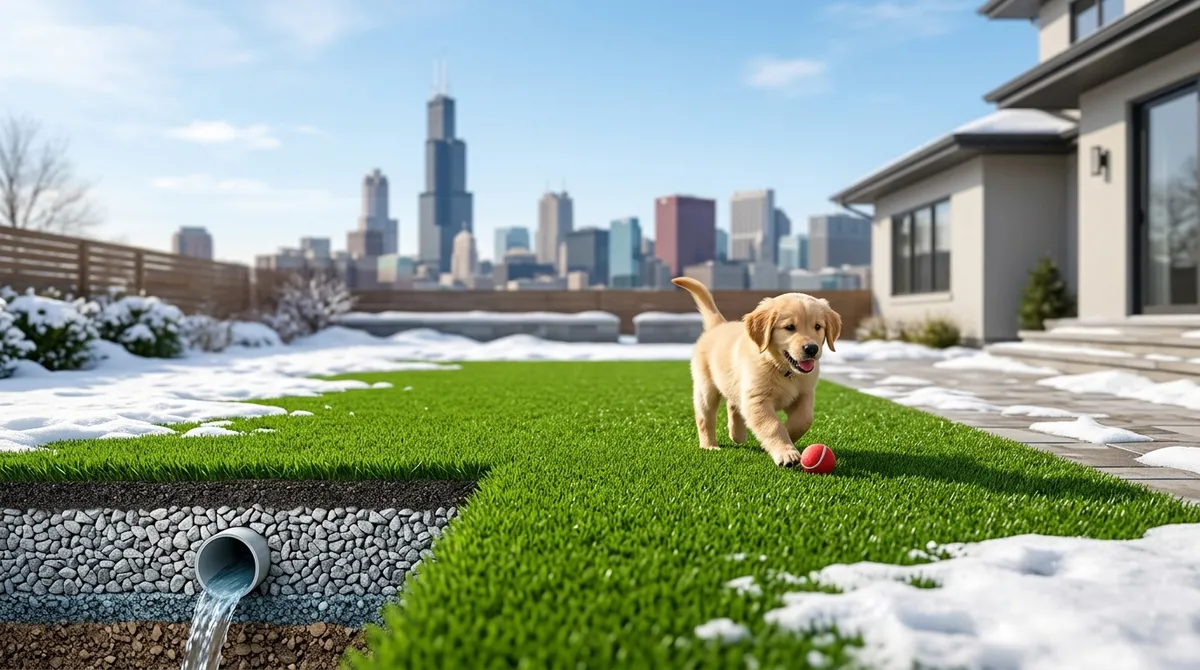
Quality pet turf remains flexible and green year-round in Chicago winters, handling freeze-thaw cycles and snow better than natural grass, which turns brown and muddy during dormancy.
-
Pet turf eliminates all urine damage (brown patches), prevents muddy paws, saves water by eliminating irrigation needs, and is non-toxic and safe for pets and children.
-
Professional installation includes site preparation with proper grading and base compaction, weed barrier placement, precise turf cutting and seaming, and even infill application for optimal odor control.
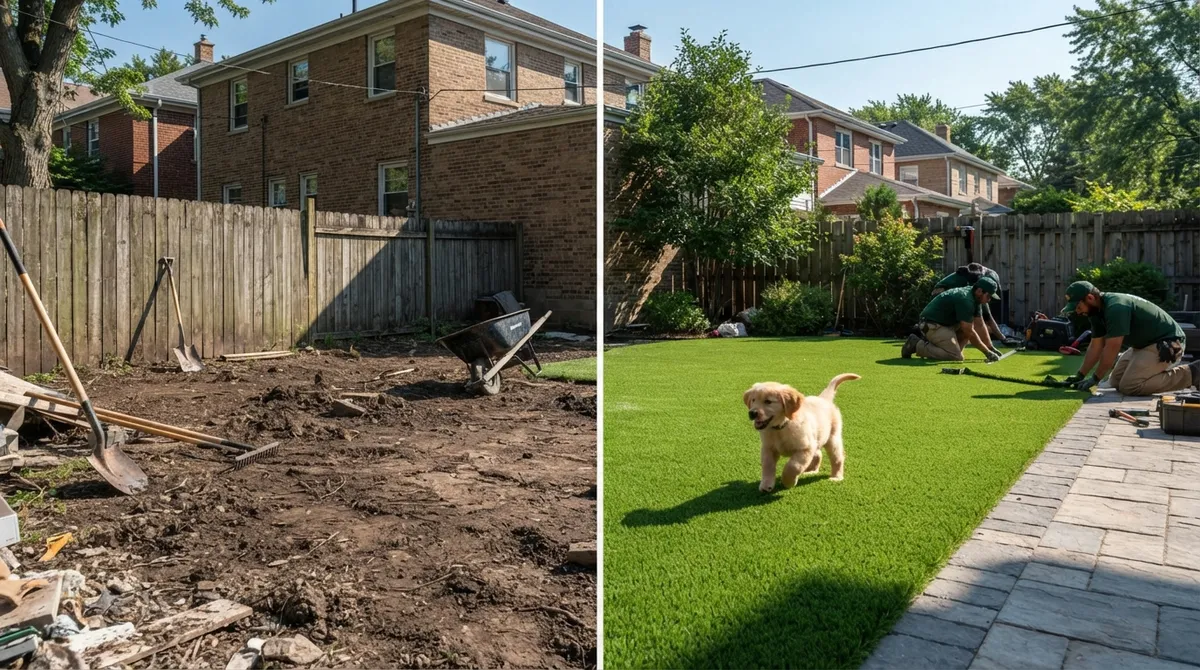
If you share your yard with a dog, you know the struggle. Muddy paws, brown patches, and that unmistakable smell that greets you every time you step outside — it’s exhausting. Natural grass simply wasn’t built to handle everything our furry friends dish out, especially in Chicago’s unpredictable climate. That’s where odor-resistant dog turf Chicago homeowners are choosing in 2026 comes in as a total game-changer. Specially engineered pet turf combines smart drainage technology, antimicrobial protection, and durable synthetic fibers to give your dog a safe, comfortable space — while keeping your yard looking and smelling fresh. Whether you live in a suburban home, a Chicago condo, or manage a commercial property with a pet area, this guide will walk you through everything you need to know about making the switch to pet-friendly artificial turf.
What Makes Dog Turf Odor-Resistant?
Not all artificial grass is created equal — especially when pets are involved. The secret to a truly odor-free pet lawn lies in two key components: the backing system and the infill material. Understanding both will help you make the best choice for your yard and your pup.
Permeable Backing Systems
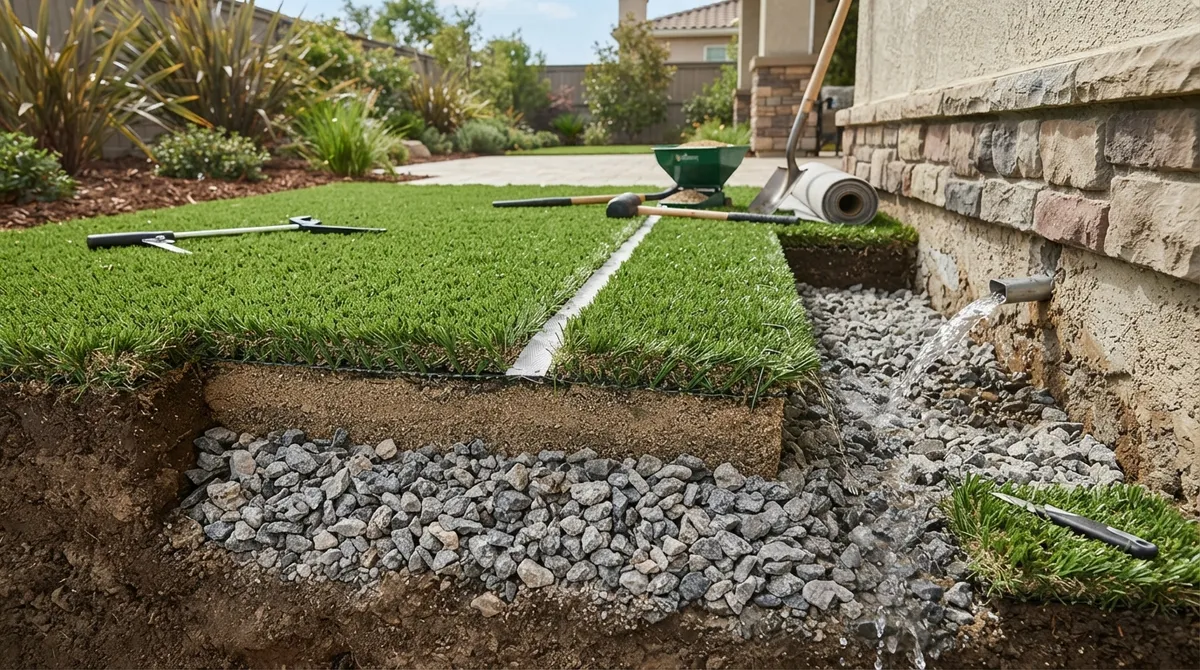
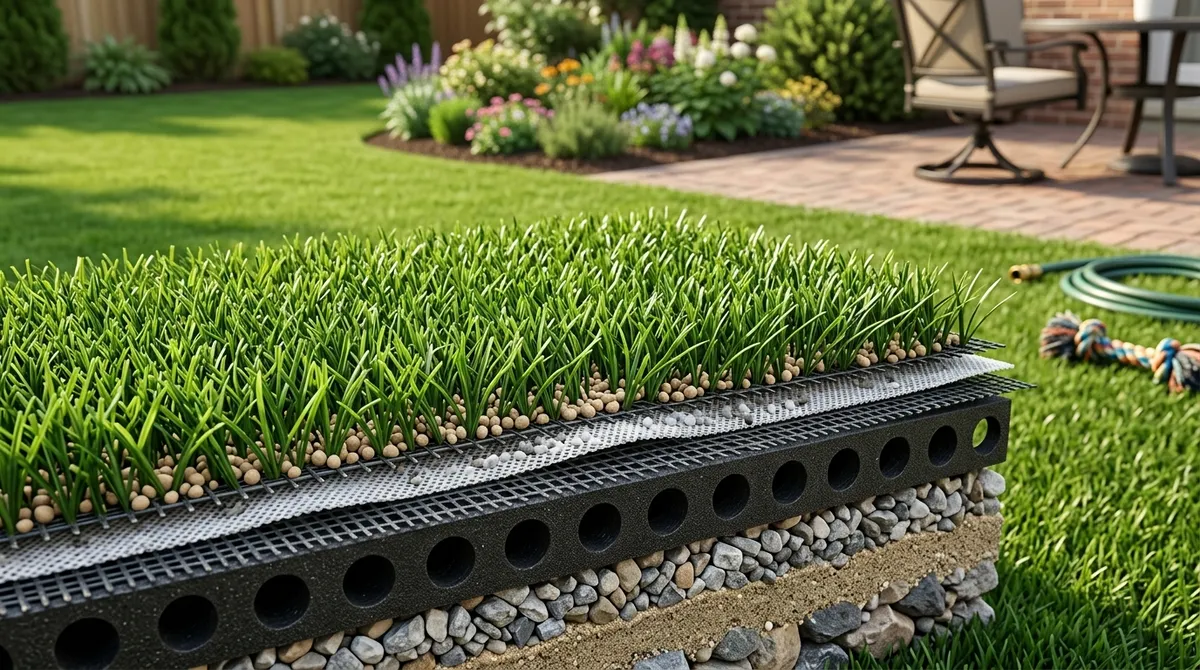
Traditional artificial grass often traps liquids in the backing layer. That leads to bacterial growth, which is the real source of bad smells. Odor-resistant pet turf uses 100% permeable backings like MaxxFlow™, DuraFlo, or DuraLock Ultra-Flo. These systems let dog urine drain freely and completely, leaving no moisture behind to breed bacteria.
Think of it like a screen door for liquid. Everything passes right through, so there’s nothing left to sit and smell. This drainage performance actually exceeds that of natural grass, making it one of the best choices for Chicago yards where clay-heavy soil already causes drainage headaches. You can learn more about why synthetic grass drains better than natural lawns to understand the full drainage advantage.
Antimicrobial Infill Technology
The infill material sits between the turf blades and adds another layer of odor protection. Products like Microban® or Envirofill are built with antimicrobial properties that actively inhibit mold, mildew, and odor-causing bacteria. They are completely non-toxic for pets and children, so you never have to worry about safety.
Envirofill also has a bonus benefit: it can cool the turf surface by up to 25%, which matters a lot during hot Chicago summers. Nobody wants their dog playing on a scorching-hot surface! For a deeper dive into how heat reduction works, check out how artificial turf heat reduction technology works.
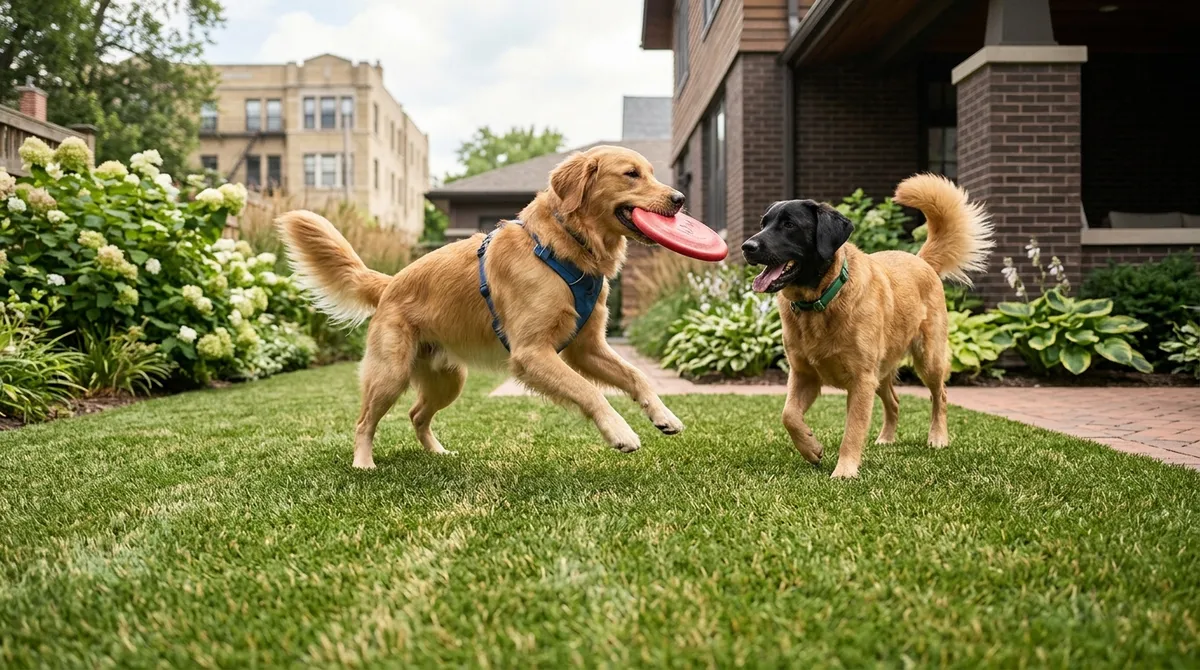
Key Benefits of Pet Turf for Chicago Dog Owners
Switching to odor-resistant dog turf offers a long list of advantages that go far beyond just eliminating smells. Here’s a quick look at why so many Chicago pet owners are making this investment in 2026.
- No more muddy paws: Synthetic turf stays clean and firm in all weather, keeping your floors and furniture cleaner.
- Zero dead patches: Dog urine won’t burn or discolor artificial grass the way it does natural lawns.
- Weed-free surface: Most pet turf systems include an integrated weed barrier backing to prevent growth underneath.
- Water savings: No irrigation is needed, helping Chicago homeowners reduce their water usage significantly.
- Safe for all pets and children: Non-toxic materials and antimicrobial infill make it family-friendly from day one.
- Year-round usability: Unlike natural grass that goes dormant and turns brown, pet turf stays green through every Chicago season.
If you’re weighing your options, this comparison of natural grass vs. non-toxic synthetic grass for pets is a great resource to explore.
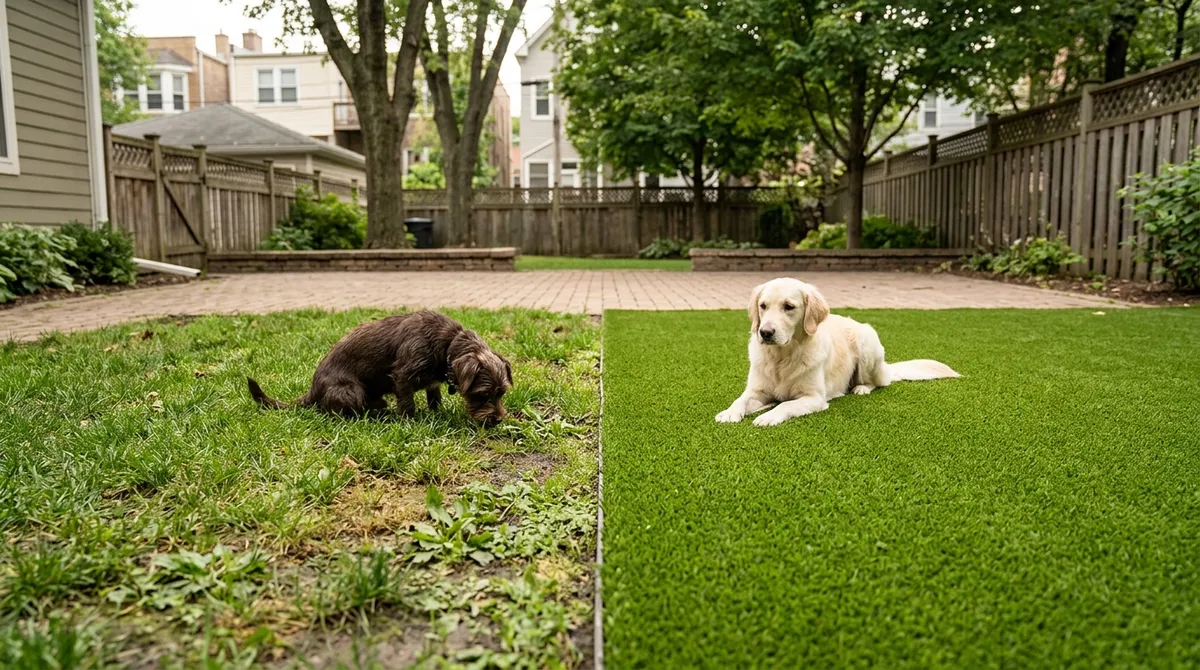
How Pet Turf Compares to Natural Grass in Chicago
Let’s put the two options side by side so you can see the full picture clearly.
| Feature | Odor-Resistant Pet Turf | Natural Grass |
|---|---|---|
| Odor Control | Excellent (antimicrobial infill + drainage) | Poor (urine absorbs into soil) |
| Mud & Mess | None | High (especially in spring/fall) |
| Urine Damage | None | Burns and kills grass |
| Water Usage | Minimal (rinsing only) | High (regular irrigation needed) |
| Winter Performance | Stays green, no dormancy | Goes dormant, turns brown |
| Maintenance | Very low | High (mowing, fertilizing, seeding) |
| Long-Term Cost | Cost-effective over time | Ongoing chemical and water costs |
As you can see, pet turf wins in nearly every category that matters to dog owners. For a broader cost comparison, explore these 14 cost-benefit facts comparing artificial turf vs real grass.
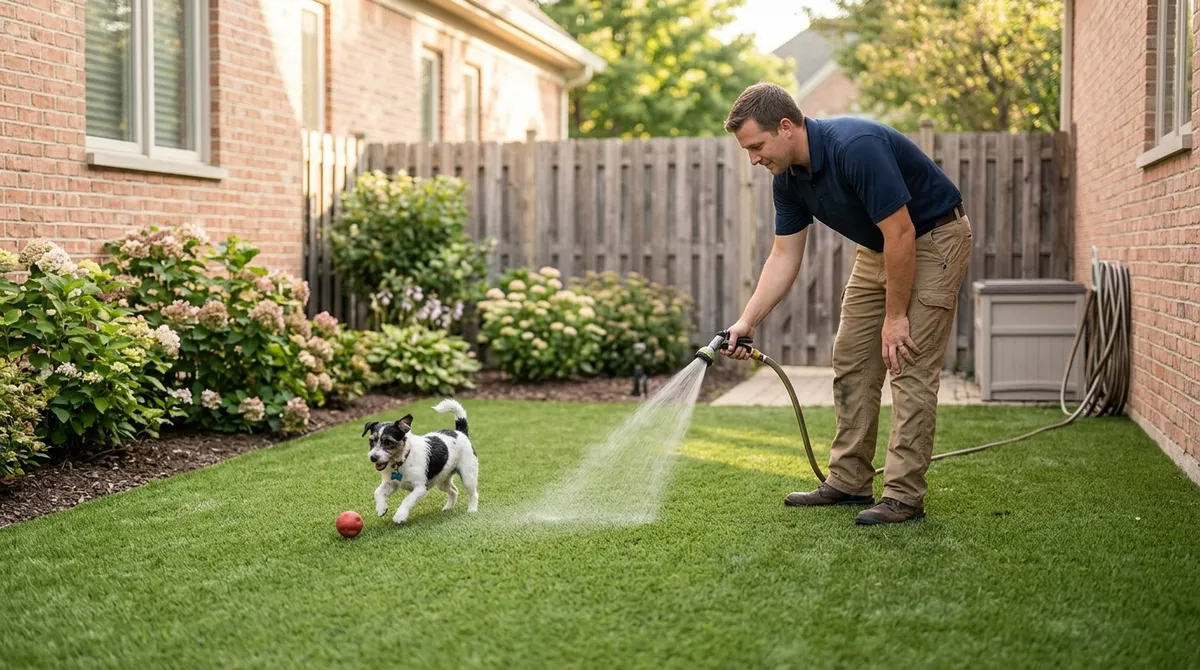
Maintaining Your Dog Turf: It’s Easier Than You Think
One of the biggest draws of pet-friendly artificial grass is just how simple the upkeep is. You don’t need fertilizers, pesticides, or special odor sprays. Here’s a simple maintenance routine to keep your turf fresh and clean.
- Scoop solid waste promptly: Remove solid waste as soon as possible, just as you would on any surface. This prevents any residue from sitting on the fibers.
- Rinse with water: Hose down the area where your dog urinates regularly. The permeable backing handles the rest by letting everything drain away completely.
- Brush the fibers occasionally: Use a stiff-bristled brush or a power broom to keep the turf blades standing upright and looking their best.
- Inspect for debris: Remove leaves, sticks, or other debris that may collect on the surface, especially after Chicago’s windy fall season.
- Deep rinse periodically: Give the whole turf area a thorough hosing down every few weeks to flush the backing completely and keep odors at bay.
Want a more detailed breakdown? Our guide on cleaning artificial turf from pet waste covers everything step by step. You can also review easy-clean pet turf options for pet-friendly yards to find the best system for your needs.
Who Is Dog Turf Right For in Chicago?
The great news is that odor-resistant dog turf works beautifully across a wide range of properties and lifestyles. Here are the types of Chicago property owners who benefit most.
- Suburban homeowners with large or medium-sized yards who want a low-maintenance, always-green lawn for their dogs.
- Condo and townhome owners with small patios, courtyards, or rooftop spaces who want a clean pet area that meets HOA guidelines.
- Commercial property managers overseeing dog-friendly office parks, hotels, or apartment communities with designated pet relief areas.
- New home builders in Aurora and surrounding suburbs looking to add turnkey pet-friendly outdoor features that appeal to buyers.
- Small business owners running dog daycares, grooming salons, or veterinary offices who need durable, sanitary outdoor surfaces.
If you’re a commercial property manager, you’ll also want to explore high-traffic commercial turf solutions for Illinois properties designed to handle heavy daily use.
What the Installation Process Looks Like
Getting pet turf installed is a smooth, professional process when handled by experienced landscapers. Here’s what you can typically expect from start to finish.
- Initial consultation and design: A landscaping professional assesses your yard, discusses your needs, and recommends the best pet turf product for your space and budget.
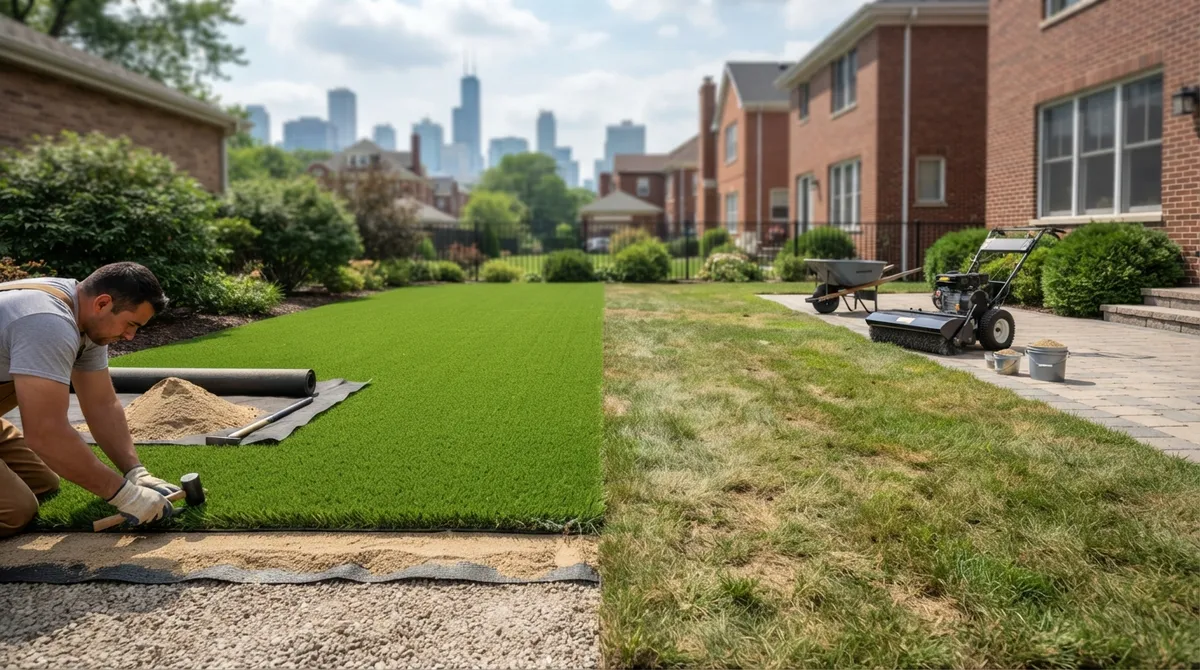
- Site preparation: The existing grass or surface is removed. The ground is graded for proper drainage, and a base material (usually crushed aggregate) is compacted firmly in place.
- Weed barrier placement: A landscape fabric weed barrier is laid down to prevent any plants from pushing through the turf over time.
- Turf installation: The artificial grass panels are cut to fit your space precisely, seamed together, and secured along the edges for a seamless, natural look.
- Infill application: Antimicrobial infill like Envirofill is spread evenly across the turf surface and brushed into the fibers for maximum performance and comfort.
Our team at Serenity Landscape Group follows a detailed installation process to ensure every pet turf project is done right. You can also review the 5 key stages of the artificial turf installation process to know exactly what to expect. And if you want to get it right the first time, don’t miss our tips on how to get artificial grass installation right the first time.
Common Mistakes to Avoid With Dog Turf
Not every pet turf installation delivers the same results. Here are the most common mistakes Chicago homeowners make — and how to avoid them.
- Choosing turf without permeable backing: Standard artificial grass doesn’t drain freely. Always confirm the product has a fully permeable backing rated for pet use.
- Skipping antimicrobial infill: Going without odor-fighting infill means bacteria can build up over time, especially in Chicago’s humid summer months.
- Poor base preparation: Inadequate compaction or grading causes the turf to shift, create puddles, or develop uneven spots. Professional prep matters a lot.
- Ignoring seam quality: Visible seams ruin the natural look. Experienced installers cut and seam turf carefully so you’d never know it’s artificial.
For a full rundown, check out 7 artificial turf installation mistakes to avoid in Chicago before you start your project. Also, read about 5 synthetic grass dog run mistakes to avoid to protect your investment.
Does Dog Turf Hold Up in Chicago Winters?
Chicago winters are no joke. You’re probably wondering if pet turf can really handle deep freezes, heavy snow, and the freeze-thaw cycles that wreak havoc on so many outdoor surfaces. The answer is a confident yes.
Quality pet turf is designed to remain flexible and intact even in subzero temperatures. Snow can be gently removed with a plastic shovel, and the turf bounces right back once it thaws. Unlike natural grass that turns into a brown, muddy mess every spring, your dog turf will look just as green and clean as it did in July. Learn more about how artificial turf compares to natural grass in Midwest winters. You can also explore how artificial turf handles heavy snow like a pro for more peace of mind.
Industry organizations like Landscape Illinois provide valuable guidance on sustainable outdoor landscaping practices across the state, including recommendations for low-maintenance turf solutions well-suited to the Illinois climate. The ICPI Certified Installer program also sets high standards for outdoor installations that complement turf projects beautifully. For even more authoritative guidance on landscape planning, the University of Illinois Extension offers research-backed resources on lawn care and landscaping solutions for Illinois homeowners.
Plan Your Perfect Pet-Friendly Yard Today
Your dog deserves a yard they can enjoy freely — and you deserve an outdoor space you’re proud of. Odor-resistant dog turf in Chicago makes both possible without the constant upkeep, the muddy messes, or the lingering smells that come with natural grass. Whether you’re a homeowner in Naperville, a condo owner in Lincoln Park, or a property manager overseeing a pet-friendly building downtown, pet turf is one of the smartest landscaping upgrades you can make in 2026.
At Serenity Landscape Group, we’ve spent over two decades helping Chicago-area homeowners and businesses transform their outdoor spaces into places they love. From our first conversation to the final installation, we’re here to guide you every step of the way. Explore our artificial turf installation services to see how we can transform your yard into a clean, safe, and beautiful space for you and your pup. When you’re ready to get started, request your free estimate today and let’s create an outdoor space your whole family — furry members included — will love.
FAQs
Q: What is the best odor-resistant dog turf for Chicago homeowners in 2026?
A: The best pet turf systems combine a 100% permeable backing (like MaxxFlow™ or DuraFlo) with an antimicrobial infill such as Envirofill or Microban®. These features work together to drain urine completely and stop odor-causing bacteria from growing, making them perfect for Chicago’s variable climate and seasons.
Q: How does permeable backing in pet turf prevent dog urine smells?
A: Permeable backing acts like a drainage screen — dog urine passes straight through rather than absorbing into the material. Without trapped moisture, bacteria have nowhere to grow, which means no lingering odors. It’s honestly one of the simplest and most effective solutions for keeping a pet yard smelling fresh!
Q: Is antimicrobial infill necessary for pet turf in Chicago yards?
A: While a good permeable backing does most of the heavy lifting, antimicrobial infill adds an important extra layer of protection — especially in Chicago’s humid summers when bacterial growth is more likely. We strongly recommend it for any yard with dogs, particularly in high-use areas like dog runs.
Q: How much does dog turf installation cost in Chicago suburbs?
A: Costs vary based on yard size, turf product, and site preparation needs, but pet turf is widely considered a cost-effective long-term investment compared to ongoing natural grass maintenance costs like watering, fertilizing, and reseeding. We recommend requesting a free estimate from a professional landscaper to get an accurate quote for your specific space.
Q: Can odor-resistant turf meet HOA requirements for Chicago condos and communities?
A: Absolutely! High-quality pet turf is designed to look realistic and beautiful, with multi-color blades that closely mimic natural grass. Many Chicago HOAs and condo associations have approved artificial turf installations, especially when they’re professionally installed and maintain a neat, natural appearance. Always check your HOA guidelines and consult with a landscaping professional for the best approach.