Key Takeaways
-
Proper drainage system installation is the most critical step in retaining wall replacement; water buildup behind walls creates pressure that causes failure, so gravel backfill, perforated drain pipes, and weep holes are essential.
-
Replace rather than repair if the wall is leaning over one inch, has significant cracking, visible base movement, or failed drainage—partial fixes delay inevitable failure and don’t address underlying causes.
-
Material choice significantly impacts longevity and cost; concrete block and segmental retaining walls last 50+ years versus timber lasting only 10-15 years, making durable materials more cost-effective over time.
-
Hire contractors with commercial experience, engineering knowledge, local code familiarity, and proven track records; poor installation fails regardless of material quality, so verification of licensing and references is critical.
-
A well-executed replacement improves property value, increases usable space, enhances curb appeal, and reduces liability—transforming problem slopes into functional landscapes that benefit tenants, customers, and the bottom line.
-
Site assessment by a qualified contractor or structural engineer is essential before replacement; evaluation of slope angles, soil conditions, drainage patterns, and nearby structures ensures code compliance and prevents costly mistakes.
A failing retaining wall on your commercial property is more than an eyesore. It is a real safety risk, a liability concern, and a sign that bigger problems may be brewing beneath the surface. Whether you manage an office building, run a retail space, or oversee an HOA community in the greater Chicago area, knowing when and how to handle retaining wall replacement commercial projects can save you time, money, and stress in the long run.
The good news? A well-planned replacement project does not just fix the problem. It can actually improve your property’s drainage, add usable outdoor space, and boost curb appeal in ways that matter to tenants, customers, and visitors alike. In this guide, we will walk you through everything you need to know to get it right the first time.
Why Commercial Retaining Walls Fail
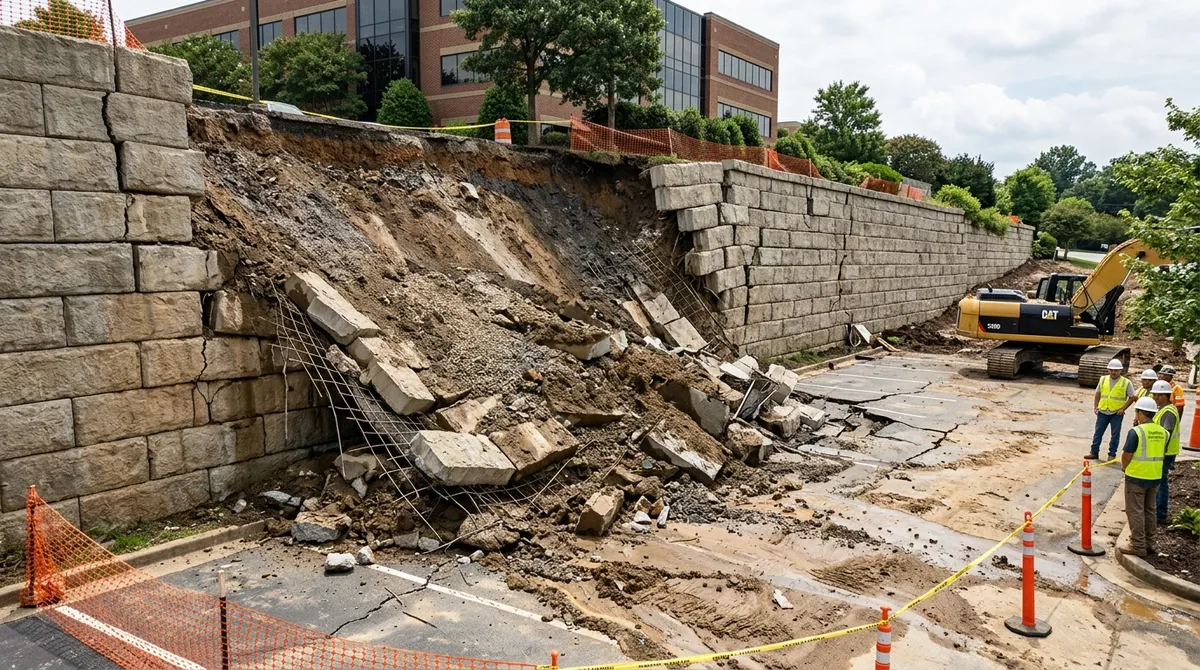
Understanding why walls fail helps you make smarter decisions about replacement. Most commercial retaining walls do not collapse overnight. They degrade gradually due to a combination of factors that add up over time. If you notice any of these warning signs on your property, it is time to call a professional.
Common causes of retaining wall failure on commercial properties include:
- Poor drainage design: Water buildup behind a wall creates intense pressure that pushes the structure outward over time.
- Soil movement and erosion: Shifting soil, especially in Chicago’s freeze-thaw climate, can undermine even well-built walls.
- Age and material decay: Older timber walls typically last only 10 to 15 years before they begin to rot and lose structural integrity.
- Improper initial installation: Walls built without proper engineering or footings are prone to early failure.
- Heavy surface loads: Parking lots, heavy foot traffic, and equipment storage can place extra stress on walls not designed for commercial use.
- Vegetation root intrusion: Tree and shrub roots can slowly crack and displace wall materials over the years.
If you are noticing leaning, cracking, bulging, or soil erosion around your wall, check out our resource on what a retaining wall is and whether you need one to better understand the structural role these walls play on your site.
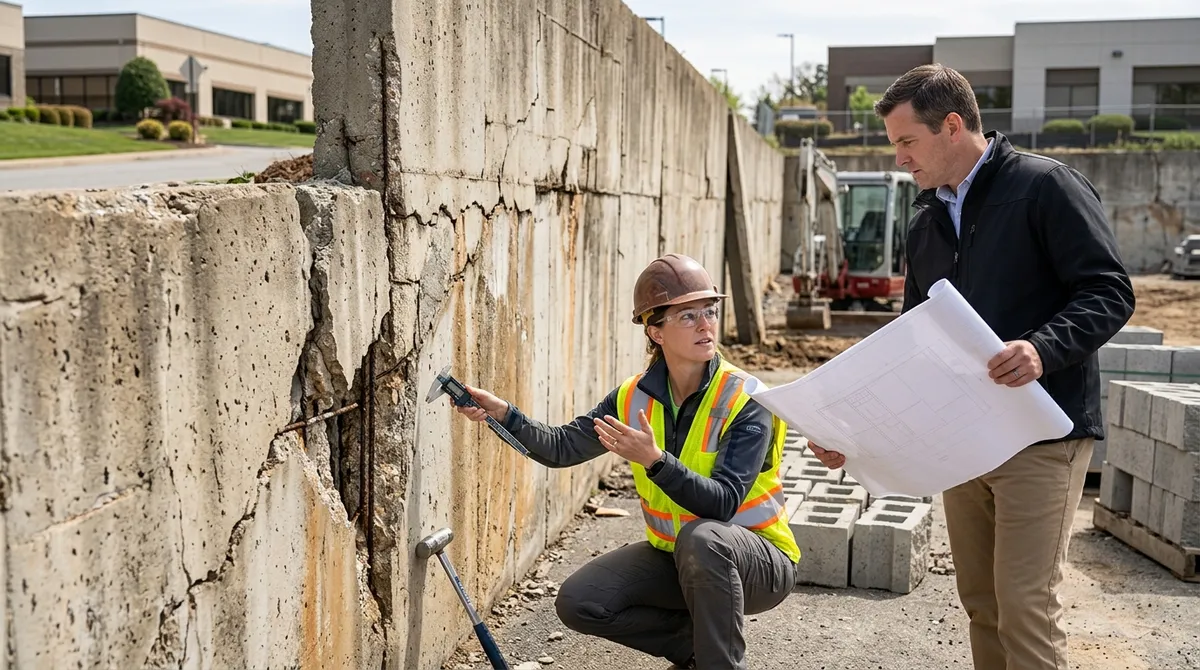
Repair vs. Full Replacement: How to Decide
Not every damaged retaining wall needs to be torn out and rebuilt. Sometimes targeted repairs are enough. But in a commercial setting, partial fixes often just delay the inevitable — and can even make things worse if the underlying cause is not addressed.
Here is a simple way to think about it. Ask yourself these three questions:
- Is the wall structurally compromised? Leaning more than one inch, significant cracking, or visible base movement usually means full replacement is safer and more cost-effective.
- Is the drainage system failing? If water is consistently pooling behind or around the wall, repairs to the face of the wall will not solve the root problem.
- Has the wall exceeded its expected lifespan? If you have an older timber or low-quality block wall, replacement with a more durable material makes better long-term financial sense.
For a deeper look at what drives commercial retaining wall decisions, the team at retaining wall engineering services can assess the structural condition of your existing wall and recommend the best course of action.
Step-by-Step Guide to Commercial Retaining Wall Replacement
Once you decide that full replacement is the right call, here is how the process typically unfolds on a commercial property. A professional landscaping and hardscaping company will guide you through each of these stages, but knowing what to expect helps you plan ahead and stay on budget.
Step 1: Site Assessment and Engineering Review
Every successful commercial retaining wall replacement starts with a thorough site evaluation. A qualified contractor will assess slope angles, soil conditions, drainage patterns, and any nearby structures that might be affected. For taller walls or complex sites, a structural engineer may be involved to ensure the new design meets safety and code requirements. You can learn more about how this process works by visiting our page on how earth retention systems work on commercial properties.
Step 2: Choosing the Right Wall Material
Material selection is one of the most important decisions in any commercial retaining wall replacement project. The right choice depends on your budget, site conditions, aesthetic goals, and how long you need the wall to last. Here is a quick comparison of the most common options:
| Material | Estimated Lifespan | Best For | Key Benefit |
|---|---|---|---|
| Concrete Block / CMU | 50+ years | High-load commercial sites | Maximum strength and durability |
| Natural Stone | 50+ years | Aesthetic-focused properties | Beautiful, timeless appearance |
| Segmental Retaining Block | 30–50 years | Most commercial applications | Versatile, cost-effective, fast to install |
| Boulder / Fieldstone | Decades with minimal maintenance | Naturalistic or rural commercial sites | Low maintenance, natural look |
| Timber / Wood | 10–15 years | Low-budget, temporary uses | Lower upfront cost |
For most commercial properties in Chicagoland, engineered concrete block or segmental retaining wall systems offer the best balance of durability, cost, and visual appeal. Working with an ICPI Certified Installer ensures your wall is built to industry standards using proven installation methods.
Step 3: Demolition and Site Preparation
Once the design is approved, the old wall needs to come down safely. This involves removing the existing structure, clearing out debris, and preparing the base area for new construction. On commercial sites, this step often requires coordinating around business operations, foot traffic, and utilities. A professional crew will plan demo carefully to minimize disruption to your daily operations.
Step 4: Drainage System Installation
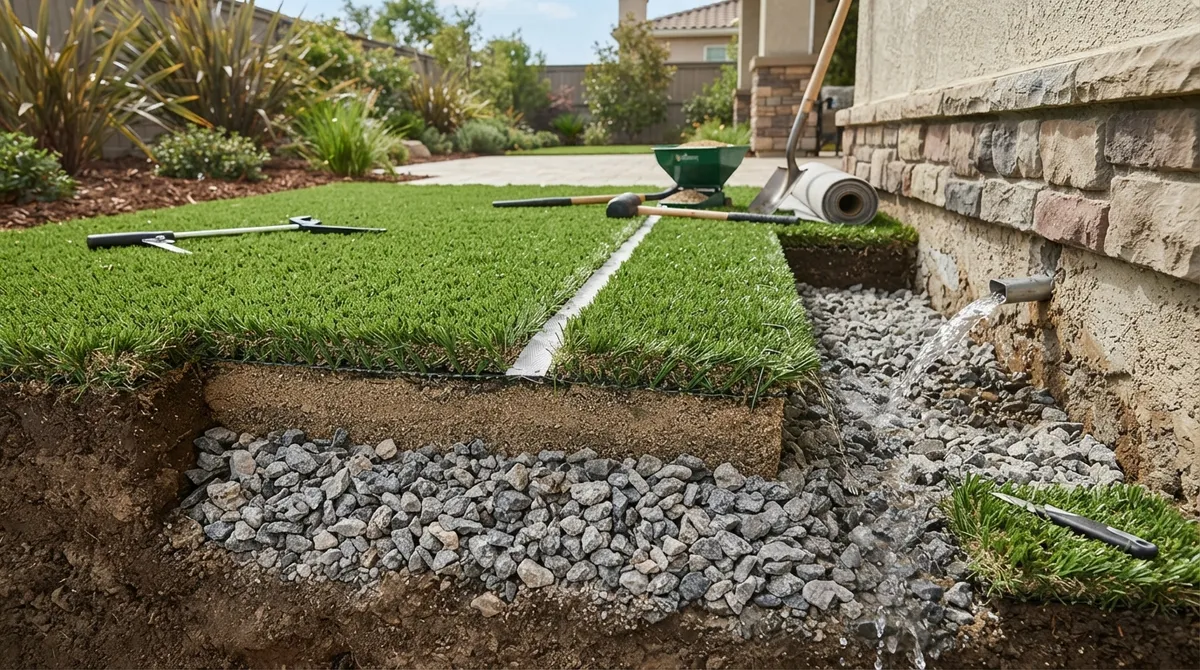
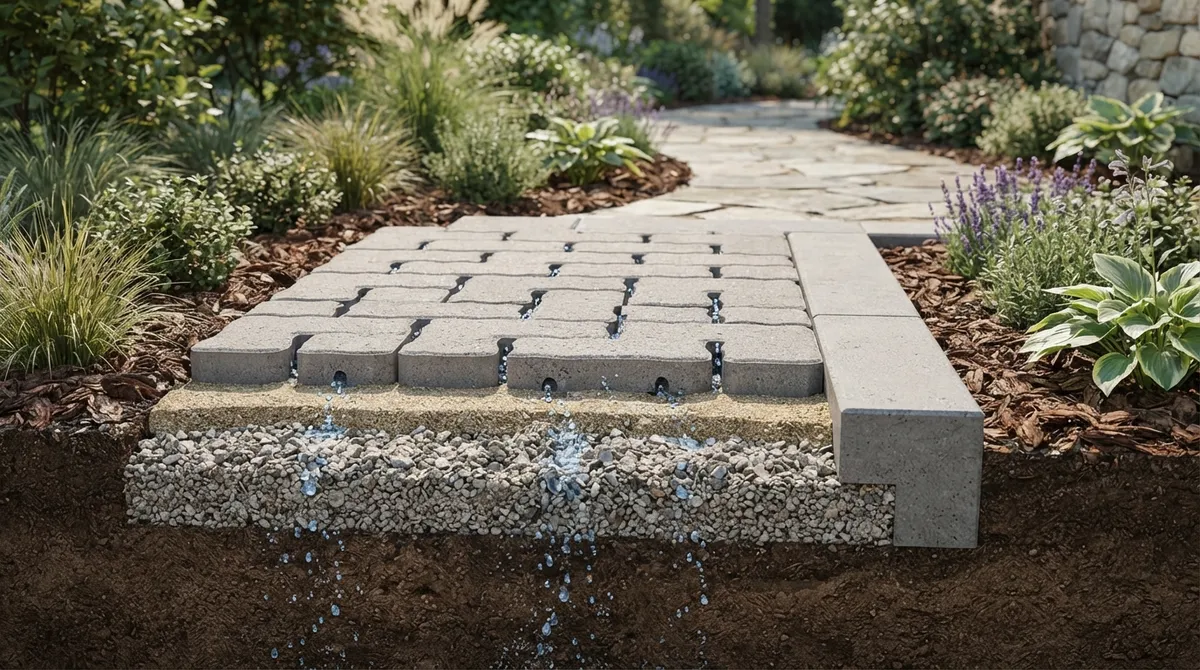
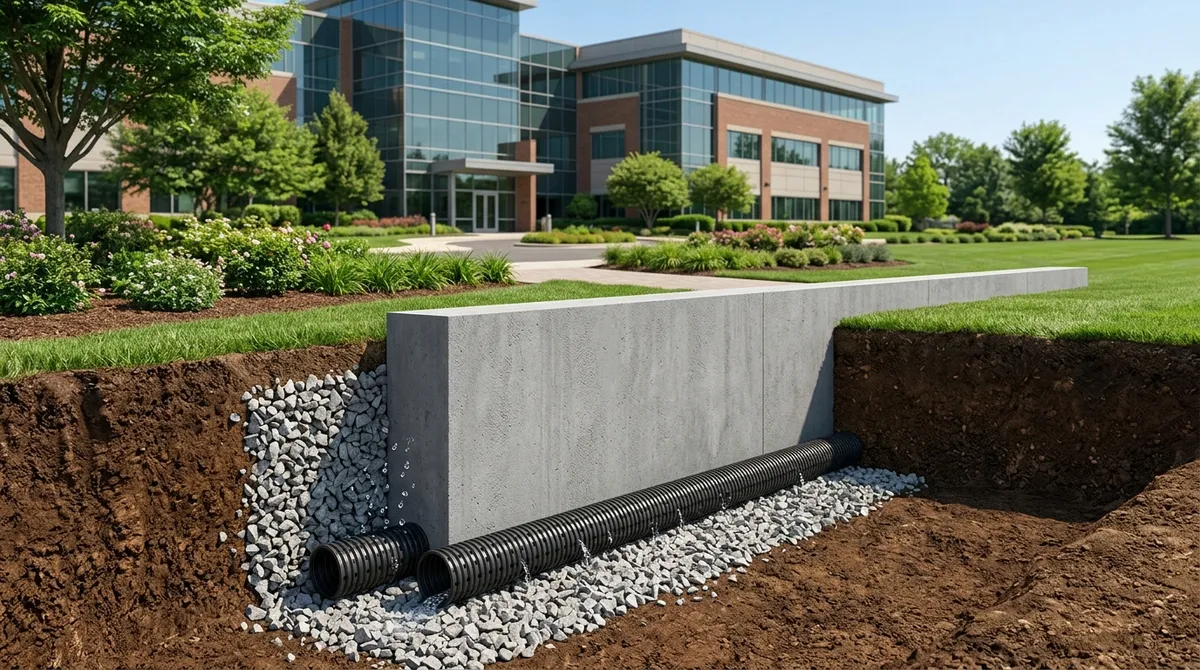
This is arguably the most critical step in any retaining wall replacement project. A new wall without proper drainage is just a future failure waiting to happen. Drainage systems typically include gravel backfill, perforated drain pipes, and weep holes or outlets that allow water to escape safely rather than build up behind the wall. For commercial sites near parking lots or retention areas, proper stormwater management is especially important. See how this compares to other strategies on our page about retaining walls vs. drainage systems for commercial stormwater management.
Step 5: Wall Construction and Backfill
With the drainage layer in place, the new wall is constructed course by course, following the engineered design. Proper compaction of backfill soil at each stage is essential for long-term stability. Rushing this part of the process is one of the most common reasons new walls fail prematurely, which is why hiring experienced commercial hardscape contractors matters so much. If you want to understand what well-built commercial walls look like, our gallery of our work offers plenty of real project examples.
Step 6: Finishing and Landscape Integration
A great retaining wall replacement does more than stabilize a slope. It becomes an attractive, functional part of your overall landscape. The finishing stage includes grading the surrounding area, adding topsoil and seed or sod, and integrating plantings, lighting, or pavers that tie the wall into your commercial property’s overall design. The result is a site that looks polished, professional, and welcoming to visitors and customers.
Materials Worth Knowing About in 2026
Material technology continues to improve, and in 2026 there are more great options than ever for commercial retaining wall replacement. Here are the top choices commercial property managers and business owners should know about:
- Precast modular block systems: These engineered blocks interlock tightly and can handle significant soil pressure. They are fast to install and available in many textures and colors. Learn more on our page about why precast modular block walls are a top choice.
- Natural stone: Timeless and durable, natural stone walls blend beautifully with upscale commercial and HOA properties. See our full guide on how to choose natural stone commercial retaining walls.
- Gabion walls: Wire mesh baskets filled with stone are a rugged, visually interesting option for properties needing heavy-duty erosion control. Check out why gabion walls are a great fit for commercial properties.
- Segmental retaining walls (SRW): One of the most popular choices for commercial landscaping projects due to their flexibility, strength, and wide range of design options. Our guide on how segmental retaining wall installation works breaks down the process clearly.
What to Look for in a Commercial Retaining Wall Contractor
Choosing the right contractor is just as important as choosing the right material. A poor installation will fail no matter how good the materials are. Here is what to prioritize when evaluating contractors for your commercial retaining wall replacement project:
- Commercial experience: Residential wall contractors may not have the equipment, crew size, or expertise for larger commercial sites.
- Engineering knowledge: Your contractor should understand soil pressure, drainage design, and load calculations — not just stacking blocks.
- Licensed and insured: Always verify licensing and liability coverage before signing any contract.
- Proven track record: Ask for references and photos of completed commercial projects similar to yours.
- Transparent pricing: Get itemized estimates so you understand what you are paying for at every stage.
- Familiarity with local codes: In Illinois, certain wall heights and configurations require permits. Your contractor should handle this process.
Landscape Illinois is a great resource for finding vetted, professional landscape contractors across the state. For specific guidance on what commercial retaining wall contractors do day-to-day, our article on what a commercial retaining wall contractor actually does is a helpful read.
How Commercial Retaining Wall Replacement Improves Your Property
A successful retaining wall replacement does much more than prevent erosion. When done right, it genuinely transforms your commercial site in ways that benefit your bottom line. Here are some of the real-world improvements property managers and business owners can expect:
- Stabilized slopes that protect nearby buildings, parking lots, and walkways from shifting soil
- Better stormwater management that reduces flooding and standing water on the property
- Increased usable square footage by turning steep or unusable slopes into level, functional areas
- Improved curb appeal that makes a strong first impression on tenants, customers, and visitors
- Reduced liability by eliminating a failing structure that poses safety risks
- Higher property value through quality hardscaping that lasts for decades
At Serenity Landscape Group, we have seen firsthand how a thoughtfully planned retaining wall replacement can completely change the way a commercial property looks and functions. Our team brings over two decades of hardscaping expertise to every project across the greater Chicago metropolitan area, and we love helping property managers turn problem slopes into polished, professional landscapes.
Want to see how it all comes together? Browse our retaining wall services page for more information, or explore our broader commercial lawn maintenance services to see how we can support your property year-round.
Budgeting for Commercial Retaining Wall Replacement
Cost is always a factor in commercial decision-making, and retaining wall replacement is no small investment. However, thinking about cost in terms of total value over time — rather than just upfront price — leads to better decisions. A concrete block wall that lasts 50+ years almost always costs less per year than replacing a timber wall every 10 to 15 years.
Key factors that affect the cost of your project include:
- Wall height and total linear footage
- Material selection and availability
- Site accessibility and excavation requirements
- Drainage system complexity
- Permit and engineering fees
- Landscape restoration after construction
To get a realistic budget for your specific property, the best step is to schedule an on-site consultation. Every commercial site is different, and a professional assessment is the only way to get accurate numbers. For more tips on finding the right professionals for your project, see our article on 5 ways to find the best commercial retaining wall contractors.
Ready to Replace Your Commercial Retaining Wall?
A failing retaining wall is not a problem that gets better on its own. The sooner you address it with a quality replacement, the less damage you will face down the road — and the sooner you can enjoy a safer, more attractive commercial property. Whether you are managing an office complex, a retail center, or an HOA community in Chicagoland, getting the right team involved early makes all the difference.
Serenity Landscape Group is here to make the process smooth, transparent, and stress-free from start to finish. Our experienced team handles everything from site assessment and engineering coordination to installation and landscape finishing — all with the care and craftsmanship your property deserves. You can learn more about how we work on our process page, or reach out directly to start a conversation about your project.
Take the first step toward a safer, more beautiful commercial property today. Request your free estimate and let our team help you plan a retaining wall replacement that truly lasts.
FAQs
Q: What does commercial retaining wall replacement actually include?
A: Great question! Commercial retaining wall replacement typically includes demolishing the old wall, installing a proper drainage system, constructing a new wall with durable materials, compacting backfill soil, and restoring the surrounding landscape. It is a full-scope project, not just a surface patch — and when done right, it transforms how your property looks and functions.
Q: When should a retaining wall be replaced instead of repaired?
A: If your wall is leaning significantly, showing major cracking, or has drainage problems that a surface repair cannot fix, full replacement is usually the smarter move. The same goes for older timber walls that have exceeded their 10 to 15 year lifespan — at that point, upgrading to a concrete or stone system gives you decades more service life.
Q: What materials are best for commercial retaining wall replacement?
A: For most commercial properties in the Chicago area, engineered concrete block, segmental retaining wall systems, and natural stone are top choices because of their durability, strength, and visual appeal. Unlike timber, these materials are designed to last 50 years or more with proper installation and drainage, making them a much better long-term investment.
Q: Do commercial retaining wall replacement projects require drainage upgrades?
A: Absolutely — drainage is one of the most important parts of any retaining wall replacement project! Without a well-designed drainage system, water pressure builds up behind the wall and shortens its life dramatically. A quality contractor will always include gravel backfill, drain pipes, and weep holes as part of the new wall design.
Q: How long does a commercial retaining wall last after replacement?
A: That depends on the materials used and how well the wall is built. Concrete block and natural stone walls installed with proper drainage can last 50 years or more under normal commercial conditions. Timber walls, on the other hand, typically last only 10 to 15 years — which is why most commercial projects upgrade to longer-lasting materials at replacement time.