Key Takeaways
-
Retaining walls with integrated drainage pipes or weep holes are essential for Chicago commercial properties, directing runoff away from foundations while preventing hydrostatic pressure damage during freeze-thaw cycles.
-
Native vegetation and bioswales can reduce stormwater runoff significantly compared to traditional turfgrass, filtering pollutants before water reaches storm drains while requiring minimal maintenance once established.
-
Proper grading is often the most cost-effective first step in stormwater management, as poor grading is a common cause of foundation damage and chronic flooding on commercial sites.
-
Permeable pavers in parking lots and plazas dramatically reduce runoff volume by allowing rainfall to percolate into the ground rather than flowing directly to storm drains.
-
Chicago’s Sustainable Development Policy offers compliance points for on-site stormwater management, making green roofs and integrated landscaping solutions financially advantageous for commercial projects.
-
Rain gardens positioned 10 feet from building foundations and planted with native species like black-eyed Susans effectively collect roof runoff while adding curb appeal with minimal irrigation needs.
If you manage a commercial property in the Chicago area, you know how intense our weather can get. Heavy rain, snowmelt, and spring storms can send water rushing across parking lots and into building foundations. That’s a real problem — and it can be costly. The good news? Smart landscape design can protect your property while also making it look beautiful. Commercial lawn maintenance and hardscaping solutions work together to keep stormwater under control. In this guide, we’re breaking down 7 landscaping features that double as effective commercial stormwater management walls and systems right here in Chicago. Whether you’re a property manager, small business owner, or developer, there’s something here for you.
Why Stormwater Management Matters for Chicago Commercial Properties
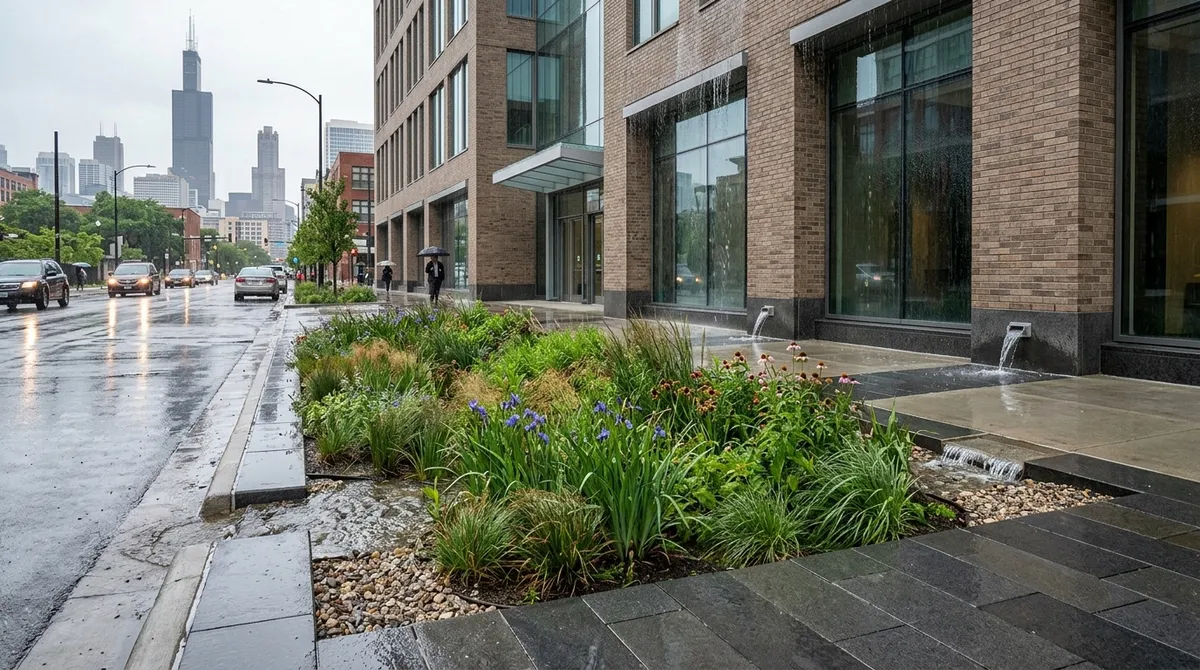
Chicago gets a lot of rain — and when it hits impervious surfaces like parking lots and rooftops, it has nowhere to go. That runoff picks up pollutants and rushes into storm drains, causing erosion and flooding along the way. Chicago’s Sustainable Development Policy encourages on-site stormwater management and green roofs, offering compliance points for commercial projects that manage water on-site.
The right landscaping features help your property absorb, filter, and redirect that water. They also make your outdoor space look more polished and professional. It’s a win-win. You can learn more about what an integrated approach looks like by exploring retaining walls vs. drainage systems for commercial stormwater management.
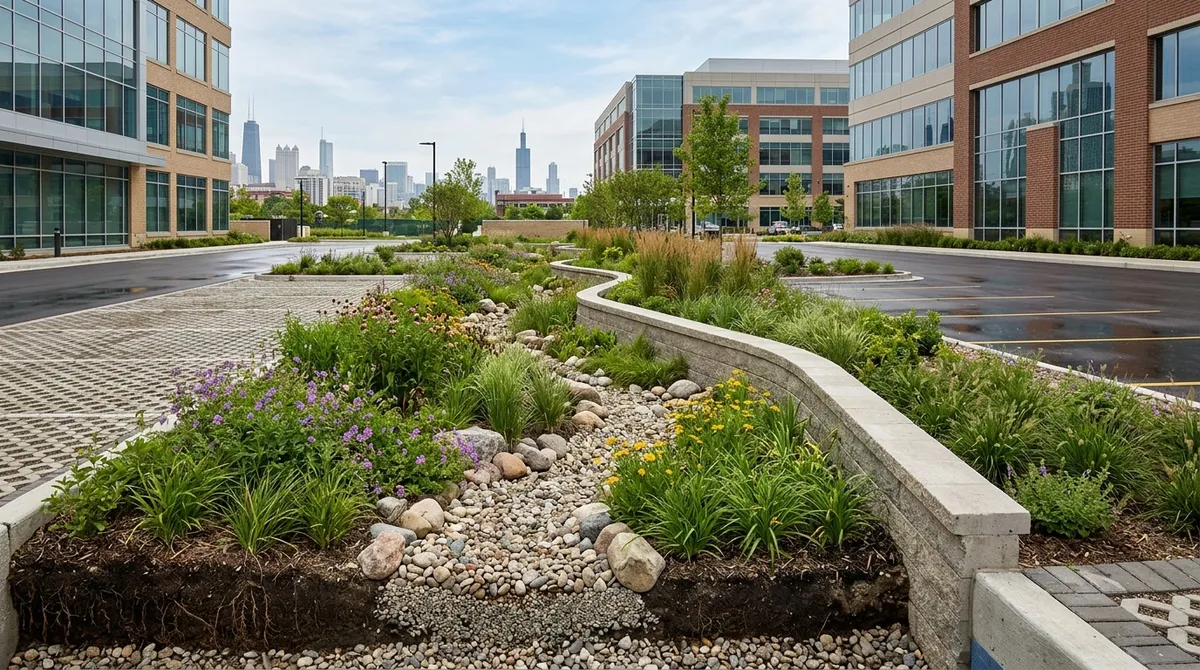
The 7 Best Landscaping Features for Commercial Stormwater Management in Chicago
1. Retaining Walls With Integrated Drainage
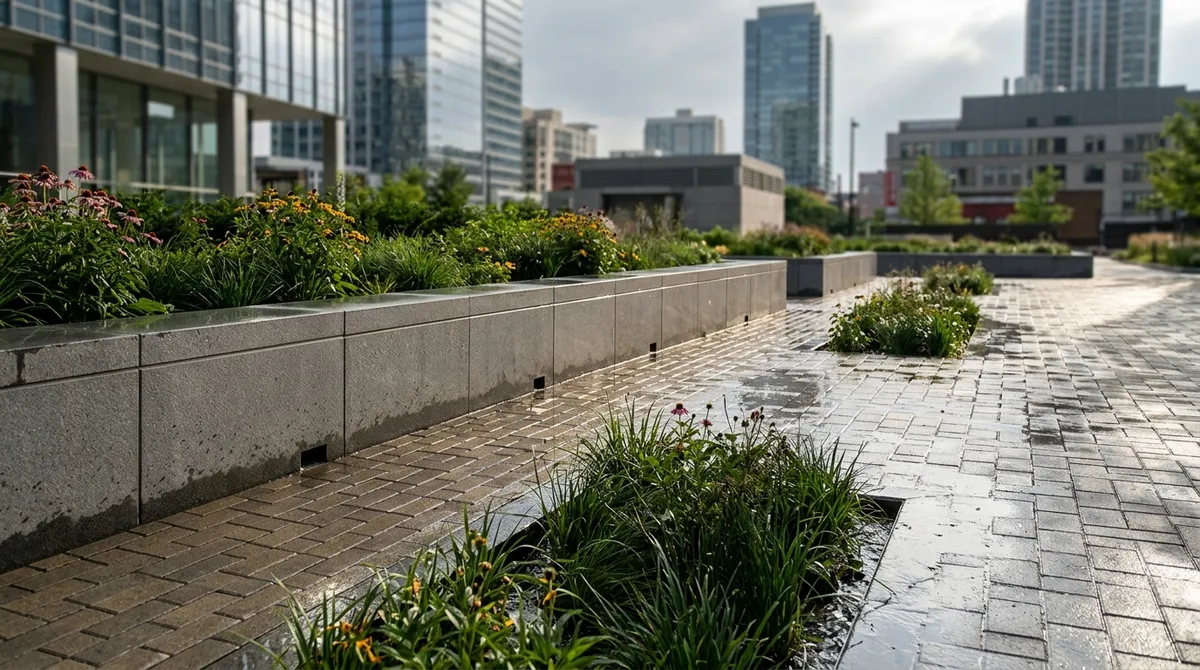
Retaining walls are one of the most powerful tools in commercial stormwater management. They do more than hold soil in place — they direct water flow away from buildings and toward appropriate drainage points. When properly designed, a retaining wall channels runoff along controlled paths rather than letting it pool near your foundation.
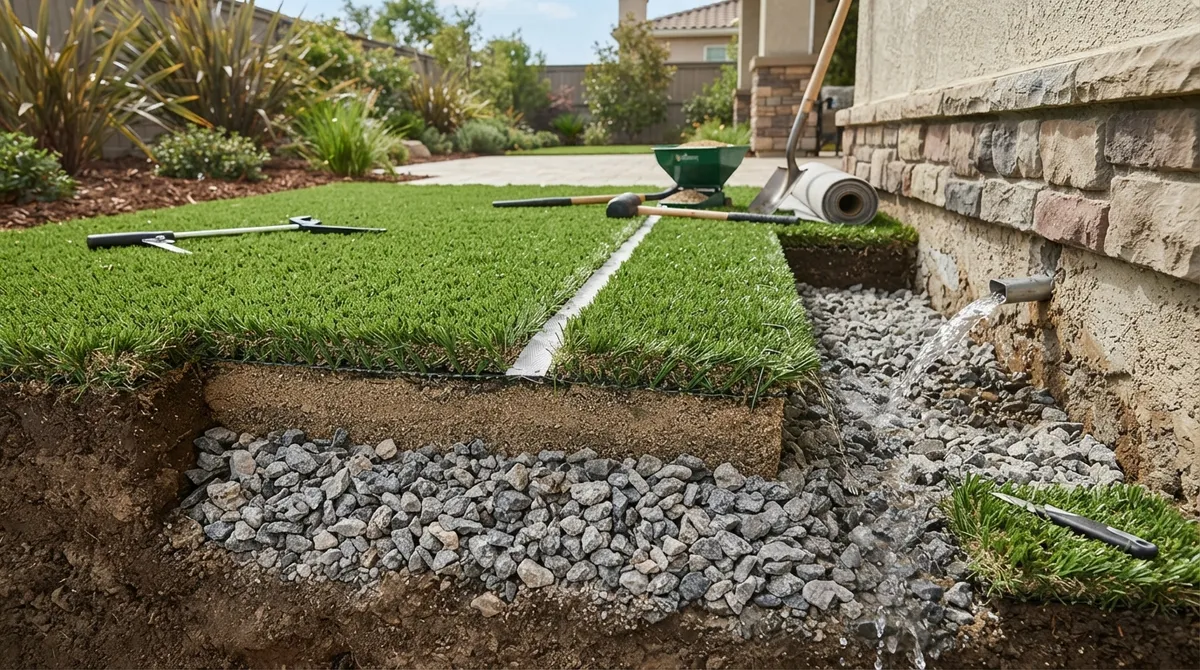
The key is integrating drainage pipes or weep holes directly into the wall design. This allows water to pass through without building up hydrostatic pressure, which can damage the wall over time. For Chicago’s freeze-thaw cycles, this drainage detail is especially important.
- Directs water away from building foundations
- Prevents soil erosion on sloped commercial sites
- Works well with catch basins and bioswales
- Durable enough for Chicago’s harsh winters
If you’re curious about the different types available, check out this overview of commercial retaining wall installation to understand your options.
2. Bioswales
Bioswales are essentially modified ditches planted with native Chicago-friendly vegetation. They receive runoff from parking lots, driveways, and other hard surfaces, then slow that water down and filter out pollutants as it percolates into the ground. Think of them as living filters built right into your landscape.
They work especially well along parking lot edges or between lanes of traffic. Native plants with deep root systems do the heavy lifting, absorbing water and improving soil structure over time. According to stormwater management research, native vegetation dramatically cuts stormwater runoff compared to traditional turfgrass.
- Filter pollutants before water reaches storm drains
- Increase water percolation naturally
- Add visual interest with native plantings
- Require less maintenance once established
Bioswales are a great complement to your softscape design strategy. They blend function with natural beauty seamlessly.
3. Rain Gardens
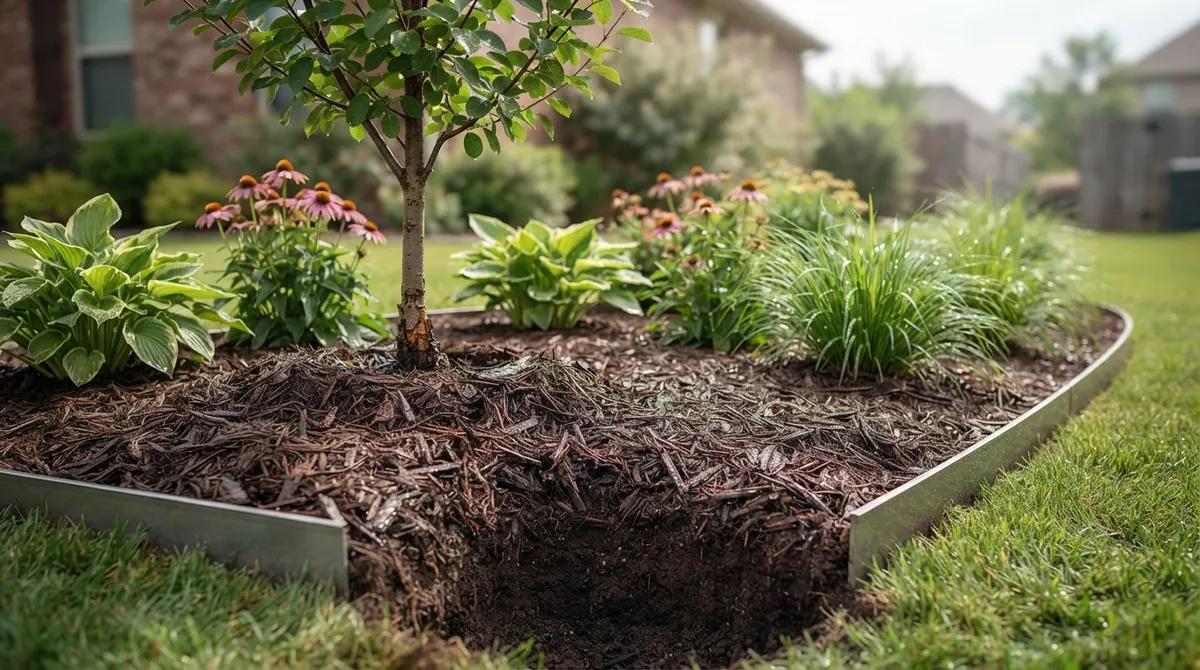
Rain gardens are man-made depressions filled with gravel, mulch, and specific plants that collect roof and pavement runoff. They slow water movement and absorb excess moisture before it can cause problems. They’re surprisingly beautiful and surprisingly effective.
For commercial properties, placement matters a lot. Rain garden sites should be positioned downhill of gutters and approximately 10 feet from foundations to effectively channel runoff. That distance protects your building while still putting the rain garden close enough to collect water efficiently.
The ideal plants for a Chicago rain garden include native species like switchgrass, black-eyed Susans, and coneflowers. These plants are hardy, attractive, and built to handle both wet feet and dry spells. For design inspiration, Landscape Illinois is a great resource for native plant recommendations across the state.
- Reduce pooling near entrances and walkways
- Add curb appeal with colorful native plantings
- Require minimal irrigation once established
- Work year-round, even in Chicago winters
4. Permeable Pavers
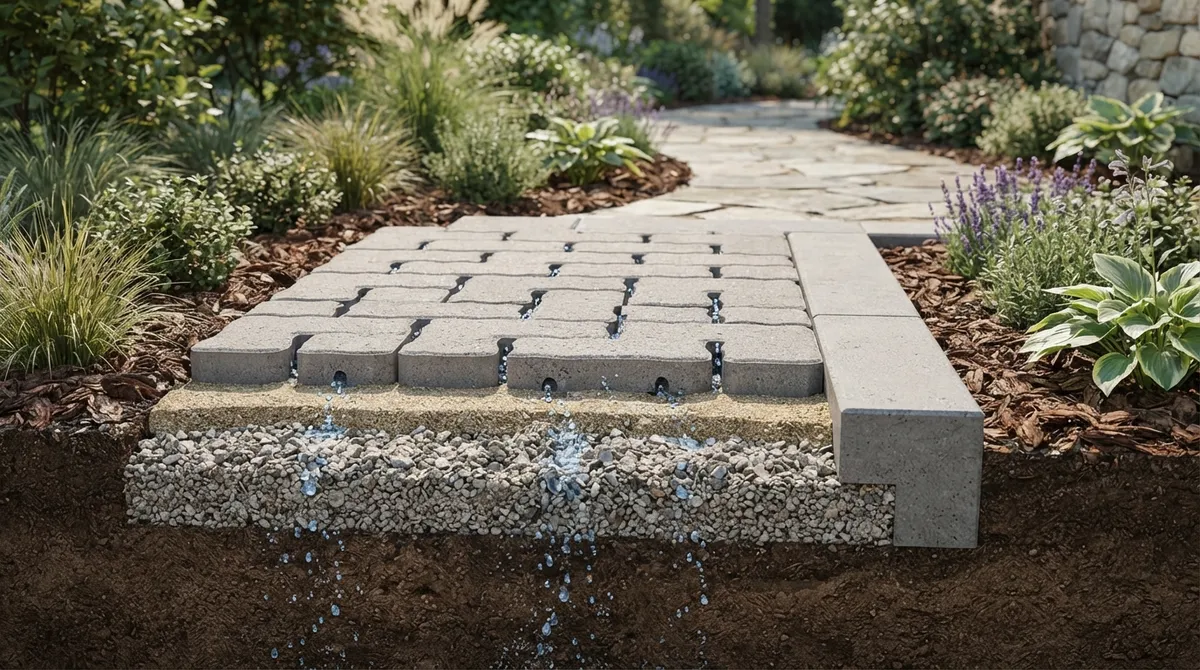
Standard concrete and asphalt send every drop of rain straight to the storm drain. Permeable pavers do the opposite — they trap rainfall and slowly release it into the ground. This dramatically reduces runoff volume from high-traffic commercial areas like parking lots and plazas.
They look just as polished as traditional pavers but perform so much better for water management. They come in a wide range of styles, colors, and materials, so you don’t have to sacrifice aesthetics for function. Our team at Serenity Landscape Group’s paver services can help you find the right fit for your commercial space.
For high-traffic areas, you’ll want to work with a certified professional. The ICPI Certified Installer program ensures your installer has the training to install permeable systems correctly the first time.
- Reduce total runoff volume significantly
- Available in many styles to match your brand
- Durable for heavy commercial foot and vehicle traffic
- Can be combined with underground storage systems
Want more detail on this option? Read about why commercial properties need professional paver contractors before making your decision.
5. Proper Grading and Earthwork
Sometimes the most powerful stormwater solution isn’t a wall or a plant — it’s the shape of the ground itself. Proper grading ensures that water flows away from your building and toward appropriate drainage features like catch basins or bioswales. Without it, even the best drainage systems underperform.
Poor grading is a surprisingly common cause of foundation damage and chronic flooding on commercial sites. Fixing it is one of the most cost-effective investments a property manager can make. It’s often the first step in any comprehensive commercial landscape grading project.
Here’s a simple checklist for effective grading on commercial properties:
- Ensure the ground slopes away from the building at a consistent rate.
- Identify low spots where water tends to pool and address them first.
- Direct water flow toward bioswales, rain gardens, or catch basins.
- Verify that grading is compatible with your existing drainage infrastructure.
- Re-evaluate grading after major soil disturbances like construction or heavy planting.
6. Native Vegetation Plantings
One of the simplest and most affordable stormwater solutions is also one of the most overlooked: planting the right plants. Native Chicago vegetation has deep root systems that dramatically improve rainfall absorption and evaporation. Compared to traditional turfgrass, native plants can cut stormwater runoff by a significant margin.
Deep roots open up soil channels, allowing water to move down into the ground rather than running off sideways. Native plants also require less watering, fewer chemicals, and less maintenance over time — all of which save you money.
Here are some excellent native plant choices for Chicago commercial landscapes:
- Big Bluestem Grass — Deep roots that reach several feet into the soil.
- Wild Blue Indigo — Nitrogen-fixing and drought-tolerant once established.
- Prairie Dropseed — Low-growing and great for parking lot borders.
- Purple Coneflower — Pollinator-friendly and visually striking.
- Swamp Milkweed — Perfect for wet areas near downspouts or bioswales.
Pairing native plants with your softscape design creates a landscape that’s both stunning and functional throughout the seasons.
7. Green Roofs
For commercial buildings with limited ground space — think urban Chicago properties or multi-story office buildings — green roofs offer an innovative stormwater solution. A green roof captures rainfall before it ever hits the ground, absorbing moisture through layers of growing media and vegetation.
Chicago’s Sustainable Development Policy actively encourages green roofs, and they can earn compliance points for commercial projects. They also provide insulation benefits, reduce the urban heat island effect, and create stunning visual interest for your building.
Urban condo owners and property managers with rooftop access might also explore rooftop terrace turf design as a complement to green roof systems. Combining turf with planted areas can maximize both beauty and water absorption in limited spaces.
- Captures water before it becomes runoff
- Reduces heating and cooling costs
- Supports Chicago’s sustainability compliance goals
- Transforms unused rooftop space into a functional asset
How These Features Work Together
The best commercial stormwater management plans don’t rely on just one solution. They layer multiple features to create a system that handles water at every stage — from the moment rain hits your roof to the point it reaches the street. Think of it like a relay race, with each feature handing water off to the next in a controlled, efficient way.
| Feature | Primary Function | Best For |
|---|---|---|
| Retaining Walls | Directs and contains water flow | Sloped sites, erosion-prone areas |
| Bioswales | Filters and absorbs runoff | Parking lot borders, driveways |
| Rain Gardens | Collects and absorbs roof/pavement runoff | Near downspouts and entry areas |
| Permeable Pavers | Reduces runoff from hard surfaces | Parking lots, plazas, walkways |
| Grading | Directs flow away from structures | All commercial sites |
| Native Plantings | Absorbs and evaporates water naturally | All landscape beds and borders |
| Green Roofs | Captures rainfall at source | Urban buildings with limited ground space |
When these features are designed together, your property handles stormwater naturally — without flooding, without erosion, and without costly repairs. For a deeper look at how retaining walls and drainage work side by side, read retaining walls vs. drainage systems: which wins for stormwater?
Choosing the Right Approach for Your Property
Every commercial property is different. A large suburban office park has different needs than a small urban restaurant patio. The right stormwater solution depends on your site size, soil type, existing drainage infrastructure, and local requirements. That’s why working with an experienced landscaping team matters so much.
At Serenity Landscape Group, we’ve spent over two decades helping commercial clients across the greater Chicago area design landscapes that look amazing and perform well in every season. We understand the local soil, climate, and code requirements — and we design solutions that fit your specific site. You can learn more about our design-to-installation process to see how we approach every project from start to finish.
For more ideas on how professional landscaping can benefit your business overall, check out 7 ways commercial landscaping boosts your business in 2026.
Common Mistakes to Avoid
Even well-intentioned stormwater projects can fall short if certain mistakes are made during planning or installation. Here are the most common ones to watch out for:
- Skipping the grading assessment. No drainage feature works well on a poorly graded site. Always start with a grading review.
- Placing rain gardens too close to foundations. They need at least 10 feet of separation from any building.
- Using non-native plants in bioswales. They won’t develop the deep roots needed for effective absorption.
- Installing retaining walls without drainage. Hydrostatic pressure buildup can cause wall failure over time.
- Underestimating runoff volume. Always design for peak storm conditions, not average rainfall.
For more guidance on avoiding costly errors, our article on commercial landscape grading wall mistakes is a helpful read. You can also explore general hardscaping mistakes to avoid that apply across all commercial projects.
Ready to Protect and Beautify Your Commercial Property?
Managing stormwater doesn’t have to be an eyesore. With the right landscaping features — from beautifully designed retaining walls to lush native plantings and permeable pavers — your commercial property can handle Chicago’s toughest storms while looking its absolute best. It’s about creating a landscape that works as hard as you do, season after season.
If you’re ready to explore commercial stormwater management walls and landscape solutions for your Chicago property, we’d love to help. Request your free estimate today and let’s start designing an outdoor space that protects your investment and turns heads at the same time. You can also call us directly at (630) 359-5139 to speak with one of our friendly team members right away.
FAQs
Q: What are the best landscaping features for stormwater management on Chicago commercial properties?
A: The best features include retaining walls with integrated drainage, bioswales, rain gardens, and permeable pavers — often used together for maximum effect. Native vegetation plantings and proper grading are also essential building blocks of any solid stormwater plan. When these elements are designed as a system, they handle even Chicago’s heaviest storms beautifully.
Q: How do bioswales and rain gardens work to manage stormwater in commercial landscapes?
A: Bioswales are planted channels that slow runoff and filter pollutants as water moves through native vegetation — they work great along parking lots and driveways. Rain gardens are shallow depressions filled with gravel, mulch, and plants that collect roof and pavement runoff and allow it to soak into the ground slowly. Both use native plants with deep root systems that do the real heavy lifting when it comes to absorption.
Q: How should retaining walls be integrated with drainage systems for commercial stormwater management?
A: Retaining walls work best for stormwater management when they include built-in drainage features like weep holes or perforated pipes that release water without allowing pressure to build up behind the wall. Proper grading should direct water toward the wall’s drainage outlet and then on to a catch basin or bioswale. Getting this integration right from the start saves you from costly wall repairs down the road!
Q: Are permeable pavers effective for stormwater management in high-traffic commercial areas?
A: Absolutely — permeable pavers are one of the most effective solutions for high-traffic commercial areas like parking lots and plazas because they allow rainfall to pass through the surface and into the ground rather than running off into storm drains. They reduce total runoff volume significantly and come in many attractive styles that enhance your property’s appearance. Just make sure they’re installed by a certified professional for best long-term performance.
Q: What does Chicago’s Sustainable Development Policy say about on-site stormwater management?
A: Chicago’s Sustainable Development Policy encourages commercial property owners to manage stormwater on-site, and it offers compliance points for features like green roofs, permeable surfaces, and native plantings. Meeting these requirements can streamline the permitting process and even reduce fees in some cases. Working with an experienced local landscaping team ensures your project is designed to meet these guidelines from day one.