Key Takeaways
-
Brush high-traffic areas weekly with a stiff-bristled broom against the fiber grain to prevent matting and keep fibers upright, which is the single most important maintenance task.
-
Regular weekly maintenance takes only 15-30 minutes and includes debris removal, low-pressure rinsing, and spot-treating pet areas, making artificial turf significantly easier than natural grass upkeep.
-
Schedule professional deep cleaning once or twice yearly to address embedded dirt, bacteria, infill loss, and restore flattened fibers, which extends turf lifespan and maintains warranty coverage.
-
Remove pet waste immediately and rinse affected areas, then apply pet-safe enzymatic cleaners weekly to eliminate odor-causing bacteria without damaging the turf fibers.
-
Avoid power washers, metal rakes, harsh chemicals, and open flames near the turf, as these hazards displace infill, damage fibers, and void manufacturer warranties.
-
Check infill levels twice yearly and replenish as needed in flattened areas, as infill supports fiber structure, cushioning, and drainage performance over time.
Artificial turf is one of the smartest investments you can make for your outdoor space. It stays green year-round, holds up to heavy foot traffic, and saves you hours of mowing and watering. But here’s the thing — it does need some care to stay looking its best. That’s where artificial turf maintenance comes in.
Whether you’ve just had a new lawn installed or you’ve had synthetic grass for years, a simple routine keeps the fibers upright, the drainage clear, and the surface fresh. The good news? It’s far easier than maintaining natural grass. According to Artificial Turf Express, most weekly routines take just 15–30 minutes — a fraction of the time natural lawns demand. In this guide, we’re sharing 7 practical, easy-to-follow tips that work for homeowners, commercial property managers, and everyone in between.
Why Artificial Turf Maintenance Actually Matters
Some people assume synthetic grass is completely hands-off. Not quite! Without basic care, fibers can flatten, infill can shift, and drainage can slow down. Over time, these issues shorten the life of your turf and can even void your warranty. The good news is that with a little consistency, artificial turf can last 10 or more years, protecting your investment for a long time.
Regular maintenance also keeps your outdoor space looking attractive and welcoming. Whether you’re a suburban homeowner in Naperville trying to impress guests or a commercial property manager in downtown Chicago boosting curb appeal, a well-kept turf surface makes a strong first impression. Let’s get into the tips!
1. Brush and Groom Fibers Regularly
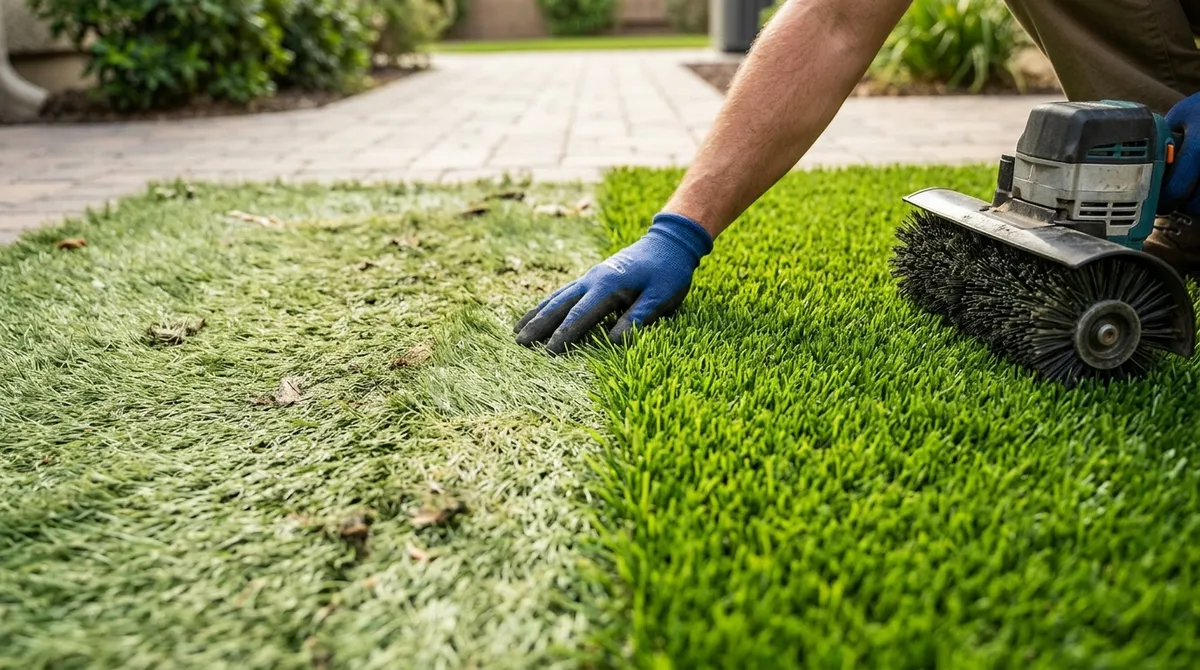
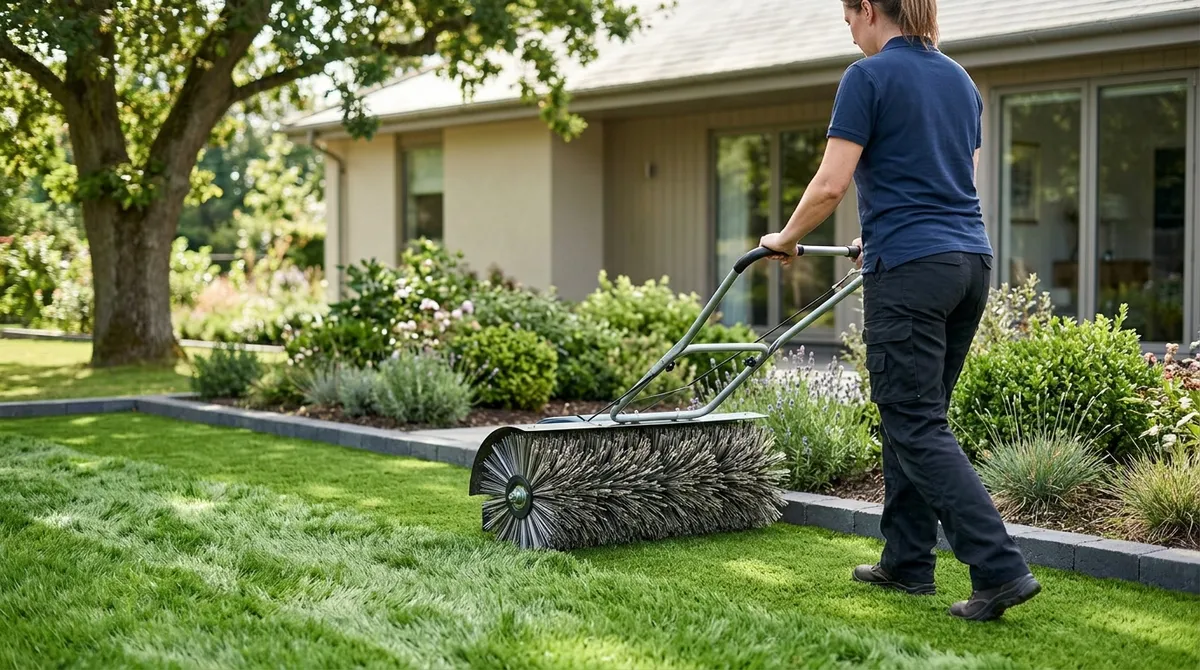
Brushing is the single most important part of artificial turf maintenance. High-traffic areas — think kids’ play zones, pet runs, and main pathways — can cause fibers to flatten and mat over time. Regular grooming lifts those fibers back up, giving your turf that fresh, lush look.
Use a stiff-bristled brush or a power broom with synthetic-safe bristles. Brush against the grain of the fibers to stand them upright. For most lawns, a quick brush once a week in busy areas is all it takes. For high-traffic commercial turf, you may want to brush more frequently.
- Use a stiff-bristled broom or power brush
- Brush against the fiber direction for best results
- Focus extra attention on play areas, walkways, and pet zones
- Avoid metal rakes — they can damage the blades
2. Rinse Weekly to Remove Dust and Debris
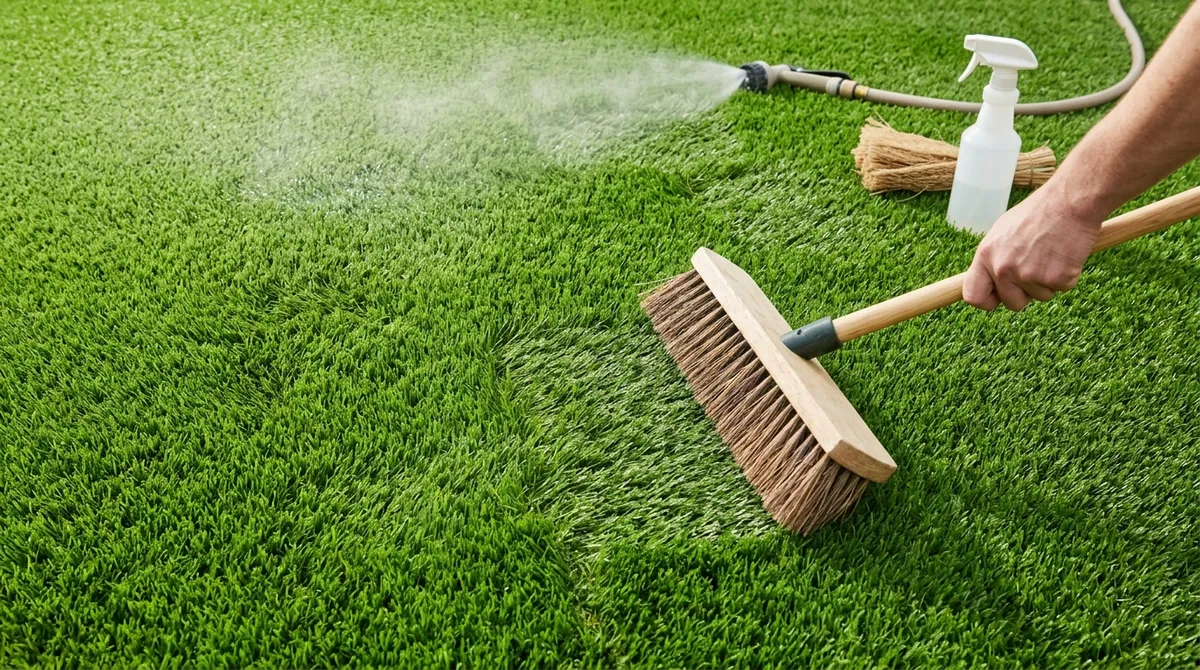
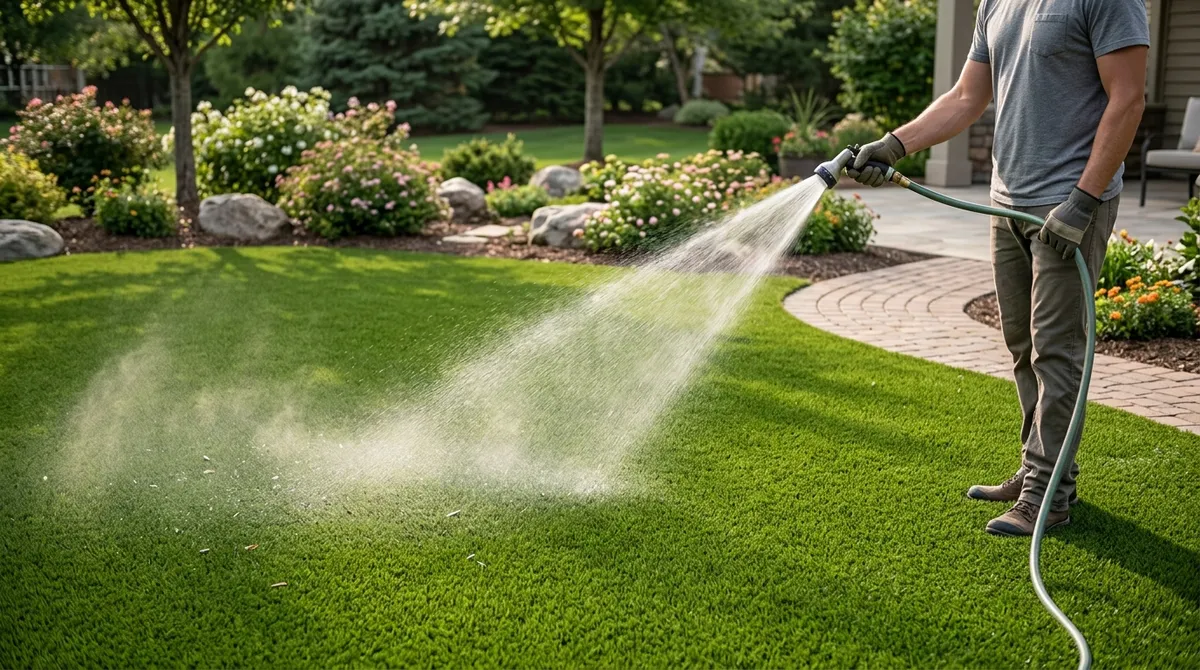
A light rinse with your garden hose once a week works wonders. It washes away dust, pollen, and small debris that accumulate on the surface. This is especially helpful in Chicago suburbs where seasonal pollen and tree debris can settle on your lawn. Rinsing also helps keep the turf cool during hot summer days.
Keep your water pressure low and steady. You don’t need a power washer — in fact, high-pressure washing can displace infill material and overwhelm your drainage system. A simple garden hose is your best friend here. This 15-minute task makes a noticeable difference in how clean and fresh your turf looks day to day.
3. Remove Debris Promptly and Properly
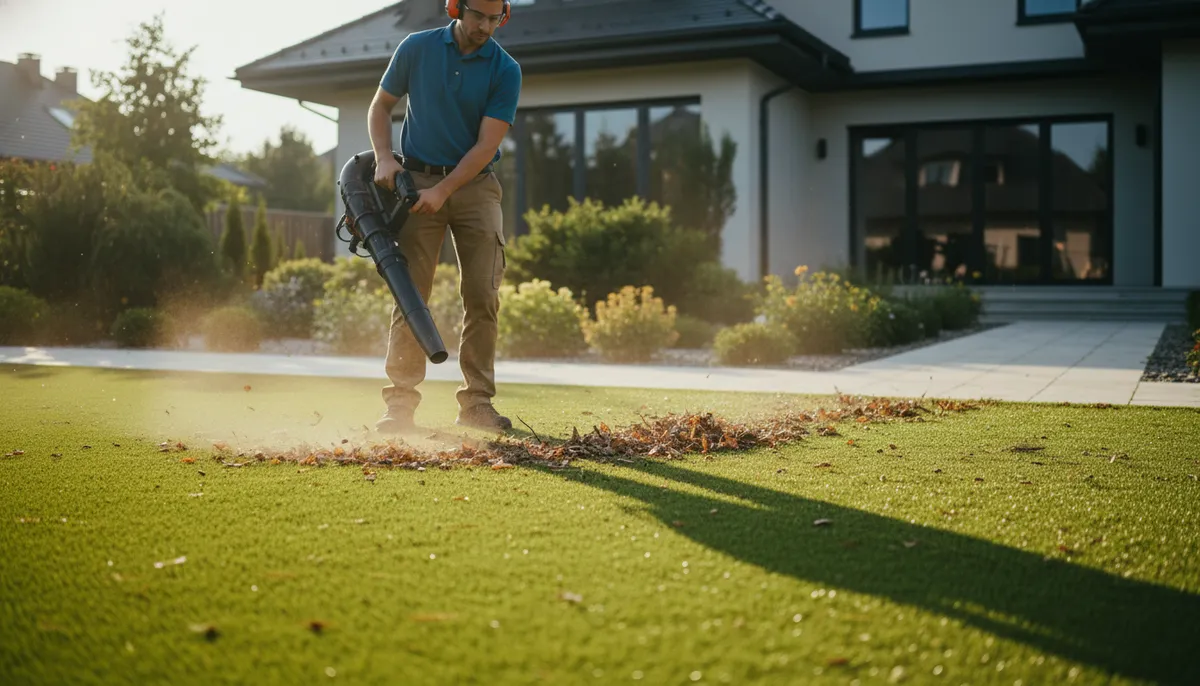
Leaves, twigs, and organic debris can build up on your turf surface. If left too long, they can trap moisture, encourage weed growth, and block drainage. The fix is simple — remove them regularly and promptly.
A leaf blower is the fastest and safest tool for the job. It clears debris without disturbing the infill or damaging the fibers. For wet leaves or heavier debris, a plastic rake works well too. Just avoid anything with sharp metal tines. Here’s a quick reference for the best tools:
| Tool | Best For | Safety Level |
|---|---|---|
| Leaf Blower | Dry leaves and light debris | Excellent |
| Plastic Rake | Wet leaves and heavier debris | Good |
| Stiff-Bristle Broom | Debris and fiber grooming | Excellent |
| Metal Rake | Not recommended | Poor — can damage fibers |
| Power Washer | Not recommended | Poor — displaces infill |
4. Tackle Pet Waste the Right Way
If you have pets, prompt cleanup is essential. Solid waste should be picked up right away and the area rinsed with water. For urine, a good rinse is usually enough for day-to-day management. But to keep odors under control long-term, you’ll want to use a pet-safe enzymatic cleaner periodically.
These cleaners break down the bacteria that cause odors rather than just masking them. They’re safe for kids, pets, and your turf. If you’re looking at easy-clean pet turf options, some synthetic grass products are specifically designed with antimicrobial properties and superior drainage to handle pet use. For Chicago pet owners, this is a game-changer for keeping backyard spaces clean and fresh through every season.
- Pick up solid waste immediately
- Rinse the area with water right away
- Apply a pet-safe enzymatic cleaner weekly or as needed
- Never use bleach or harsh chemicals — they can damage fibers
- Check drainage holes regularly to ensure they stay clear
5. Manage Infill Levels Throughout the Year
Infill material — like crumb rubber, sand, or organic options — sits between the turf fibers. It gives your lawn its cushioned feel, helps fibers stand upright, and supports drainage. Over time, infill can shift, compact, or thin out, especially in high-traffic zones.
Checking infill levels a couple of times a year is a smart habit. If you notice certain areas looking flat or feeling harder underfoot, it may be time to add more infill. Choosing the right infill type also makes a difference for performance and comfort. Professional landscapers can handle infill replenishment as part of a seasonal maintenance visit, ensuring even distribution across your entire lawn.
6. Schedule Annual Deep Cleaning
Even with great weekly habits, your turf benefits from a thorough deep clean once or twice a year. Think of it like a professional detail for your lawn. A deep clean tackles embedded dirt, bacteria, and odors that routine rinsing can’t reach.
Here’s what a professional deep cleaning typically includes:
- High-pressure rinsing — removes deep-seated dirt and residue from the turf base
- Antimicrobial treatment — kills bacteria and eliminates odor-causing organisms
- Infill rejuvenation — redistributes and replenishes infill for even coverage
- Fiber grooming — lifts and restores flattened fibers across the entire surface
- Drainage check — clears any blocked drainage holes or channels
Professional services from teams experienced in artificial turf installation and care are especially valuable here. They have the right tools and products to restore your turf without causing damage. According to SYNLawn’s maintenance guide, professional deep cleaning extends turf lifespan by addressing infill loss and deep-seated dirt that builds up over time.
7. Protect Your Turf from Common Hazards
There are a few everyday hazards that can shorten the life of your synthetic lawn. Being aware of them — and taking simple precautions — goes a long way. Here’s what to watch out for:
- Heat sources: BBQ grills, fire pits, and reflective windows can melt or discolor turf fibers. Keep open flames away from the surface. Check out artificial turf heat reduction technology if heat is a concern in your yard.
- Sharp objects: Avoid dragging metal furniture, sharp tools, or heavy equipment across the turf.
- Chemicals: Harsh cleaning products, fertilizers, and pesticides can damage synthetic fibers. Stick to turf-safe products only.
- Standing water: While synthetic grass drains well, blocked drainage can cause water to pool. Learn why drainage matters and keep those channels clear.
- Weed growth at edges: Weeds can occasionally sprout through seams or edges. Preventing weeds in artificial turf is easier with proper edge sealing during installation.
Artificial Turf Maintenance: A Quick Weekly Routine
Consistency is the key to a beautiful, long-lasting synthetic lawn. Here’s a simple weekly routine that takes less than 30 minutes:
- Use a leaf blower or plastic rake to clear debris from the surface
- Rinse the entire lawn with a garden hose on a low-pressure setting
- Spot-treat any pet areas with an enzymatic cleaner as needed
- Brush high-traffic areas with a stiff-bristled broom
- Do a quick visual check for any damaged seams, edges, or drainage issues
That’s it! Five simple steps, and your turf stays looking fresh and performs well all week long. For a deeper look at maximizing your turf lifespan in Illinois, the climate here actually works in your favor — Chicago winters can help naturally rinse and cool your synthetic lawn between sessions.
When to Call a Professional Landscaping Team
Some maintenance tasks are best left to the pros. If you notice significant fiber matting, infill loss, drainage problems, or persistent odors, it’s time to call in reinforcements. A professional team brings specialized tools, the right products, and the know-how to diagnose and fix issues before they become bigger problems.
At Serenity Landscape Group, we’ve been caring for outdoor spaces across the greater Chicago area for over two decades. From residential backyards in the suburbs to commercial lawn maintenance for office and retail properties, our team handles everything from routine grooming to full deep-cleaning services. We love helping our clients get the most out of their outdoor investments, and turf care is a big part of that. You can also explore resources from Landscape Illinois for industry-backed guidance on outdoor maintenance best practices.
Not sure if your turf needs professional attention? Here’s a quick checklist:
- Fibers are flat and won’t spring back after brushing
- Odors persist even after regular rinsing
- Drainage is noticeably slower than usual
- Infill looks uneven or thin in certain areas
- Seams or edges are lifting or separating
If you’re checking more than one box, give your landscape team a call. Catching these issues early saves money and extends the life of your lawn significantly. For hardscaping that complements your turf, check out how beautiful pavers can create a stunning border or patio space alongside your synthetic grass.
Maintain Your Warranty With Regular Care
Most quality synthetic turf products come with a manufacturer’s warranty — often 8 to 15 years. But here’s something many homeowners don’t realize: poor maintenance can void that warranty. Manufacturers typically require documented, consistent care to honor warranty claims.
Following a regular maintenance routine, using approved cleaning products, and scheduling professional deep cleaning all support your warranty coverage. It’s worth reviewing your specific warranty terms to understand what’s required. For guidance on what to expect from a professional installation, the 5 key stages of the turf installation process give great context on how proper setup sets the stage for easy long-term maintenance.
Bring It All Together: Your Turf, Your Space
Artificial turf maintenance doesn’t have to feel like a chore. With the right habits in place, it becomes a quick and satisfying part of enjoying your outdoor space. A little brushing here, a quick rinse there, and a professional deep clean once or twice a year — that’s really all it takes to keep synthetic grass looking gorgeous and performing well for over a decade.
Whether you’re a homeowner in the Chicago suburbs, a condo owner with a rooftop terrace, or a commercial property manager wanting to keep things polished and professional, these tips give you a clear path forward. And if you ever want expert help, the team at Serenity Landscape Group is just a call away. We take pride in helping our clients enjoy beautiful, stress-free outdoor spaces year-round.
Ready to give your synthetic lawn the care it deserves — or thinking about upgrading your outdoor space altogether? Request your free estimate today and let our team help you create and maintain an outdoor space you’ll love every single day.
FAQs
Q: What is the basic weekly maintenance routine for artificial turf?
A: Great news — it’s simple and fast! Each week, use a leaf blower or plastic rake to clear debris, give the lawn a light rinse with your garden hose, and brush high-traffic areas with a stiff-bristled broom. The whole routine takes just 15–30 minutes, making it far less work than natural grass.
Q: How do I remove pet waste and odors from my synthetic grass?
A: Pick up solid waste right away and rinse the area with water. For odor control, use a pet-safe enzymatic cleaner regularly — it breaks down bacteria rather than just covering up smells. Avoid harsh chemicals like bleach, as they can damage the turf fibers over time.
Q: How often should I schedule a professional deep cleaning for my artificial turf?
A: Once or twice a year is the sweet spot for most lawns. A professional deep clean tackles embedded dirt, bacteria, and odor that routine rinsing can’t reach. It also includes infill rejuvenation and fiber grooming to keep your turf looking and performing like new.
Q: Can regular maintenance really protect my artificial turf warranty?
A: Absolutely! Most turf manufacturers require consistent, documented maintenance to honor warranty claims. Sticking to a regular care routine, using approved cleaning products, and getting periodic professional service all help ensure your warranty stays valid for the long haul.
Q: What should I avoid when cleaning artificial turf?
A: Steer clear of power washers (they displace infill and strain drainage), metal rakes (they damage fibers), bleach and harsh chemicals (they degrade synthetic materials), and open flames anywhere near the surface. Stick to a garden hose, plastic rake, stiff-bristle broom, and turf-safe cleaning products for the best results.