Key Takeaways
-
Drainage is the critical factor in earth retention system success — water buildup behind walls creates hydrostatic pressure that causes cracking and failure, so systems must include weep holes, gravel backfill, or perforated pipes to channel water away.
-
Chicago’s freeze-thaw cycles, heavy spring rains, and clay soils create perfect conditions for soil movement, requiring commercial properties to use engineered systems that handle higher foot traffic, vehicle loads, and building surcharges beyond residential needs.
-
Most commercial earth retention systems above 4 feet in the Chicago area require building permits and professional engineering sign-off, so working with qualified contractors and geotechnical engineers is essential to avoid fines and removal orders.
-
Modern earth retention systems can be both functional and beautiful — natural stone, textured blocks, planted gabions, and terraced designs transform necessary structural elements into landscape features that boost curb appeal and property value.
-
MSE walls and reinforced-soil systems install 25-30% faster than comparable alternatives, reducing construction disruption on commercial sites while providing cost-effective, durable solutions for large-scale projects.
-
System selection depends on multiple factors: grade change height, soil type, water management needs, traffic loads, aesthetics, and local codes — there’s no one-size-fits-all solution, requiring professional site assessment and engineering.
If your commercial property has slopes, grade changes, or unstable soil, you already know the headaches that come with it. Erosion creeps in after heavy rain. Soil shifts where you least expect it. And suddenly, that beautiful landscape you envisioned becomes a muddy, unstable mess. That’s where earth retention systems for commercial properties come in — and they’re more than just a practical fix. Done right, they’re a stunning part of your overall landscape design. Whether you manage an office park, a retail center, or a mixed-use development in the greater Chicago area, understanding how these systems work can save you time, money, and a lot of frustration. Let’s walk through everything you need to know in plain, simple language.
What Are Commercial Earth Retention Systems?
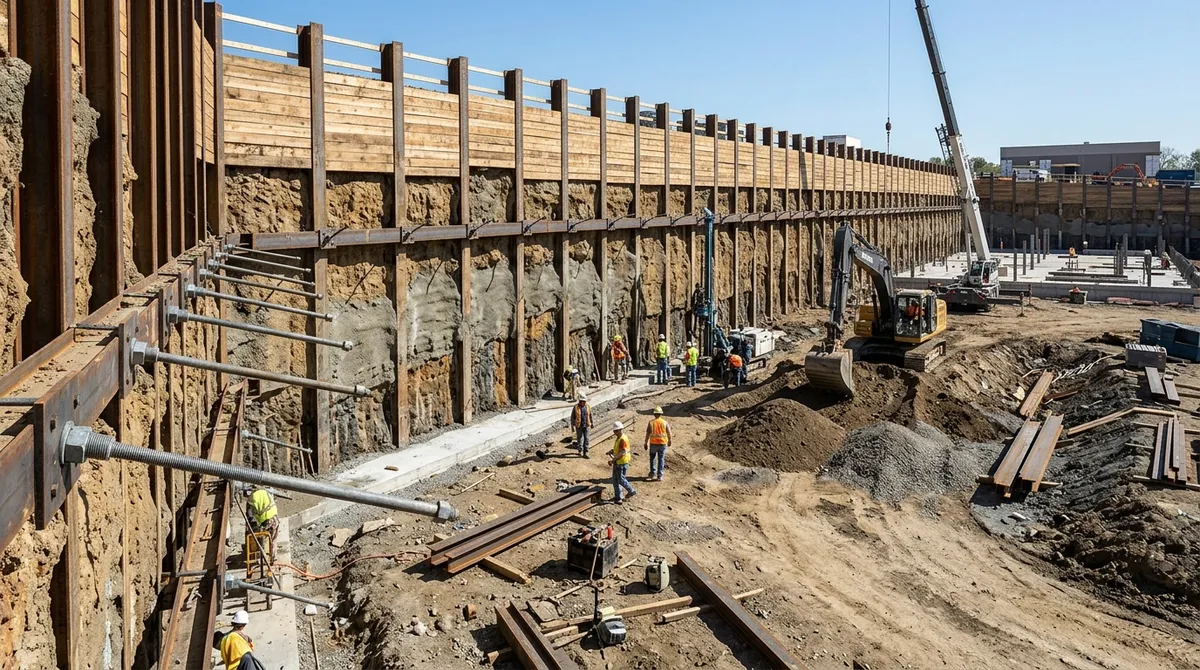
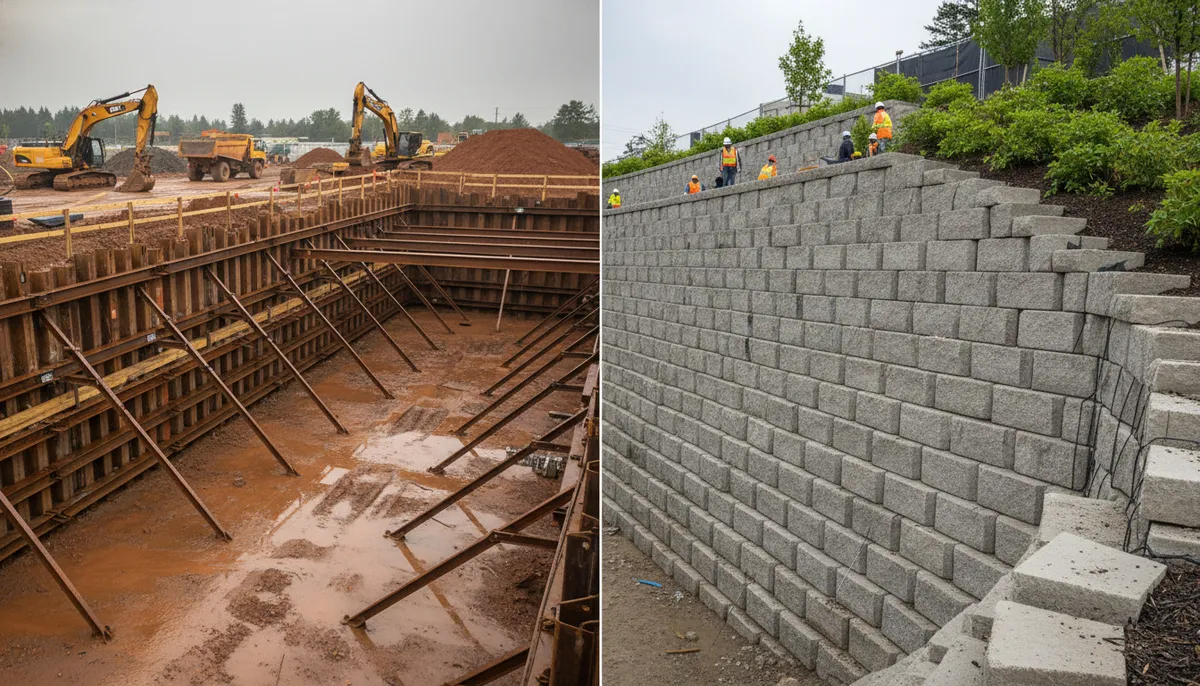
Commercial earth retention systems are engineered structures designed to hold soil in place. They prevent slopes from collapsing and manage lateral earth pressure on commercial sites. Think of them as the backbone of your site’s landscape — invisible in their function but critical to everything above them.
These systems are used on office parks, retail developments, industrial properties, and mixed-use projects. They can be temporary (used during construction) or permanent (built into the finished landscape). The right choice depends on your soil type, site geometry, water management needs, and structural demands.
If you’ve ever wondered whether your sloped commercial property needs one, check out What Is a Retaining Wall and Do You Need One? for a helpful starting point.
Why Commercial Properties in Chicago Need Earth Retention
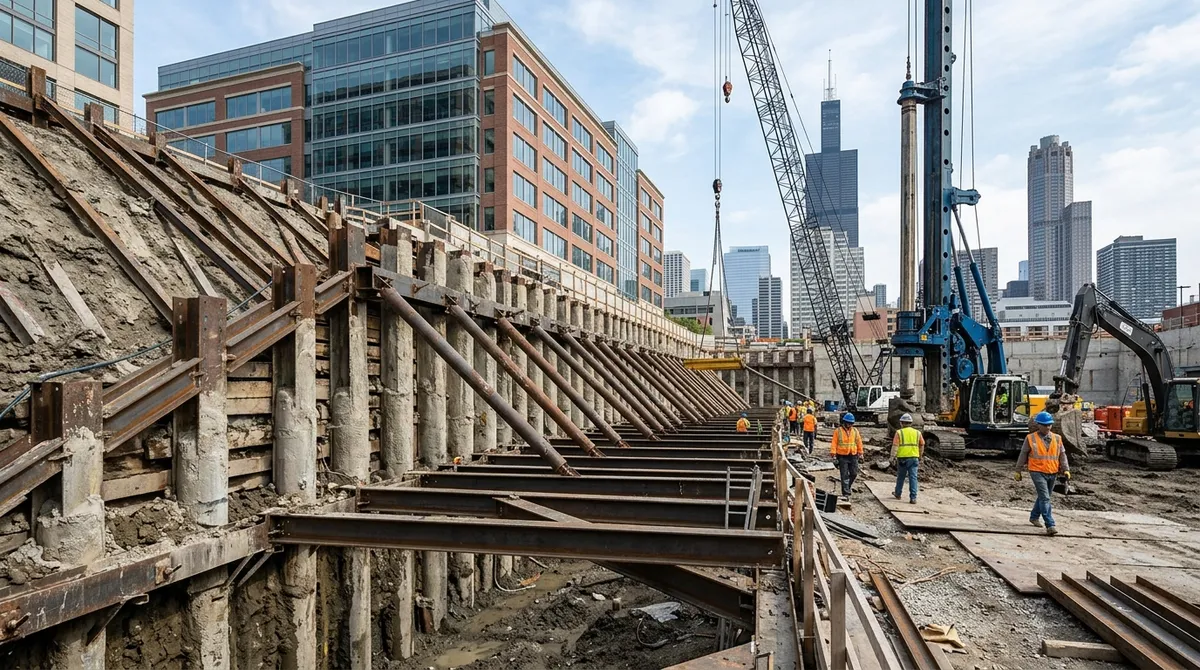
Chicago’s climate is no joke. Freeze-thaw cycles, heavy spring rains, and clay-heavy soils create a perfect storm for soil movement. Without proper earth retention, slopes erode, foundations shift, and drainage problems multiply fast.
Commercial properties face even bigger challenges than residential ones. Higher foot traffic, vehicle loads, and building surcharges all add pressure to the soil. You need systems built to handle that weight — not just aesthetically, but structurally.
- Prevents costly soil erosion and slope failure
- Manages water runoff and drainage problems
- Creates usable, level areas on sloped terrain
- Supports below-grade structures and deep foundations
- Boosts curb appeal and landscape aesthetics
- Protects neighboring properties from soil movement
For more insight into why slope management matters so much, read Why Does Your Commercial Property Need Slope Stabilization?.

Types of Earth Retention Systems Used in Commercial Landscaping
Not all earth retention systems are created equal. Each type has its strengths and best-use scenarios. Here’s a breakdown of the most common solutions used in commercial landscape and site development work.
1. Retaining Walls
Retaining walls are the most recognizable form of earth retention. They hold back soil and create clean grade separations. Materials include concrete block, natural stone, timber, and segmental retaining wall units. Some engineered gravity retaining walls can reach heights of up to 50 feet in certain applications — that’s impressive engineering at work.
Modern retaining walls aren’t just functional — they’re beautiful. Retaining walls can be designed to complement your commercial property’s architecture and brand aesthetic. Learn more about how they transform landscapes in Why Do Retaining Walls Transform Sloped Yards Into Usable Spaces.
2. Mechanically Stabilized Earth (MSE) Walls
MSE walls use layers of compacted fill reinforced with geosynthetic materials or steel strips. They’re cost-effective, fast to install, and highly durable. Some reinforced-soil systems install 25–30% faster than comparable MSE block walls, which means less disruption to your commercial site during construction.
3. Gabion Systems
Gabions are wire mesh baskets filled with rock or stone. They’re flexible, drain naturally, and blend well into natural landscapes. They’re a great choice for waterfront commercial properties or sites near retention ponds. Speaking of which, see Retaining Walls for Retention Ponds: What You Need to Know for details on that specific application.
4. Soil Nails and Tiebacks
These systems anchor into the existing soil or rock to stabilize steep slopes. They’re commonly used during excavation phases or where space is too tight for a traditional retaining wall. They’re a popular temporary earth retention solution during active construction.
5. Sheet Piling
Sheet piling involves driving interlocking steel or vinyl sheets into the ground to form a wall. It’s often used near water or where deep excavation is needed. This is more common in temporary applications but can be permanent in the right conditions.
| System Type | Best Use | Temporary or Permanent | Aesthetic Potential |
|---|---|---|---|
| Retaining Walls | Grade separation, terracing | Permanent | High |
| MSE Walls | Large-scale commercial fills | Permanent | Medium |
| Gabions | Waterfront, natural settings | Permanent | High |
| Soil Nails / Tiebacks | Steep slopes, tight spaces | Both | Low |
| Sheet Piling | Excavation, near water | Both | Low |
Temporary vs. Permanent Earth Retention: What’s the Difference?
This is one of the most common questions we hear. The short answer? Temporary systems protect your site during construction. Permanent systems stay in place as part of your finished commercial landscape.
Here’s a simple way to think about it:
- Temporary systems are installed to support excavations and active construction phases. They keep workers safe and prevent soil collapse while the site is being developed.
- Permanent systems become part of the completed project. They provide long-term structural support, manage drainage, and enhance the aesthetic of the finished site.
- Some systems serve both purposes — like sheet piling or soil nails — depending on the project scope and engineering requirements.
Professional design is critical for both types. Commercial earth retention must account for surcharges, traffic loads, worker safety, and long-term structural performance. That’s why working with experienced professionals — like those at Serenity Landscape Group — makes all the difference. You can also review How to Plan Site Development Retaining Walls That Last for deeper planning guidance.
How Drainage Affects Earth Retention Performance
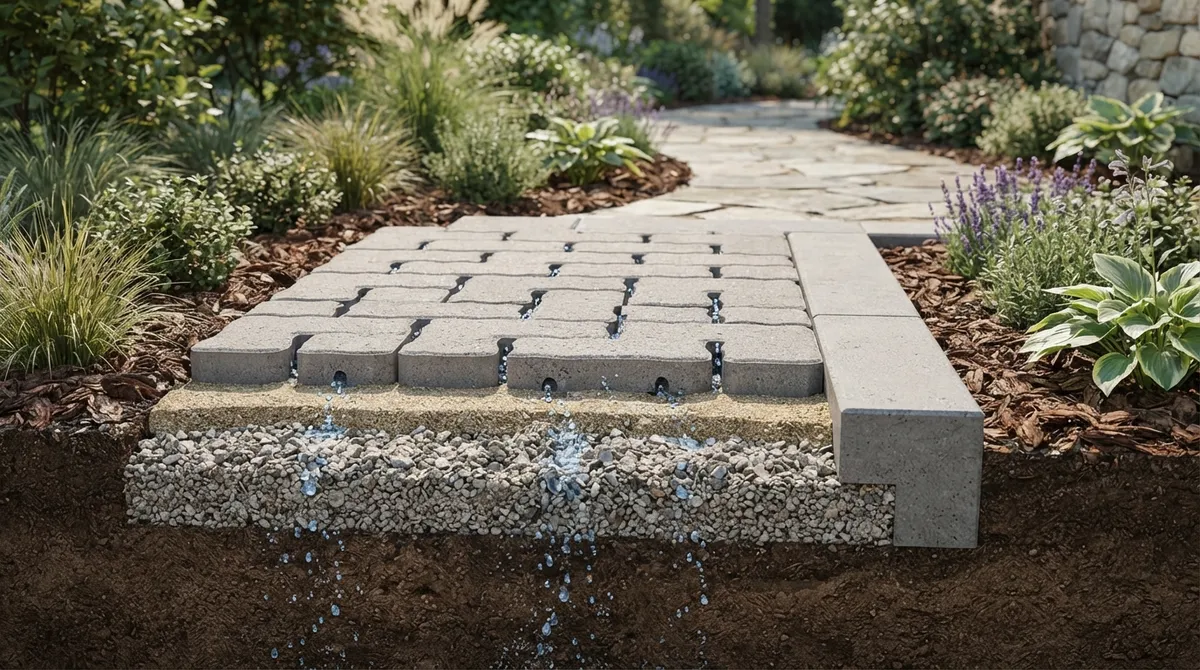
Water is the number one enemy of any earth retention system. When water builds up behind a retaining wall or within a slope, it creates hydrostatic pressure. That pressure can crack walls, push them forward, and cause complete system failure.
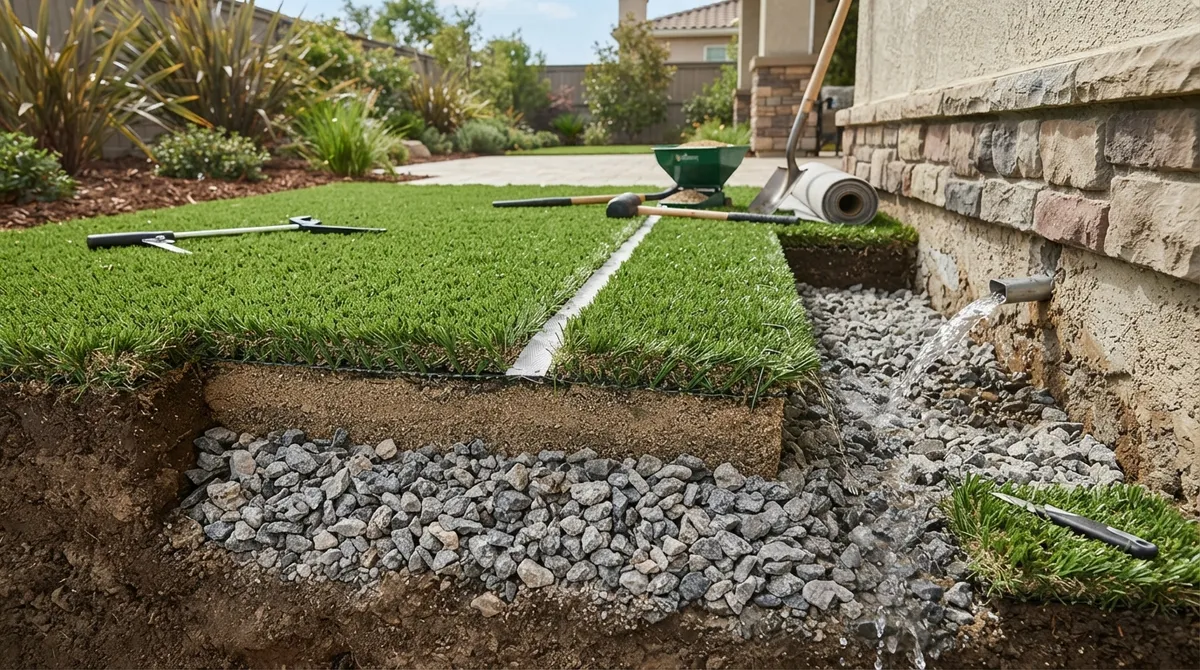
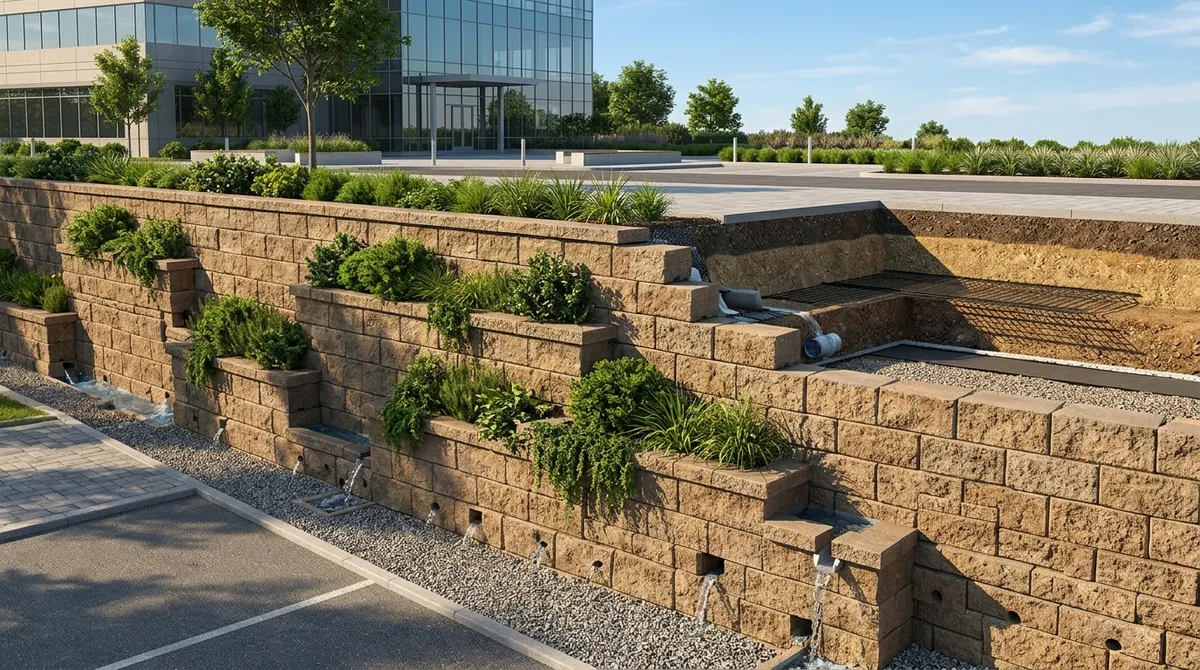
Good drainage design is non-negotiable. Most commercial retaining wall systems include built-in drainage components like weep holes, gravel backfill, or perforated drainage pipes. These features channel water away before pressure builds up.
- Weep holes allow water to escape through the wall face
- Gravel backfill provides a fast drainage path behind the wall
- Perforated drain pipes collect and redirect groundwater
- Geotextile fabric prevents fine soil particles from clogging drainage systems
Proper grading and commercial lawn maintenance practices also play a big role in keeping drainage working as designed over time. Industry resources like Landscape Illinois offer helpful guidance on regional best practices for drainage and slope management.
Aesthetic Integration: Earth Retention That Looks Great
Here’s something a lot of people don’t realize: commercial earth retention systems don’t have to look industrial or cold. Modern systems are designed to integrate beautifully with the surrounding landscape.
Vegetated walls, textured concrete block, natural stone veneers, and even planted terrace systems all turn a functional necessity into a visual feature. For commercial property managers trying to boost curb appeal, this is a game-changer.
- Natural stone retaining walls add warmth and texture
- Planted gabion walls soften hard edges with greenery
- Textured block walls complement modern architectural styles
- Terraced slopes create usable outdoor seating or garden areas
- Lighting integration highlights wall features after dark
Pairing your earth retention with quality pavers, softscapes, and lighting and sound systems creates a cohesive commercial landscape that impresses clients and tenants alike. See inspiring examples in our gallery of our work.
Do Commercial Earth Retention Systems Require Permits and Engineering?
Yes — and this is important. Most commercial earth retention systems require permits and professional engineering sign-off. The rules vary by municipality, but in the greater Chicago area, walls above a certain height (often 4 feet) typically require a building permit and engineered drawings.
- Site assessment: A geotechnical engineer evaluates soil conditions, water table, and load requirements.
- System design: Engineers create stamped plans specific to your site. Some providers offer PE-stamped plans in 44 states, giving you broad coverage for multi-site commercial projects.
- Permit application: Drawings are submitted to your local municipality for approval.
- Inspections: Construction is inspected at key stages to ensure compliance.
- Final approval: Once complete, the system is signed off and documented.
Working with a qualified contractor who understands local regulations is essential. ICPI Certified Installer credentials are a strong indicator of professional training and quality standards in hardscape and earth retention work. You can also explore how contractors approach commercial projects in What Does a Commercial Retaining Wall Contractor Actually Do?.
How to Choose the Right Earth Retention System for Your Site
Choosing the right system comes down to several key factors. There’s no one-size-fits-all answer, but here’s a straightforward framework to guide your decision.
- Evaluate the height of the grade change. Taller slopes need more robust engineered solutions.
- Assess the soil type. Clay soils common in Chicago suburbs behave very differently from sandy or loam soils.
- Consider water and drainage. Sites with high water tables or heavy runoff need systems with superior drainage integration.
- Account for loads and surcharges. Parking lots, traffic areas, and building proximity all affect structural requirements.
- Think about aesthetics. The system should complement your overall commercial landscape design.
- Check local codes. Always verify permit and engineering requirements with your municipality before selecting a system.
For a broader look at how hardscaping fits into your commercial landscape strategy, How to Choose Between Landscaping vs Hardscaping for Your Yard is a great read. You can also explore options through the Serenity Landscape Group project process to understand how we approach commercial landscape planning from start to finish.
Industry organization resources from groups affiliated with Landscape Illinois are also excellent for finding vetted commercial landscape contractors in the Chicago region.
Common Mistakes to Avoid with Commercial Earth Retention
Even well-meaning property managers can run into trouble. Here are the most common mistakes to steer clear of.
- Skipping the geotechnical assessment — soil conditions matter enormously. Don’t guess.
- Underestimating drainage needs — poor drainage is the leading cause of retaining wall failure.
- Choosing aesthetics over engineering — beauty and function must go hand in hand.
- Ignoring permit requirements — unpermitted walls can result in fines and removal orders.
- Hiring unqualified contractors — always verify experience and credentials for commercial-scale work.
See 3 Commercial Landscape Grading Walls Mistakes to Avoid for a deeper dive into what can go wrong and how to prevent it. And if you want to see how commercial landscaping adds real value to your business, don’t miss 7 Ways Commercial Landscaping Boosts Your Business In 2026.
Ready to Stabilize and Beautify Your Commercial Property?
Earth retention systems for commercial properties are one of those investments that pay off in multiple ways. They protect your site, manage water, create usable space, and — when designed well — make your property look polished and professional. Whether you’re dealing with a mild slope or a significant grade change, the right system makes all the difference.
At Serenity Landscape Group, we’ve spent over two decades helping commercial property managers, developers, and business owners across the greater Chicago area solve exactly these kinds of challenges. We combine structural know-how with landscape artistry to deliver earth retention solutions that work beautifully — in every sense of the word.
Ready to take the next step? Request your free estimate today and let’s talk about how we can transform your commercial property into something you’re truly proud of. Or give us a call directly — reach our team at (630) 359-5139 and we’ll be happy to answer your questions.
FAQs
Q: What is a commercial earth retention system?
A: A commercial earth retention system is an engineered structure that holds soil in place on commercial sites like office parks, retail centers, and mixed-use developments. It prevents slope collapse, manages lateral earth pressure, and creates stable, usable terrain. Think of it as the structural backbone that keeps your landscape looking great and performing safely season after season!
Q: When is a retaining wall considered an earth retention system?
A: Any retaining wall designed to hold back a significant amount of soil — especially on a commercial site — qualifies as an earth retention system. The key is that it’s engineered to manage lateral soil pressure rather than simply decorative. If it’s doing serious structural work, it’s an earth retention system, plain and simple.
Q: How does drainage affect retaining wall performance on commercial properties?
A: Drainage is one of the most critical factors in retaining wall performance. When water builds up behind a wall, it creates hydrostatic pressure that can cause cracking, tilting, or even complete failure. Most commercial earth retention systems include drainage features like weep holes, gravel backfill, or perforated pipes to channel water away safely — and that’s a big deal for long-term durability!
Q: Do commercial earth retention systems require permits in Chicago?
A: Yes, in most cases they do! In the greater Chicago area, retaining walls and earth retention systems above a certain height (often 4 feet) typically require a building permit and engineered stamped drawings. Requirements vary by municipality, so always check local codes before starting your project. Working with an experienced commercial landscape contractor helps you navigate this process smoothly.
Q: How much does a commercial earth retention system cost?
A: Costs vary widely depending on the system type, wall height, site conditions, drainage requirements, and materials used. A basic segmental retaining wall will cost far less than a fully engineered MSE wall or soil nail system. The best way to get an accurate number is to request a site-specific estimate from a qualified commercial landscaping professional who can assess your unique conditions.