Key Takeaways
-
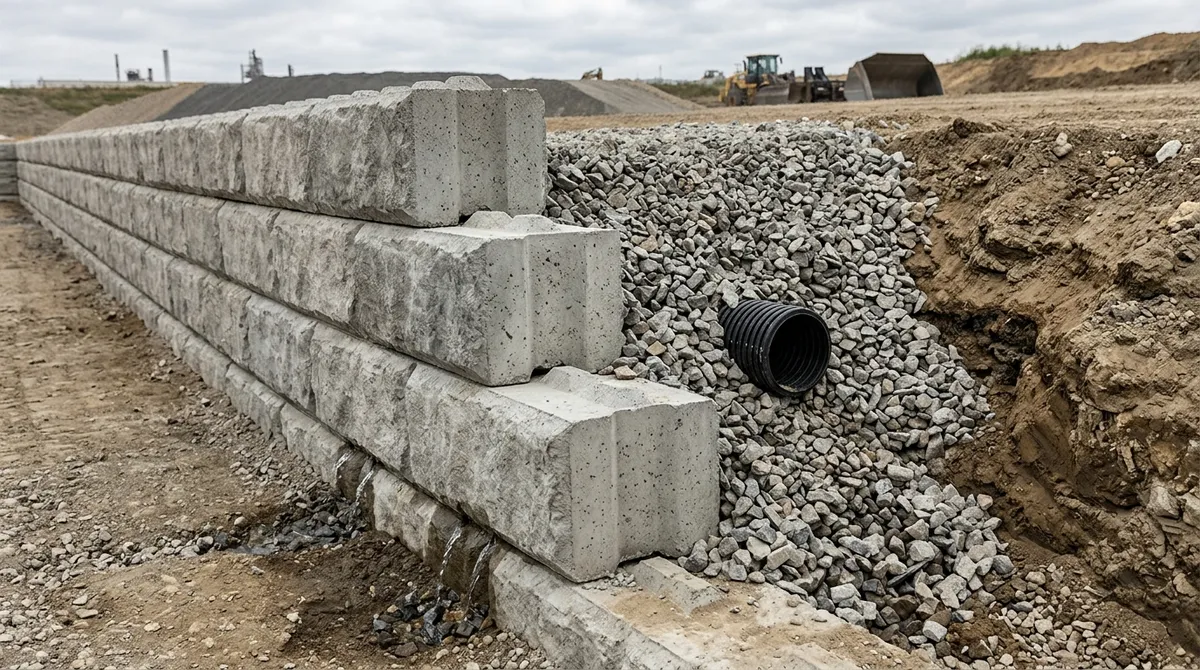
Proper drainage is as critical as the wall structure itself; without it, hydrostatic pressure can crack or collapse even well-built walls within years, so include washed stone backfill, perforated drain tile, and weep holes in any design.
-
Industrial retaining walls require advanced engineering and heavy-duty materials like concrete, modular block, or sheet piling to handle greater soil loads and pressure than residential walls, making contractor expertise essential for project success.
-
Warning signs including tilting, horizontal cracks, bulging sections, water pooling, and loose blocks indicate urgent need for professional inspection; catching these issues early prevents expensive structural failure and full replacement costs.
-
Material selection directly impacts wall strength, drainage, maintenance, and longevity; concrete block, natural stone, interlocking modular block, gabion, and sheet piling each suit different site conditions and budget requirements.
-
When hiring a contractor, verify commercial project experience, proper licensing and insurance, drainage and engineering knowledge, detailed written estimates, and ICPI certification to ensure long-term performance and avoid costly mistakes.
-
Cost varies significantly based on wall height, material choice, site accessibility, drainage complexity, and local labor rates; commercial projects typically range from thousands to over $50,000, requiring detailed site assessments for accurate pricing.
If your property has a slope, uneven terrain, or soil that tends to shift after heavy rain, you already know the headaches that come with it. Water pools in the wrong places. Soil erodes. Usable space disappears. That’s exactly where industrial retaining wall contractors come in. These specialists design and build heavy-duty walls that hold back soil, control drainage, and turn problem areas into functional, attractive outdoor spaces.
Whether you manage a commercial property, run a business, or own a home in the Chicago suburbs, understanding what industrial retaining walls do — and how to find the right contractor — can save you a lot of time, money, and stress. Let’s walk through everything you need to know, from materials and drainage to cost and contractor selection.
What Do Industrial Retaining Wall Contractors Actually Do?
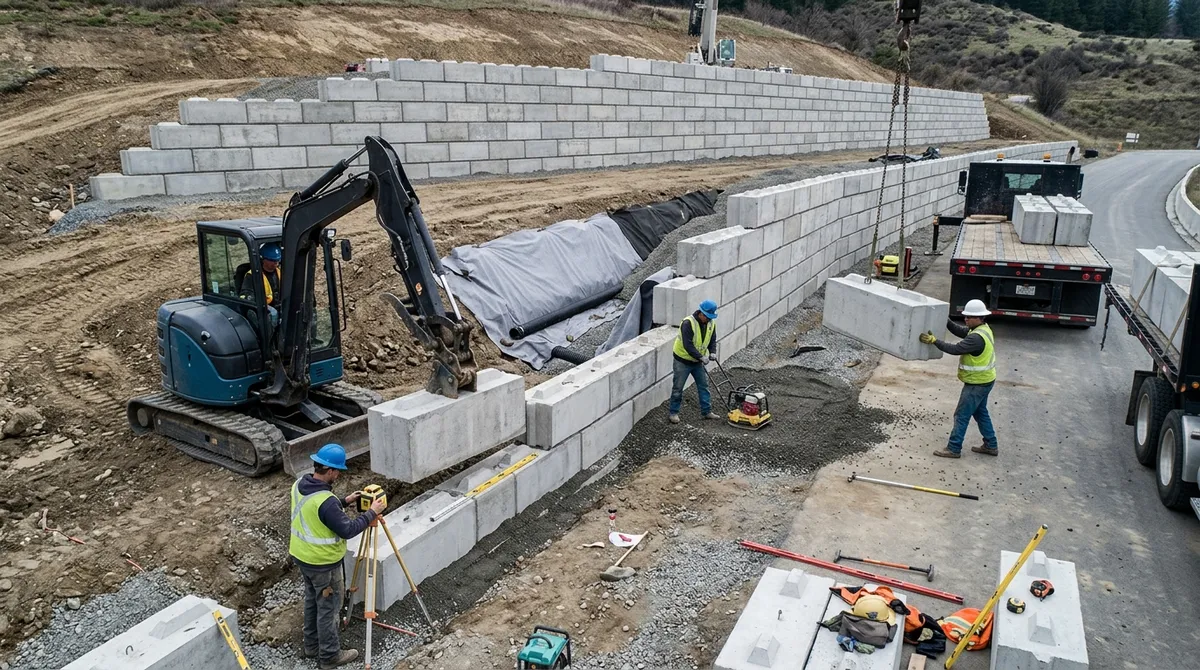
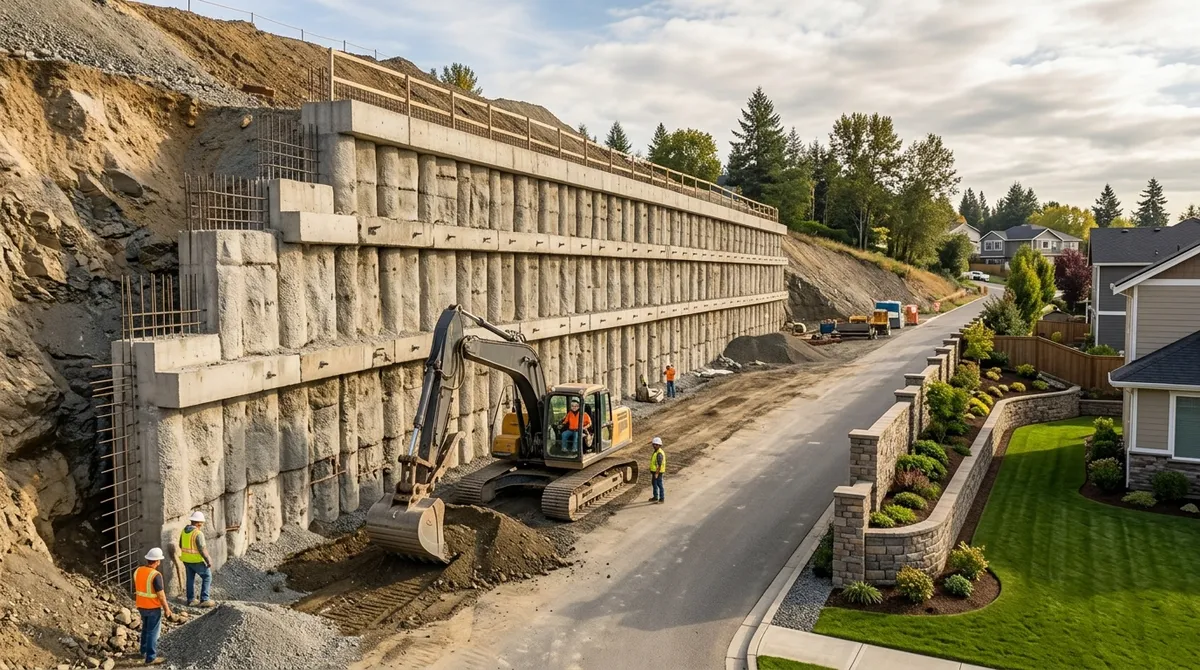
Industrial retaining wall contractors go beyond basic landscaping. They handle large-scale, structurally demanding projects that require careful planning and durable materials. You can learn more about the full scope of this work by reading what a commercial retaining wall contractor actually does.
Here’s a quick look at the core services these contractors typically provide:
- Site assessment and soil analysis
- Custom wall design based on load, slope, and drainage needs
- Installation of walls using concrete, stone, or interlocking block systems
- Drainage integration, including drain tile and washed stone backfill
- Repair and replacement of aging or damaged walls
- Erosion control and slope stabilization
These services benefit a wide range of clients — from suburban homeowners dealing with sloped backyards to commercial property managers trying to manage stormwater runoff on large sites. If you’re curious about how retaining walls transform sloped yards into usable spaces, the difference is often dramatic.
How Are Industrial Retaining Walls Different From Residential Ones?
Great question — and one we hear all the time. Residential retaining walls are often smaller and handle lighter loads. Industrial and commercial retaining walls must handle greater pressure, larger surface areas, and heavier soil loads. That means more engineering, more durable materials, and more precise installation.
Here are the key differences at a glance:
| Feature | Residential Wall | Industrial/Commercial Wall |
|---|---|---|
| Height | Typically under 4 feet | Often 4–12+ feet |
| Load requirements | Light to moderate | Heavy, including vehicle loads |
| Materials used | Decorative block, timber, stone | Concrete, modular block, gabion, sheet piling |
| Engineering required | Minimal to moderate | Often requires structural engineering |
| Drainage systems | Basic | Advanced drain tile and washed stone systems |
| Project timeline | Days to one week | Weeks to months |
For a deeper dive, check out the guide on how heavy-duty retaining wall construction actually works. Understanding the complexity of these projects helps you set the right expectations from day one.
Best Materials for Industrial Retaining Walls
Choosing the right material is one of the most important decisions in any retaining wall project. The material affects strength, appearance, drainage, and long-term maintenance. According to industry experts and Landscape Illinois, material selection should always match the site conditions and intended use.
Here are the most common materials used by industrial retaining wall contractors:
- Concrete block: Extremely durable and versatile. Works well for large commercial and industrial projects. Easy to customize in shape and color. Learn more about planning commercial concrete block retaining walls that last.
- Natural stone: Offers a premium, timeless look with excellent durability. Often chosen for high-visibility commercial landscapes. Great for properties that want beauty and strength. Explore how to choose natural stone commercial retaining walls.
- Interlocking modular block: A popular choice for industrial sites. These systems are engineered for strength and can handle significant soil pressure. Read about why precast modular block walls are a great choice.
- Gabion walls: Wire cages filled with stone. Very effective for erosion control and drainage. Often used near water features or retention ponds. Discover why gabion wall installation is a top choice for commercial properties.
- Sheet piling: Steel or concrete sheets driven into the ground. Best for tight spaces or areas with high groundwater. Learn about 12 commercial sheet piling wall facts you should know.
The Role of Drainage in Retaining Wall Longevity
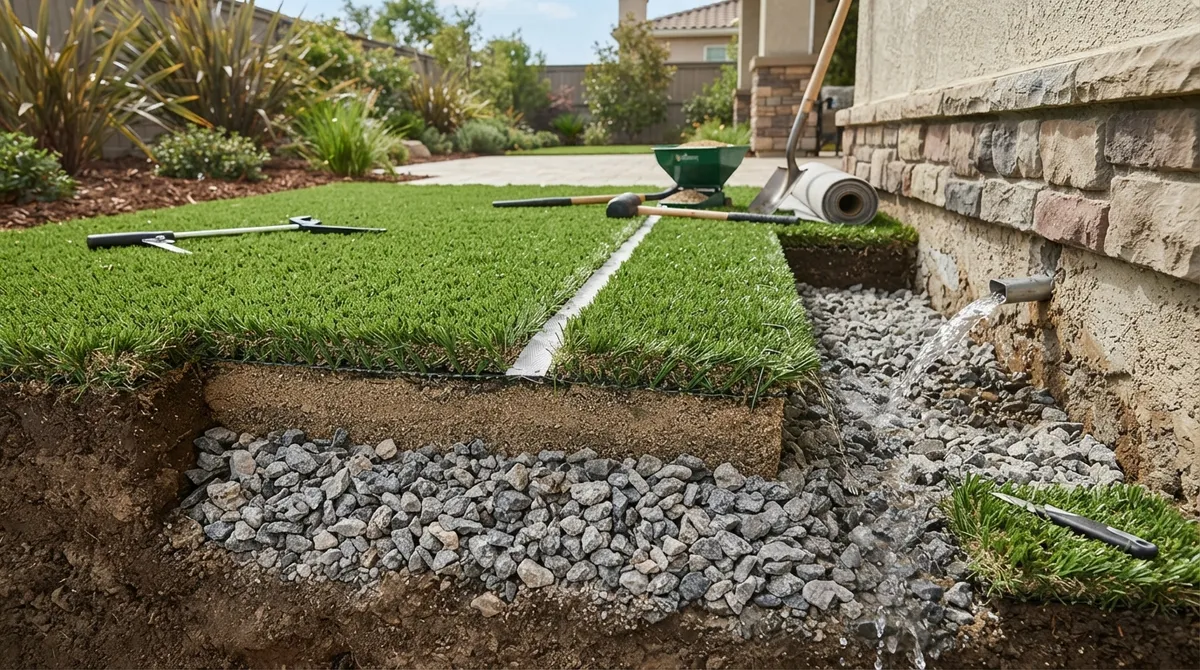
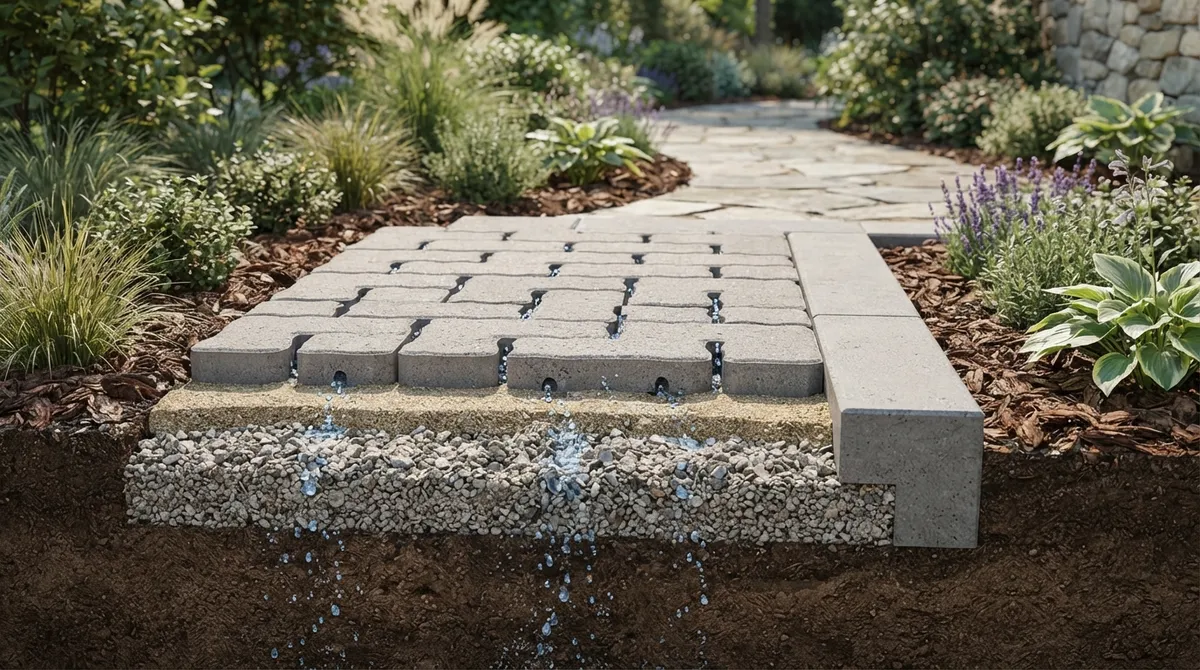
Here’s something many people don’t realize: drainage is just as important as the wall itself. Without proper drainage, water builds up behind the wall and creates what engineers call hydrostatic pressure. That pressure can crack, tilt, or even collapse a wall over time.
Good industrial retaining wall contractors always include drainage as part of the design. A well-drained wall can last for decades. A poorly drained one can fail in just a few years — regardless of how solid the materials are.
Effective drainage systems typically include:
- Washed stone or gravel backfill behind the wall
- Perforated drain tile to channel water away
- Weep holes at the base of the wall to release pressure
- Surface grading to direct water away from the wall base
If you’re dealing with stormwater challenges on a commercial property, it’s worth reading about retaining walls vs. drainage systems for commercial stormwater management. Sometimes a combination of both is the best solution.
When Does a Retaining Wall Need Repair or Replacement?
Even the best-built walls eventually need attention. Knowing the warning signs early can save you from a much bigger problem — and a much bigger bill. Here are signs your retaining wall may need professional attention:
- Visible tilting or leaning away from the slope
- Cracks running horizontally across the wall face
- Bulging sections where soil is pushing through
- Water pooling near the base after rain
- Erosion or soil loss behind or around the wall
- Loose or missing blocks and mortar
If you notice any of these issues, don’t wait. A professional inspection can determine whether repair or full replacement is the smarter choice. You can explore your options by reading about how to plan commercial retaining wall replacement that lasts.
Who Needs Industrial Retaining Wall Services?
Industrial retaining wall work isn’t just for large factories or highway projects. In the Chicago area, these services are commonly needed by:
- Suburban homeowners with sloped yards who want to create level garden beds, patios, or play areas
- Commercial property managers who need to stabilize slopes near parking lots, walkways, or building foundations
- Small business owners looking to improve curb appeal and manage water flow around their storefronts
- HOAs that maintain shared outdoor spaces and need long-lasting, low-maintenance solutions
- New home builders who need retaining walls as part of comprehensive site development and grading plans
If you manage a commercial space, you’ll find this guide on 5 ways to find the best commercial retaining wall contractors especially useful. It’s full of practical tips to help you make a confident hiring decision.
How to Choose the Right Industrial Retaining Wall Contractor
Not all contractors are created equal. Hiring the right team for a large-scale retaining wall project requires some careful thought. Here’s what to look for:
- Experience with commercial and industrial projects: Ask specifically about projects similar in size and scope to yours.
- Proper licensing and insurance: Always verify that the contractor carries general liability and workers’ compensation coverage.
- Knowledge of drainage and engineering: A good contractor understands the structural side of wall design, not just the installation.
- Clear written estimates: A professional contractor will give you a detailed quote with materials, labor, and timeline clearly spelled out.
- References and portfolio: Ask to see past work and speak with previous clients. ICPI Certified Installers follow rigorous industry standards for hardscaping and wall construction.
It also helps to understand retaining wall engineering services so you can ask informed questions during your contractor search.
What Does an Industrial Retaining Wall Cost?
Cost is always a top question, and honestly, it varies quite a bit depending on the project. The main factors that affect pricing include:
- Wall height and total linear footage
- Material choice (concrete, natural stone, gabion, etc.)
- Site accessibility and soil conditions
- Complexity of drainage systems required
- Local labor rates and permit requirements
As a general benchmark, commercial retaining wall projects can range from a few thousand dollars for simpler installations to well over $50,000 for large-scale industrial work. The best way to get an accurate number is to request a detailed site assessment and written estimate from a qualified contractor.
If you’d like to understand the hardscaping side of your outdoor project more broadly, the guide on 6 things to know about commercial hardscape contractors is a great starting point. And for more on common pitfalls, check out 7 hardscaping mistakes to avoid in your outdoor space.
Why Choose Serenity Landscape Group for Your Retaining Wall Project
At Serenity Landscape Group, we’ve been building beautiful, functional outdoor spaces across the greater Chicago area for over two decades. Our retaining wall services cover everything from design and material selection to drainage planning and installation — for both residential and commercial clients.
We work with homeowners, business owners, HOAs, and commercial property managers who want walls that look great and hold up season after season. Our team brings real structural knowledge to every project, and we treat every client’s outdoor space like it’s our own. You can see examples of our completed work in our gallery of our work and learn how we approach every project from start to finish on our process page.
We also offer a full range of complementary services — from pavers and softscapes to commercial lawn maintenance — so your entire outdoor space gets the care and attention it deserves.
According to the Landscape Illinois association, working with experienced, licensed professionals ensures better long-term results and peace of mind. We couldn’t agree more — and we’d love to show you what that looks like in practice.
Ready to Build Something That Lasts?
Industrial retaining walls are serious investments. Done right, they protect your property, improve usability, and add lasting value. Done wrong, they become expensive headaches. The key is choosing a contractor who combines technical know-how with genuine care for your project.
If you’re ready to take the next step, we’d love to hear about your property and what you’re hoping to achieve. Request your free estimate today and let our team help you design a retaining wall solution that works beautifully for years to come. You’re also welcome to call us directly at (630) 359-5139 — we’re always happy to chat about your project and answer any questions you have.
FAQs
Q: What do industrial retaining wall contractors do?
A: Industrial retaining wall contractors design, build, and repair heavy-duty walls that hold back soil, control erosion, and manage drainage on large or complex properties. They handle everything from site assessment and material selection to drainage system installation — making them a one-stop solution for slope and terrain challenges!
Q: How are industrial retaining walls different from residential ones?
A: Industrial and commercial retaining walls are typically taller, built to handle heavier loads, and require more advanced engineering and drainage systems than standard residential walls. They also use more durable materials like reinforced concrete, gabion systems, and modular block designed for long-term performance under heavy conditions.
Q: Do retaining wall contractors handle drainage and erosion control?
A: Absolutely — drainage is a critical part of any retaining wall project! Good contractors always include systems like washed stone backfill, drain tile, and weep holes to prevent water buildup and reduce hydrostatic pressure, which are the most common causes of wall failure.
Q: What materials are best for commercial retaining walls?
A: The best material depends on your site conditions, budget, and aesthetic goals. Concrete block, natural stone, interlocking modular block, gabion wire cages, and sheet piling are all popular options for commercial and industrial projects. A qualified contractor can help you choose the right fit for your specific needs.
Q: When does a retaining wall need repair or replacement?
A: Watch for warning signs like tilting, horizontal cracks, bulging sections, water pooling at the base, or loose and missing blocks. If you notice any of these, it’s time to call a professional for an inspection — catching problems early almost always saves money and prevents more serious structural damage down the road.